Agent-to-Agent Communication
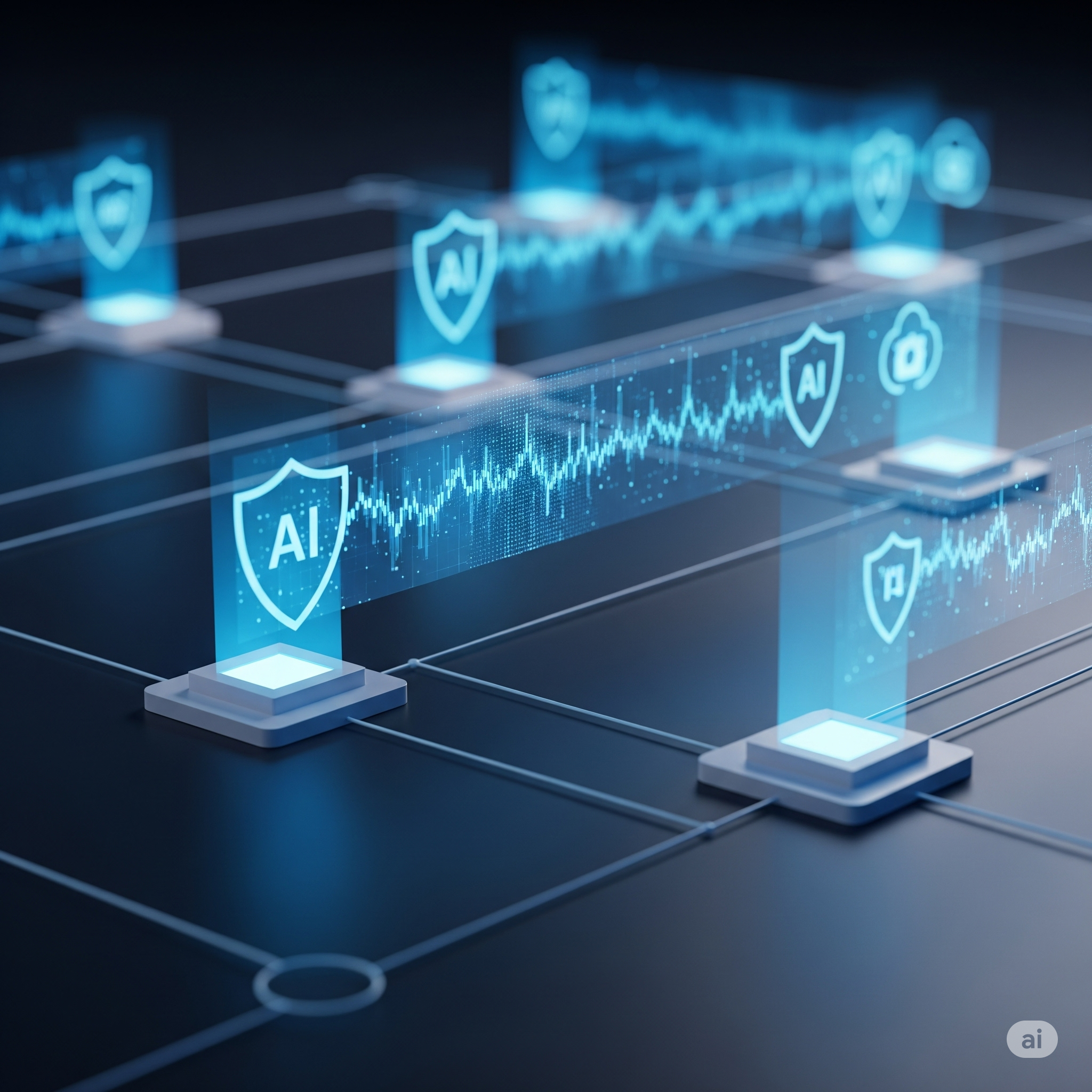
Agent-to-Agent Communication: The Cloud-Native Future of AI
We've all been amazed by the power of large language models. We can build RAG pipelines, chain prompts, and call functions. But in many ways, we're still working with a single, monolithic "brain." The next leap isn't just a smarter AI; it's AI teams.
This is the world of Agent-to-Agent (A2A) communication. And as a community focused on practical, modern applications, we need to talk about its perfect partner: cloud-native architecture.
A2A isn't just a new buzzword for API calls. It's the framework that allows independent, autonomous AI agents to collaborate, negotiate, share insights, and divide complex problems to achieve a common goal. Think of it like a human software team: you don't just have one "super-developer" who does everything. You have a product manager, a backend dev, a frontend dev, and a QA tester, all communicating to ship a product.
Now, where do we run this AI-powered "dream team"? This is where the cloud-native connection becomes brilliant.
AI Agents are Just "Microservices with Brains"
For the past decade, the tech world has moved from giant, monolithic applications to microservices. We did this for a few key reasons: scalability, resilience, and independent development.
An AI-driven, multi-agent system faces the exact same challenges. A single, monolithic AI that tries to be a data-query expert, a creative writer, and a code-genius all at once is brittle, hard to update, and impossible to scale efficiently.
The solution is to treat each AI agent as a specialized, containerized, and independently deployable service.
- Your DatabaseQueryAgent is one microservice.
- Your DataAnalysisAgent (which needs a GPU) is another.
- Your ReportWritingAgent (using the latest LLM) is a third.
They each do one thing well, and they use A2A protocols to talk to each other. This is the future of AI architecture, and it's fundamentally a cloud-native problem.
The Benefits of A2A in a Cloud-Native World
When you combine A2A with cloud-native principles and platforms (like Kubernetes), you unlock a new level of power.
1. True Scalability & Elasticity
In a traditional setup, scaling your "AI" means scaling the entire monolithic app. With an A2A/cloud-native model, you get granular control.
Scenario: You have a sudden need to analyze 10,000 user reports.
Cloud-Native Solution: Your OrchestratorAgent doesn't break a sweat. It simply asks Kubernetes to scale the DataAnalysisAgent deployment from 1 pod to 50 pods. These agents work in parallel, and when the job is done, Kubernetes scales them back down to 1. This is efficient, cost-effective, and impossible with a single-agent model.
2. Resilience and Fault Tolerance
What happens if your AI agent "hallucinates," gets stuck in a loop, or its container crashes?
Cloud-Native Solution: Kubernetes provides self-healing. It will detect the failed agent pod and restart it automatically. Furthermore, the "manager" agent can be designed to handle this. It can detect a failed task, log the error, and re-assign the job to another available agent in the pool. The system doesn't crash; it adapts.
3. Specialization & Independent Deployment
This is a massive win for development teams. Just like with microservices, you get true CI/CD for your AI.
Cloud-Native Solution: Your "Data Science" team can fine-tune and update the DataAnalysisAgent with a new model. They can deploy this update without an ounce of coordination from the "Content" team, who is simultaneously updating the prompts for the ReportWritingAgent. Each agent has its own build pipeline, version, and deployment schedule.
4. Asynchronous, Event-Driven Communication
Complex AI tasks aren't simple request-response calls. They are long-running, asynchronous processes. An agent might need to "think" for 30 seconds, query three databases, and then wait for another agent to finish its part.
Cloud-Native Solution: This is exactly what cloud-native, event-driven architectures (like Kafka or a service mesh) are built for. Agents can communicate by publishing events ("Task:AnalysisComplete") and subscribing to topics they care about ("Job:ReportWriting"). This de-couples the agents and makes the entire system more robust and scalable.
A Practical Example: The Community Newsletter
Let's say we want to automate a "Global AI Athens" quarterly newsletter.
A UserProxyAgent (as a service) receives the high-level goal: "Draft the Q3 newsletter on our community engagement."
It passes this to an OrchestratorAgent. This agent, running in its own pod, breaks down the task.
It finds the AnalyticsAgent (using Kubernetes service discovery) and sends it a task: "Analyze engagement data from BigQuery for Q3." The AnalyticsAgent pod might have special access (a dedicated service account) to do this.
Once complete, the OrchestratorAgent sends that analysis to the WritingAgent (another pod, maybe running a fine-tuned LLM): "Draft a 500-word summary of these findings in a friendly tone."
Finally, the draft is sent to a HumanReviewAgent (which could be a tool that messages a specific Slack channel), flagging it for one of us to approve.
All of this happens as a system of communicating, scalable, and resilient containerized services—not one giant Python script.
The Takeaway
Agent-to-Agent communication isn't just an AI concept; it's an architectural pattern. And the best-practice architecture to support it is the one we're already using to build modern, scalable software: cloud-native.
As we in the Global AI Athens community start building more complex and autonomous systems, we need to think like architects, not just prompt engineers. The future of AI is distributed.
What are your thoughts? Are you experimenting with multi-agent frameworks like AutoGen or LangGraph? Let's discuss it in the community!