The Integration Mastery - New wave of AI Development
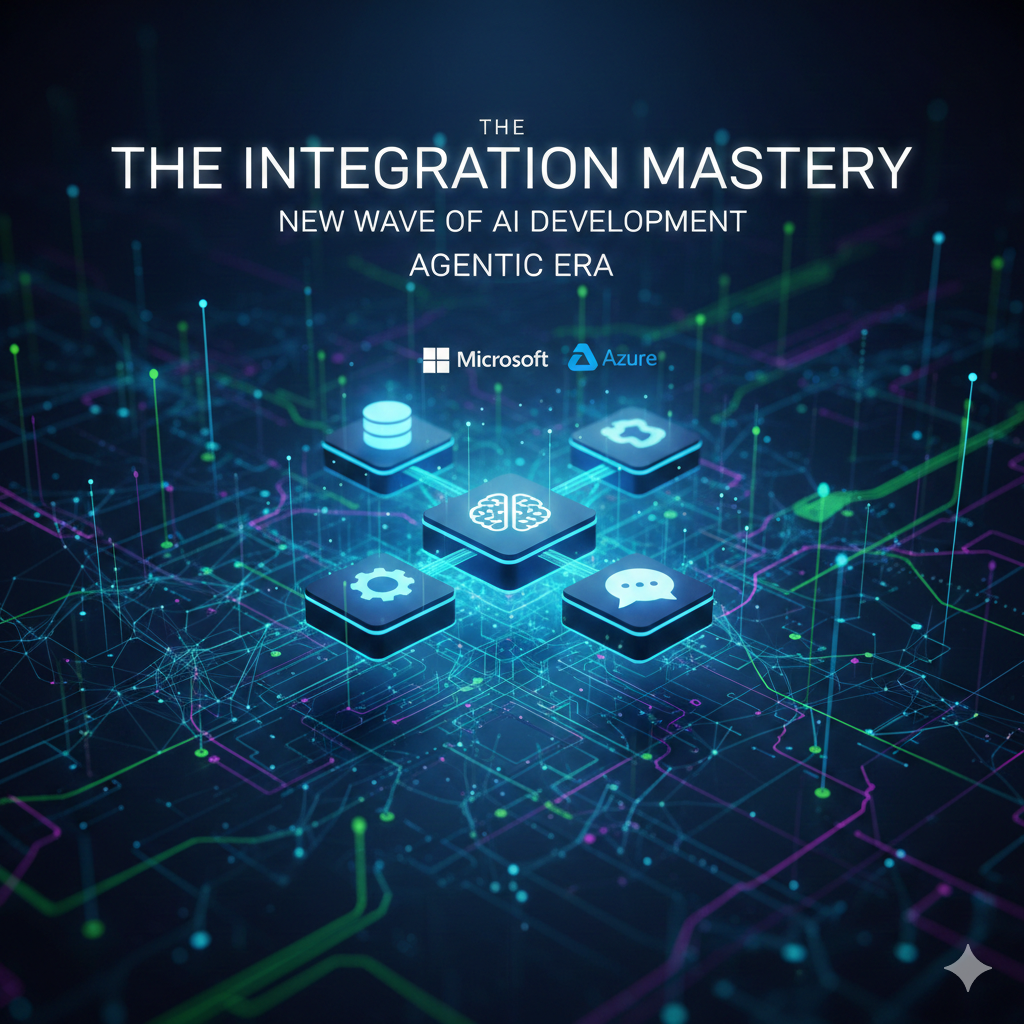
The transition from "Chatbots" to "Autonomous Agents" marks the most significant shift in the AI landscape since the debut of LLMs. We are no longer just asking questions; we are building systems that can think, plan, and execute. Welcome to the Agentic Era.
The Foundation: Microsoft Agent Framework
At the heart of this revolution is the Microsoft Agent Framework, a robust ecosystem designed to move AI beyond simple prompt-response loops. The true power of this framework lies in its Integration Mastery.
Key architectural components include:
- Memory AI Context Providers: Tools like Mem0 and Redis allow agents to maintain long-term context, evolving from forgetful scripts to persistent digital colleagues.
- RAG (Retrieval Augmented Generation): Integration with Azure AI Search ensures agents are grounded in your specific organizational data rather than just "guessing."
- Omnichannel UI: Whether through AG UI or Purview, the framework ensures these "brains" have the right "body" to interact with users across platforms.
From Theory to Action: Real-World Agentic Workflows
The true "Mastery" of integration is seen in how these frameworks solve complex business bottlenecks. Let’s look at two cutting-edge implementations:
1. The Autonomous Logistics Engine
Shipping and logistics are notoriously unpredictable. By leveraging the TwoBrain AI Agent on Azure, organizations are automating responses to shipping delays. * The Integration: The agent doesn't just notify a user of a delay; it integrates with supply chain data to analyze the impact and trigger automated workflows in Azure to mitigate downtime. * The Result: A transition from reactive customer service to proactive, agent-led resolution.
2. The Intelligent Helpdesk
Traditional helpdesks are often productivity sinks. The Intelligent Helpdesk model demonstrates the next level of support: * The Integration: By combining the Microsoft Agent Framework with internal knowledge bases, the agent acts as a first-tier engineer. * The Capability: It can troubleshoot, provide step-by-step guidance, and even perform administrative tasks (like password resets) without human intervention.
Why "Integration Mastery" Matters
We are entering a "New Wave" where the value of an AI developer is measured by their ability to orchestrate. It is no longer enough to call an API; you must build a nervous system of integrations.
Context Management
- Utilizing Cosmos DB or Redis to maintain persistent identity and long-term memory across sessions.
Tool Use
- Empowering agents to execute functions, call APIs, and bridge the gap with legacy databases.
Governance
- Leveraging Microsoft Purview to ensure all agentic actions remain secure, compliant, and auditable.
The Path Forward
The Agentic Era is defined by autonomy. As we master the integrations provided by the Microsoft Agent Framework and take inspiration from practical deployments, we move closer to a world where AI doesn't just assist us—it partners with us.
For developers, this shift is non‑negotiable: mastering agentic SDKs is now the core skill required to build modern AI applications. The next generation of software won’t be built with prompts alone — it will be built by engineers who understand how to orchestrate memory, tools, actions, and governance into autonomous systems.
The Wave is Now: The tools are here. The frameworks are ready. It's time to build.