/Events /AgentCon - Bengaluru
AgentCon - Bengaluru
This event is part of AgentCon, organized by Global AI Bengaluru.
Schedule
About
A Note on Attendance
AgentCon Bengaluru has received an incredible response from the community. Thank you!
To account for no-shows, we've accepted slightly more registrations than capacity. Here's what that means for you:
The first 300 attendees to check in will be seated inside the main hall. After that, remaining attendees are welcome to watch the live stream from our rooftop overflow space (capacity: 100).
Please arrive on time and collect your badge early. The first 300 to check in get a seat inside the hall; after that, it's rooftop only.
Parking
Parking at the venue is very limited. Only 20 spots available. First come, first serve.
Join us for the AI Agents World Tour, a global series of one-day conferences designed exclusively for developers building the future with AI agents.
From San Francisco to Singapore, we’re bringing together leading engineers, researchers, and creators to explore the cutting edge of AI agent design, deployment, and integration. Whether you’re building intelligent assistants, autonomous systems, or next-gen developer tools, this event is your fast track to practical knowledge, hands-on demos, and real-world insights.
What to Expect:
- Deep-Dive Talks from AI pioneers and industry leaders
- Technical Workshops on building, deploying, and scaling agents
- Live Demos of powerful open-source frameworks and tools
- Networking with a global community of builders and innovators
This isn't just another AI event — it’s where developers meet to talk about real code.
Ready to build the future?
More details will be added soon.
Who's on stage

https://www.linkedin.com/in/abhi-singhs
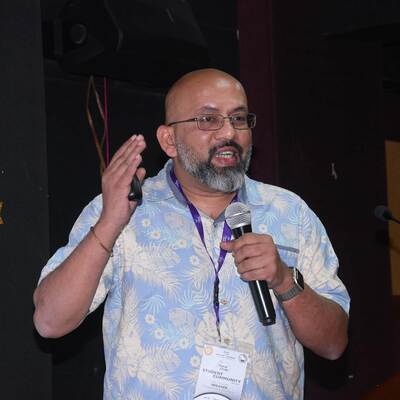
Giri Venkatesan is a Developer Advocate and Architect at Solace, focused on building the future of AI-native, real-time enterprise systems using Agentic AI, event-driven architecture (EDA), and API-first integration. With decades of experience across enterprise integration, Giri has driven architectural evolution from legacy EAI and B2B integration models to modern cloud-native microservices and real-time event streaming. Today, Giri’s work centers on Agentic AI - helping organizations design and operationalize autonomous AI agents that can reason, plan, and take action across distributed systems. He advocates for using events and messaging as the nervous system for AI agents, enabling them to respond instantly to changing business conditions, coordinate workflows across services, and execute tasks reliably at scale. His expertise spans integration technologies, asynchronous APIs (AsyncAPI), REST APIs, open-source ecosystems, and event-driven patterns that make AI-powered systems more scalable, resilient, and observable. Giri is passionate about turning AI from “experiments and prototypes” into production-ready agent-driven architectures that improve productivity, accelerate innovation, and unlock new automation opportunities. He regularly shares insights on LinkedIn, Medium, and DEV Community - educating architects and developers on building real-world systems where AI agents, APIs, and real-time events work together to deliver smarter digital experiences and business agility.

I’m a seasoned software engineer with a background in storage systems, databases, and large-scale banking applications. These days, I work as a Developer Advocate at Redis, where I get to explore the latest in AI and build prototypes that bring new ideas to life. I love breaking down complex concepts, creating hands-on demos and helping developers discover what’s possible with emerging tech.
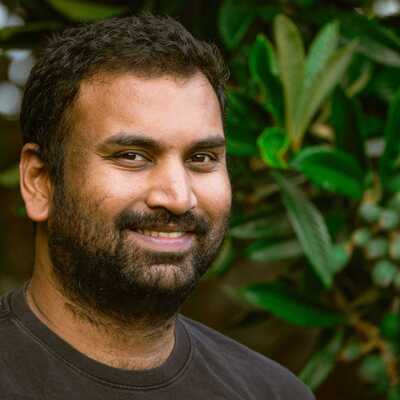
With over 13 years of industry experience spanning healthcare, ad tech, and retail, Kshetrajna Raghavan has spent the last four years at Shopify building cutting-edge machine learning products that make life easier for merchants. From Product Taxonomy Classification to Image Search and Financial Forecasting, Kshetrajna has tackled a variety of impactful projects. Armed with a Master’s in Operations Research from Florida Institute of Technology, Kshetrajna brings a robust technical background to the table. When not diving into data, Kshetrajna loves jamming on guitars, tinkering with electric guitar upgrades, hanging out with two large dogs, scuba diving, wildlife photography and conquering video game worlds.

I am an AI Engineer and Architect specializing in Agentic systems, production-grade GenAI, and Responsible AI design. As a GenAI Developer/Advocate at AWS, I work at the intersection of building multi-agent architectures, observability, and real-world AI deployment to—helping developers move from demos to scalable, trustworthy systems across domains.

Akash Deb builds open-source voice AI hardware for bringing realtime AI agents into the physical world. He maintains ElatoAI and other voice AI projects, which have collectively earned 2.4K+ GitHub stars and been featured in Wired and OpenAI’s official Cookbook as an example of voice AI on hardware. He studied Computer Engineering at UIUC and previously worked as a product engineer at Asana and Coursera.

Balaji Jayaraman is a Senior Programmer Writer within the Developer Content and Advocacy team at Docusign, joining the company in 2025. Combining his background in software development and technical writing, Balaji acts as a bridge between complex code and creator success. He is passionate about developer advocacy and specializes in producing comprehensive developer documentation, API guides, and tools. His recent initiatives focus on integrating AI with Docusign such as MCP connector—to streamline, simplify, and enhance the overall developer experience.

As a Developer Advocate at Neo4j, I help developers harness the power of graph technology and AI. A Microsoft MVP and global speaker at events like TED, Microsoft Build, and WeAreDevelopers, I focus on making complex tech accessible through content, community, and hands-on support. My mission is to connect, empower, and inspire developers to build impactful solutions.

Henk is a Cloud Advocate specializing in Artificial intelligence and Azure with a background in application development. He is currently part of the AI cloud advocate team and based in the Netherlands. Before joining Microsoft, he was a Microsoft AI MVP and worked as a software developer and architect building lots of AI powered platforms on Azure.

Amar Nath Pandey is an Advisory Engineer at IBM India Software Lab with approximately 18 years of IT experience specializing in J2EE, Cloud technologies, and Machine Learning. He has a proven track record of leading teams to deliver complex platforms, including Kubernetes-based ML serving systems and intelligent automation foundations. Amar holds certifications in Data Science and Machine Learning, and his technical expertise spans Java, Golang, Python, and cloud-native tools like Docker and OpenShift. Throughout his career at organizations like Oracle, Nokia Siemens, and IBM, he has consistently focused on building scalable web applications and innovative software solutions.
Sessions & tracks
Registration
Main Track ·Agents of Tomorrow: Building the Next Generation of Intelligence
We stand at the edge of a profound shift in artificial intelligence. Over the last five years, generative AI has moved from novelty to necessity—transforming how we create, code, and collaborate. Now, a new frontier is emerging: AI agents. Unlike traditional tools that wait for instructions, agents can perceive, decide, and act toward goals—expanding the boundaries of what humans and machines can achieve together.
In this keynote, we’ll explore the evolution from copilots to fully agentic systems, highlight breakthroughs that are reshaping industries, and imagine the future horizons where autonomous agents redefine productivity, creativity, and discovery. Most importantly, we’ll discuss the role of humans in this new era—not as bystanders, but as leaders guiding how agents operate, align with our values, and amplify our potential.
The Agents of Tomorrow are here—and the future will be built by those bold enough to partner with them.
Henk is a Cloud Advocate specializing in Artificial intelligence and Azure with a background in application development. He is currently part of the AI cloud advocate team and based in the Netherlands. Before joining Microsoft, he was a Microsoft AI MVP and worked as a software developer and architect building lots of AI powered platforms on Azure.
Context Graphs: Agent Memory as a Super Power
AI agents can follow prompts and use tools, but often lack the institutional context needed to explain why a decision is made. That reasoning: policies, precedents, and past outcomes are usually scattered across systems and human memory. Context graphs capture this missing layer by modeling decision traces over time, including causality and context. By giving agents access to just enough historical and organizational knowledge, context graphs enable more explainable, consistent, and auditable decisions.
As a Developer Advocate at Neo4j, I help developers harness the power of graph technology and AI. A Microsoft MVP and global speaker at events like TED, Microsoft Build, and WeAreDevelopers, I focus on making complex tech accessible through content, community, and hands-on support. My mission is to connect, empower, and inspire developers to build impactful solutions.
Building Realtime Voice AI Agents in the Physical World
Voice AI is moving beyond web apps and chat interfaces into toys, wearables, kiosks, robots, and other physical devices. But building a realtime AI agent on hardware is very different from building one in the browser.
In this session, I’ll show how to build a working realtime voice AI agent that runs through an ESP32-based device with a microphone, speaker, and cloud speech-to-speech pipeline. We’ll cover the full stack: audio capture, streaming over WebSockets, latency tradeoffs, speech-to-text, LLM reasoning, text-to-speech, device state, and the practical constraints of running AI interactions on low-power hardware.
The session includes a live demo of a physical device having a realtime spoken conversation with an AI character, plus a breakdown of the architecture behind it.
Attendees will leave with a clear mental model for how to bring AI agents into the physical world, what breaks in production, and how to think about latency, reliability, and user experience when AI leaves the screen.
Akash Deb builds open-source voice AI hardware for bringing realtime AI agents into the physical world. He maintains ElatoAI and other voice AI projects, which have collectively earned 2.4K+ GitHub stars and been featured in Wired and OpenAI’s official Cookbook as an example of voice AI on hardware. He studied Computer Engineering at UIUC and previously worked as a product engineer at Asana and Coursera.
Event-Driven Multi-Agent Systems: Why Your AI Agents Need a Broker, Not a Bus
Most agentic AI frameworks treat communication as an afterthought — agents call each other directly or chain sequentially. This talk challenges that pattern. Drawing on production experience building agents for PII redaction, schedule extraction, and real-time service coordination, we examine where direct agent communication fails in enterprise environments and how event-driven architecture transforms multi-agent coordination from a point-to-point tangle into a decoupled, observable mesh.
Giri Venkatesan is a Developer Advocate and Architect at Solace, focused on building the future of AI-native, real-time enterprise systems using Agentic AI, event-driven architecture (EDA), and API-first integration. With decades of experience across enterprise integration, Giri has driven architectural evolution from legacy EAI and B2B integration models to modern cloud-native microservices and real-time event streaming. Today, Giri’s work centers on Agentic AI - helping organizations design and operationalize autonomous AI agents that can reason, plan, and take action across distributed systems. He advocates for using events and messaging as the nervous system for AI agents, enabling them to respond instantly to changing business conditions, coordinate workflows across services, and execute tasks reliably at scale. His expertise spans integration technologies, asynchronous APIs (AsyncAPI), REST APIs, open-source ecosystems, and event-driven patterns that make AI-powered systems more scalable, resilient, and observable. Giri is passionate about turning AI from “experiments and prototypes” into production-ready agent-driven architectures that improve productivity, accelerate innovation, and unlock new automation opportunities. He regularly shares insights on LinkedIn, Medium, and DEV Community - educating architects and developers on building real-world systems where AI agents, APIs, and real-time events work together to deliver smarter digital experiences and business agility.
From Ticket to PR While You Sip Filter Coffee
The future is not one giant autonomous agent. It is a governed SDLC where agents help at each step and humans stay in control.
Structure:
- Plan: clarify requirements.
- Code: agent mode or coding/cloud agent.
- Test: generate and run tests.
- Review: Copilot code review.
- Secure: code scanning, secret scanning, dependency vulnerability checks.
- Merge: human approval and policy controls.
Why it is current: GitHub Copilot coding agent now runs code scanning, secret scanning, and dependency vulnerability checks inside its workflow, and uses Copilot code review before opening PRs.
https://www.linkedin.com/in/abhi-singhs
Lunch
Main Track ·Your Agents Don’t Like APIs — Fixing Multi-Agent Systems with MCP
Modern AI agents struggle not because of reasoning limits, but because of interaction with tools on interfaces designed for humans. In agentic systems, this mismatch leads to incorrect tool selection, redundant calls, increased latency, & weak workflows that fail under real-world conditions. As MCP emerges as a standard for how models connect with tools & applications (LF Events), it provides a path to move from heuristic interactions to structured, contract-driven systems. Taking a travel customer use case, this talk explores how the MCP redefines agent-tool interaction through schema-based contracts, enabling deterministic execution & reducing ambiguity. We’ll dive into MCP architecture—servers, clients, transports—& demonstrate how standardized tool definitions improve reliability & efficiency in agent workflows. We’ll compare a traditional API-driven approach with an MCP-based design, highlighting measurable improvements in latency, cost, & system behavior. We’ll also cover production architectures: building MCP-compliant services, scaling them using containerized infrastructure, & implementing observability, security, & governance & failure handling real-world deployments.
I am an AI Engineer and Architect specializing in Agentic systems, production-grade GenAI, and Responsible AI design. As a GenAI Developer/Advocate at AWS, I work at the intersection of building multi-agent architectures, observability, and real-world AI deployment to—helping developers move from demos to scalable, trustworthy systems across domains.
How Docusign Built an Autonomous Coding Agent for Repetitive Engineering Tasks
Every engineering team has a backlog of repetitive tasks that consume real time but require little judgment. At Docusign, we built an autonomous coding agent to handle that work, ensuring humans review it at every step. Here's how we built it and how it built itself.
Balaji Jayaraman is a Senior Programmer Writer within the Developer Content and Advocacy team at Docusign, joining the company in 2025. Combining his background in software development and technical writing, Balaji acts as a bridge between complex code and creator success. He is passionate about developer advocacy and specializes in producing comprehensive developer documentation, API guides, and tools. His recent initiatives focus on integrating AI with Docusign such as MCP connector—to streamline, simplify, and enhance the overall developer experience.
From One-Shot to Agentic: Optimizing Shop Intelligence with DSPy
Learn how Shopify evolved their approach to extracting structured data from millions of merchant stores. One-shot LLM calls hit quality and cost ceilings fast, so the team shifted to an agentic architecture where the model explores stores on its own to find answers.
By using DSPy to define, optimize, and run specialized sub-agents, they improved both reliability and maintainability. The shift from GPT-5 to a self-hosted Qwen model cut costs by roughly 75x while improving quality, enabling full coverage across all Shopify shops instead of just a subset.
With over 13 years of industry experience spanning healthcare, ad tech, and retail, Kshetrajna Raghavan has spent the last four years at Shopify building cutting-edge machine learning products that make life easier for merchants. From Product Taxonomy Classification to Image Search and Financial Forecasting, Kshetrajna has tackled a variety of impactful projects. Armed with a Master’s in Operations Research from Florida Institute of Technology, Kshetrajna brings a robust technical background to the table. When not diving into data, Kshetrajna loves jamming on guitars, tinkering with electric guitar upgrades, hanging out with two large dogs, scuba diving, wildlife photography and conquering video game worlds.
Context is all you need
You built an AI agent, it works great, but once in a while you see it give completely wrong answers with confidence. That usually isn’t because the model lacks reasoning ability, but because the system supplied missing or poorly scoped context. The model was smart enough, but the system failed to get the right information to it at the right time.
In this talk, I’ll introduce Context Engineering as the discipline of designing how AI systems retrieve, assemble, and deliver context across multi-step workflows. I’ll show why this has become the real bottleneck in modern AI systems, why classic RAG is often too linear for agentic applications, and why approaches like direct text-to-SQL can become slow, fragile, and hard to govern when agents need reliable access to structured operational data.
Through concrete architecture patterns, I’ll walk through how to build a better context pipeline: combining unstructured retrieval with structured data access, exposing data as tools instead of making the model guess queries, and using techniques like semantic caching and memory to improve latency, cost, and answer quality. Attendees will leave with practical ways to rethink how context flows through AI systems and a clear mental model for building agents that are faster, more reliable, and better grounded in real-world data.
I’m a seasoned software engineer with a background in storage systems, databases, and large-scale banking applications. These days, I work as a Developer Advocate at Redis, where I get to explore the latest in AI and build prototypes that bring new ideas to life. I love breaking down complex concepts, creating hands-on demos and helping developers discover what’s possible with emerging tech.
The "Security Guard" for AI: Making Enterprise Tools Safe with MCP Gateways
Abstract: In the last few years, everyone started talking to AI. Now, we are entering a new phase where AI doesn't just talk—it actually does work for us. While this is exciting, it creates a big safety problem for company data and reputation. Leaders are now asking: "How do we let our teams use AI without accidentally opening our doors to hackers?" This presentation gives leaders a clear, non-technical plan for using AI safely. We will look at the real risks companies face and show how an MCP Gateway acts as a single, strong "Security Guard" for all your AI tools. We will explain how to keep your data private and follow legal rules without slowing down your AI projects.
Join us to learn how to turn AI into a safe, powerful engine for your company while keeping your data under your control.
Amar Nath Pandey is an Advisory Engineer at IBM India Software Lab with approximately 18 years of IT experience specializing in J2EE, Cloud technologies, and Machine Learning. He has a proven track record of leading teams to deliver complex platforms, including Kubernetes-based ML serving systems and intelligent automation foundations. Amar holds certifications in Data Science and Machine Learning, and his technical expertise spans Java, Golang, Python, and cloud-native tools like Docker and OpenShift. Throughout his career at organizations like Oracle, Nokia Siemens, and IBM, he has consistently focused on building scalable web applications and innovative software solutions.
The Grand Closing: Raffle & Community Quiz
What better way to end the day than with a little friendly competition and a lot of good energy? Our closing session brings the whole community together for a fun-filled raffle and quiz, a celebration of everything we've explored and discussed today.
Put your AI knowledge to the test, cheer on your fellow attendees, and keep your fingers crossed as we draw our raffle winners. Prizes, laughs, and great company guaranteed. See you at the finish line!
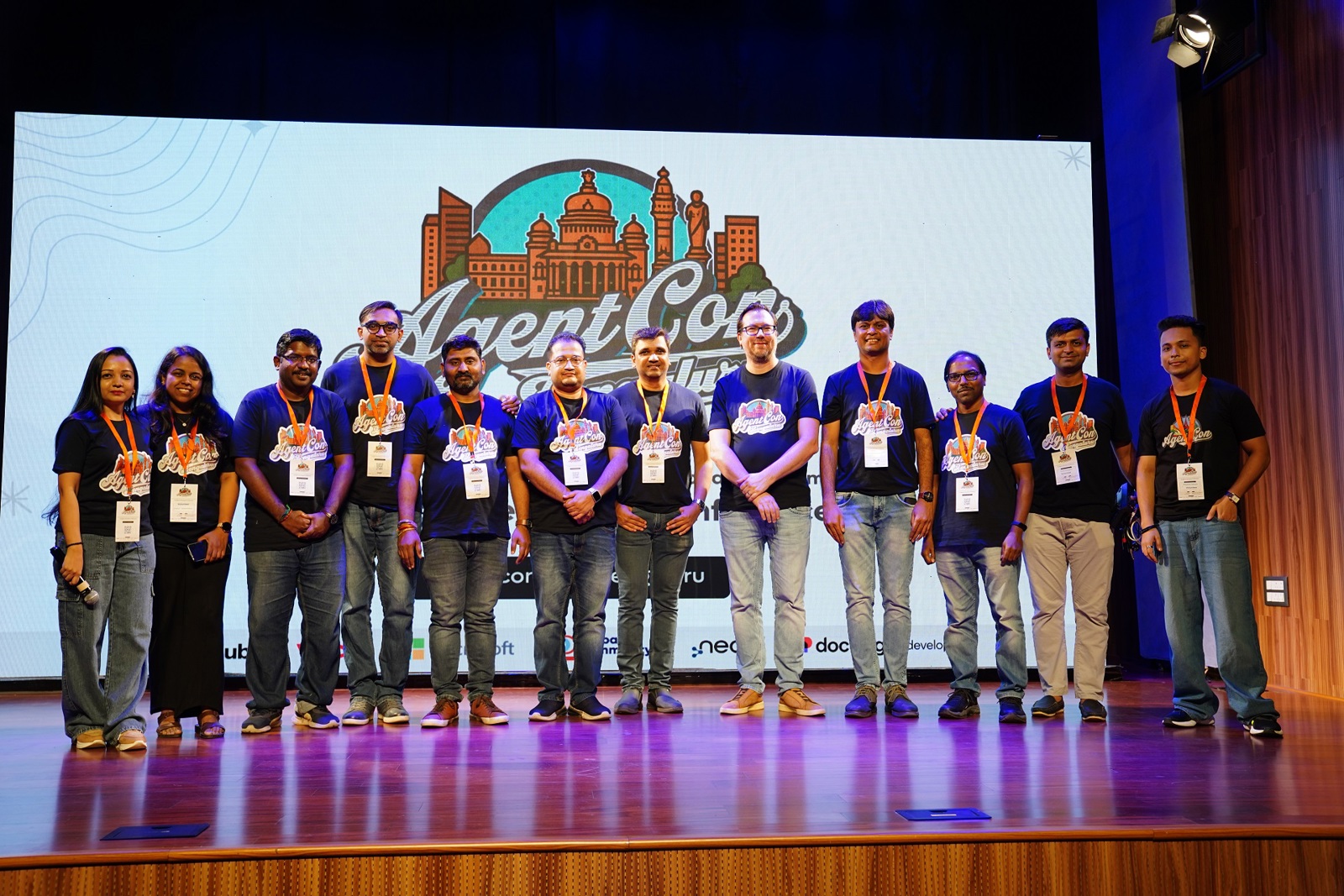
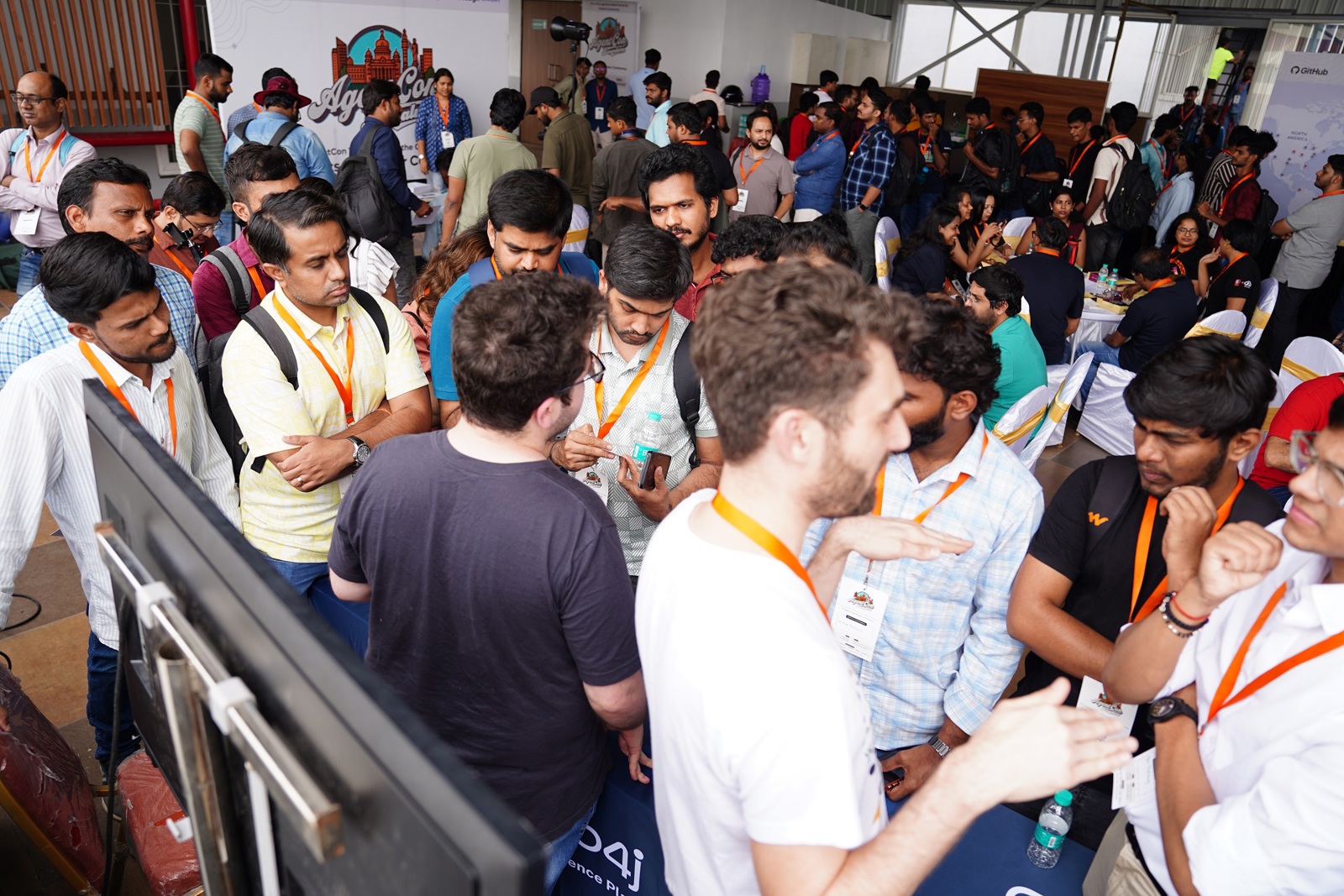
This is how it looked
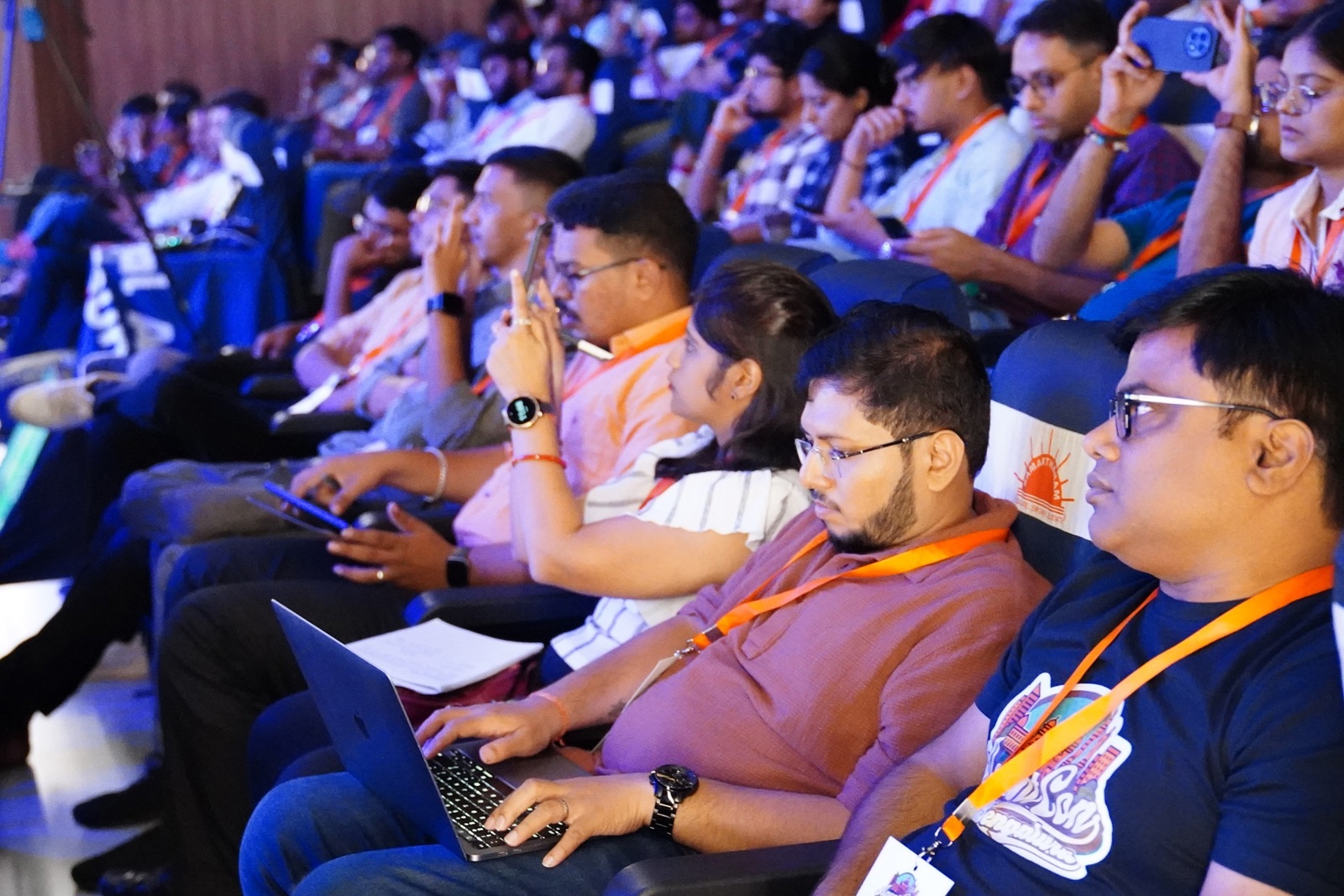
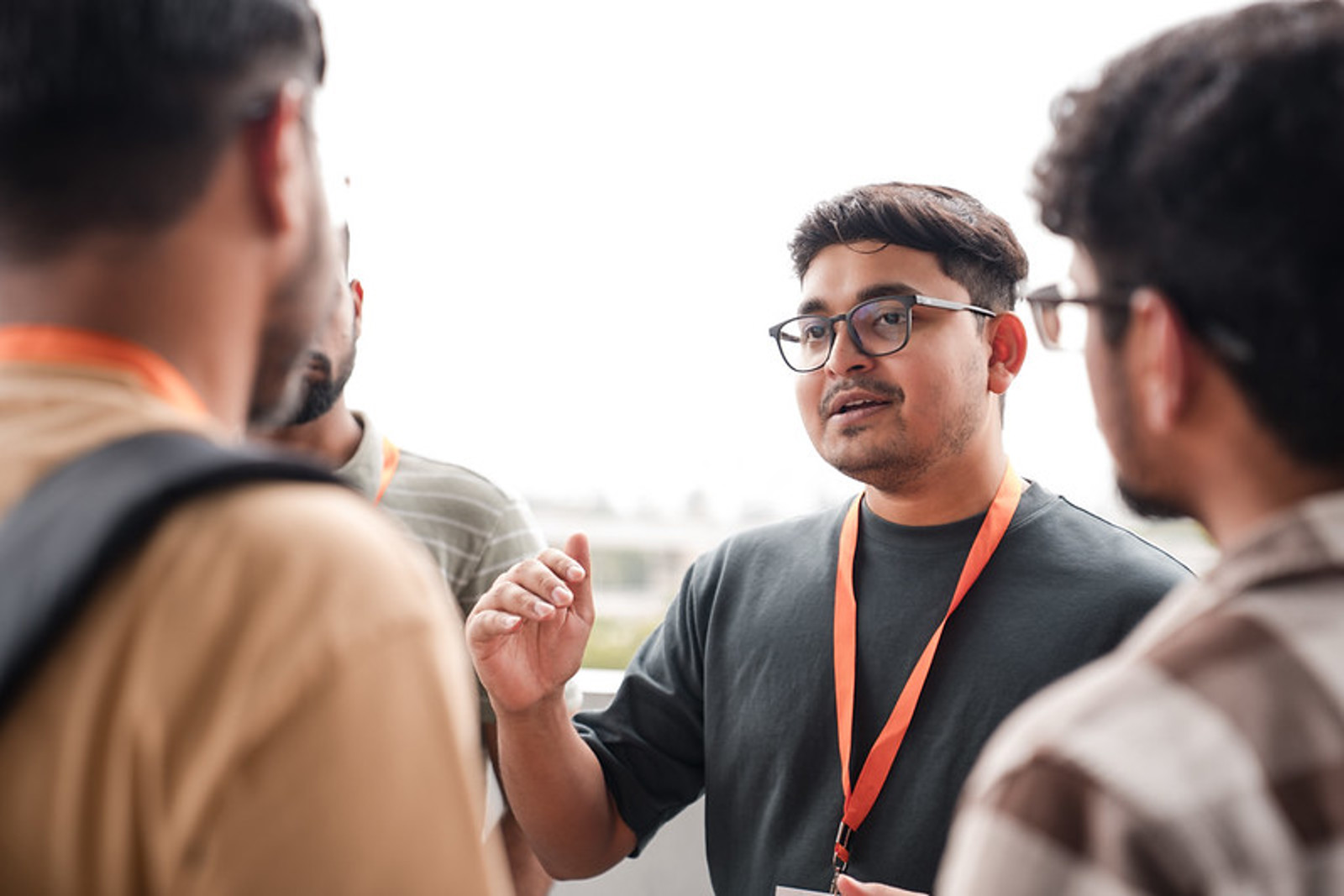
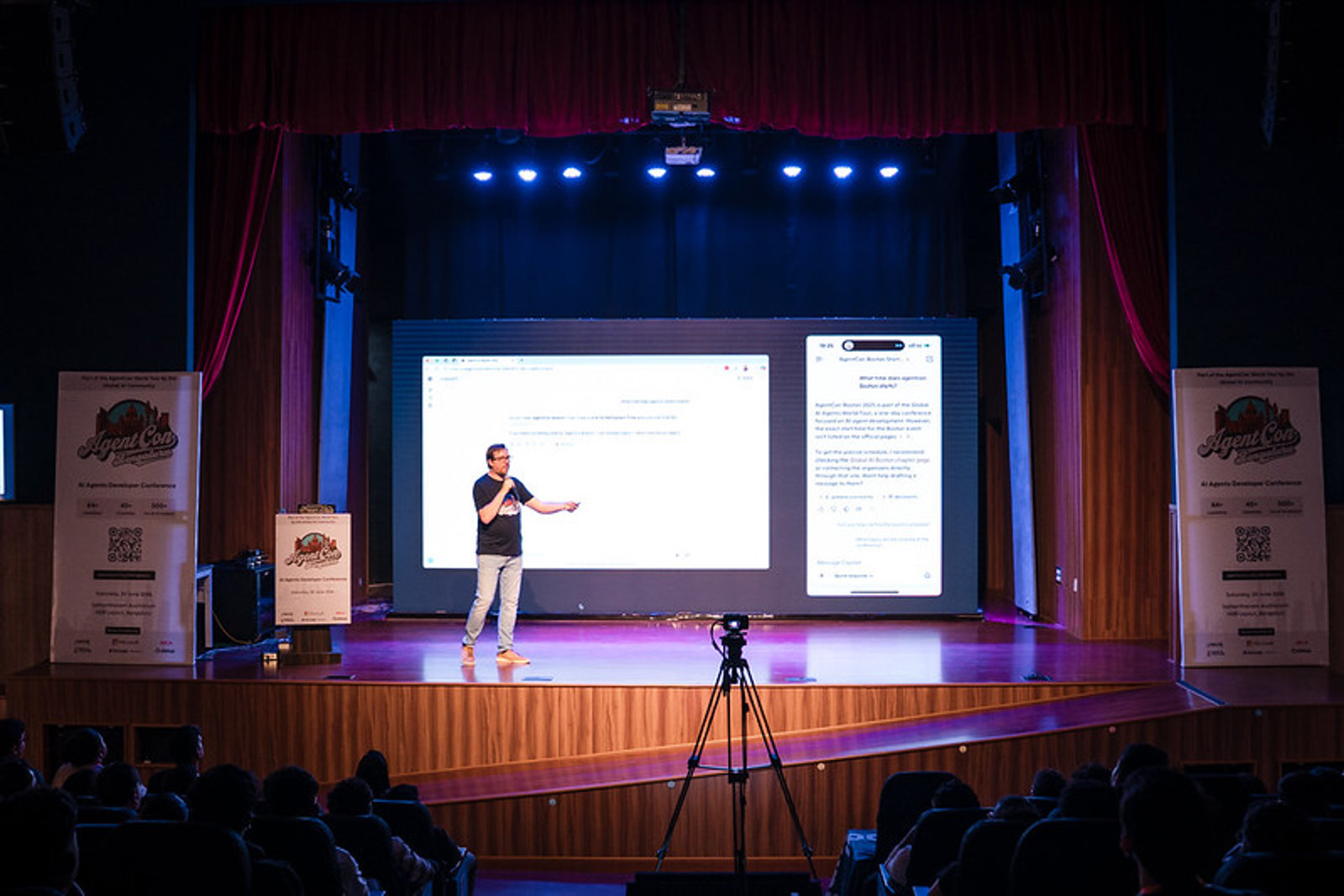
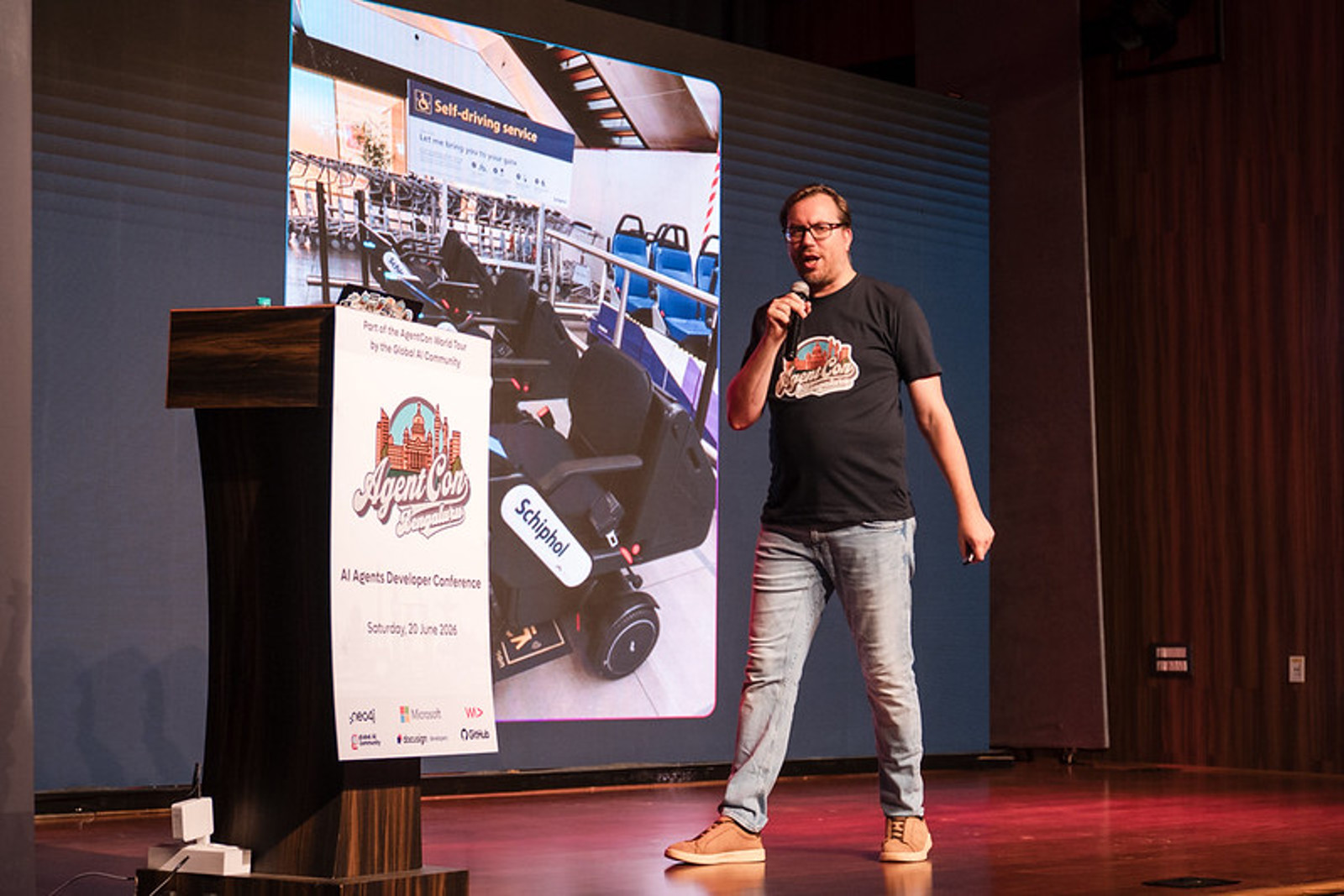
Watch the talks
Made possible by
Sponsors






Community partners


Explore AgentCon
AI Agents Developer Conference
AgentCon made possible by: