/Events /AgentCon - Perth 2026
AgentCon - Perth 2026
This event is part of AgentCon, organized by Global AI Perth.
Schedule
About
Join us for the AI Agents World Tour, a global series of one-day conferences designed exclusively for developers building the future with AI agents.
From San Francisco to Singapore, we're bringing together leading engineers, researchers, and creators to explore the cutting edge of AI agent design, deployment, and integration. Whether you're building intelligent assistants, autonomous systems, or next-gen developer tools, this event is your fast track to practical knowledge, hands-on demos, and real-world insights.
What to Expect:
- Deep-Dive Talks from AI pioneers and industry leaders
- Technical Workshops on building, deploying, and scaling agents
- Live Demos of powerful open-source frameworks and tools
- Networking with a global community of builders and innovators
This isn't just another AI event — it’s where developers meet to talk about real code.
Ready to build the future? Join us in Perth.
Who's on stage
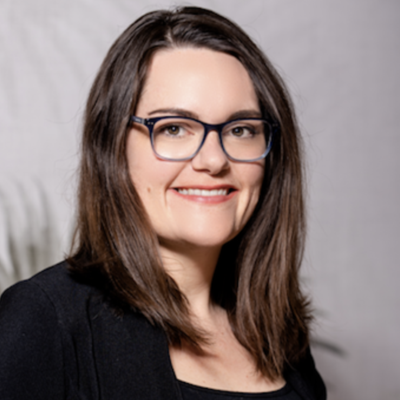
Sarah is a Senior Software Engineer at Microsoft, working on organic growth systems and frameworks for Clipchamp and other Office apps. When she's not on the job she's training for marathons, chilling with her cat and planning holidays.
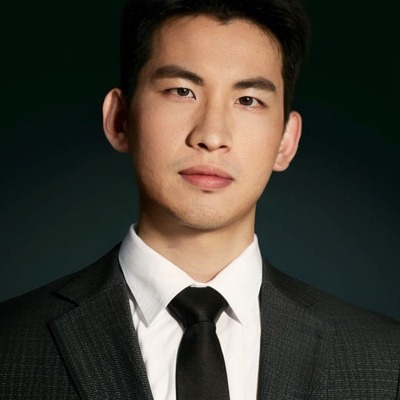
My career: More details available on my LinkedIn Short Intro: 1. start up company 2. Bytedance ( parent company of tiktok) 3. Master of IT in UWA 4. Mid-Level Senior Software Engineer at PictureWealth As a Team lead participated at 4 * Hackathon
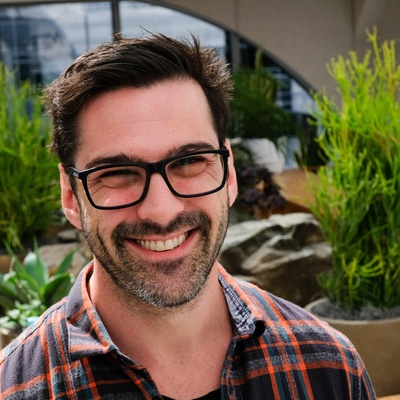
Phil is a developer relations engineer for IBM and Google Developer Expert living in Melbourne, Australia. He loves working with JavaScript, TypeScript or Ruby to build web applications and tools to help developers. He once helped build a website that captured the world's favourite sandwich fillings. He has too many GitHub repositories. Away from the keyboard, Phil listens to ska punk, hangs out with his miniature dachshund (also called Ruby), and is on a mission to discover the world's best beers. Phil tweets at @philnash and you can find him elsewhere online at https://philna.sh.

Daniel is a seasoned Solution Architect and a coder at heart, bringing broad expertise in cloud application and system integration on Azure. He specializes in cloud-first architecture and applying AI innovations to build scalable, efficient, and resilient solutions. Driven by a passion for mentoring and community, Daniel actively shares knowledge and collaborates with developers from diverse cultural backgrounds. He enjoys turning ideas into practical solutions that foster innovation and create real-world impact. At the core of his work is a commitment to learning, collaboration, and making a positive difference through technology. Beyond his professional role, Daniel volunteers as a FIRST LEGO League coach, helping students build LEGO robots and learn Python. He is particularly interested in how robotics and AI can be used in education to inspire creativity and equip the next generation with strong problem-solving skills.
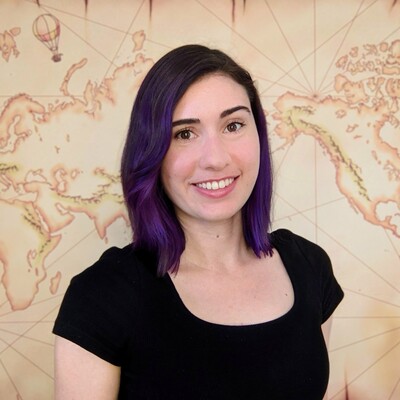
Melissa Houghton is a Principal Software Engineer at MakerX, a Microsoft MVP in Developer Technologies, an international conference speaker, and a technical community event organiser. She is a Women in Tech WA 2023 Tech [+] Award Winner and an Octopus Insider. She is a driven software engineer and excellent leader with extensive experience in end-to-end application development and delivery. She enjoys solving complex problems and is always open to learning new things, with current work focused on .NET and Azure. Outside of the tech world, Melissa lives in Australia's South West, raising her twin baby girls. In her free time, she loves to travel and has a boutique wine business with her winemaker husband.
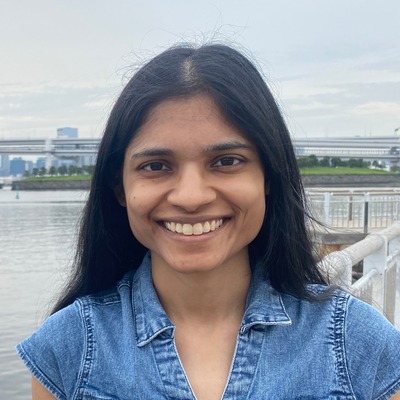
Ashita works as a developer advocate at AWS with a strong focus on frontend and AI technologies. With 10+ years of experience in full stack development, she is passionate about building impactful products and equally loves empowering & engaging with fellow developers in the community. She is the co-creator of an award-winning open source, cross-platform agentic API client (GitHub - https://github.com/ashitaprasad) and has delivered more than 100 talks & workshops in reputed international conferences such as AI Devcon, AI India, PyML, SciPy etc. Full list of my past talks with video links - https://ashitaprasad.github.io
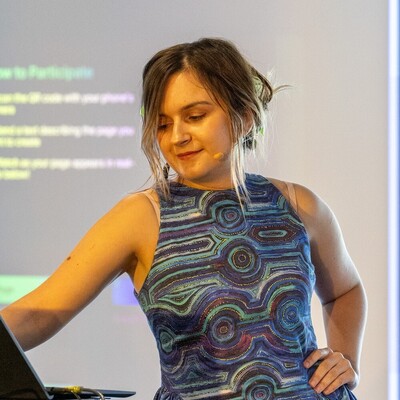
Nina Ajnira Karisik is a software engineer, speaker, and founder of MadeApt, a fashion-tech startup reimagining how clothing is made and experienced. With a background in AI, development, and community-building, Nina’s work blends technical depth with a human touch. She’s known for creating interactive sessions where audiences co-create apps live, exploring the joys and messiness of coding with AI. Her talks and talks have been featured in Australia, India, Spain and beyond

George Coldham is a Cloud Solution Architect at Microsoft, working with enterprise and public-sector organisations to design and operate secure cloud and identity architectures at scale. His work focuses on Zero Trust, identity as the modern security control plane, and the practical realities of securing SaaS, cloud platforms, and emerging AI systems in complex environments. George specialises in helping organisations reduce real-world risk without undermining productivity or user experience. Alongside his technical role, George is an experienced international speaker, educator, and community organiser. He regularly presents at industry conferences, bootcamps, and meetups, translating complex security concepts into practical guidance for practitioners and decision-makers. George is the founder of Global Security Community, the lead organiser of the Perth Microsoft Security Meetup, and an organiser within the global AI and developer community. He brings a practitioner-led, evidence-based perspective to his talks, drawing on real customer scenarios rather than vendor theory or marketing narratives. His speaking topics include Zero Trust beyond the marketing slides, identity-driven security, cloud and SaaS security in practice, and designing security architectures for humans as well as systems.
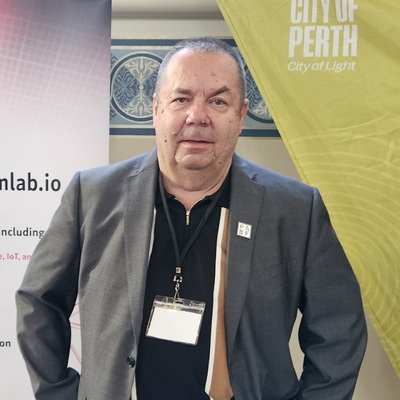
Jacek Korneluk is a Blockchain and AI strategist, and the Founder and Director of Spektrumlab Pty Ltd and Spektrumlab.io - a platform focused on practical education, mentoring, and innovation in emerging technologies. With over 20 years of multidisciplinary experience across healthcare, digital health, and technology, he operates at the intersection of AI, Web3, and digital transformation. Jacek mentors founders and teams in applying AI, blockchain, and agent-based systems in practical, outcome-driven ways. He works closely with founders, professionals, and organisations to bridge the gap between concept and execution. He translating complex ideas into practical strategies and real-world applications. His work includes leading LedgerMed - a blockchain and AI framework for patient-centric healthcare and contributing to the international publication Decentralised Healing. Jacek is a Blocksquare Ambassador and an active member of the innovation ecosystem in Western Australia, including the WA AI Hub and Polish Business WA. In 2025, he was recognised as PropTech Champion of Western Australia and named a finalist in three categories at The Blockies. He regularly publishes insights on AI, blockchain, and digital transformation at Spektrumlab.io.
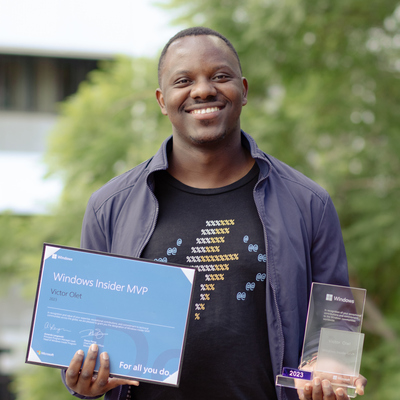
Victor is a science enthusiast pursuing a doctoral degree in renewable energy at Curtin University. His research focuses on biomass valorization and eco-friendly plastics. He actively promotes chemical science as a committee member of the American Chemical Society's Australian Student Chapter. Victor also engages in science communication through CSIRO's STEM Professionals program. As a Microsoft Learn Student Ambassador, he enhances his digital literacy and incorporates computational chemistry into his research. Victor's active contributions to the Windows Insider Program earned him the 2023 Windows Insider Most Valuable Professional Award, a testament to his impact in the Windows community.
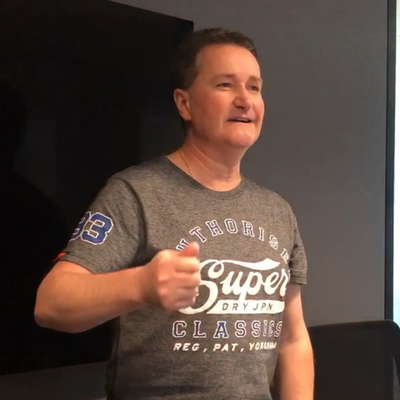
Andy is an Agile Coach and Transformation Practitioner who is gambling the next decade of his career on the shift to Agentic Coding and embedded AI Agents.
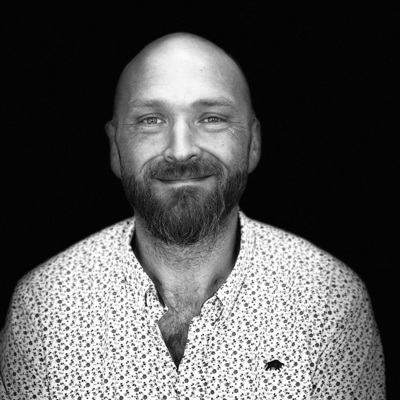
Aidan is an accomplished technology executive with over 20 years of experience driving innovation across startups, scale-ups, and enterprise organisations. Currently he is working at Bankwest as a Chief Engineer, driving the transformation from a "bricks and mortar" to a purely digital bank. He is also Fractional CTO & Startup/Investment Advisor at Run Level Five, providing mentoring and guidance to startup founders who are pre-seed through to their series A fundraising. Aidan brings a unique blend of deep technical expertise, strategic business acumen, and proven leadership capabilities to help organisations navigate complex technology challenges and achieve transformative outcomes. With a career spanning from embedded systems to complex cloud systems, Aidan has a demonstrated versatility in leading technology initiatives across diverse industries. As a four-time startup VP/CTO and Founder, Aidan has successfully navigated the entrepreneurial landscape, developing products from concept to market across IoT, consumer products, roadside assistance, and data analytics domains. His technical contributions extend to academic research, with published work on autonomous robotics and multi-robot navigation systems.
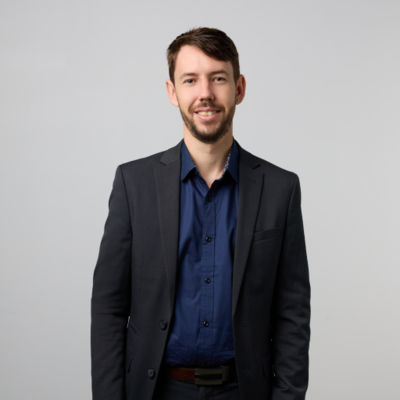
I’m Anthony, known as Anto, and I am from Perth, WA. I work as a Cloud Security Architect at Canon Business Services ANZ, and I have six years in cloud technologies, with the last three years focused on cloud security. I enjoy working with Microsoft Defender XDR and Microsoft Intune and focus on translating technical concepts into clear, practical guidance for non-technical audiences. I spend my spare time blogging, co-hosting a podcast, and delivering practical talks and workshops. I’m also active in the Perth tech community, regularly presenting at local meetups and mentoring others.

Stephen Tulp is a Distinguished Technologist at Insight and Microsoft MVP specialising in Azure Infrastructure as Code
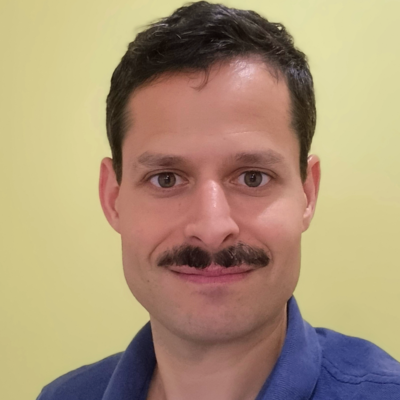
I created my first *.bat file "FORMAT C:" when I was nine years old - those were the days when floppy disks roamed the Earth and Windows 3.1's screensaver could entertain a crowd. I hold a double-PhD from the University of Wageningen and the University of Tasmania, which taught me to Scandisk and Defrag (at least) once a week. I've worked at the University of Missouri, the University of Melbourne and now at the University of Western Australia, where I try to make the digital-agriculture revolution a reality.
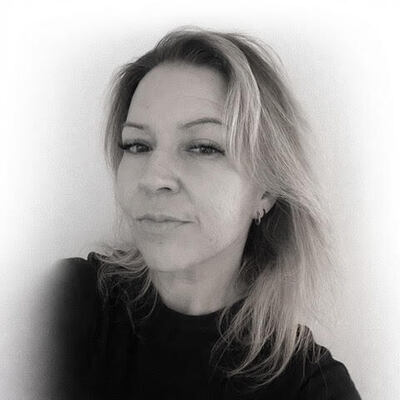
Dr Vasey is a cross-discipline innovator and relentless technology + AI advocate. She has degrees in electrical & electronic engineering, and computer science, and completed a PhD studying semiconductor physics. Crossing from academia into industry she landed roles in the WA mining sector developing automation algorithms and software for mining, rail, and exploration. She has focused on the geosciences leading technology and data science teams across the value chain. Dr Vasey is now CEO of Darkmine, a startup company dedicated to bringing agentic AI intelligence to mining and exploration.
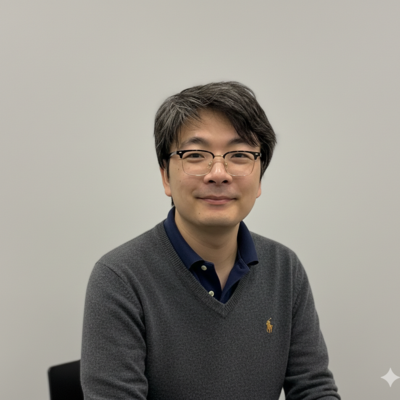
Auxten Wang - 👨🏻💻 Experience in RecSys, Database - Technical Director of ClickHouse core team - Principal Engineer in Shopee (ML Platform) - ❤️ Love Open Source! - Contributed to ClickHouse, Jemalloc, K8s, Memcached, CockroachDB, Superset - Creator of chDB(Acquired), CovenantSQL
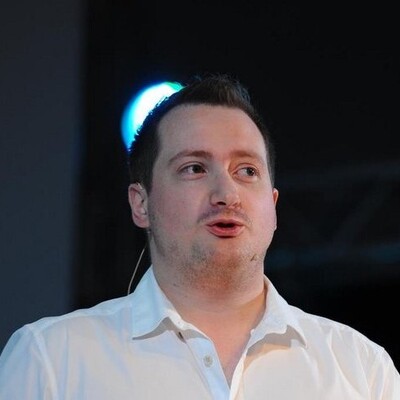
Arnaud is the co-creator of Azure landing zones for Terraform which is part of Cloud Adoption Framework (http://akams/caf). At Microsoft for more than 20 years Arnaud has helped customer and partners to adopt Azure with Microsoft and industry best practices.
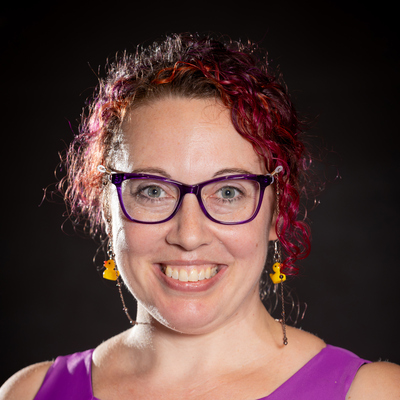
Jo Minney is a small business founder and technical communicator based (for now) in Perth, Western Australia. She is passionate about user experience, data-driven decision making, cats and travel – not necessarily in that order. She’s also an avid maker, from 3D printing to sewing to woodworking, and loves combining technology and creativity to make cool stuff and encouraging others to do the same. By day, you’ll find Jo working with charities and NGOs helping them to create bespoke digital platforms, conducting usability testing, or running workshops to help organisations level up their digital presence. You might also find her donating her time to help tackle social issues (such as gender inequality, domestic violence and global poverty) through the use of technology, or freelancing as a Nielsen Norman certified user experience research consultant. Jo is an ambassador, sponsor and lead mentor for She Codes Australia, a social enterprise that aims to make tech jobs more accessible for women, and a has been recognized via multiple awards for her advocacy work related to diversity and gender equity. An accomplished international conference speaker, Jo can regularly be found with a microphone in hand speaking about user experience, accessibility, imposter syndrome, closing the gender gap and pockets.
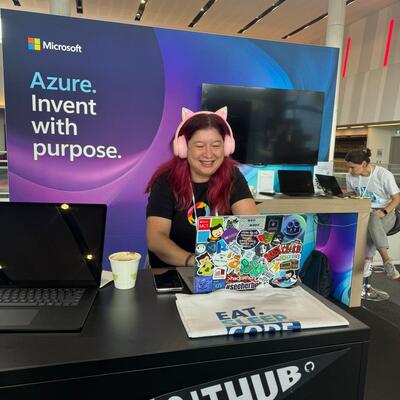
Michelle Sandford is a Developer Engagement Leader who writes code, builds with GitHub and Azure AI, and learns out loud. She likes sharing what’s useful (and what isn’t), and believes shipping is better than talking about it: - A community builder, connecting MVPs, user groups, universities, and developer communities into thriving ecosystems that learn together and lift each other higher. - A technical storyteller, Michelle shapes how the world talks about AI‑powered engineering and Azure innovation bringing clarity, curiosity, and creativity to every conversation. - A program strategist, designing scalable, repeatable motions that help developers grow their capability and confidence at pace with a rapidly evolving industry. - A bridge between engineering and the field making sure developers feel heard, supported, and empowered, from the first line of code to the final production push.
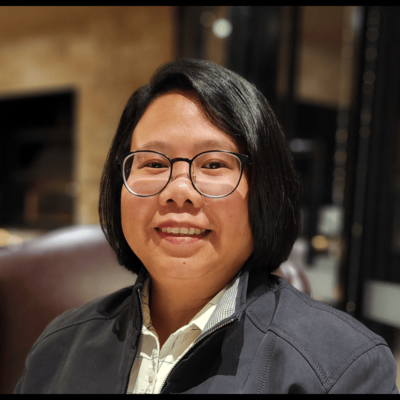
Clariza is experienced in designing and automating cloud infrastructure and CI/CD pipelines for large-scale integration systems in the education sector. She specializes in infrastructure as code, serverless architectures, and containerized cloud platforms. Evolving from a deep operations background, Clariza is actively transitioning into platform Solution Architecture, with a focus on scalable cloud, data, and integration platforms, bridging infrastructure and application code. Clariza enjoys sharing practical insights on cloud-native concepts and contribute to the tech community .
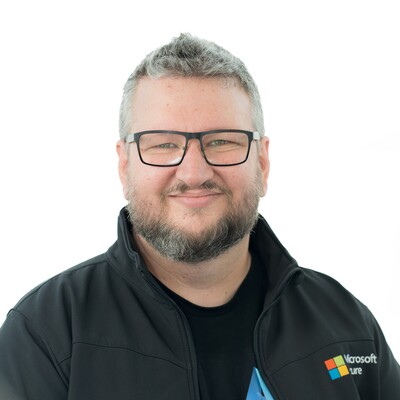
Ben is a Perth-based Solution Engineer with more than 25 years in the IT industry, spanning small businesses, service providers, enterprise environments, and cross-industry transformation initiatives. After years of seeing the same technical problems repeat themselves in slightly different disguises, Ben found his answer in cloud platforms and modern engineering practices. Today, he works at the intersection of architecture and implementation, designing, building, and demonstrating cloud-native solutions that are scalable, secure, and grounded in real-world constraints and actual business requirements. As a Solution Engineer at Microsoft, Ben partners with organisations to turn ambitious ideas into working systems. Whether it’s modern application platforms, DevOps practices, or emerging cloud capabilities, he focuses on showing what’s possible and making it practical. Beyond his day job, Ben is an active member of the Perth tech community, including the Perth GitHub User Group, where he shares lessons from the field, advocates for better engineering practices, and helps demystify cloud for teams at every stage of their journey. He’s driven by a simple goal: use the cloud to build things that are genuinely awesome.
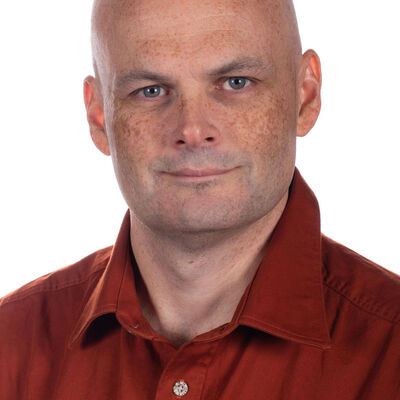
Orin Thomas is a Principal Cloud Operations Advocate ad Microsoft, an MCT, and has a string of Microsoft MCSE and MCITP certifications. He has written more than 3 dozen books for Microsoft Press on topics including Windows Server, Windows Client, Azure, System Center, Exchange Server, Security, and SQL Server. He is an author at PluralSight and is a candidate in the Doctor of Information Technology program at Charles Sturt University. You can follow him on twitter at http://twitter.com/orinthomas
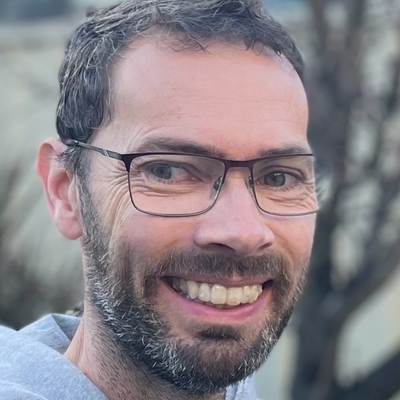
Graeme is a AI Apps Global Black Belt working for Microsoft, helping teams to innovate with AI on Azure. His IT passion was first stirred with a 1Kb ZX81 in 1983. He’s now had almost 30 years of commercial IT experience as an Engineer, Architect and CTO. He's well versed in .NET, JavaScript, Java, and VB3, and is learning to love Python. He built LISP neural networks before the AI Winter of the 90s. In his spare time, he hangs out with his kids, plays guitar, and builds iOS apps.
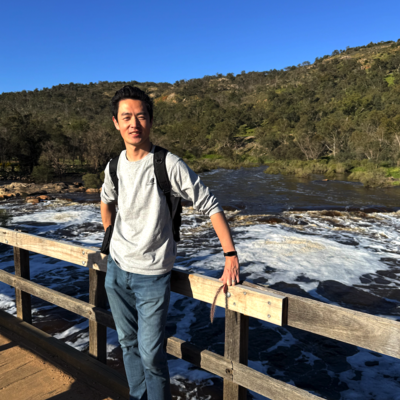
Bright Qi is a software engineer who builds products with AI agents and helps others figure out where AI actually fits — not the pitch deck version, but the part that runs in production. He writes Practical Playbooks on Substack and runs the Practical Playbooks Club, a Perth community for practitioners turning AI into real workflows.
Sessions & tracks
Registration
Get your registration validated and have a coffee while you say hello to your fellow agents.
Welcome and House Keeping
Main Theatre [Wesfarmers Theatre] ·KeyNote: The secret lives of agents
Do you know what your agents get up to when you’re not watching? It’s been said that one should treat IT workloads like cattle rather than pets, but what does that mean about how we treat AI agents? Should we be experimental, letting them be free range across our digital estate? Should we impose strict restrictions on agents and their environment from the beginning? As organizations become more dependent on agents, how do we determine who is responsible for the decisions agents make? In this session we’ll cover everything that can go wrong and right when we let our IT workloads make their own decisions, how to keep track of the shenanigans they might engage in, and who is ultimately responsible for the consequences of letting agents run amok.
Orin Thomas is a Principal Cloud Operations Advocate ad Microsoft, an MCT, and has a string of Microsoft MCSE and MCITP certifications. He has written more than 3 dozen books for Microsoft Press on topics including Windows Server, Windows Client, Azure, System Center, Exchange Server, Security, and SQL Server. He is an author at PluralSight and is a candidate in the Doctor of Information Technology program at Charles Sturt University. You can follow him on twitter at http://twitter.com/orinthomas
Room Change
Main Theatre [Wesfarmers Theatre] ·Agents, All Grown Up: Production-Ready AI with Microsoft Foundry Agent Service
You've built an AI agent. It reads files, writes code, remembers context, and happily gets the job done on your laptop. But how do you take that same agent and safely serve it to thousands of users across your enterprise? How do you give it an identity, govern its access, and observe what it's doing at scale?
Building an agent is now the easy part. Making it production-ready, with real isolation, real identity, and real governance, is where things get hard.
Enter the new hosted agents in Microsoft Foundry Agent Service. Every agent session runs in its own secure, isolated sandbox, with a persistent file system, scale-to-zero economics, and an Entra Agent ID so your agent has its own identity on Azure. Bring any framework you like, whether that's Microsoft Agent Framework, LangGraph, OpenAI Agents SDK, or even the Claude Agent SDK. Define your environment with a Dockerfile, and deploy with a single azd deploy.
In this session, we'll tour the new Foundry Agent Service. We'll explore per-session sandboxes, filesystem persistence, identity and governance, built-in memory and observability, and see how a locally-built agent can be taken to production in minutes.
Join me as we grow our AI agents up, from prototype to production, the secure and scalable way.
Melissa Houghton is a Principal Software Engineer at MakerX, a Microsoft MVP in Developer Technologies, an international conference speaker, and a technical community event organiser. She is a Women in Tech WA 2023 Tech [+] Award Winner and an Octopus Insider. She is a driven software engineer and excellent leader with extensive experience in end-to-end application development and delivery. She enjoys solving complex problems and is always open to learning new things, with current work focused on .NET and Azure. Outside of the tech world, Melissa lives in Australia's South West, raising her twin baby girls. In her free time, she loves to travel and has a boutique wine business with her winemaker husband.
Morning Tea
Main Theatre [Wesfarmers Theatre] ·Evolving AI chat with MCP Apps
Interacting with AI is still mostly text: you type, it calls tools and generates responses. But text is the wrong UI for many tasks and leads to awkward experiences. We've been building great experiences on the web for years, so let's bring that into chat. The MCP Apps extension is a proposed standard, inspired by MCP-UI and OpenAI's Apps SDK, that adds a UI layer to MCP that agents can render, generating real, web-powered interfaces that users can control from inside the chat.
In this talk you'll learn how to build interactive UIs that run inside AI chats. We'll start with a standard MCP server, add a UI component to display results, then make it interactive. We'll see the experience evolve from plain text to a mini-app inside the chat that can call tools and carry on the conversation. You'll leave ready to bring your app to life inside AI chats.
Phil is a developer relations engineer for IBM and Google Developer Expert living in Melbourne, Australia. He loves working with JavaScript, TypeScript or Ruby to build web applications and tools to help developers. He once helped build a website that captured the world's favourite sandwich fillings. He has too many GitHub repositories. Away from the keyboard, Phil listens to ska punk, hangs out with his miniature dachshund (also called Ruby), and is on a mission to discover the world's best beers. Phil tweets at @philnash and you can find him elsewhere online at https://philna.sh.
Room Change
Main Theatre [Wesfarmers Theatre] ·OpenClaw × GitHub Copilot: Building Apps Anywhere & Anytime
Got an app idea while picking up the kids, waiting in a car park, sitting on the train, or lying in bed? I'll show how I use an OpenClaw hosted on Azure, connected to GitHub Copilot Coding Agents teaming up to help build the idea out on the fly, literally.
OpenClaw acts as my orchestrator and communicator: it captures the idea, breaks it into tasks, coordinates multiple coding agents, monitors progress, flags blockers, and keeps me updated wherever I am.
The goal is to show a new way of building apps: anyone with an idea, OpenClaw as mission control, and GitHub Copilot Coding Agents turning app ideas into working software - anywhere, anytime.
Daniel is a seasoned Solution Architect and a coder at heart, bringing broad expertise in cloud application and system integration on Azure. He specializes in cloud-first architecture and applying AI innovations to build scalable, efficient, and resilient solutions. Driven by a passion for mentoring and community, Daniel actively shares knowledge and collaborates with developers from diverse cultural backgrounds. He enjoys turning ideas into practical solutions that foster innovation and create real-world impact. At the core of his work is a commitment to learning, collaboration, and making a positive difference through technology. Beyond his professional role, Daniel volunteers as a FIRST LEGO League coach, helping students build LEGO robots and learn Python. He is particularly interested in how robotics and AI can be used in education to inspire creativity and equip the next generation with strong problem-solving skills.
Room Change
Main Theatre [Wesfarmers Theatre] ·Hold Your Horses: Harness Engineering for Feral Agents
Agentic engineering teams do not become reliable by giving agents better prompts. They become reliable when the work around them is engineered.
In this talk, I’ll share the opinionated approach I've taken to harness engineering: the deterministic scaffolding, team topology, control loops, review gates, task boundaries, and automated backpressure that shape how agents plan, collaborate, hand off work, and recover when they drift.
I’ll explain why I think successful AI-first delivery depends less on individual agent brilliance and more on the harness that constrains the system into useful behaviour.
If you’re trying to turn a swarm of capable but feral agents into an engineering team that can actually ship, this one’s for you.
Aidan is an accomplished technology executive with over 20 years of experience driving innovation across startups, scale-ups, and enterprise organisations. Currently he is working at Bankwest as a Chief Engineer, driving the transformation from a "bricks and mortar" to a purely digital bank. He is also Fractional CTO & Startup/Investment Advisor at Run Level Five, providing mentoring and guidance to startup founders who are pre-seed through to their series A fundraising. Aidan brings a unique blend of deep technical expertise, strategic business acumen, and proven leadership capabilities to help organisations navigate complex technology challenges and achieve transformative outcomes. With a career spanning from embedded systems to complex cloud systems, Aidan has a demonstrated versatility in leading technology initiatives across diverse industries. As a four-time startup VP/CTO and Founder, Aidan has successfully navigated the entrepreneurial landscape, developing products from concept to market across IoT, consumer products, roadside assistance, and data analytics domains. His technical contributions extend to academic research, with published work on autonomous robotics and multi-robot navigation systems.
Lunch
Main Theatre [Wesfarmers Theatre] ·Pro-code agents on Microsoft Foundry
Agents have always wanted freedom and flexibility to do what they want to do. They don't want to share process space with other agents. They don't want to accidentally see each other's inner-musings on the file system. And if they choose to be part of a conversation that lasts for days, months or even years, well that's just their prerogative. And they don't want to become bloated by being told about every single tool they could possibly ever potentially need up-front.
Agents need a new kind of host. A hosting platform that crams multiple agents into the same process — sharing memory, files, and identity — won't cut it anymore. And they want to discover tools when they need them.
Graeme will take us through the new Agent Hosting Platform and Toolbox in Microsoft Foundry. We'll see examples built using different agent frameworks, and see the new world that's been created for our agents to live in.
Graeme is a AI Apps Global Black Belt working for Microsoft, helping teams to innovate with AI on Azure. His IT passion was first stirred with a 1Kb ZX81 in 1983. He’s now had almost 30 years of commercial IT experience as an Engineer, Architect and CTO. He's well versed in .NET, JavaScript, Java, and VB3, and is learning to love Python. He built LISP neural networks before the AI Winter of the 90s. In his spare time, he hangs out with his kids, plays guitar, and builds iOS apps.
Room Change
Main Theatre [Wesfarmers Theatre] ·Building rich AI-Native UI for Agentic Interactions using MCP Apps
AI Agents are getting smarter with each passing day. But, their interfaces? Not so much.
But, what if there is a way to turn the AI chat from a place where you converse into a place where you can actually work?
MCP Apps offer a solution to go beyond the text and standardize how MCP servers can deliver rich, bidirectional UI components like dashboards, forms, interactive visualizations & more. These components are rendered securely and natively within AI hosts, enabling agents to interact with users via rich interactive interfaces.
In this session, attendees will learn:
- Core architectural patterns from real MCP Apps development
- How to handle sandboxed host–server communication, manage state synchronization, stream real-time updates, handle async tasks, & add multiplayer collaboration
- How to leverage context and persist memory across conversations
- How to avoid some common pitfalls and utilize debugging workflows and tools
- How to add authentication & deploy a remote MCP Server providing MCP Apps
We will walk through a complete, production-style Sales Analytics MCP Apps running on VS Code and perform a code deep-dive to showcase the effective foundational patterns while building MCP Apps.
I have written a highly appreciated deep dive article series on MCP Apps:
- Foundations of MCP Apps: https://dev.to/ashita/a-practical-guide-to-building-mcp-apps-1bfm
- Real-world use case & deployment: https://dev.to/aws/how-i-built-mcp-apps-based-sales-analytics-agentic-ui-deployed-it-on-amazon-bedrock-agentcore-4e9i
This talk will derive some key learnings from my articles and more real world MCP Apps development use cases, which will definitely benefit the attendees.
Ashita works as a developer advocate at AWS with a strong focus on frontend and AI technologies. With 10+ years of experience in full stack development, she is passionate about building impactful products and equally loves empowering & engaging with fellow developers in the community. She is the co-creator of an award-winning open source, cross-platform agentic API client (GitHub - https://github.com/ashitaprasad) and has delivered more than 100 talks & workshops in reputed international conferences such as AI Devcon, AI India, PyML, SciPy etc. Full list of my past talks with video links - https://ashitaprasad.github.io
Room Change
Main Theatre [Wesfarmers Theatre] ·Git-APE A multi-agent platform engineering framework
What happens when you replace CLIs, wrappers, and module catalogues with a team of AI agents that talk to each other?
Git-Ape is an open-source multi-agent framework built on GitHub Copilot that turns a single natural-language prompt — "deploy a Python function app" — into a fully validated Azure deployment. An orchestrator agent delegates to specialized sub-agents: one gathers requirements through conversation, another generates ARM templates, a third runs security analysis and cost estimation, and a fourth executes the deployment with post-deployment health checks. Nothing reaches your cloud subscription without passing a security gate and your explicit confirmation.
In this session I will:
Show the architecture — how 8 agents and 12 skills are composed using a plugin-based orchestration model, each with a single responsibility and well-defined handoff contract.
Live demo — walk through a real deployment from prompt to running resource, showing the requirements interview, template generation, security gate (blocking on Critical/High findings), cost estimate, what-if preview, and final deploy — all inside VS Code.
Explain the three enforcement layers — compliance at generation time (agent context), plan time (CI/CD with SARIF security scanning), and runtime (drift detection) — implementing the thesis from Microsoft's Platform Engineering for the Agentic AI Era.
Share patterns and pitfalls — what worked, what broke, and what we learned about agent-to-agent handoffs, tool selection reliability, and keeping humans in the loop for irreversible actions.
Attendees will leave with concrete patterns for building multi-agent systems that do real work — not just chat — and a GitHub repo they can install and try the same day.
Target Topics:
- Building AI Agents using frameworks (GitHub Copilot agent plugins)
- Integrating AI Agents into real products or workflows
- Multi-agent collaboration and orchestration patterns
- Agent security, monitoring, and governance
- Developer tools, SDKs, and cloud integrations for agents
- Hands-on demos
Arnaud is the co-creator of Azure landing zones for Terraform which is part of Cloud Adoption Framework (http://akams/caf). At Microsoft for more than 20 years Arnaud has helped customer and partners to adopt Azure with Microsoft and industry best practices.
Room Change
Main Theatre [Wesfarmers Theatre] ·From Friction to Flow
What if the biggest productivity gains in software development were not about typing faster, but about reducing the invisible friction that breaks focus every day?
In this talk, I will share how GitHub Copilot transformed my workflow from fragmented and reactive to more focused, more agentic, and more impactful. Through real examples across coding, debugging, documentation, and collaboration, I will show how Copilot can accelerate day-to-day engineering work while reinforcing the practices that matter in real organizations: security, compliance, governance, and human accountability.
This is a story about flow, but also about trust, and why responsible AI adoption creates more value than speed alone.
Michelle Sandford is a Developer Engagement Leader who writes code, builds with GitHub and Azure AI, and learns out loud. She likes sharing what’s useful (and what isn’t), and believes shipping is better than talking about it: - A community builder, connecting MVPs, user groups, universities, and developer communities into thriving ecosystems that learn together and lift each other higher. - A technical storyteller, Michelle shapes how the world talks about AI‑powered engineering and Azure innovation bringing clarity, curiosity, and creativity to every conversation. - A program strategist, designing scalable, repeatable motions that help developers grow their capability and confidence at pace with a rapidly evolving industry. - A bridge between engineering and the field making sure developers feel heard, supported, and empowered, from the first line of code to the final production push.
Closing remarks and thank you.
Registration
Get your registration validated and have a coffee while you say hello to your fellow agents.
Welcome and House Keeping
Second Theatre [Stan Peron Theatre] ·KeyNote: The secret lives of agents
Do you know what your agents get up to when you’re not watching? It’s been said that one should treat IT workloads like cattle rather than pets, but what does that mean about how we treat AI agents? Should we be experimental, letting them be free range across our digital estate? Should we impose strict restrictions on agents and their environment from the beginning? As organizations become more dependent on agents, how do we determine who is responsible for the decisions agents make? In this session we’ll cover everything that can go wrong and right when we let our IT workloads make their own decisions, how to keep track of the shenanigans they might engage in, and who is ultimately responsible for the consequences of letting agents run amok.
Orin Thomas is a Principal Cloud Operations Advocate ad Microsoft, an MCT, and has a string of Microsoft MCSE and MCITP certifications. He has written more than 3 dozen books for Microsoft Press on topics including Windows Server, Windows Client, Azure, System Center, Exchange Server, Security, and SQL Server. He is an author at PluralSight and is a candidate in the Doctor of Information Technology program at Charles Sturt University. You can follow him on twitter at http://twitter.com/orinthomas
Room Change
Second Theatre [Stan Peron Theatre] ·The UX Research AI Frontier
It's unlikely that AI will ever truly replace UX researchers, but as LLMs come along in leaps and bounds, we'd be pretty silly not to consider whether we can use these tools to 'research' more effectively and save ourselves time and money.
The real trick that we need to discover is... what can we offload to an agent? When do we need real live humans to make sure we're not ending up in AI bubbles? Is there anything AI can do better than humans? And what are the repercussions if we get it wrong?
Nielsen Norman certified UX consultant Jo Minney looks at some of the most common UX research practices and how AI can be integrated into them ethically - and whether or not the trade off is worth it.
Jo Minney is a small business founder and technical communicator based (for now) in Perth, Western Australia. She is passionate about user experience, data-driven decision making, cats and travel – not necessarily in that order. She’s also an avid maker, from 3D printing to sewing to woodworking, and loves combining technology and creativity to make cool stuff and encouraging others to do the same. By day, you’ll find Jo working with charities and NGOs helping them to create bespoke digital platforms, conducting usability testing, or running workshops to help organisations level up their digital presence. You might also find her donating her time to help tackle social issues (such as gender inequality, domestic violence and global poverty) through the use of technology, or freelancing as a Nielsen Norman certified user experience research consultant. Jo is an ambassador, sponsor and lead mentor for She Codes Australia, a social enterprise that aims to make tech jobs more accessible for women, and a has been recognized via multiple awards for her advocacy work related to diversity and gender equity. An accomplished international conference speaker, Jo can regularly be found with a microphone in hand speaking about user experience, accessibility, imposter syndrome, closing the gender gap and pockets.
Morning Tea
Second Theatre [Stan Peron Theatre] ·Agentic InfraOps, the next iteration of Cloud Engineering
Understand how we can move from random non-deterministic outcomes for Cloud Engineering to more deterministic outcomes using MCP, Agents, Skills and custom instructions through mult-agent orchestration and Github Copilot
Stephen Tulp is a Distinguished Technologist at Insight and Microsoft MVP specialising in Azure Infrastructure as Code
Room Change
Second Theatre [Stan Peron Theatre] ·Beyond the Prototype: DevOps Thinking for Agentic AI in Production
AI agents are quickly moving from experiments and demos into real-world applications. But building an agent is only half the challenge, operating it reliably as part of a production system is where the real complexity begins.
In this session, we explore how DevOps thinking can help bridge the gap between AI prototypes and production-ready systems. Drawing from real-world cloud and infrastructure experience, we'll look at how principles such as infrastructure as code, observability, automation, and continuous delivery apply to agentic AI applications.
Through a practical architecture example, a student admission web app powered by an AI agent built with .NET and running in containers, we'll examine how the agent interacts with APIs, tools, and external systems to drive admission workflows. We'll look at what engineers need to consider when deploying, scaling, and monitoring these AI-powered systems in production environments.
Rather than focusing on model training or prompt tricks, this talk focuses on the systems thinking required to run AI agents reliably: how they are deployed, how their decisions are observed, and how failures are handled in real-world environments.
Attendees will walk away with practical insights and architecture patterns for moving from AI experiments to production-ready agentic systems.
Clariza is experienced in designing and automating cloud infrastructure and CI/CD pipelines for large-scale integration systems in the education sector. She specializes in infrastructure as code, serverless architectures, and containerized cloud platforms. Evolving from a deep operations background, Clariza is actively transitioning into platform Solution Architecture, with a focus on scalable cloud, data, and integration platforms, bridging infrastructure and application code. Clariza enjoys sharing practical insights on cloud-native concepts and contribute to the tech community .
Room Change
Second Theatre [Stan Peron Theatre] ·One Poisoned Agent: How a Single Compromise Cascades
Autonomous agents are reshaping how systems behave and how risk moves. In this 30 minute session, you will follow a realistic scenario where simple development agents gradually become production assets, and a single poisoned component triggers a cascading incident.
We will trace the promotion path from development to staging to production, exposing the trust boundaries that commonly fail and the subtle ways agent behaviour can drift or be exploited. You will see how applying Zero Trust principles early, including identity, attestation, capability manifests, runtime authorisation and containment, prevents escalation before it spreads.
You will leave with a practical model and specific controls you can apply to harden development practices, secure promotions and reduce blast radius long before agents reach production.
I’m Anthony, known as Anto, and I am from Perth, WA. I work as a Cloud Security Architect at Canon Business Services ANZ, and I have six years in cloud technologies, with the last three years focused on cloud security. I enjoy working with Microsoft Defender XDR and Microsoft Intune and focus on translating technical concepts into clear, practical guidance for non-technical audiences. I spend my spare time blogging, co-hosting a podcast, and delivering practical talks and workshops. I’m also active in the Perth tech community, regularly presenting at local meetups and mentoring others.
Lunch
Second Theatre [Stan Peron Theatre] ·Code Maps - Giving your coding agent application context
I've been working on exploring a different way for coding agents to understand codebases: Instead of the blind 'grep' of dozens of irrelevant files, we can map the system as a knowledge graph
- Files, functions, classes, and methods etc become nodes
- While calls, uses, and other relationships become edges,
This gives the agent a structure it can navigate by opening one node and following the tree.
In this talk I'll run through the approach and design of this early experiment.
First tests are encouraging, with around 30% token savings when traversing code this way. That matters more every month because even as per-token costs drop, scaling AI coding across teams and repos explodes our total token volume; without smarter navigation, those savings evaporate under massive context loads.
Smaller, more focused context should also help reduce hallucinations, because the model is working from a tighter, more relevant slice of the code instead of a noisy flood of unrelated material. In other words, better structure means less waste, lower cost, and more grounded answers.
Andy is an Agile Coach and Transformation Practitioner who is gambling the next decade of his career on the shift to Agentic Coding and embedded AI Agents.
Room Change
Second Theatre [Stan Peron Theatre] ·Building Agentic AI for Mineral Exploration
Want to go treasure hunting? The world needs more critical minerals but so far no agents are on the job. This session will demo the exploration agents we're building at Darkmine, with behind-the-scenes look at how to work in a data-rich multi-modal real-world problem space. It'll also cover how to use the Open-Source GPLv3 baselode library to build your own chat-based domain-specific interaction with exploration data.
Dr Vasey is a cross-discipline innovator and relentless technology + AI advocate. She has degrees in electrical & electronic engineering, and computer science, and completed a PhD studying semiconductor physics. Crossing from academia into industry she landed roles in the WA mining sector developing automation algorithms and software for mining, rail, and exploration. She has focused on the geosciences leading technology and data science teams across the value chain. Dr Vasey is now CEO of Darkmine, a startup company dedicated to bringing agentic AI intelligence to mining and exploration.
Room Change
Second Theatre [Stan Peron Theatre] ·Orchestrating Scientific Workflows with AI Agents and Cloud HPC
High-performance computing (HPC) powers scientific discovery, AI training, and large-scale simulation workloads, but the tooling and workflows remain complex and difficult to access for many developers and researchers.
This session explores how AI agents can act as orchestration layers for scientific computing workflows running on cloud HPC infrastructure. Using a practical live demonstration built on Azure AI Foundry, Python agents, containerized GROMACS workloads, and GPU-enabled Azure VMs, we will walk through how an agent can interpret a natural language request, configure a scientific workflow, launch a simulation, monitor execution, and summarize results.
Rather than focusing on fully autonomous systems, this talk emphasizes reliable, constrained orchestration patterns that simplify access to HPC systems while preserving reproducibility and operational clarity.
Topics covered include:
Designing agent-driven scientific workflows Orchestrating containerized HPC workloads with AI agents Using Azure AI Foundry as a reasoning layer Tool-calling patterns for scientific compute tasks Practical lessons learned building agentic workflows for real compute infrastructure
This session is aimed at engineers, AI practitioners, cloud architects, and researchers interested in practical applications of agentic AI beyond chat interfaces and into real computational systems.
Victor is a science enthusiast pursuing a doctoral degree in renewable energy at Curtin University. His research focuses on biomass valorization and eco-friendly plastics. He actively promotes chemical science as a committee member of the American Chemical Society's Australian Student Chapter. Victor also engages in science communication through CSIRO's STEM Professionals program. As a Microsoft Learn Student Ambassador, he enhances his digital literacy and incorporates computational chemistry into his research. Victor's active contributions to the Windows Insider Program earned him the 2023 Windows Insider Most Valuable Professional Award, a testament to his impact in the Windows community.
Room Change
Second Theatre [Stan Peron Theatre] ·You Don't Have To Participate
What happens when the "demo" never ends? Transitioning a hardware-based AI installation from a 20-minute stage presentation to a 5-day continuous gallery exhibition requires an ecosystem of resilience.
In this session, I’ll pull back the curtain on the Butterfly Effect installation. We’ll explore the technical and philosophical architecture required to keep robotic entities "alive" and interactive in a public space.
Key takeaways include:
The Orchestration Layer: How to use Python to manage hardware reactions, LLM latency, and system heartbeats without manual intervention.
Contextual Silence: Designing the "rest states" and trigger logic that dictate when the butterflies engage with the public and when they remain still to preserve the narrative (and the motors).
Failsafes & Recovery: Building a "self-healing" system that can handle network drops, API timeouts, and the unpredictability of a live gallery environment.
The Goal of Sovereign Art: Why we should move away from centralized "black box" models toward local, context-aware systems that respect the physical space they inhabit.
Nina Ajnira Karisik is a software engineer, speaker, and founder of MadeApt, a fashion-tech startup reimagining how clothing is made and experienced. With a background in AI, development, and community-building, Nina’s work blends technical depth with a human touch. She’s known for creating interactive sessions where audiences co-create apps live, exploring the joys and messiness of coding with AI. Her talks and talks have been featured in Australia, India, Spain and beyond
Closing remarks and thank you.
Registration
Get your registration validated and have a coffee while you say hello to your fellow agents.
Welcome and House Keeping
Workshop Room 1 [Michael Chaney] ·KeyNote: The secret lives of agents
Do you know what your agents get up to when you’re not watching? It’s been said that one should treat IT workloads like cattle rather than pets, but what does that mean about how we treat AI agents? Should we be experimental, letting them be free range across our digital estate? Should we impose strict restrictions on agents and their environment from the beginning? As organizations become more dependent on agents, how do we determine who is responsible for the decisions agents make? In this session we’ll cover everything that can go wrong and right when we let our IT workloads make their own decisions, how to keep track of the shenanigans they might engage in, and who is ultimately responsible for the consequences of letting agents run amok.
Orin Thomas is a Principal Cloud Operations Advocate ad Microsoft, an MCT, and has a string of Microsoft MCSE and MCITP certifications. He has written more than 3 dozen books for Microsoft Press on topics including Windows Server, Windows Client, Azure, System Center, Exchange Server, Security, and SQL Server. He is an author at PluralSight and is a candidate in the Doctor of Information Technology program at Charles Sturt University. You can follow him on twitter at http://twitter.com/orinthomas
Room Change
Workshop Room 1 [Michael Chaney] ·Why Your AI Agent Forgets — and What Your Brain Already Figured Out
"Our agent needs memory" usually means four different things at once — and most architectures only solve one. Cognitive science worked this out fifty years ago by studying brains, and discovered something stranger along the way: the systems we forget with matter as much as the ones we remember with. Production agents haven't caught up. This talk closes the gap, shows where real systems quietly fail, and ends on a question about what makes an agent the same agent tomorrow as it was today.
Bright Qi is a software engineer who builds products with AI agents and helps others figure out where AI actually fits — not the pitch deck version, but the part that runs in production. He writes Practical Playbooks on Substack and runs the Practical Playbooks Club, a Perth community for practitioners turning AI into real workflows.
Morning Tea
Workshop Room 1 [Michael Chaney] ·Your Agent's Memory Shouldn't Be a Markdown File
Look at how your agents store memory today: CLAUDE.md, AGENTS.md, a session directory full of .jsonl and .md files, maybe a vector DB bolted on the side. It works at small scale. It falls over the moment you want to query across sessions, run cross-run evals, or do anything more sophisticated than "stuff the file into the prompt."
Memory is a database problem — but not the database you're thinking. Postgres is the wrong shape (agents are short-lived; networking out is architectural mismatch). Vector DBs are too narrow (memory has structure, not just similarity). What agents actually want is an in-process OLAP engine with three native primitives: structured tables for runs / context / evals, vector indexes for semantic recall over past actions, and cross-session SQL for "how did I solve this kind of task last time?"
This talk walks through that architecture, built on chDB — the in-process build of ClickHouse, which I created and lead at ClickHouse Inc. chDB collapses what would otherwise be three databases into one library you import.
We'll cover:
- Why "agents are short-lived" makes embedded the right architectural shape
- A reference schema for agent memory that scales past markdown files
- Vector recall + structured query in one statement, with concrete latency numbers
- Failure modes from shipping the chDB MCP server and TypeScript SDK over the past year
- Honest comparison: where this beats pgvector+Postgres, where DuckDB lands, and where "just use a folder of files" is still the right call
Closing live demo: take a markdown-based agent harness and upgrade it in 50 lines to a SQL-queryable memory store — same local-only deployment, but you can now JOIN, aggregate, recall, and run real evals. Code published as an open repo for attendees to fork.
Auxten Wang - 👨🏻💻 Experience in RecSys, Database - Technical Director of ClickHouse core team - Principal Engineer in Shopee (ML Platform) - ❤️ Love Open Source! - Contributed to ClickHouse, Jemalloc, K8s, Memcached, CockroachDB, Superset - Creator of chDB(Acquired), CovenantSQL
Room Change
Workshop Room 1 [Michael Chaney] ·Beyond the Parrot: Architecting GraphRAG and Autonomous Loops for Precision Agriculture
Moving from a "chatty LLM" to a production-grade agricultural agent requires shifting from simple prompts to complex architectural abstractions. Using site-specific weed management as our case study, this session deconstructs the journey of building a system that doesn't just talk about farming—it reasons and acts.
I will share the evolution of my agentic stack: from treating LLMs as "talking parrots," to specialised "savants," and finally to a layered architecture of GraphRAG-based "wikis" that provide a verifiable ground truth for autonomous decision-making.
Technical Deep-Dive:
The Architecture of Autonomy: How to implement hooks and asynchronous agents that move from reactive chat to event-driven execution.
Knowledge as Infrastructure: Using GraphRAG to map biological relationships (weed phenology, chemical resistance) that standard vector search misses.
Skills & Tooling: Designing modular "Skills" that allow agents to interact with the physical world (API-driven spray missions and weather-risk modelling).
The Developer Experience (DX): A look at the "Agentic SDLC"—how I use VSCode Chat Debuggers and Agent Debugging tools to trace reasoning loops and fix hallucinations in complex workflows.
I created my first *.bat file "FORMAT C:" when I was nine years old - those were the days when floppy disks roamed the Earth and Windows 3.1's screensaver could entertain a crowd. I hold a double-PhD from the University of Wageningen and the University of Tasmania, which taught me to Scandisk and Defrag (at least) once a week. I've worked at the University of Missouri, the University of Melbourne and now at the University of Western Australia, where I try to make the digital-agriculture revolution a reality.
Room Change
Workshop Room 1 [Michael Chaney] ·From Prompts to Behaviour: How Interaction Shapes AI Agents
“Exploring human–AI interaction as a new layer of system design.”
Description:
Most conversations around AI agents focus on frameworks, orchestration, and code. But in real-world use, a significant part of an agent’s behaviour is shaped through interaction.
In this session, me Jacek Korneluk - AI strategist and early adopter explores how natural language functions as a behavioural programming layer for modern AI systems. Drawing on extensive hands-on experimentation across multiple models, he demonstrates how sustained interaction can produce consistent, recognisable response patterns what can be described as emerging “digital modality.”
This talk reframes AI agents not as static tools, but as adaptive systems influenced by tone, structure, and conversational context
Jacek Korneluk is a Blockchain and AI strategist, and the Founder and Director of Spektrumlab Pty Ltd and Spektrumlab.io - a platform focused on practical education, mentoring, and innovation in emerging technologies. With over 20 years of multidisciplinary experience across healthcare, digital health, and technology, he operates at the intersection of AI, Web3, and digital transformation. Jacek mentors founders and teams in applying AI, blockchain, and agent-based systems in practical, outcome-driven ways. He works closely with founders, professionals, and organisations to bridge the gap between concept and execution. He translating complex ideas into practical strategies and real-world applications. His work includes leading LedgerMed - a blockchain and AI framework for patient-centric healthcare and contributing to the international publication Decentralised Healing. Jacek is a Blocksquare Ambassador and an active member of the innovation ecosystem in Western Australia, including the WA AI Hub and Polish Business WA. In 2025, he was recognised as PropTech Champion of Western Australia and named a finalist in three categories at The Blockies. He regularly publishes insights on AI, blockchain, and digital transformation at Spektrumlab.io.
Lunch
Workshop Room 1 [Michael Chaney] ·Reinvent old software in an Agentic way (not set in stone)
I’ll share two practical topics:
- How to reinvent legacy software with an agentic approach, based on my past projects.
- How to apply Harness Engineering to build stable, production-ready AI agents. This session is code-focused and vendor-agnostic.
I can also share what I’ve learned from studying Claude Code’s source code and Harness Engineering.
if i get accepted, I will write a detailed proposal.
My career: More details available on my LinkedIn Short Intro: 1. start up company 2. Bytedance ( parent company of tiktok) 3. Master of IT in UWA 4. Mid-Level Senior Software Engineer at PictureWealth As a Team lead participated at 4 * Hackathon
Room Change
Workshop Room 1 [Michael Chaney] ·Room Change
Workshop Room 1 [Michael Chaney] ·Room Change
Workshop Room 1 [Michael Chaney] ·Closing remarks and thank you.
Registration
Get your registration validated and have a coffee while you say hello to your fellow agents.
Welcome and House Keeping
Workshop Room 2 [Sir Rod Eddington] ·KeyNote: The secret lives of agents
Do you know what your agents get up to when you’re not watching? It’s been said that one should treat IT workloads like cattle rather than pets, but what does that mean about how we treat AI agents? Should we be experimental, letting them be free range across our digital estate? Should we impose strict restrictions on agents and their environment from the beginning? As organizations become more dependent on agents, how do we determine who is responsible for the decisions agents make? In this session we’ll cover everything that can go wrong and right when we let our IT workloads make their own decisions, how to keep track of the shenanigans they might engage in, and who is ultimately responsible for the consequences of letting agents run amok.
Orin Thomas is a Principal Cloud Operations Advocate ad Microsoft, an MCT, and has a string of Microsoft MCSE and MCITP certifications. He has written more than 3 dozen books for Microsoft Press on topics including Windows Server, Windows Client, Azure, System Center, Exchange Server, Security, and SQL Server. He is an author at PluralSight and is a candidate in the Doctor of Information Technology program at Charles Sturt University. You can follow him on twitter at http://twitter.com/orinthomas
Room Change
Workshop Room 2 [Sir Rod Eddington] ·From Demo to Trusted Agent
AI agents become much more interesting when they stop being chat windows and start using tools: reading files, writing drafts, calling APIs, creating issues, and shaping real workflows. At that point, they are no longer just prompts. They are software with permissions.
In this practical session, I’ll use a real CLI-based speaker agent as the example: an agent that helps take a conference talk from rough idea to draft submission material. We’ll start with the naive version that feels impressive in a demo, then progressively add the controls that make it more trustworthy: scoped tools, workspace boundaries, least privilege, approval gates, logging, diff review, and simple policy checks.
This is a builder-focused talk for people experimenting with agents, coding assistants, and autonomous workflows. The goal is not to cover every possible agent security problem. It is to show a small, repeatable pattern for moving from prototype to controlled automation without burying the whole thing under governance theatre.
George Coldham is a Cloud Solution Architect at Microsoft, working with enterprise and public-sector organisations to design and operate secure cloud and identity architectures at scale. His work focuses on Zero Trust, identity as the modern security control plane, and the practical realities of securing SaaS, cloud platforms, and emerging AI systems in complex environments. George specialises in helping organisations reduce real-world risk without undermining productivity or user experience. Alongside his technical role, George is an experienced international speaker, educator, and community organiser. He regularly presents at industry conferences, bootcamps, and meetups, translating complex security concepts into practical guidance for practitioners and decision-makers. George is the founder of Global Security Community, the lead organiser of the Perth Microsoft Security Meetup, and an organiser within the global AI and developer community. He brings a practitioner-led, evidence-based perspective to his talks, drawing on real customer scenarios rather than vendor theory or marketing narratives. His speaking topics include Zero Trust beyond the marketing slides, identity-driven security, cloud and SaaS security in practice, and designing security architectures for humans as well as systems.
Morning Tea
Workshop Room 2 [Sir Rod Eddington] ·Snake Bot Tournament with GitHub Copilot
In this interactive hack session, you will compete against other teams to build the best bot to play a 2-version version of the classic Snake game. Come up with a strategy to win and use any tools at your disposal to build an automated bot. Watch the knockout tournament live in your browser, and the last surviving bot is declared the winner! Open to any skill level, you'll be using GitHub Copilot and Codespaces to customise your Snake with a personality and strategy with plain language prompts or build your own in your own choice of language with the documented API!
You'll need a laptop and a GitHub account.
Ben is a Perth-based Solution Engineer with more than 25 years in the IT industry, spanning small businesses, service providers, enterprise environments, and cross-industry transformation initiatives. After years of seeing the same technical problems repeat themselves in slightly different disguises, Ben found his answer in cloud platforms and modern engineering practices. Today, he works at the intersection of architecture and implementation, designing, building, and demonstrating cloud-native solutions that are scalable, secure, and grounded in real-world constraints and actual business requirements. As a Solution Engineer at Microsoft, Ben partners with organisations to turn ambitious ideas into working systems. Whether it’s modern application platforms, DevOps practices, or emerging cloud capabilities, he focuses on showing what’s possible and making it practical. Beyond his day job, Ben is an active member of the Perth tech community, including the Perth GitHub User Group, where he shares lessons from the field, advocates for better engineering practices, and helps demystify cloud for teams at every stage of their journey. He’s driven by a simple goal: use the cloud to build things that are genuinely awesome.
Room Change
Workshop Room 2 [Sir Rod Eddington] ·Room Change
Workshop Room 2 [Sir Rod Eddington] ·Lunch
Workshop Room 2 [Sir Rod Eddington] ·Your AI Podcast Crew: A Hands-On Workshop in Multi-Agent Systems
You'll leave this session with two things: a working podcast episode and the code that made it.
Build an agentic production studio where AI agents research topics, write scripts, and generate audio — all orchestrated by code you write during the workshop. No podcasting experience required.
Participants will need a laptop and an active Azure subscription.
Sarah is a Senior Software Engineer at Microsoft, working on organic growth systems and frameworks for Clipchamp and other Office apps. When she's not on the job she's training for marathons, chilling with her cat and planning holidays.
Room Change
Workshop Room 2 [Sir Rod Eddington] ·Room Change
Workshop Room 2 [Sir Rod Eddington] ·Room Change
Workshop Room 2 [Sir Rod Eddington] ·Closing remarks and thank you.
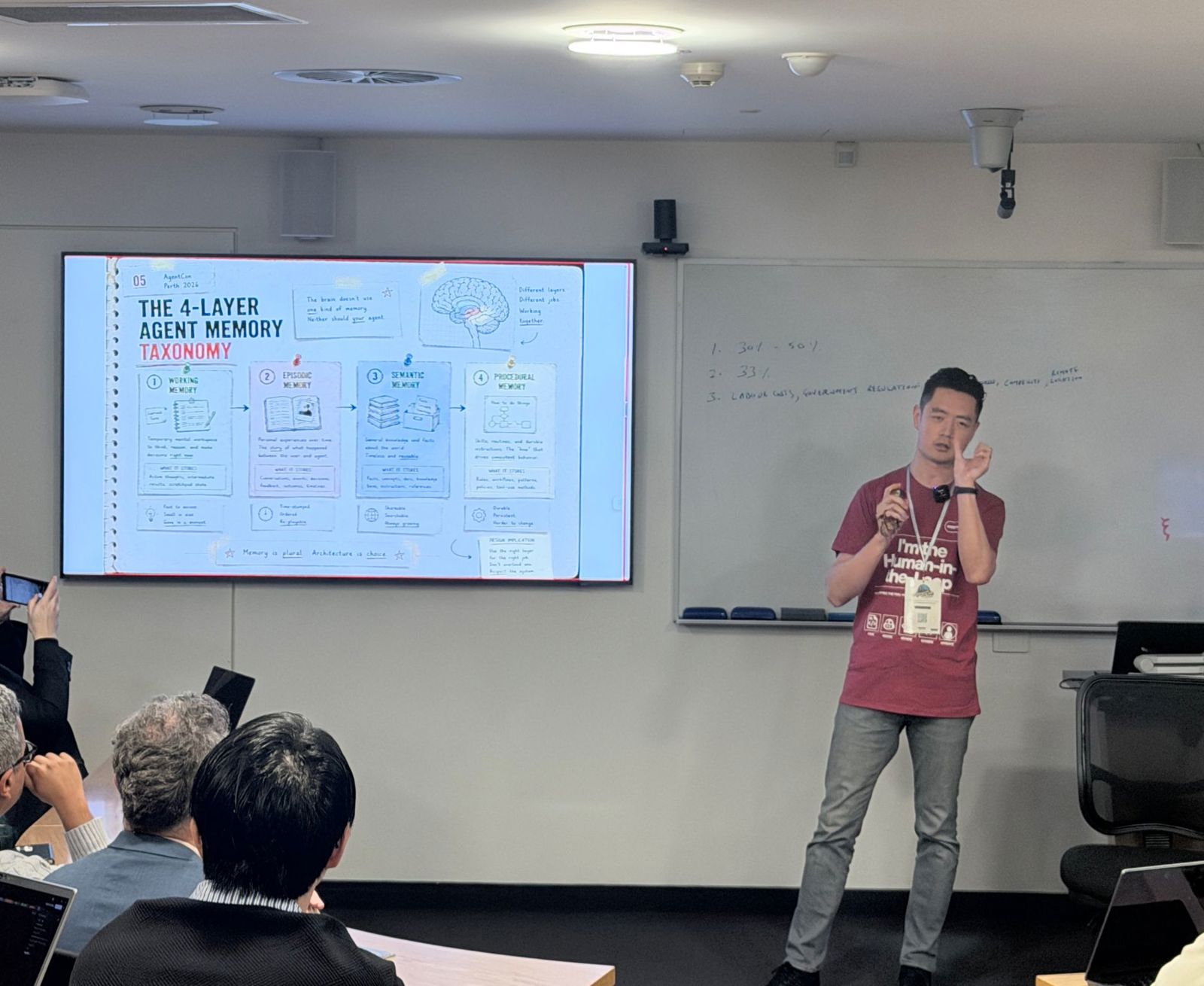
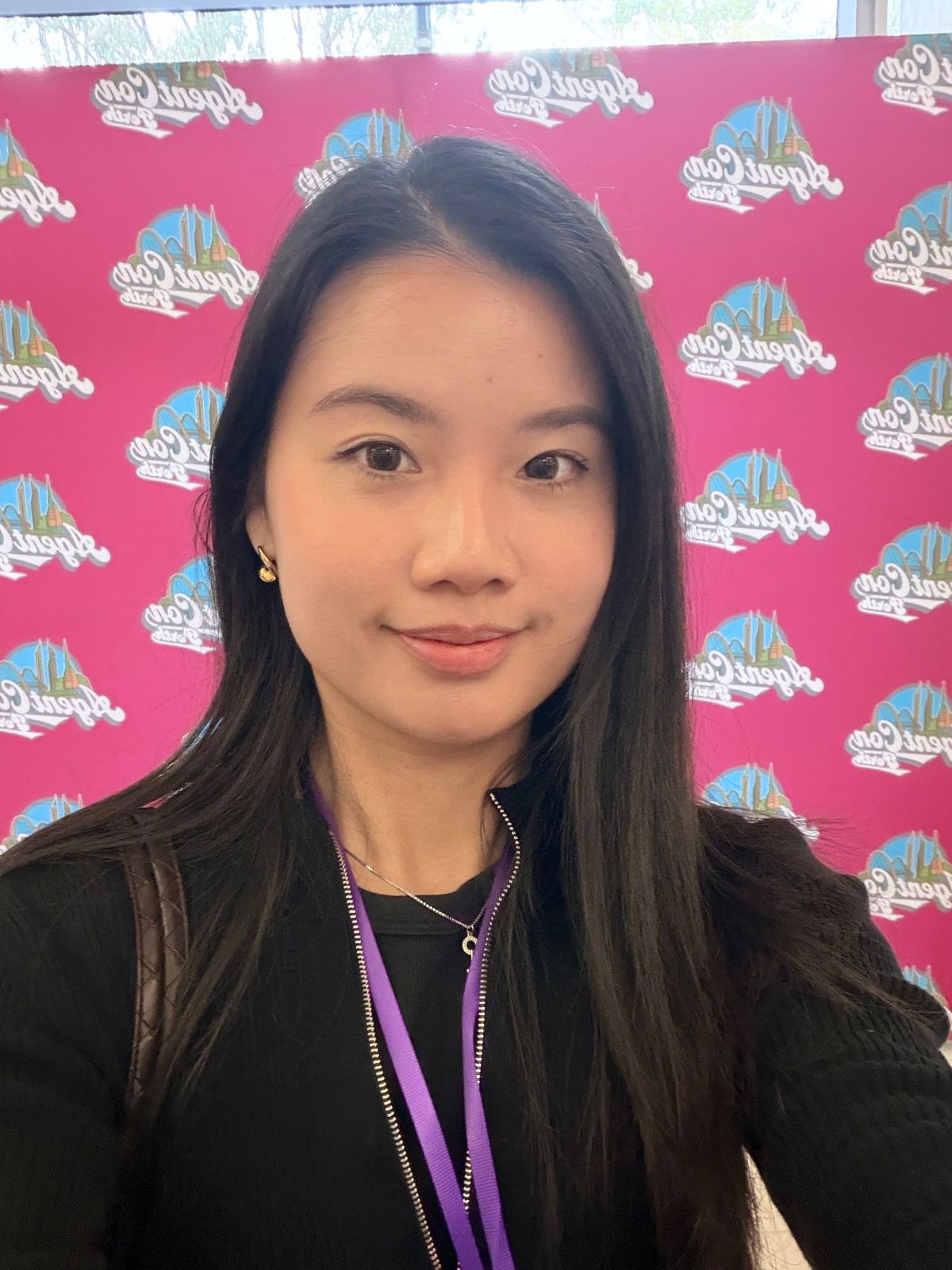
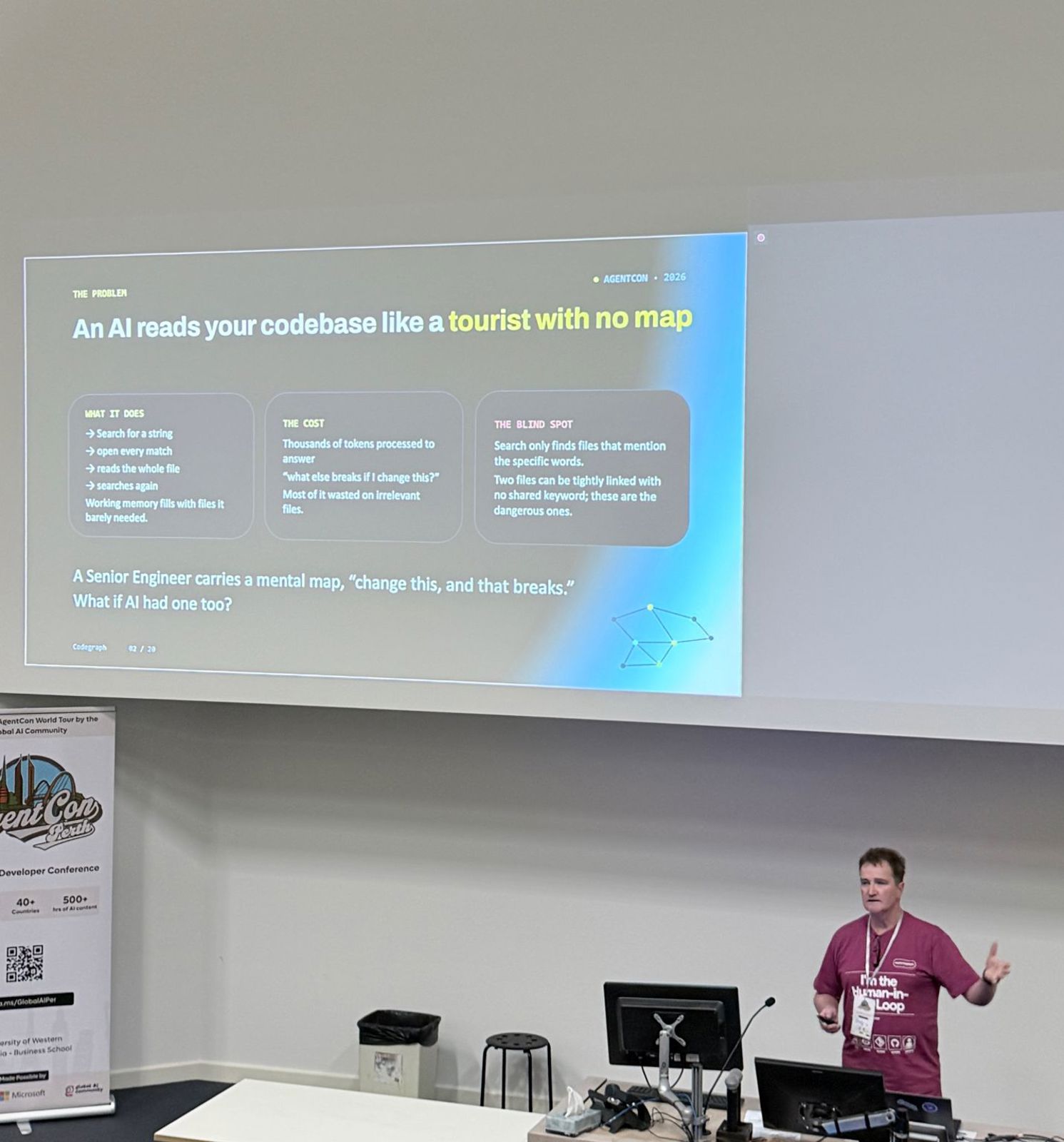
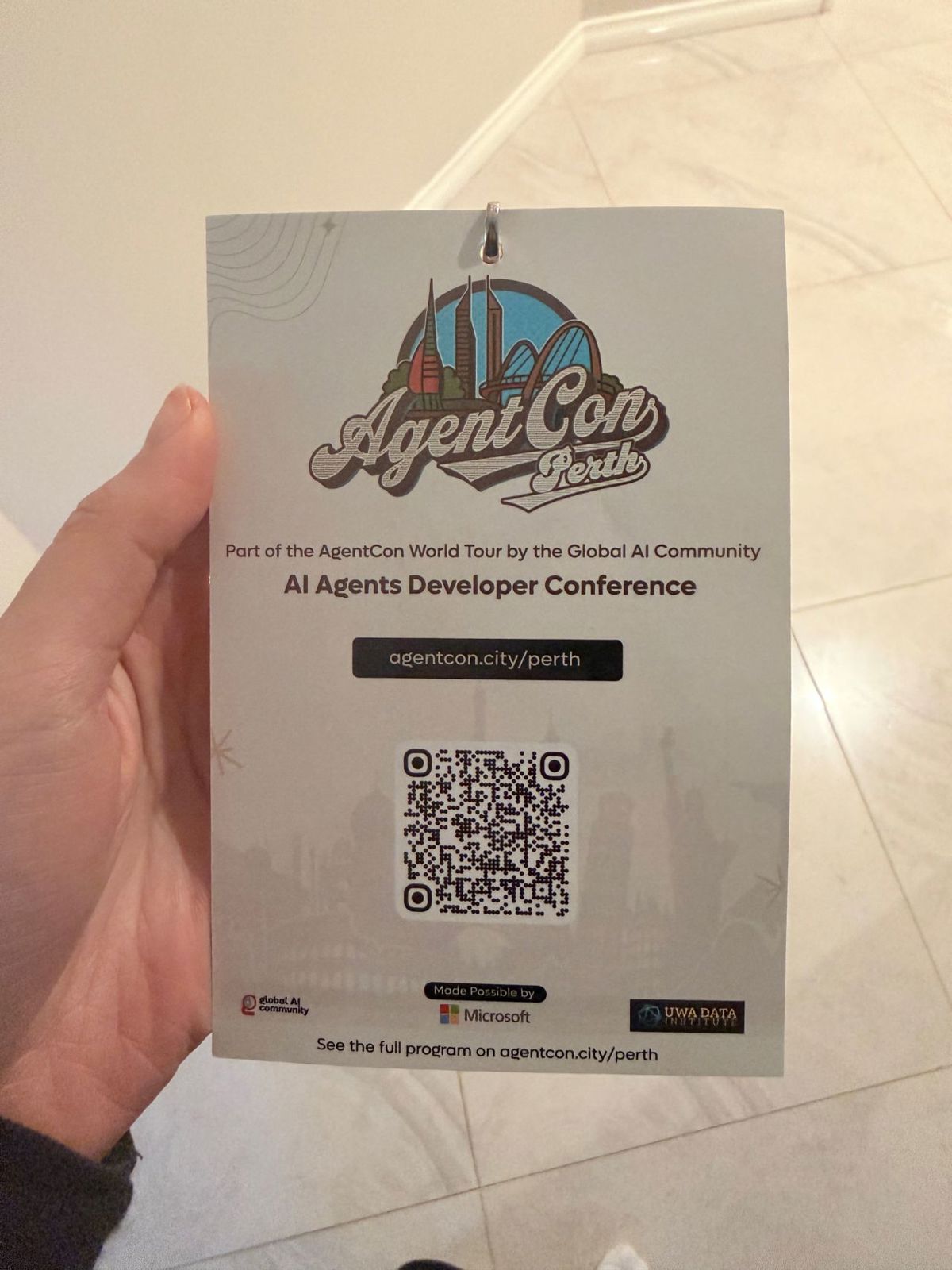
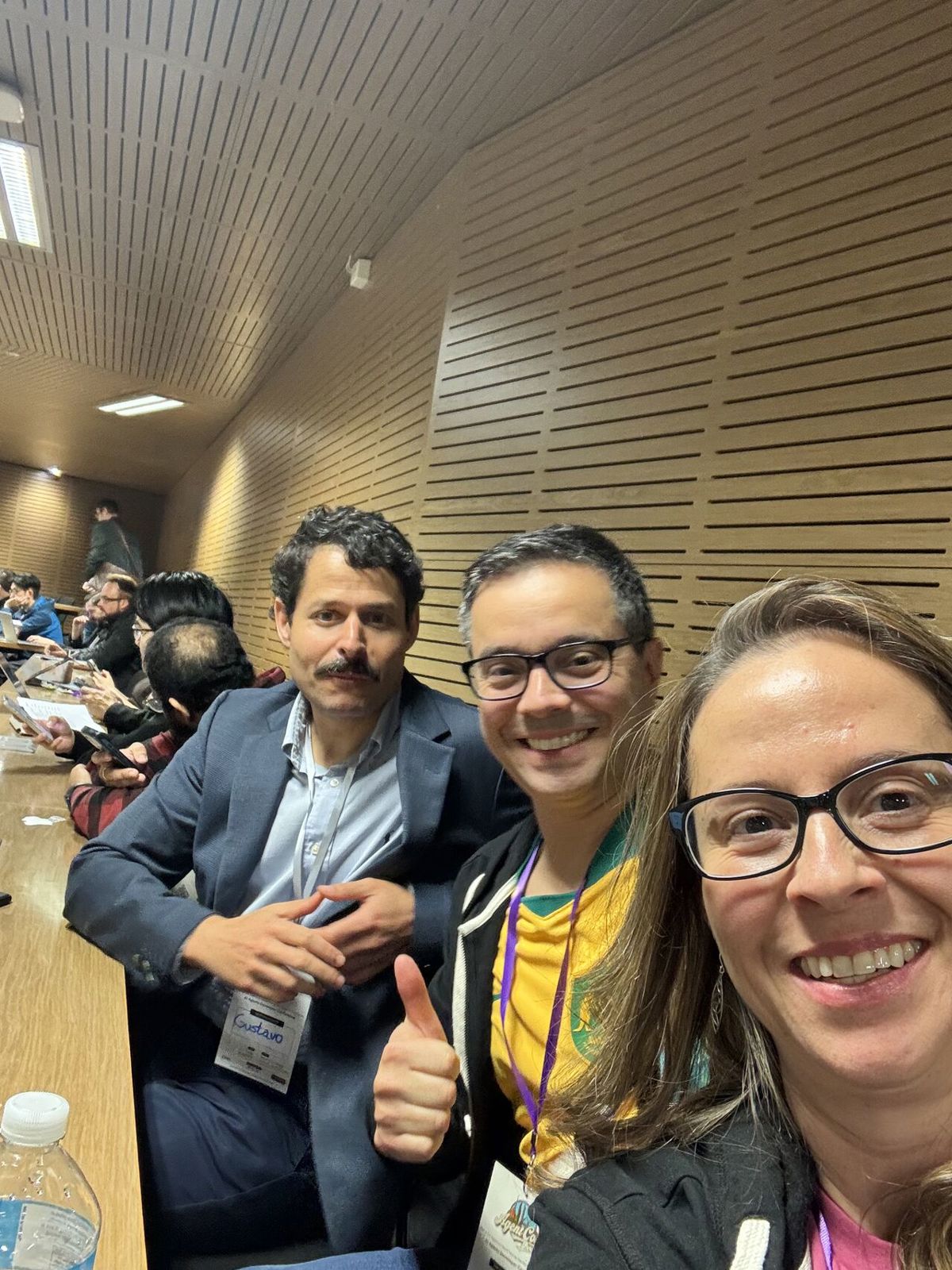
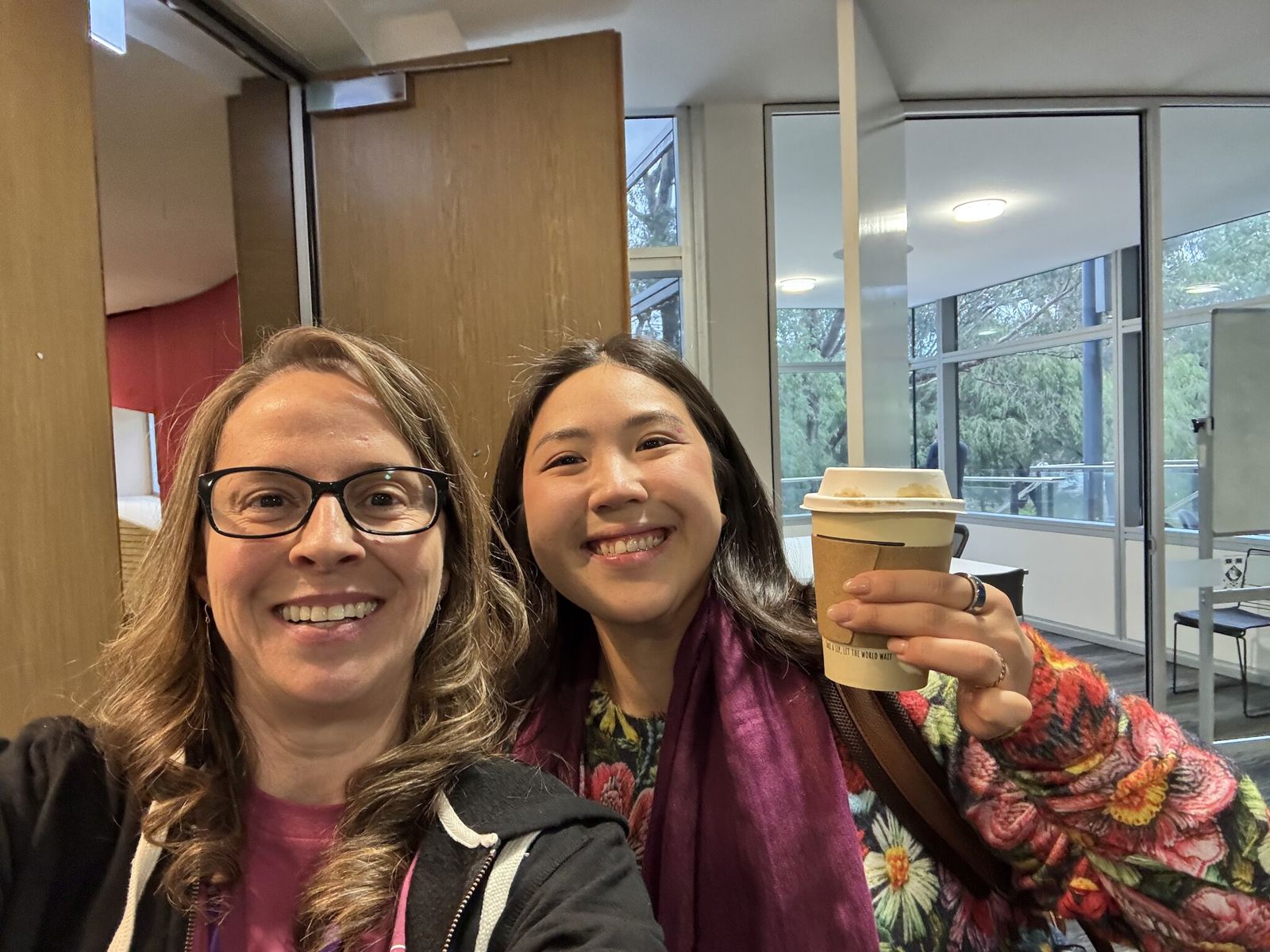
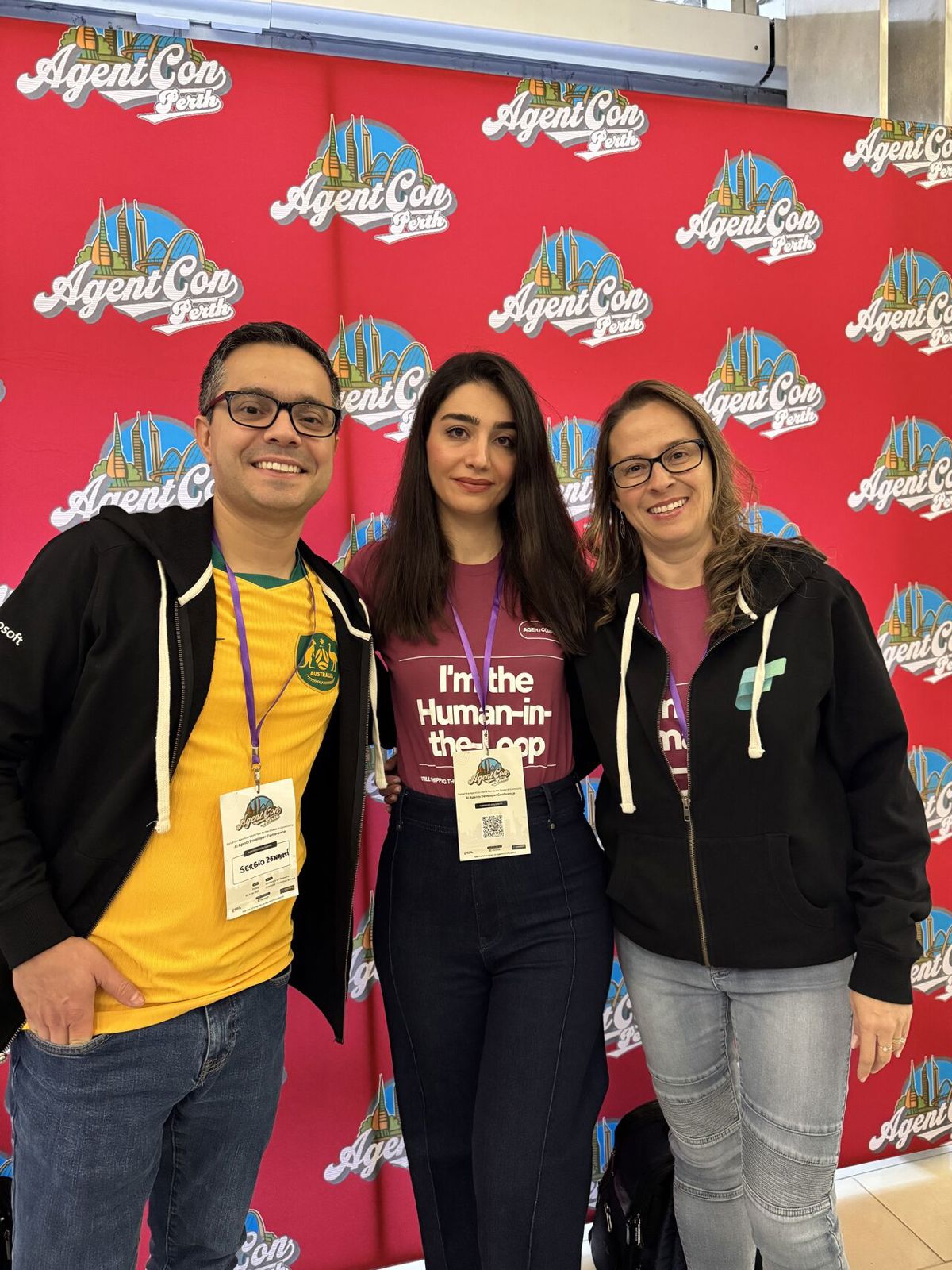
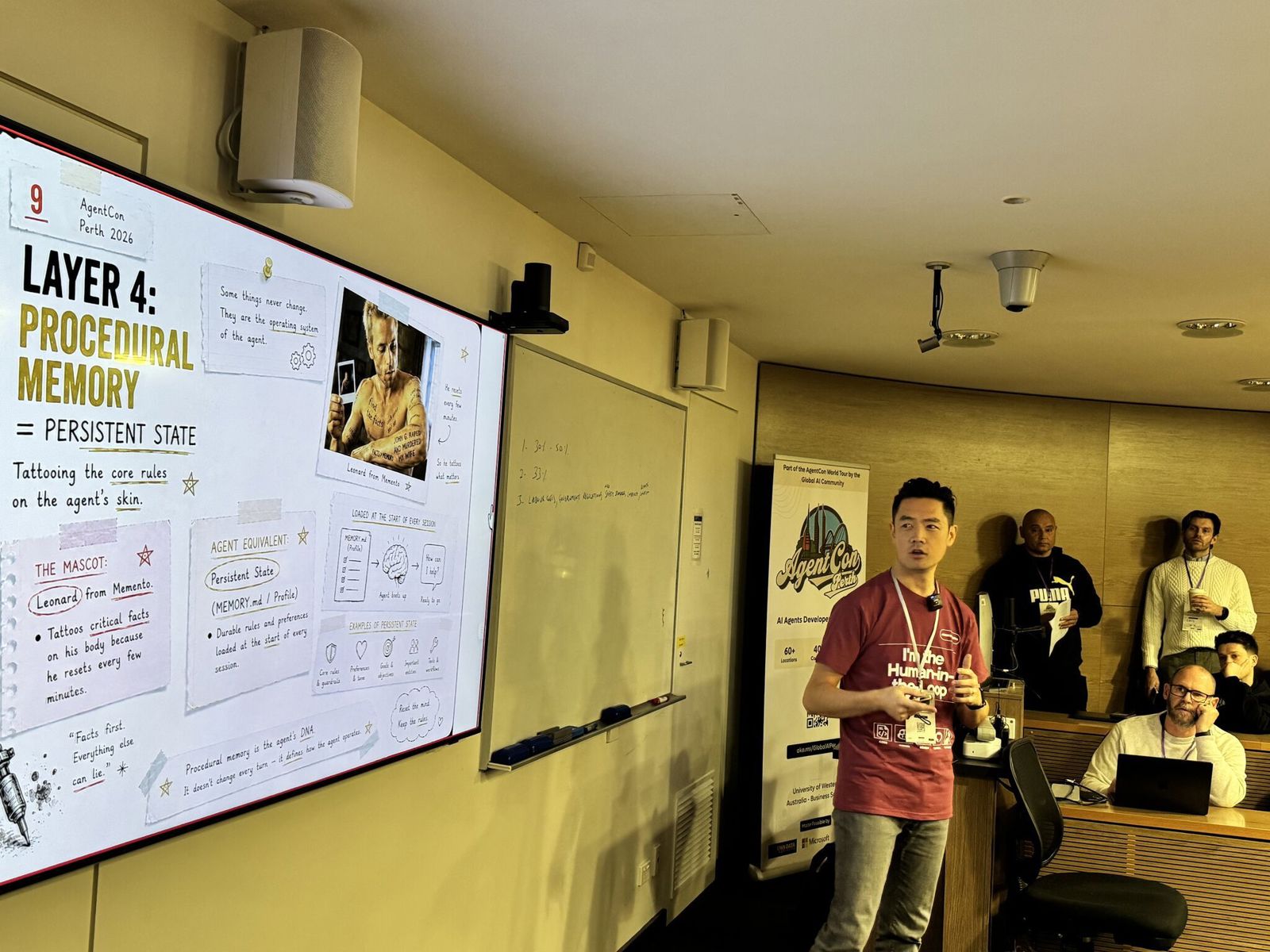
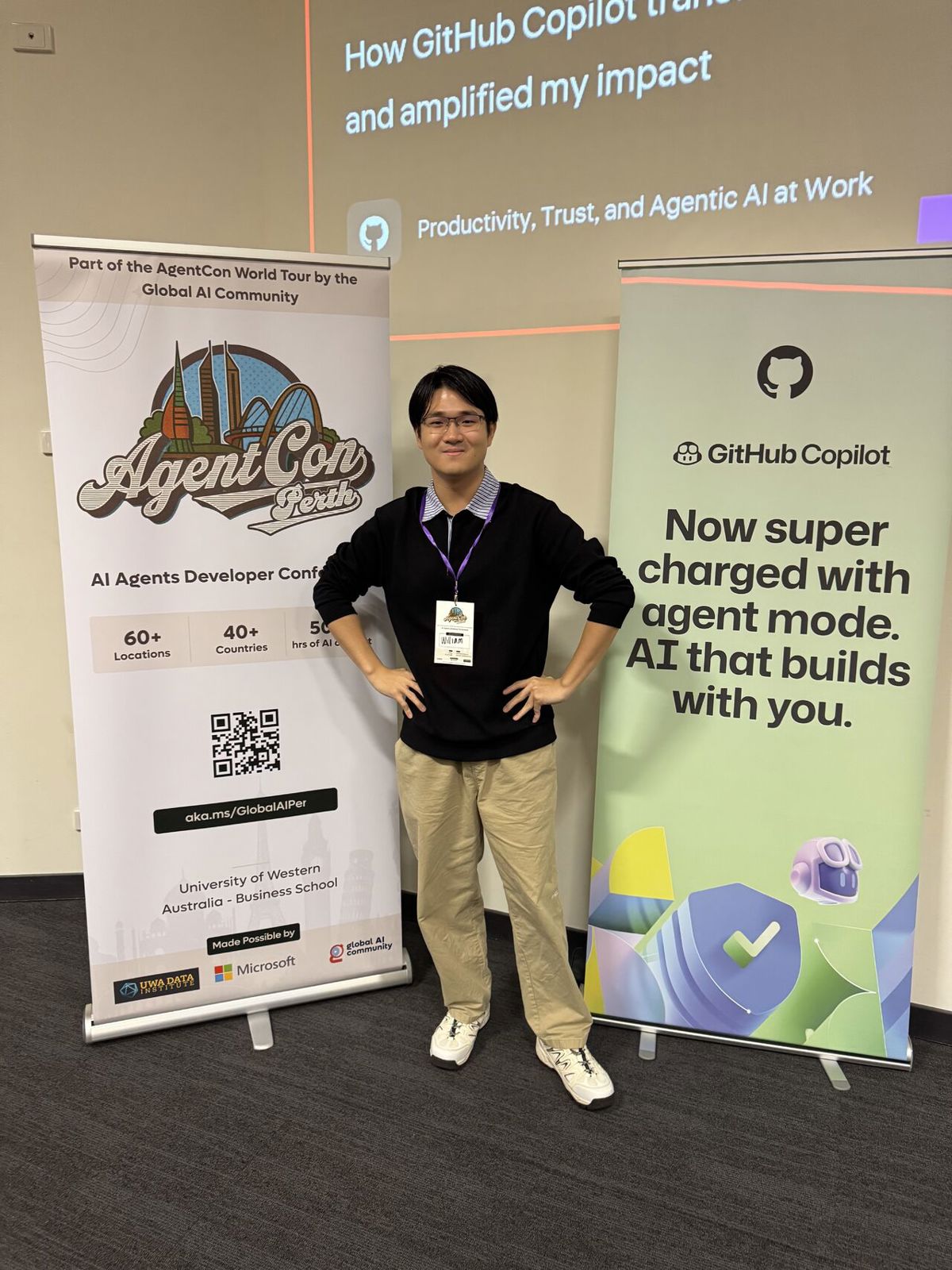
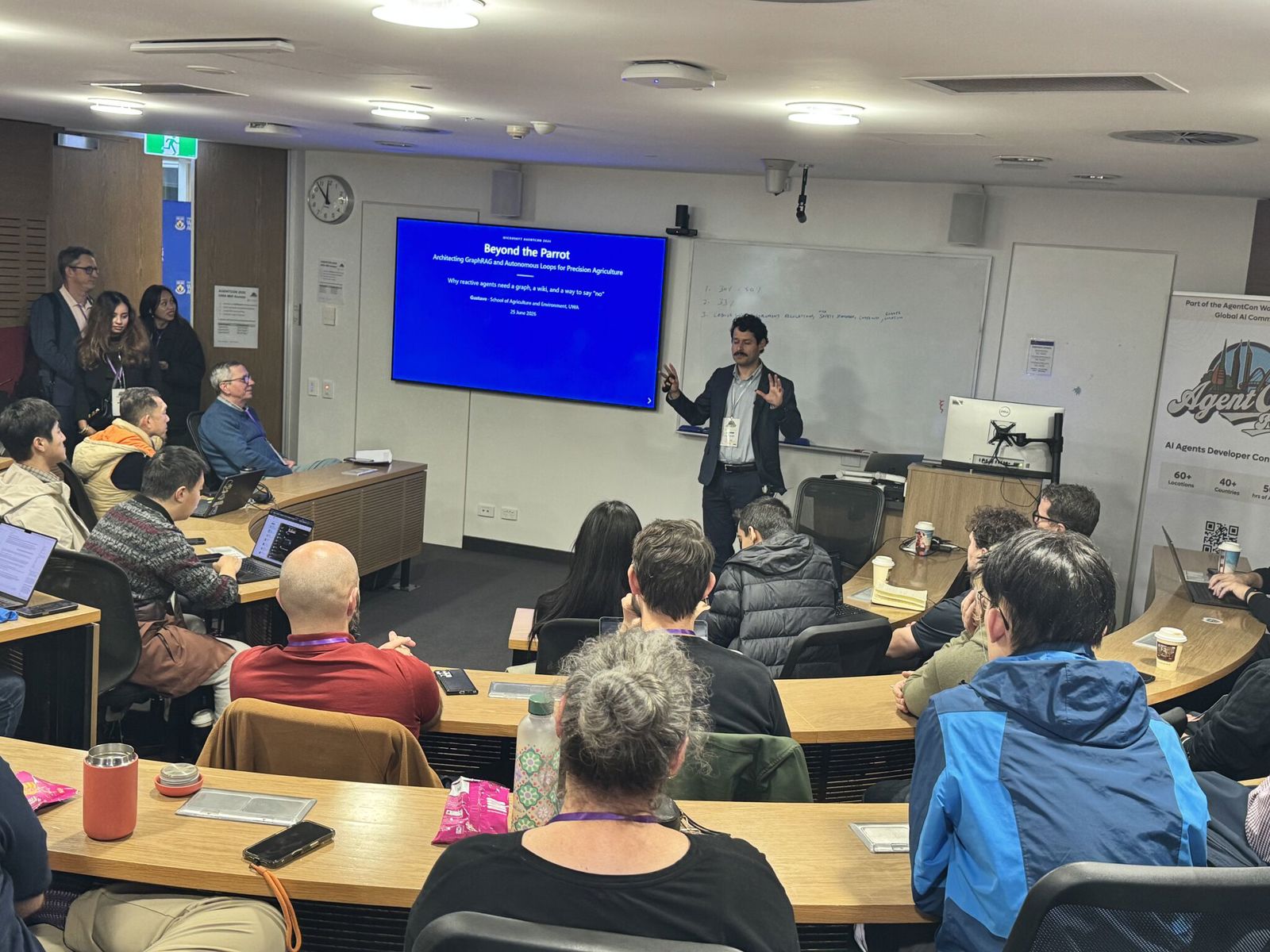
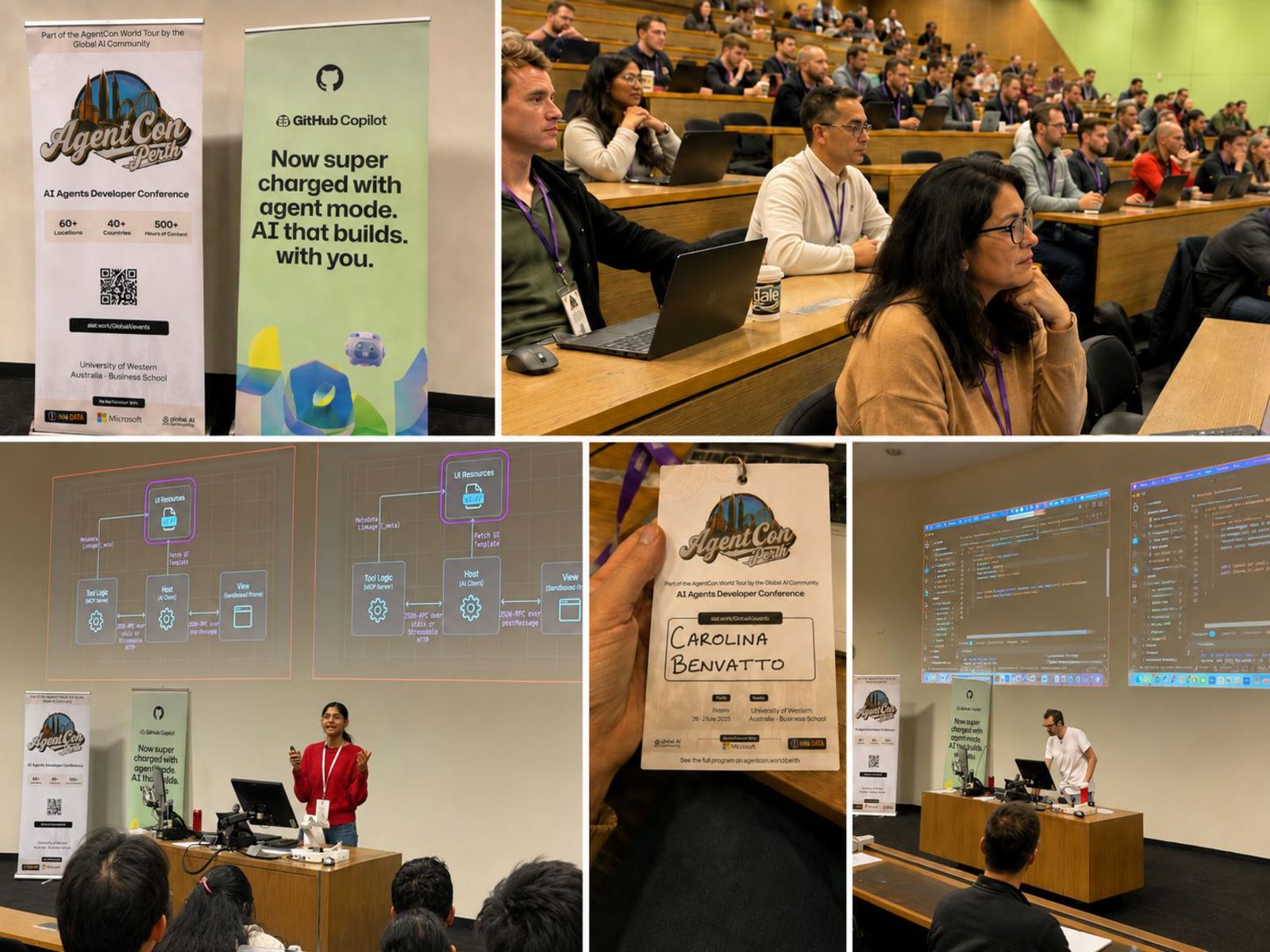
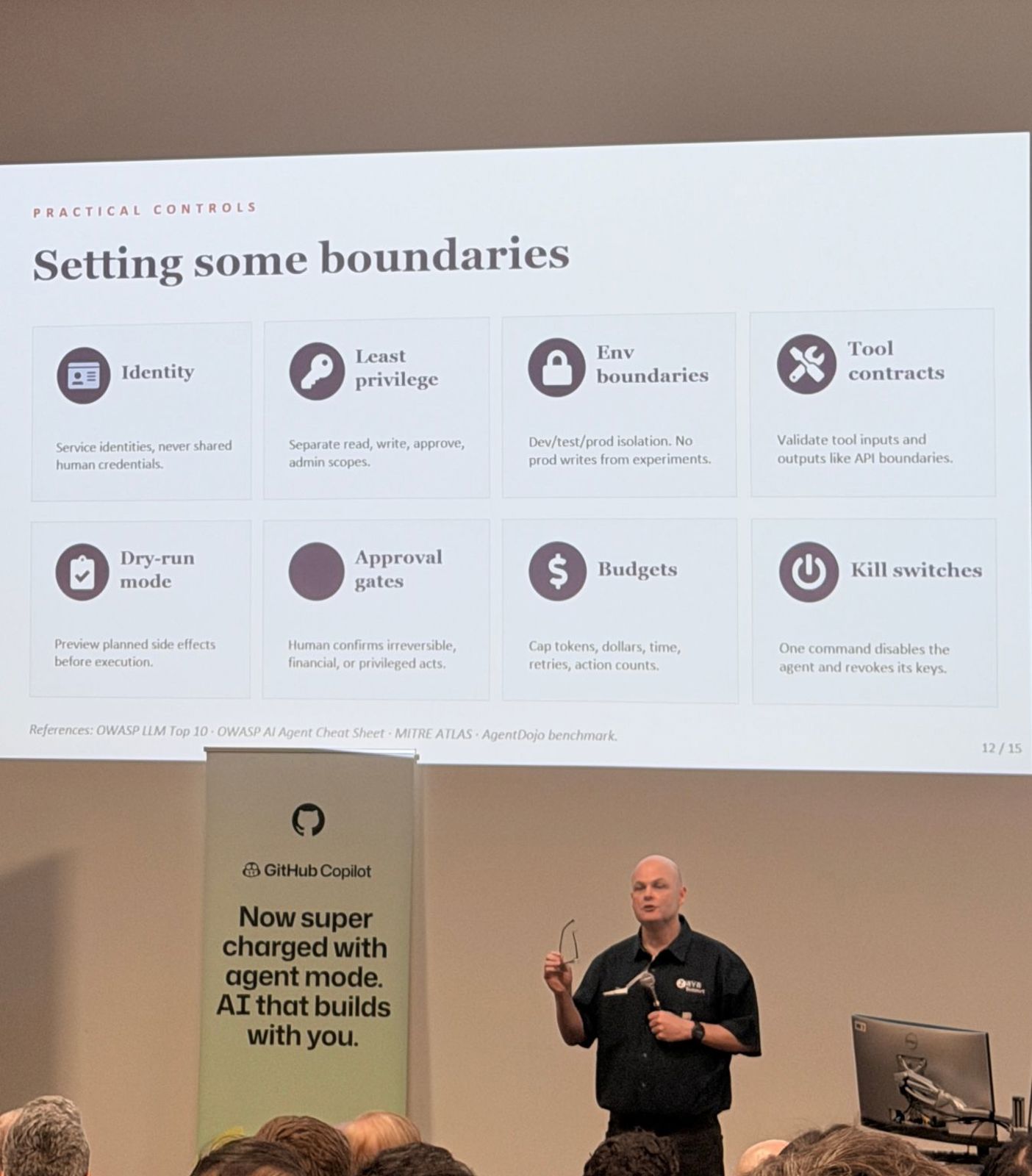
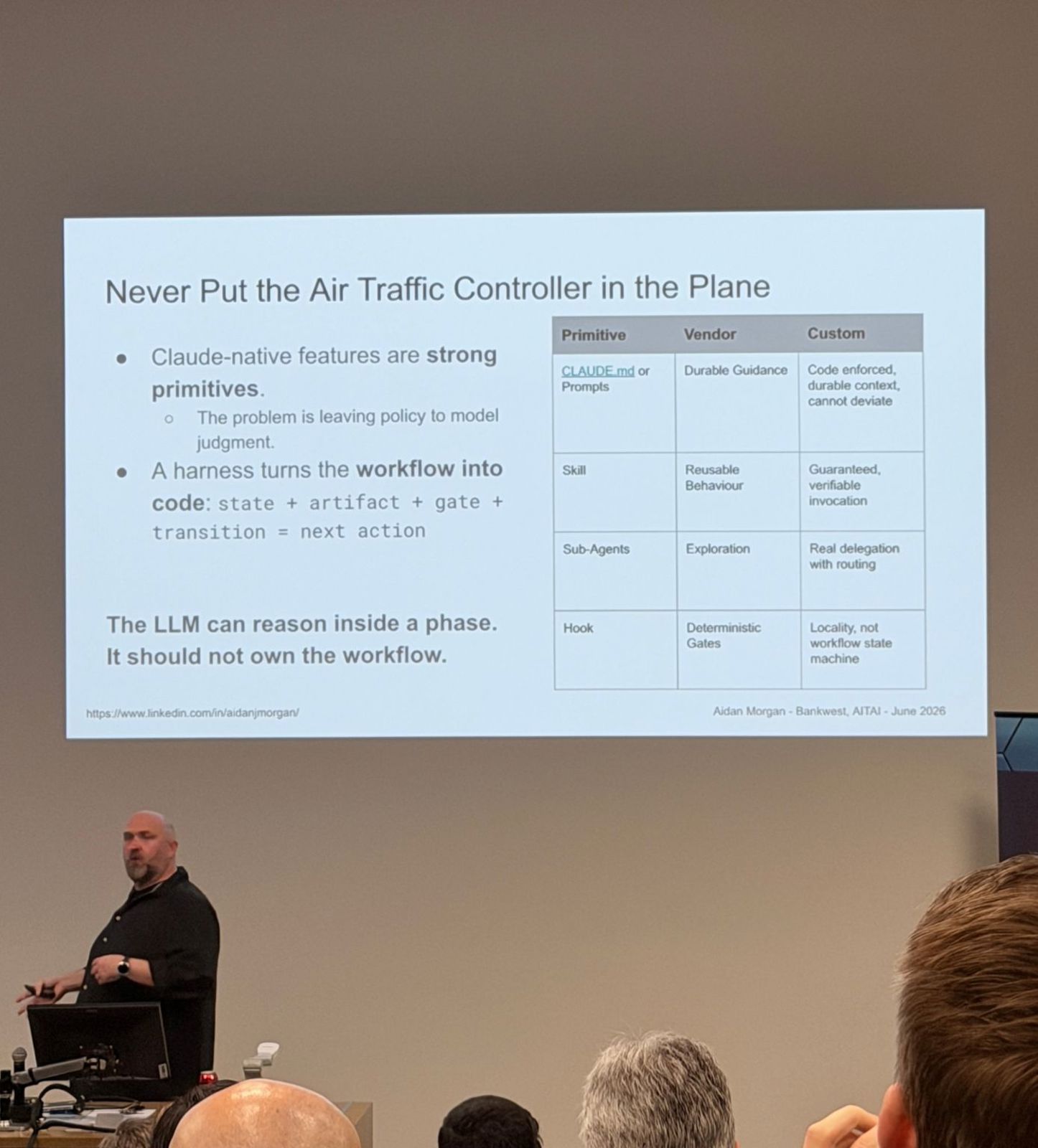
This is how it looked
Made possible by
Made possible by:

Explore AgentCon
AI Agents Developer Conference
AgentCon made possible by: