/Events /AgentCon - Zurich

About
Join us for the AI Agents World Tour, a global series of one-day conferences designed exclusively for developers building the future with AI agents.
From San Francisco to Singapore, we’re bringing together leading engineers, researchers, and creators to explore the cutting edge of AI agent design, deployment, and integration. Whether you’re building intelligent assistants, autonomous systems, or next-gen developer tools, this event is your fast track to practical knowledge, hands-on demos, and real-world insights.
What to Expect:
- Deep-Dive Talks from AI pioneers and industry leaders
- Technical Workshops on building, deploying, and scaling agents
- Live Demos of powerful open-source frameworks and tools
- Networking with a global community of builders and innovators
This isn't just another AI event — it’s where developers meet to talk about real code.
Ready to build the future?
Who's on stage

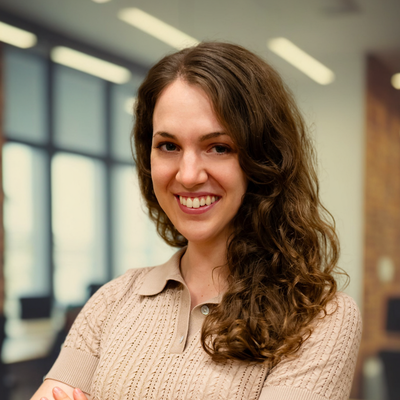
Betta Lyon Delsordo began her cyber journey at the age of 13 when she started teaching herself to code. This grew into freelance web development work for small businesses in Montana, where she soon realized she needed to know more about application security to keep her clients safe. She began learning more about secure coding and interned with a hacking firm, and realized she was pretty good at it. After completing a Master's in Cybersecurity at Georgia Tech, obtaining certifications such as the GPEN, and working her way up through pentesting, Betta is now working as a Penetration Tester at Amazon Web Services in Italy. Her areas of expertise include application security, secure code review, cloud security, and AI hacking. She has also built several AI tools for her employers to improve processes such as secure code review and threat intelligence insights. Betta is very involved in the cybersecurity community and with organizations that support women in technology. She has been a mentor for 10 years with Technovation (an international girls coding program), and is an organizer and speaker for organizations promoting diversity in technology including RTC, WiCyS, WISP, and WSC. Betta is a frequent conference speaker on topics ranging from AI hacking to secure coding, and has spoken for the World Bank and conferences like DEF CON 33, ESET World 2025, and WiCyS 2025.
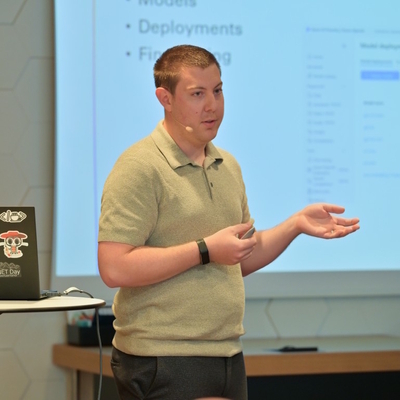
As a seasoned full-stack developer with 8 years of experience, Cédric is fueled by a passion for .NET, Azure and especially AI! He is dedicated to crafting valuable and secure solutions for end users generating true business value. Located in Basel, Switzerland.
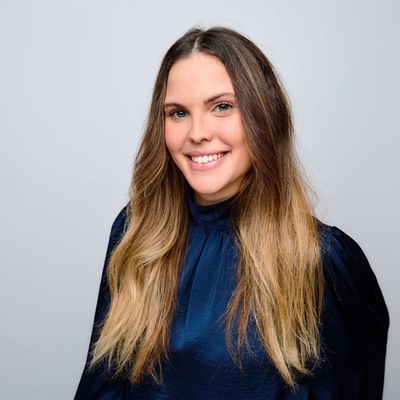
Leyre de la Calzada is an AI Cloud Solution Architect at Microsoft, specialized in Microsoft Fabric and Foundry. She works with strategic accounts to design and implement AI-driven solutions and powered by multi-agent architectures that turn enterprise data into actionable insights.
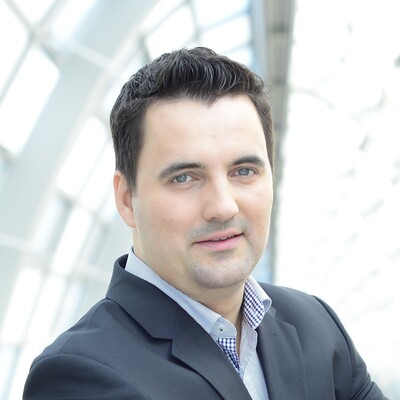
Alexander Wachtel has been recognized as a Microsoft AI MVP since 2020 for his community work in AI area. During his Ph.D. research at the Karlsruhe Institute of Technology (KIT), he has published several AI papers in the area of Human-Computer-Interaction, Natural Language Processing & Cognitive Services. Furthermore, he is still teaching agile software engineering at the KIT using Azure DevOps. Due to his teaching activities at the KIT, he was also awarded as a Microsoft Innovative Educator (MIE) expert from 2016 to 2019. Due to his many years of experience, he has been also honored as a Microsoft Certified Trainer (MCT) since 2013. He provides Microsoft consulting for the industry and public sector, and teaches classes for Microsoft Certified Azure Solutions Architect Expert and Microsoft 365 Certified Administrator Expert.

As a Developer Advocate at Neo4j, I help developers harness the power of graph technology and AI. A Microsoft MVP and global speaker at events like TED, Microsoft Build, and WeAreDevelopers, I focus on making complex tech accessible through content, community, and hands-on support. My mission is to connect, empower, and inspire developers to build impactful solutions.
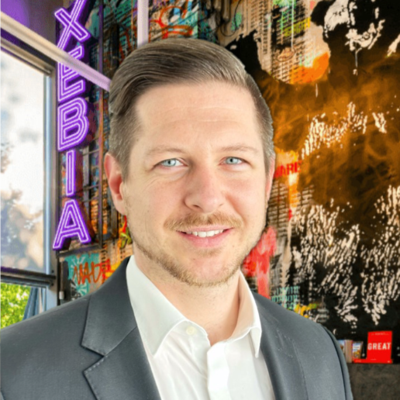
Andreas Giesa, Director of Digital Business Consulting at Xebia and former Head of eBusiness at Liebherr, is a visionary leader in the field of digitalization. With over 16 years of experience, he passionately drives digital business models, strategies, and innovative technologies such as AI and IoT. His focus is on customer-oriented solutions, digital excellence, and the development and empowerment of agile teams for digital transformation.

Dominique is a Sr Software Solution Engineer at Microsoft, passionate about Software Craftmanship and its intersection with AI.
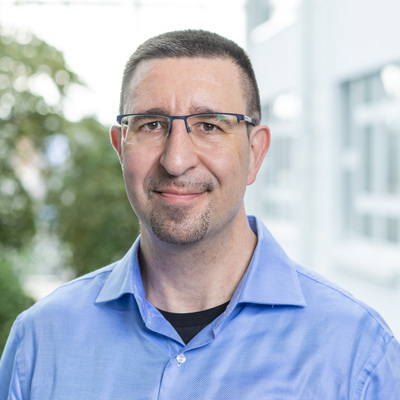
José is a Microsoft AI MVP, Speaker, LinkedIn Learning Trainer, and K6 Champion. He is passionate about Azure Cloud and Generative AI, focusing on Agentic AI, Software Architecture, Performance, Profiling, and performance testing. José also loves UI/UX, particularly with XAML-based technologies, and was previously a Silverlight MVP. He enjoys sharing his knowledge and having fun while doing so, whether at user group talks, conferences, or training sessions. Currently, he works at Swiss Life as the Developer Community Lead and Software Architect, where he is helping define the AI Strategy.

I’m a tech entrepreneur and AI builder based in Zurich, where strategy meets code. After 18 years in executive banking, I taught myself Python and transitioned from managing large organizations to building AI systems that run on logic, not hierarchy. Over the past three years, I’ve delivered more than 20 AI projects across healthcare, banking, industrial automation, and customer experience - designing solutions that actually survive contact with reality. My mission is to build client-centric AI factories - scalable agentic systems that transform how businesses operate, scale, and compete. I focus on practical AI engineering: modular architectures, automation orchestration, and measurable ROI. On stage, I talk about what happens when AI leaves the lab — the financial bubble, the architecture of resilient AI systems, client-centric implementation, and hard-earned lessons from real AI failures. I bridge strategy and execution - turning AI potential into reliable, auditable business systems that deliver beyond the demo.

With over 15 years of experience in software engineering and cloud solutions, I bring expertise in designing and deploying advanced AI-driven systems. As a Senior AI Cloud Solutions Architect at Plain Concepts, I leverage Azure AI Foundry, Python, and C# to craft scalable and secure AI architectures. My focus includes implementing AI AGENTS for intelligent decision-making, developing robust AI pipelines, and modernizing cloud-native systems to meet diverse industry needs. My work emphasizes innovation, collaboration, and precision, driving impactful AI solutions tailored to client goals. As a certified Azure Solutions Architect Expert, I enable organizations to harness the power of artificial intelligence for predictive analytics and natural language understanding. Beyond technical delivery, my passion for knowledge-sharing is evident through authoring "GitHub for Next-Generation Coders," empowering the next wave of developers to thrive in collaborative software development ecosystems.
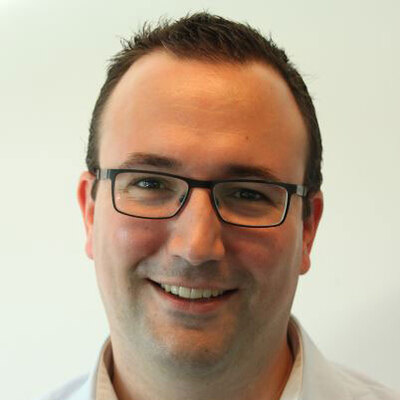
With over 20 years of experience developing software on the Microsoft stack, Roelant Dieben has a lot to share about stuff that has been obsolete for years. At Sopra Steria he is helping companies with their Azure cloud and AI challenges, he is a Microsoft Azure & AI MVP, and has a passion for machine learning & AI and application lifecycle management.

Bernhard Merkle works as a Software Specialist and Technology Scout for Gen AI, AI, ML, Cloud, XOps related technologies in the central Research & Development Department at SICK AG, one of the world’s leading producers of sensors and sensor solutions. He is a Microsoft MVP for AI, loves Python and serves as internal consultant for new Software Development Technologies. In his spare time he gives a lecture about development with Models and AI. He writes technical articles and also gives sessions at various conferences (e.g. ACCU, PyConUK, , QCon, OOPSLA, EclipseCon and OOP).
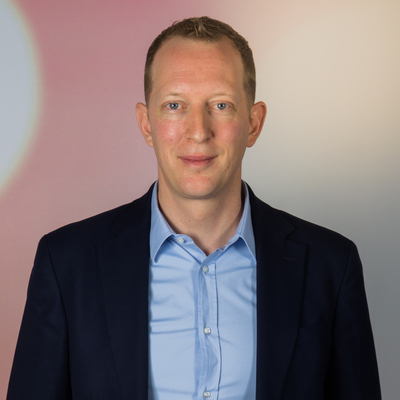
Enthusiastic about technology, passionate about growing, inspiring and leading technical teams, getting-things-done-mentality and problem solving skills. Specialized in Microsoft 365, Dynamics 365, Microsoft Teams, Microsoft Azure and SharePoint. Currently working as CTO for isolutions - a leading Microsoft partner in Switzerland - and in charge of setting up the delivery center in Barcelona. Awarded as Microsoft MVP since 2015 and as a Microsoft Regional Director since 2020. Together with the isolutions team, he is committed to making customers happy and successful every day. The focus is on a secure and sustainable integration of various Microsoft and third-party products. He lives in Barcelona, but can also be met regularly in Switzerland. With pleasure he shares his secret tips for the best fondue.
Sessions & tracks
Doors Open & Registration
Main Area ·Welcome
Main Area ·Rise of the Agent Boss
Let's leave the whole drama of AI will take your job. This year, we will all have a NEW role on the AI-verse…managing AI Agents!
Join us to learn how exactly to prepare for The Rise of the Agent Boss (that's you!)
Agentic Reasoning with POLE: Integrating Neo4j and the Microsoft Agent Framework
Discover how graph databases and agentic workflows work together through a live demo using Neo4j’s POLE model and the Microsoft Agent Framework. In just a few steps, we show how agents can understand complex relationships and make decisions using rich graph context.
As a Developer Advocate at Neo4j, I help developers harness the power of graph technology and AI. A Microsoft MVP and global speaker at events like TED, Microsoft Build, and WeAreDevelopers, I focus on making complex tech accessible through content, community, and hands-on support. My mission is to connect, empower, and inspire developers to build impactful solutions.
José is a Microsoft AI MVP, Speaker, LinkedIn Learning Trainer, and K6 Champion. He is passionate about Azure Cloud and Generative AI, focusing on Agentic AI, Software Architecture, Performance, Profiling, and performance testing. José also loves UI/UX, particularly with XAML-based technologies, and was previously a Silverlight MVP. He enjoys sharing his knowledge and having fun while doing so, whether at user group talks, conferences, or training sessions. Currently, he works at Swiss Life as the Developer Community Lead and Software Architect, where he is helping define the AI Strategy.
Break
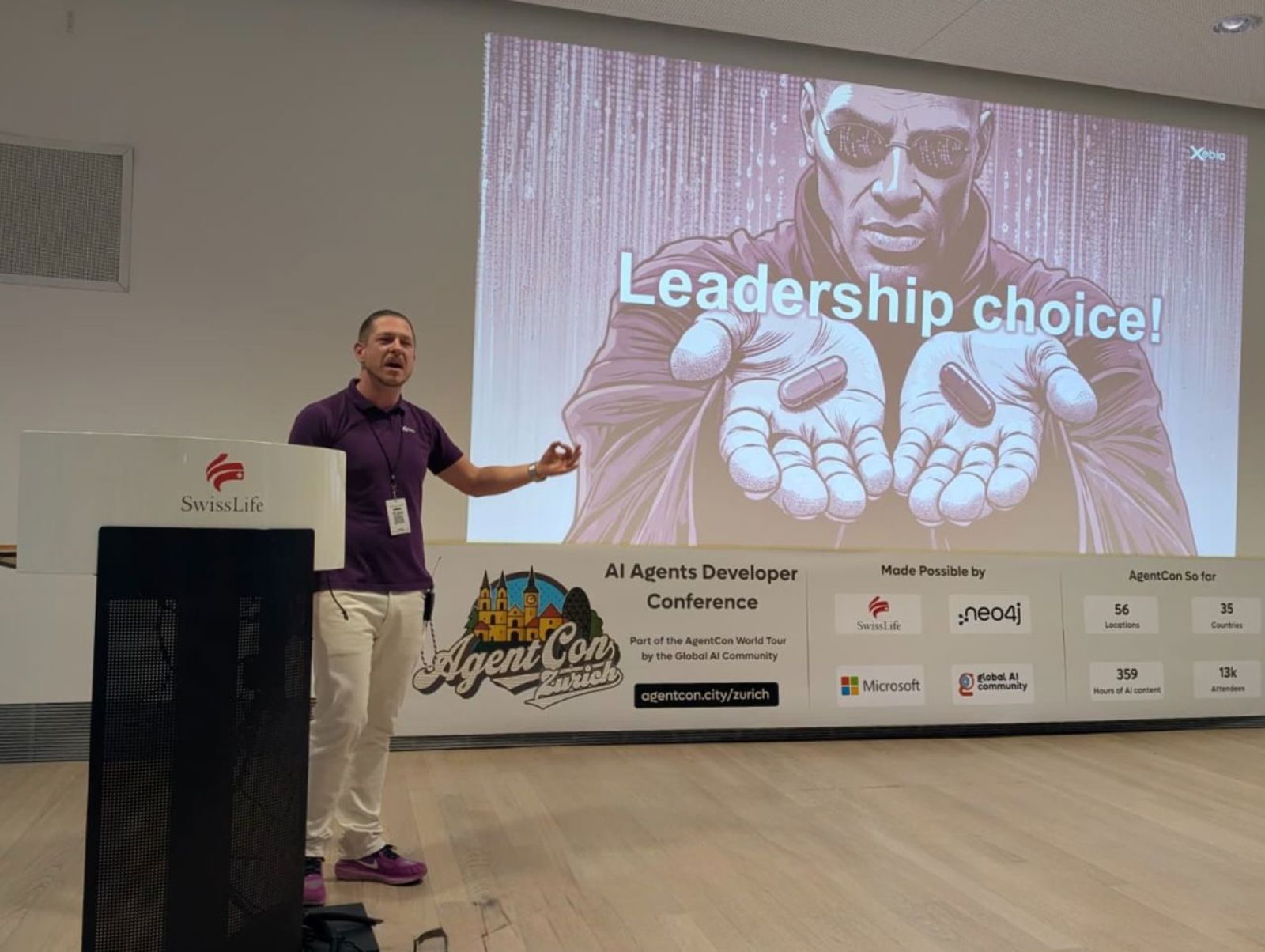
Main Area ·From ChatGPT to Androids: The Next Leadership Frontier
Over the past years, I’ve seen how artificial intelligence has shifted from a fascinating experiment to an unstoppable force transforming how we work, lead, and create value. From AI copilots in software development, agentic process automation to robotic androids entering production lines in 2026, the wave of automation is accelerating. Yet fear, resistance, and outdated linear thinking often hold organizations back. I’ll explore what defines an AI agent, how they are reshaping office and development jobs, and why leaders must act now. This session provides a practical blueprint for navigating change: start small, experiment boldly, and prioritize emotional intelligence and enablement. With exponential technologies moving faster than ever, leadership must evolve – from control to curiosity, and from resistance to responsible action.
Andreas Giesa, Director of Digital Business Consulting at Xebia and former Head of eBusiness at Liebherr, is a visionary leader in the field of digitalization. With over 16 years of experience, he passionately drives digital business models, strategies, and innovative technologies such as AI and IoT. His focus is on customer-oriented solutions, digital excellence, and the development and empowerment of agile teams for digital transformation.
Give Work to AI: How Agentic AI Powered the Humanless. Swiss AI Chatbot Factory
The future of work isn’t just about humans using AI—it’s about AI becoming the workforce. In this talk, I unveil a groundbreaking approach to business automation: an AI-powered chatbot factory where AI agents act as developers, designers, and operators. With just two human founders, this factory builds and deploys chatbots within minutes, proving that AI-driven enterprises can scale without expanding human teams.
I will share the architecture, automation strategies, and real-world challenges behind the Swiss AI Chatbot Factory, highlighting how AI-first businesses can be structured, optimized, and monetized. From self-managing AI teams to workflow orchestration, this session explores the next frontier of AI-driven entrepreneurship—where companies operate with minimal human intervention, and AI takes on real, productive roles.
I’m a tech entrepreneur and AI builder based in Zurich, where strategy meets code. After 18 years in executive banking, I taught myself Python and transitioned from managing large organizations to building AI systems that run on logic, not hierarchy. Over the past three years, I’ve delivered more than 20 AI projects across healthcare, banking, industrial automation, and customer experience - designing solutions that actually survive contact with reality. My mission is to build client-centric AI factories - scalable agentic systems that transform how businesses operate, scale, and compete. I focus on practical AI engineering: modular architectures, automation orchestration, and measurable ROI. On stage, I talk about what happens when AI leaves the lab — the financial bubble, the architecture of resilient AI systems, client-centric implementation, and hard-earned lessons from real AI failures. I bridge strategy and execution - turning AI potential into reliable, auditable business systems that deliver beyond the demo.
Responsible AI in Action: From Principles to Real-World Impact
As AI systems move from experimentation to large-scale deployment, organizations must ensure these technologies are not only effective, but also trustworthy, fair, and compliant. While Responsible AI principles are widely accepted, applying them in real-world products and workflows remains a practical challenge. This talk focuses on how Responsible AI can be implemented in practice—across data, models, and applications. Using concrete examples, it highlights how teams can operationalize fairness, transparency, privacy, and accountability throughout the AI lifecycle. In addition, the session showcases what’s new in Responsible AI, including features and tools available today that help teams assess risk, improve explainability, and meet regulatory expectations. Attendees will gain actionable insights, practical patterns, and an overview of ready-to-use capabilities that enable responsible AI without slowing innovation.
Alexander Wachtel has been recognized as a Microsoft AI MVP since 2020 for his community work in AI area. During his Ph.D. research at the Karlsruhe Institute of Technology (KIT), he has published several AI papers in the area of Human-Computer-Interaction, Natural Language Processing & Cognitive Services. Furthermore, he is still teaching agile software engineering at the KIT using Azure DevOps. Due to his teaching activities at the KIT, he was also awarded as a Microsoft Innovative Educator (MIE) expert from 2016 to 2019. Due to his many years of experience, he has been also honored as a Microsoft Certified Trainer (MCT) since 2013. He provides Microsoft consulting for the industry and public sector, and teaches classes for Microsoft Certified Azure Solutions Architect Expert and Microsoft 365 Certified Administrator Expert.
Lunch
Main Area ·10 reasons why companies fail to adopt generative AI
10 reasons why companies fail to adopt Generative AI and what to do about it. Generative AI offers enormous potential to make companies more efficient. Employees become more productive, can take more care of customers and are ultimately happier because they have more meaningful tasks. However, we see that many companies are struggling with the implementation. In this session, we will look for the reasons and discuss strategies to make adoption work.
Enthusiastic about technology, passionate about growing, inspiring and leading technical teams, getting-things-done-mentality and problem solving skills. Specialized in Microsoft 365, Dynamics 365, Microsoft Teams, Microsoft Azure and SharePoint. Currently working as CTO for isolutions - a leading Microsoft partner in Switzerland - and in charge of setting up the delivery center in Barcelona. Awarded as Microsoft MVP since 2015 and as a Microsoft Regional Director since 2020. Together with the isolutions team, he is committed to making customers happy and successful every day. The focus is on a secure and sustainable integration of various Microsoft and third-party products. He lives in Barcelona, but can also be met regularly in Switzerland. With pleasure he shares his secret tips for the best fondue.
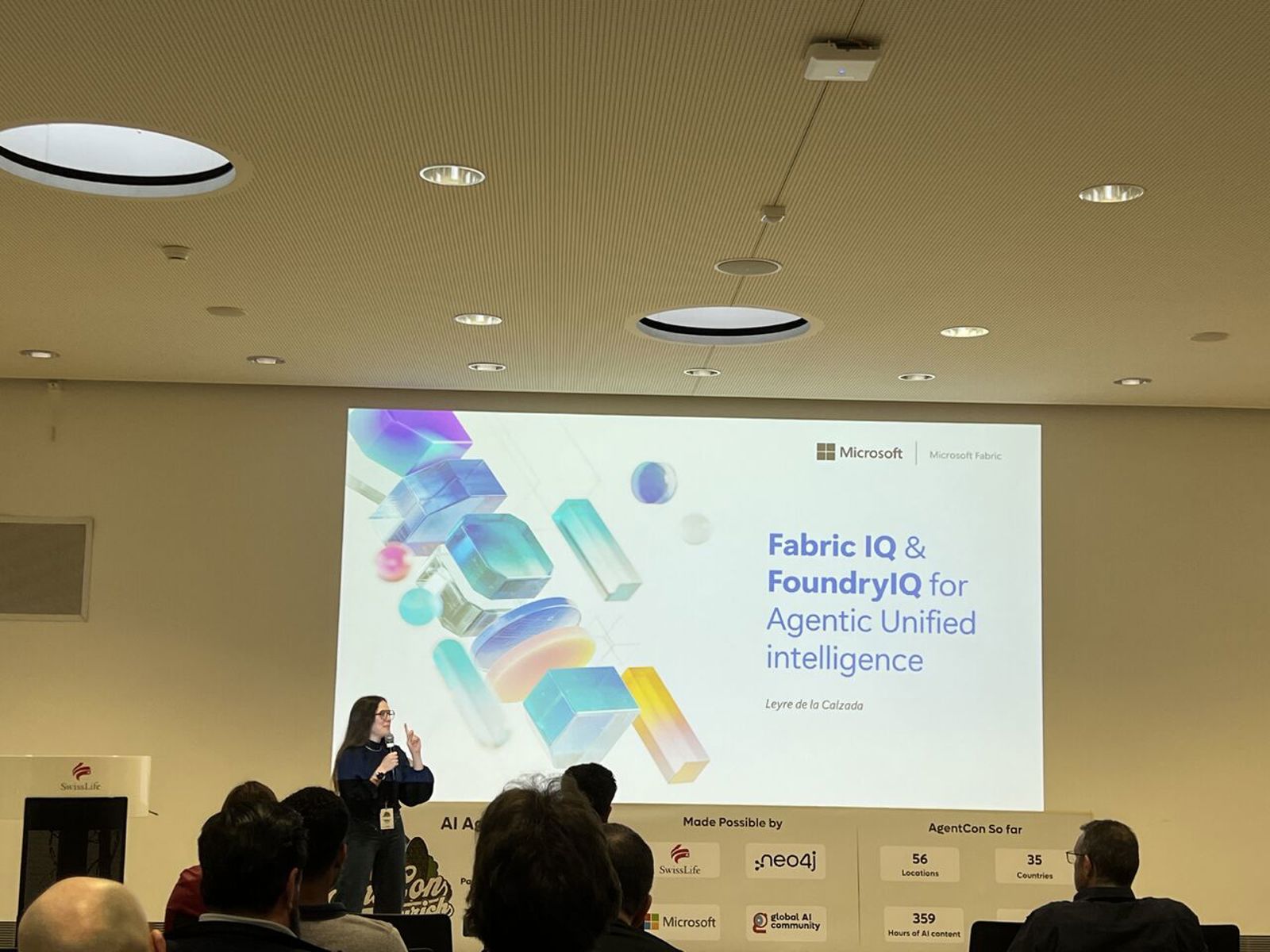
Increase Your Agents’ IQ with FabricIQ + FoundryIQ
Discover how FabricIQ and FoundryIQ work together to elevate the intelligence of your agents. FabricIQ takes you from unified data to unified intelligence across all your knowledge in Fabric. FoundryIQ serves as the intelligent connection point for all structured and unstructured knowledge your agents depend on. Combined, they unlock smarter, more capable AI agents.
Leyre de la Calzada is an AI Cloud Solution Architect at Microsoft, specialized in Microsoft Fabric and Foundry. She works with strategic accounts to design and implement AI-driven solutions and powered by multi-agent architectures that turn enterprise data into actionable insights.
TypeAgent: From RAG to Structured RAG: Building Long-Context, Precise, and Fast AI Systems
Retrieval-Augmented Generation (RAG) has become the de-facto method for grounding Large Language Models in enterprise data. But classic RAG quickly reaches its limits: conversations drift, pronouns lose their meaning, long-term state becomes ambiguous, and complex multi-step queries often fail. In this talk, we introduce Structured RAG, a next-generation approach implemented in TypeAgent, an open-source framework originally prototyped by Guido van Rossum. Structured RAG keeps conversation context well-organized, reduces hallucinations, improves retrieval precision, and allows AI agents to handle multi-turn dialogues and complex instructions—while remaining fast and highly scalable.
We walk through the core architecture of Structured RAG, including typed conversations, semantic memory layers, indexing strategies, and automatic disambiguation of historical references. Live demos show how TypeAgent enables long-running AI agents that remain accurate over dozens of turns. Attendees will gain a deep understanding of how to move beyond vanilla RAG and how to incorporate Typed Conversations into real-world Python systems.
I am an active contributor to TypeAgent, an open-source framework initiated by Guido van Rossum for building typed conversational agents and Structured RAG systems. I works on large-scale AI deployments, document understanding pipelines, and knowledge-graph-driven retrieval systems in industrial environments.
Bernhard Merkle works as a Software Specialist and Technology Scout for Gen AI, AI, ML, Cloud, XOps related technologies in the central Research & Development Department at SICK AG, one of the world’s leading producers of sensors and sensor solutions. He is a Microsoft MVP for AI, loves Python and serves as internal consultant for new Software Development Technologies. In his spare time he gives a lecture about development with Models and AI. He writes technical articles and also gives sessions at various conferences (e.g. ACCU, PyConUK, , QCon, OOPSLA, EclipseCon and OOP).
Break
Main Area ·MCP in .NET: From Zero to Hero
In this session, we’ll explore Model-Context-Protocol (MCP).
We’ll begin with a high-level overview of MCP, illustrating its core concepts through a practical implementation using Semantic Kernel in .NET. We will also introduce advanced capabilities like elicitation and sampling but get most out of MCP.
From there, we’ll shift focus to security. We’ll examine common vulnerabilities in MCP-based architectures and demonstrate how to securely implement it using OAuth.
Whether you're new to MCP or looking to deepen your expertise, this session will equip you with both the conceptual understanding and hands-on techniques to build secure AI solutions.
As a seasoned full-stack developer with 8 years of experience, Cédric is fueled by a passion for .NET, Azure and especially AI! He is dedicated to crafting valuable and secure solutions for end users generating true business value. Located in Basel, Switzerland.
Roundtable
Main Area ·Endnote Microsoft Switzerland
Endnote Microsoft Switzerland: AI Agents
Dominique is a Sr Software Solution Engineer at Microsoft, passionate about Software Craftmanship and its intersection with AI.
Closing
Doors Open & Registration
Workshop ·Welcome
Workshop ·Rise of the Agent Boss
Let's leave the whole drama of AI will take your job. This year, we will all have a NEW role on the AI-verse…managing AI Agents!
Join us to learn how exactly to prepare for The Rise of the Agent Boss (that's you!)
Agentic Reasoning with POLE: Integrating Neo4j and the Microsoft Agent Framework
Discover how graph databases and agentic workflows work together through a live demo using Neo4j’s POLE model and the Microsoft Agent Framework. In just a few steps, we show how agents can understand complex relationships and make decisions using rich graph context.
As a Developer Advocate at Neo4j, I help developers harness the power of graph technology and AI. A Microsoft MVP and global speaker at events like TED, Microsoft Build, and WeAreDevelopers, I focus on making complex tech accessible through content, community, and hands-on support. My mission is to connect, empower, and inspire developers to build impactful solutions.
José is a Microsoft AI MVP, Speaker, LinkedIn Learning Trainer, and K6 Champion. He is passionate about Azure Cloud and Generative AI, focusing on Agentic AI, Software Architecture, Performance, Profiling, and performance testing. José also loves UI/UX, particularly with XAML-based technologies, and was previously a Silverlight MVP. He enjoys sharing his knowledge and having fun while doing so, whether at user group talks, conferences, or training sessions. Currently, he works at Swiss Life as the Developer Community Lead and Software Architect, where he is helping define the AI Strategy.
Break
Workshop ·It’s Giving Insecure Vibes: Secure Coding Literacy for Vibe Coders
Vibe coding has a time and a place: it is great for making quick prototypes, and is very tempting for less technical folks. However, those who don’t understand their own code will be blissfully unaware of the many security vulnerabilities that AI assistants can introduce. In this presentation, I will cover a variety of common vulnerabilities that can be introduced from vibe coding, and then how to recognize and fix them. I will also cover how to prompt genAI tools to code more securely and help you review your code, as well as how to take a hybrid approach with AI-advised coding. This is a crucial topic for anyone venturing into vibe coding, as well as any team leads who are starting to see AI-generated code introduced by more junior members.
Betta Lyon Delsordo began her cyber journey at the age of 13 when she started teaching herself to code. This grew into freelance web development work for small businesses in Montana, where she soon realized she needed to know more about application security to keep her clients safe. She began learning more about secure coding and interned with a hacking firm, and realized she was pretty good at it. After completing a Master's in Cybersecurity at Georgia Tech, obtaining certifications such as the GPEN, and working her way up through pentesting, Betta is now working as a Penetration Tester at Amazon Web Services in Italy. Her areas of expertise include application security, secure code review, cloud security, and AI hacking. She has also built several AI tools for her employers to improve processes such as secure code review and threat intelligence insights. Betta is very involved in the cybersecurity community and with organizations that support women in technology. She has been a mentor for 10 years with Technovation (an international girls coding program), and is an organizer and speaker for organizations promoting diversity in technology including RTC, WiCyS, WISP, and WSC. Betta is a frequent conference speaker on topics ranging from AI hacking to secure coding, and has spoken for the World Bank and conferences like DEF CON 33, ESET World 2025, and WiCyS 2025.
Lunch
Workshop ·AI Architecture Critic: How Agentic AI Designs, Fixes and Visualizes Cloud Systems
In this session, I show how Agentic AI can radically change the way we design, evaluate and visualize cloud systems using the Microsoft Agent Framework.
I will demonstrate a lightweight multi-agent workflow, an AI Architecture Critic & Fixer and how it collaborates with my open-source project Cloud Visualizer Pro, which generates Azure-ready architectures directly from text or rough sketches.
Attendees will learn:
How to build practical Agentic workflows in <150 lines of code
How AI can detect architectural risks, security gaps and misconfigurations
How agents can auto-improve designs using Azure best practices
How to generate visual and deployable IaC (Bicep/Terraform) from text
How enterprises can integrate this pattern into real engineering teams
This talk is perfect for developers, architects and engineering leaders who want to see Agentic AI applied to real cloud problems, not theoretical demos.
With over 15 years of experience in software engineering and cloud solutions, I bring expertise in designing and deploying advanced AI-driven systems. As a Senior AI Cloud Solutions Architect at Plain Concepts, I leverage Azure AI Foundry, Python, and C# to craft scalable and secure AI architectures. My focus includes implementing AI AGENTS for intelligent decision-making, developing robust AI pipelines, and modernizing cloud-native systems to meet diverse industry needs. My work emphasizes innovation, collaboration, and precision, driving impactful AI solutions tailored to client goals. As a certified Azure Solutions Architect Expert, I enable organizations to harness the power of artificial intelligence for predictive analytics and natural language understanding. Beyond technical delivery, my passion for knowledge-sharing is evident through authoring "GitHub for Next-Generation Coders," empowering the next wave of developers to thrive in collaborative software development ecosystems.
Break
Workshop ·Build a Pizza Ordering Agent with Microsoft Foundry and MCP
In this hands-on workshop, you’ll learn to build domain-specific AI agents with Foundry Agent Service. Starting from a simple agent, you’ll add system prompts, custom instructions, and knowledge with RAG. You’ll extend it with tool calling (like a pizza calculator) and connect external services via MCP for live menu and order handling. By the end, you’ll have a working Contoso PizzaBot that can answer questions, recommend pizzas, and manage orders.
With over 20 years of experience developing software on the Microsoft stack, Roelant Dieben has a lot to share about stuff that has been obsolete for years. At Sopra Steria he is helping companies with their Azure cloud and AI challenges, he is a Microsoft Azure & AI MVP, and has a passion for machine learning & AI and application lifecycle management.
Endnote Microsoft Switzerland
Endnote Microsoft Switzerland: AI Agents
Dominique is a Sr Software Solution Engineer at Microsoft, passionate about Software Craftmanship and its intersection with AI.
Closing
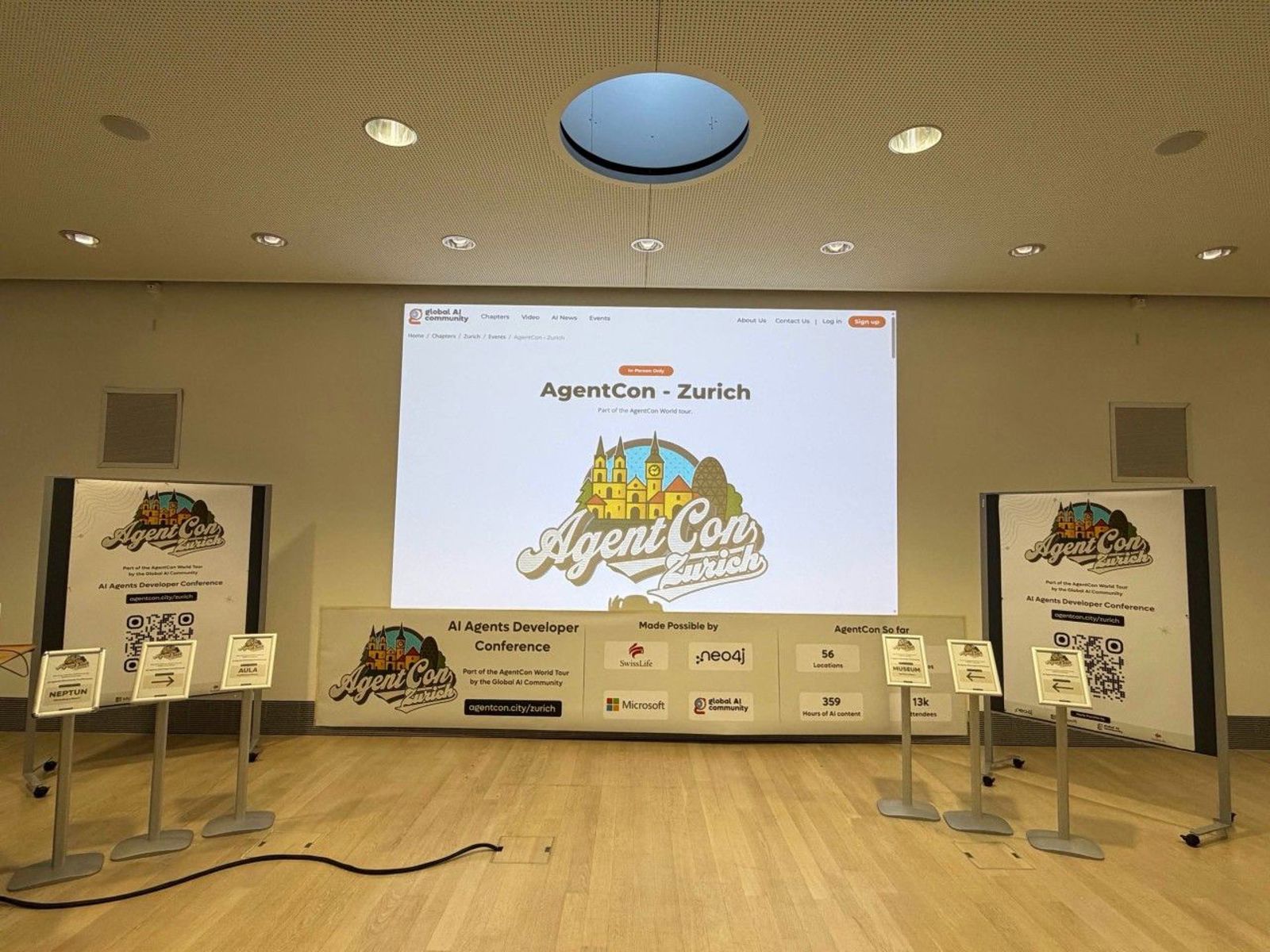
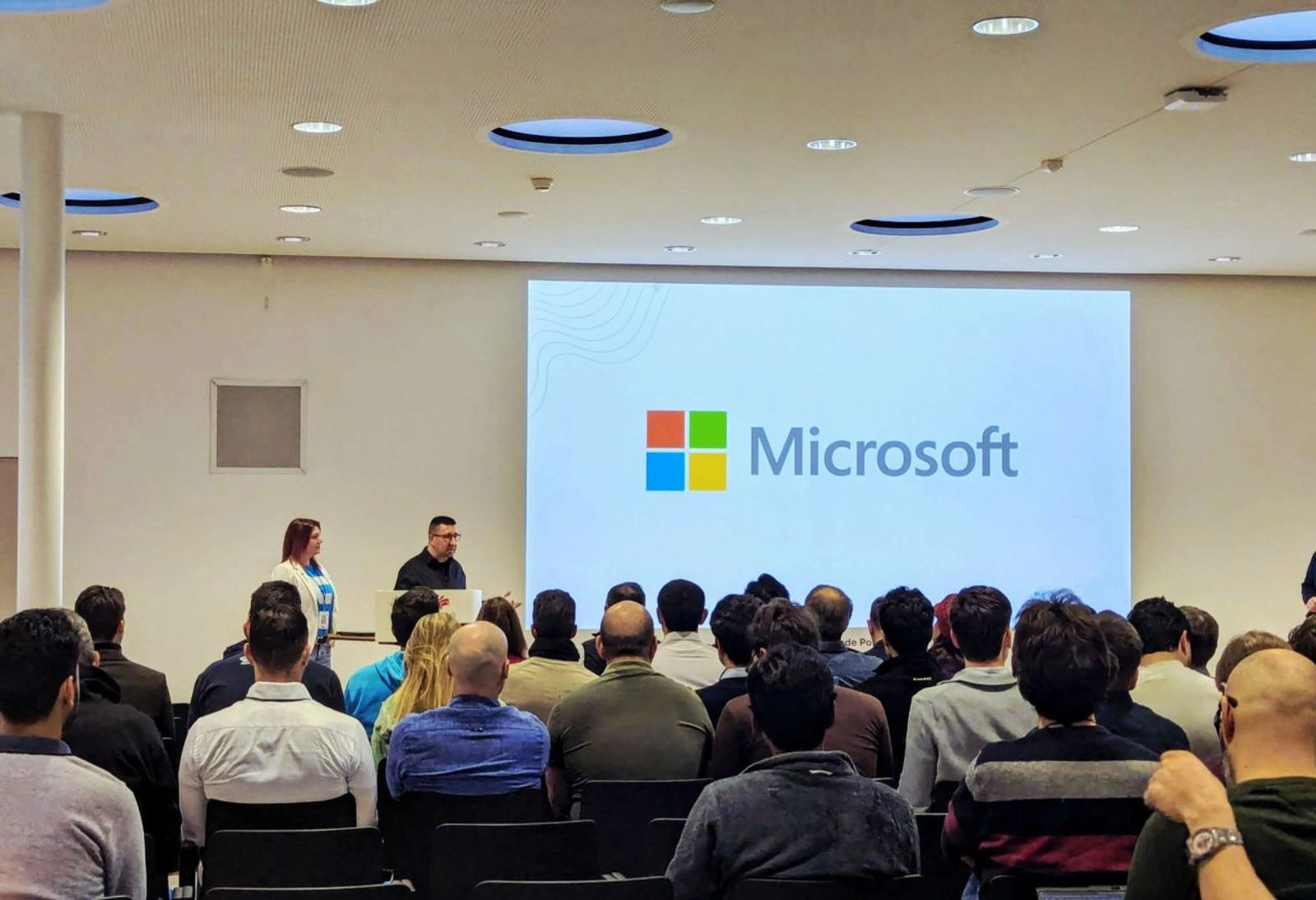
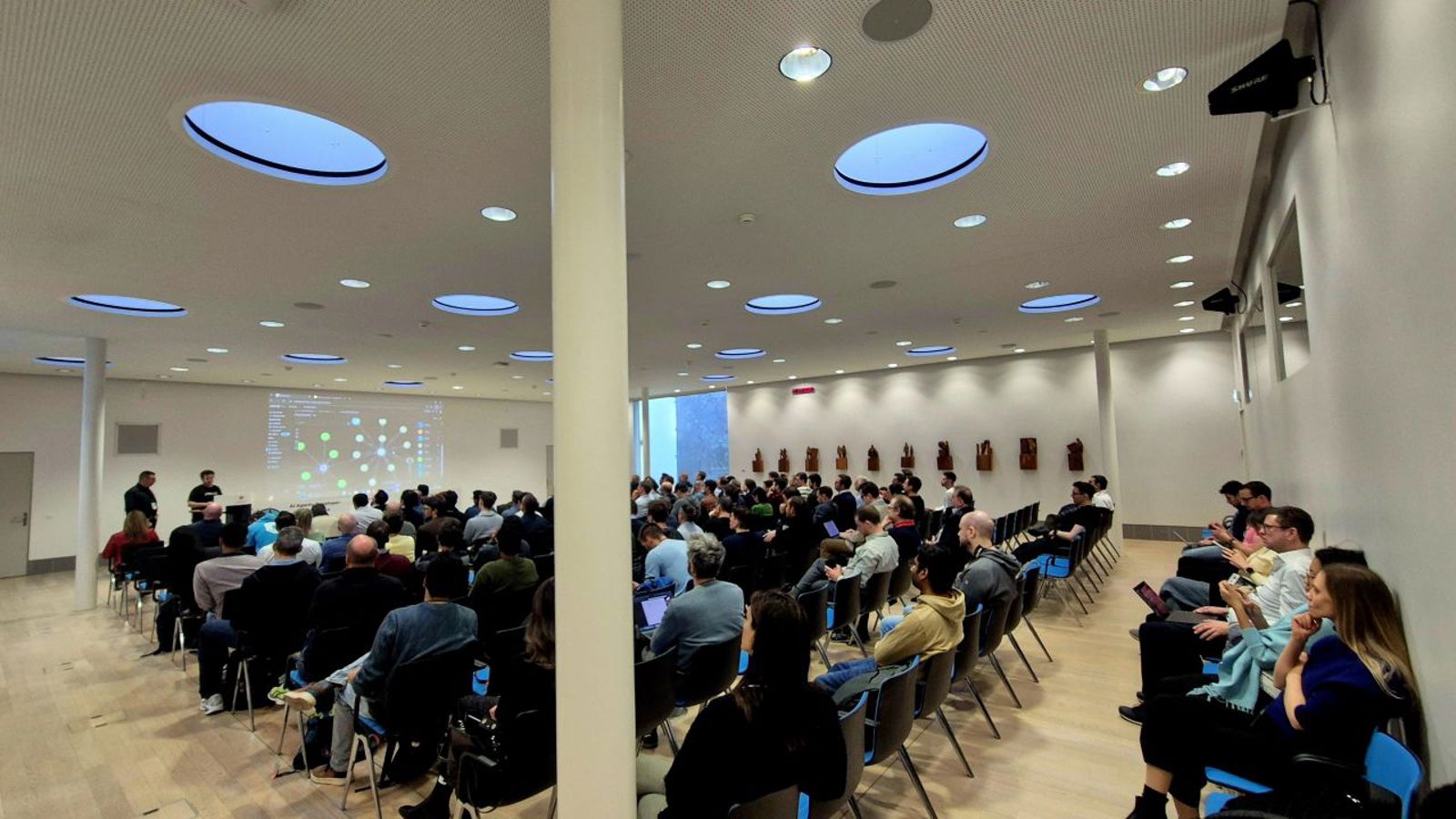
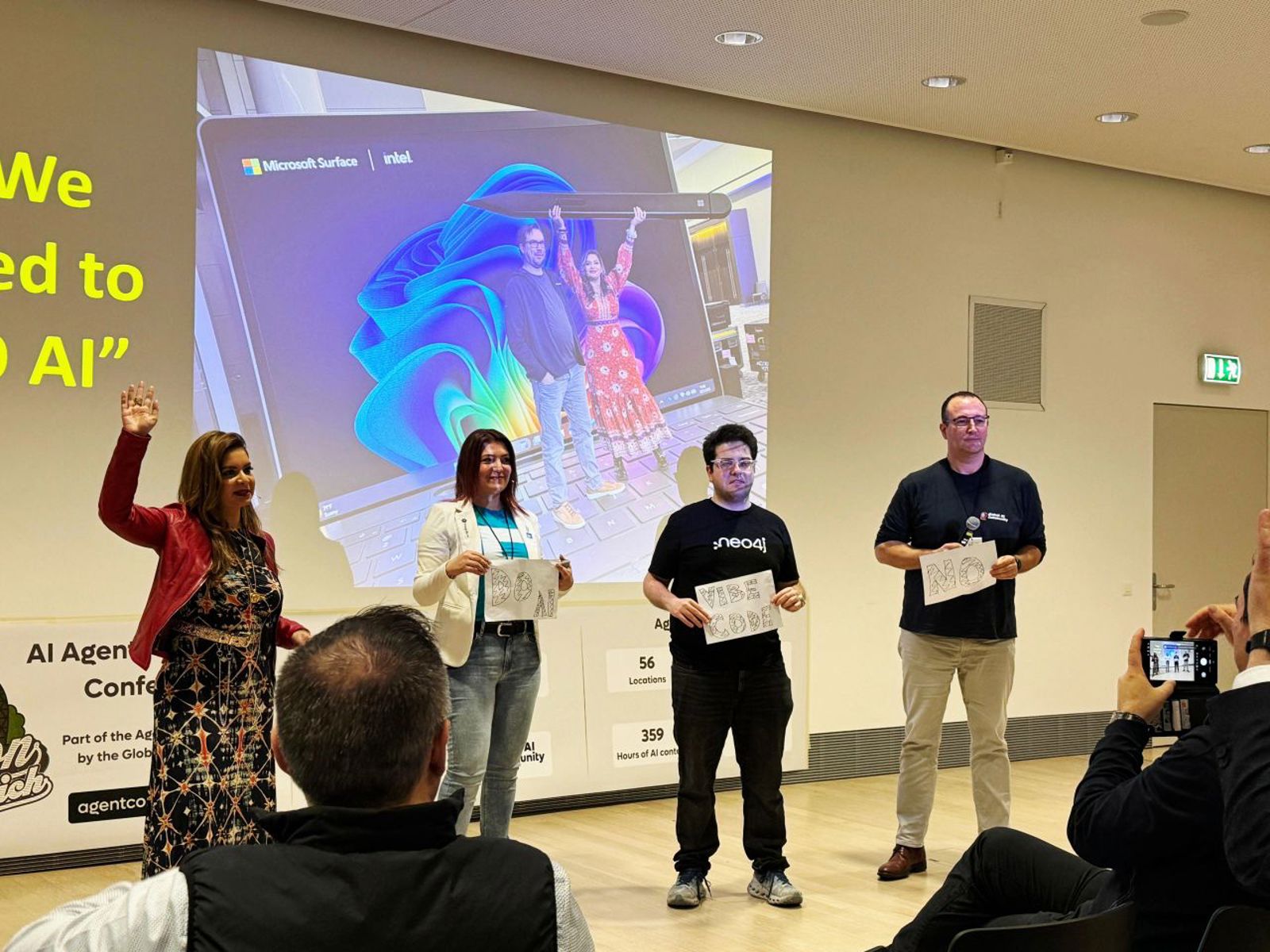
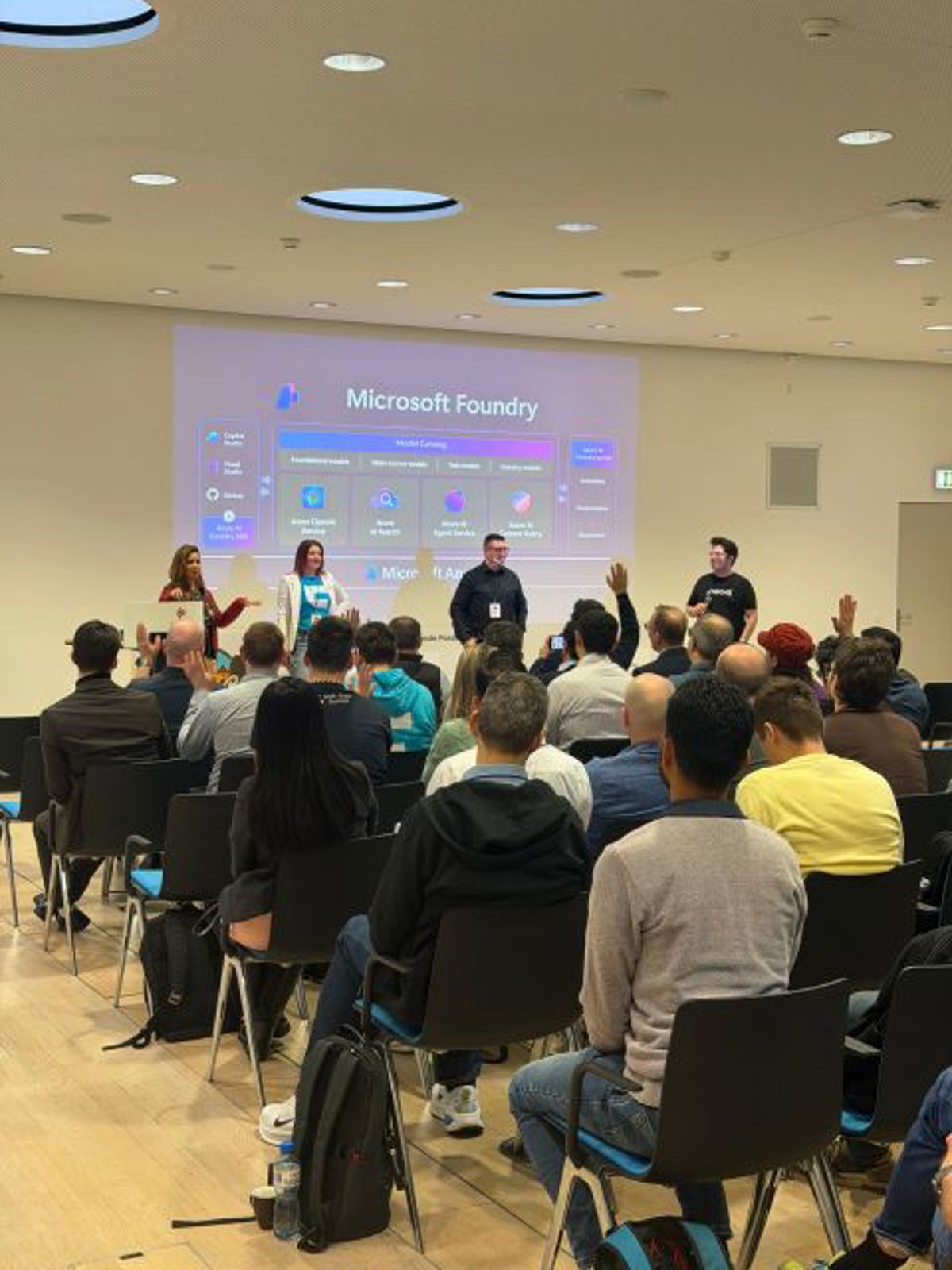
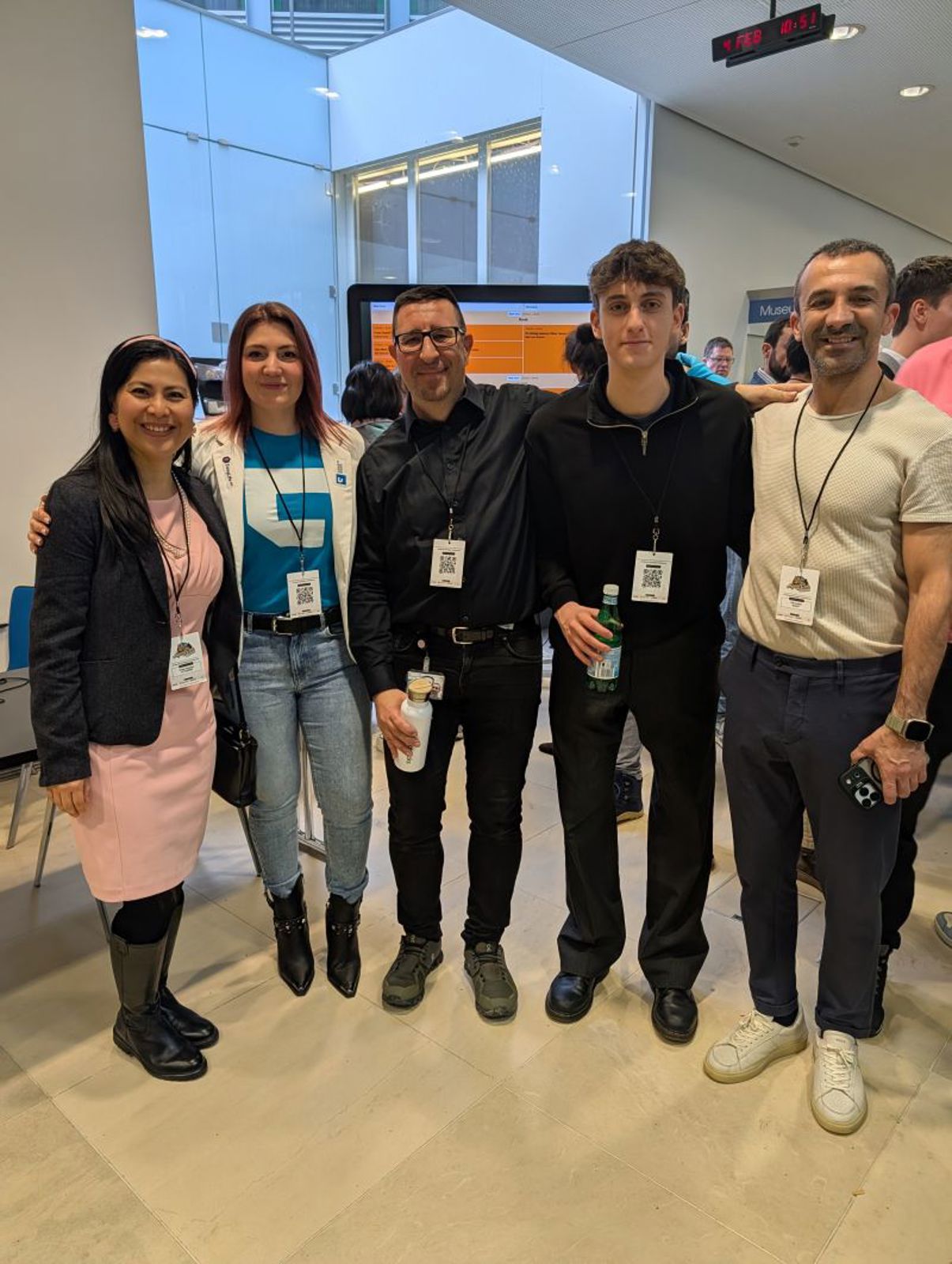
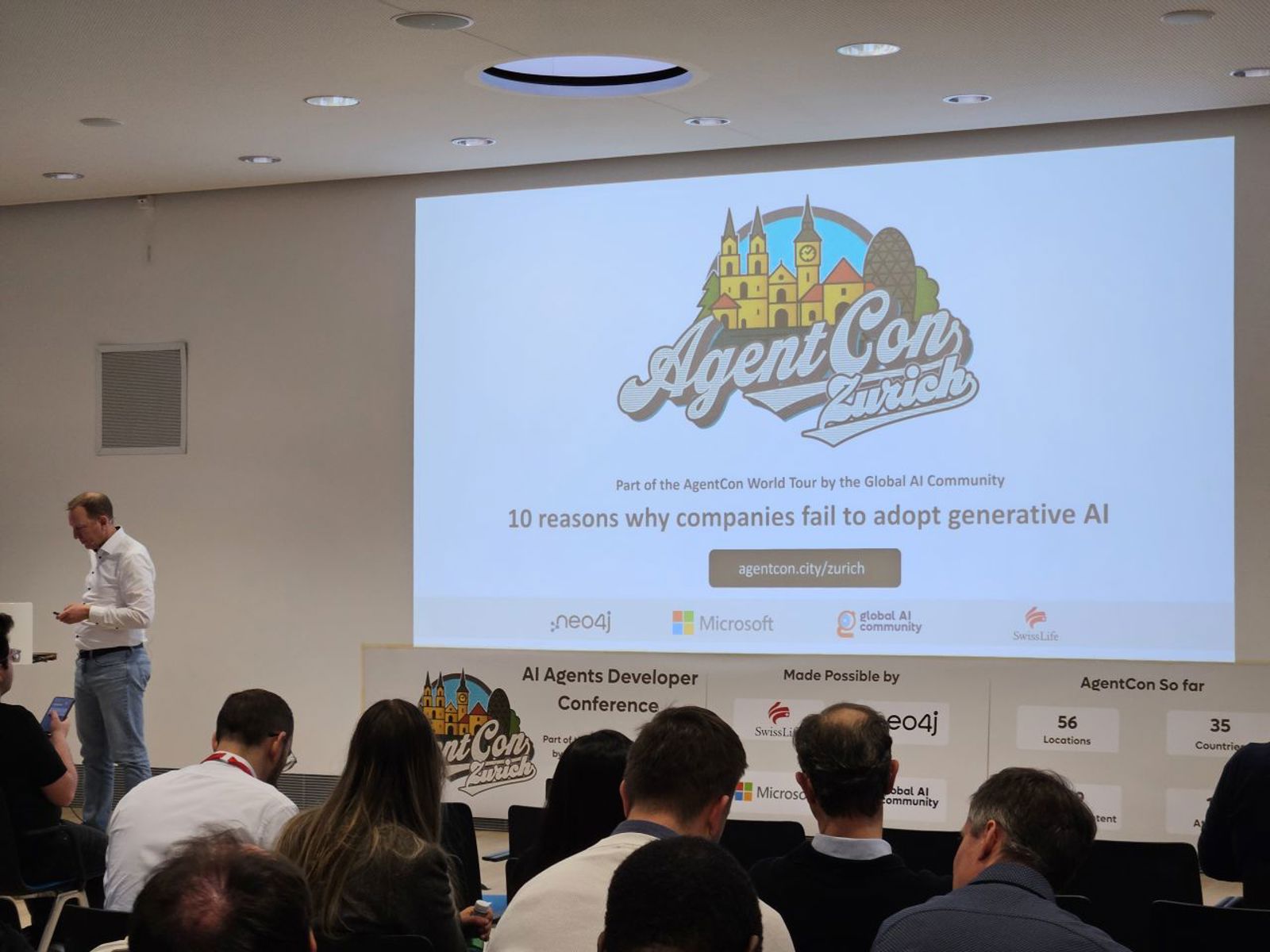
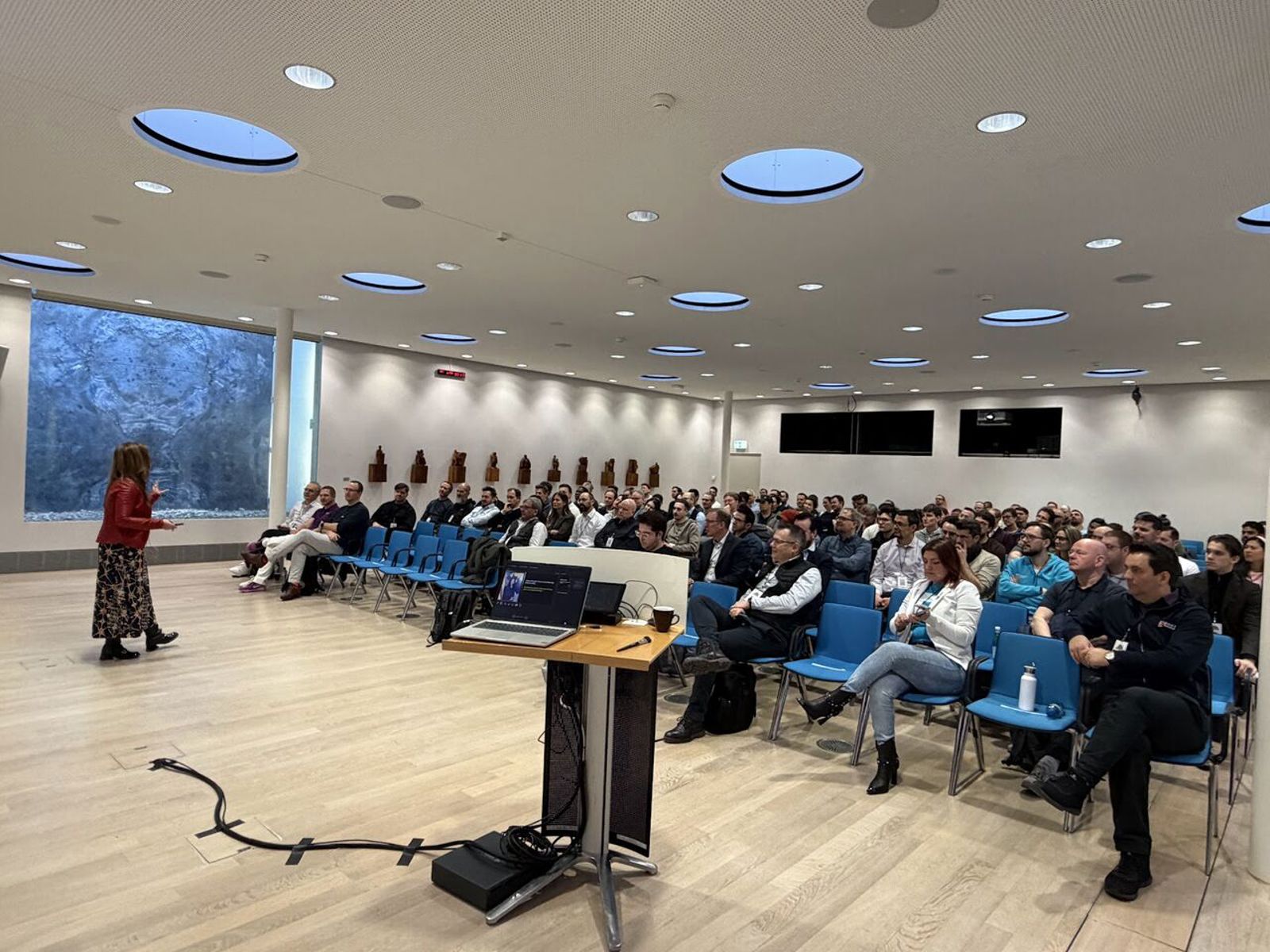
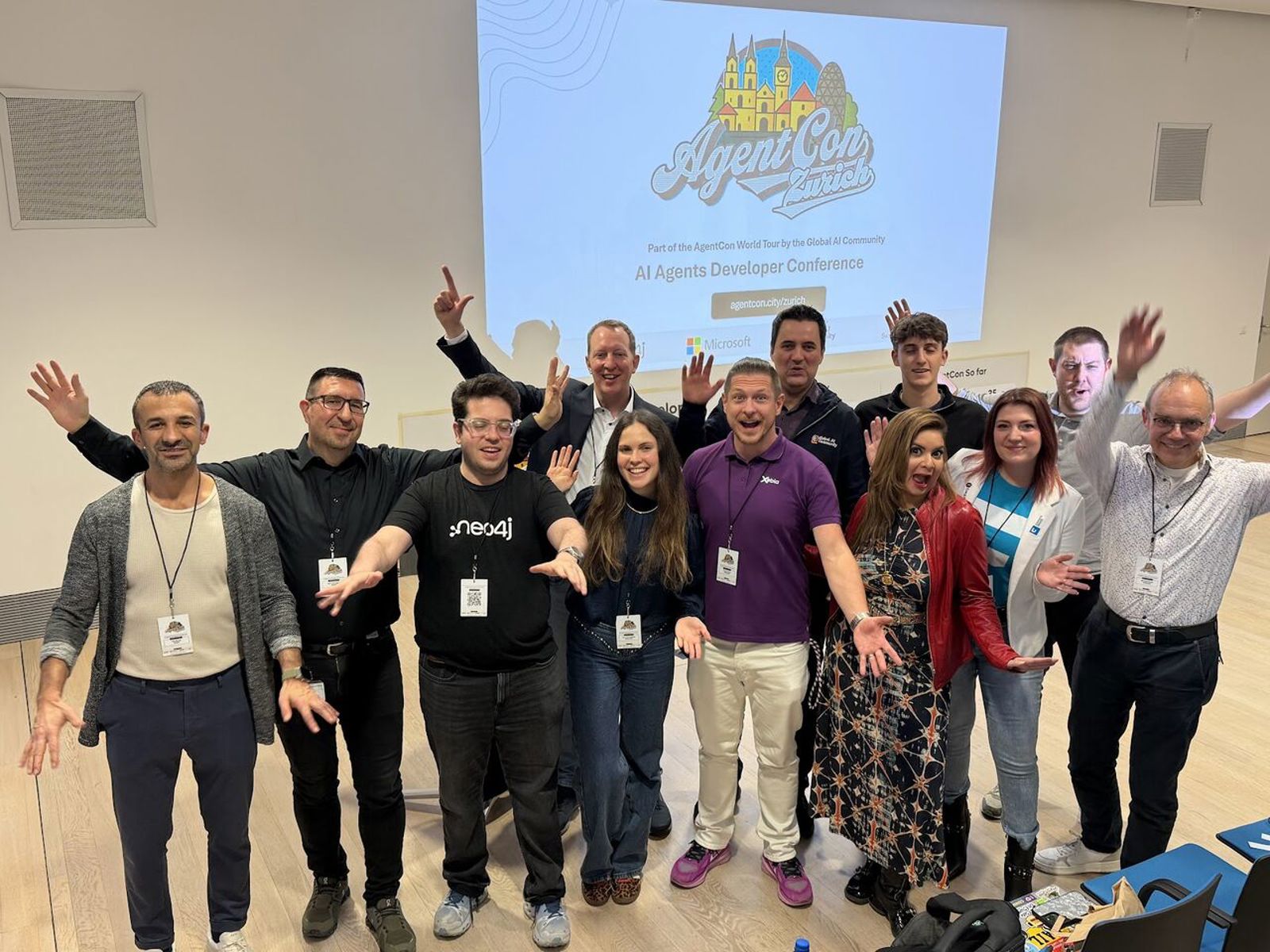
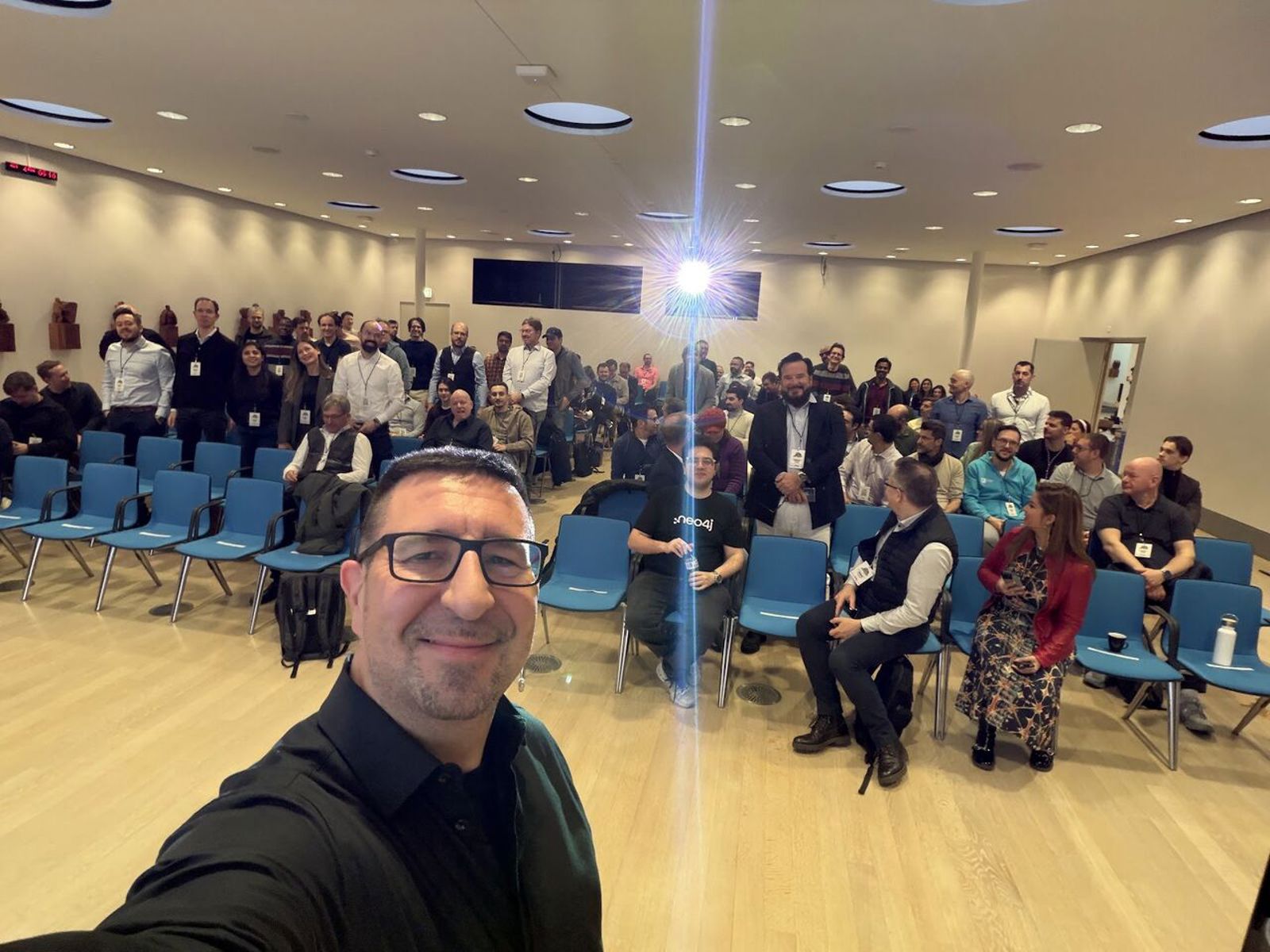
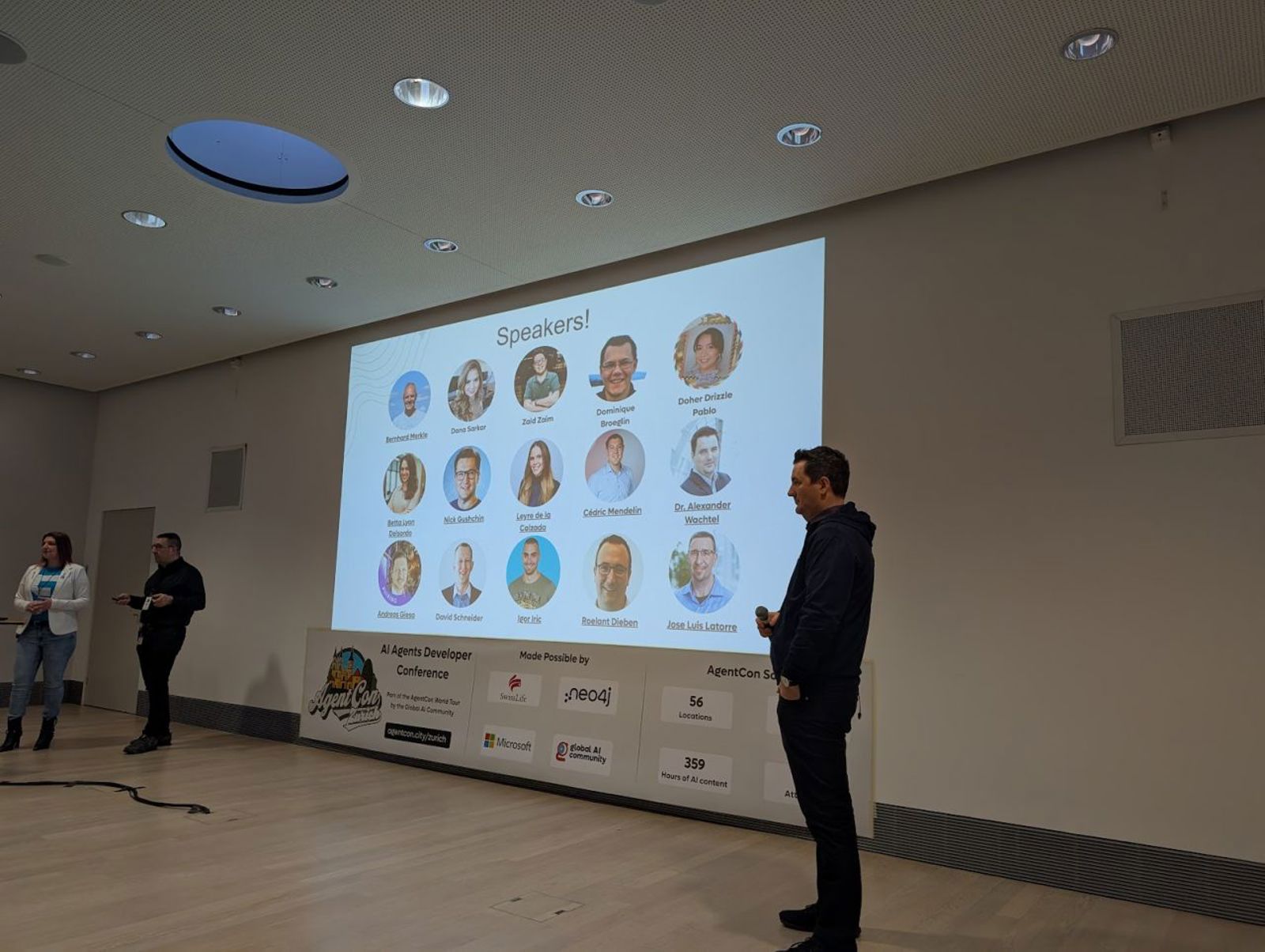
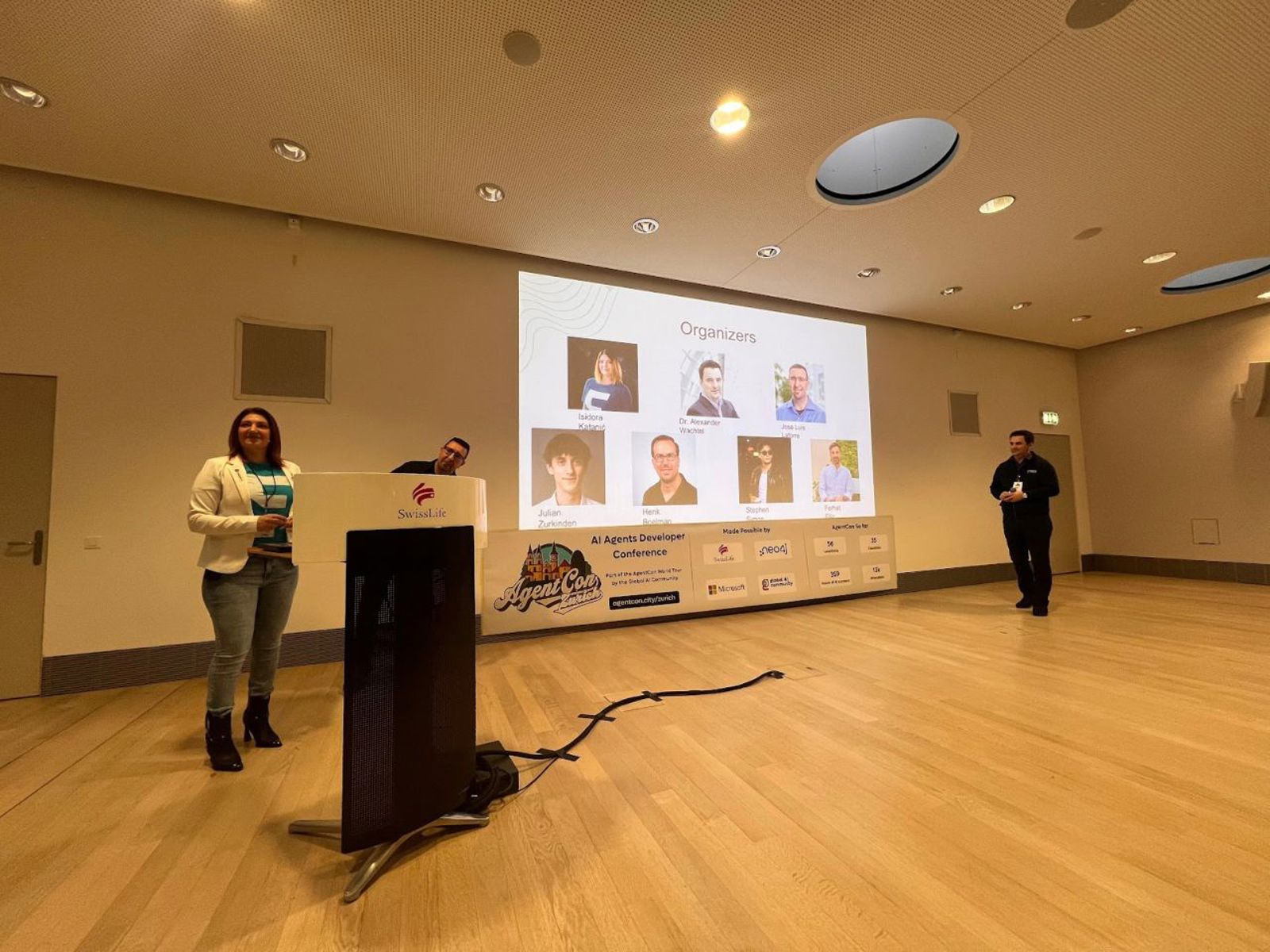
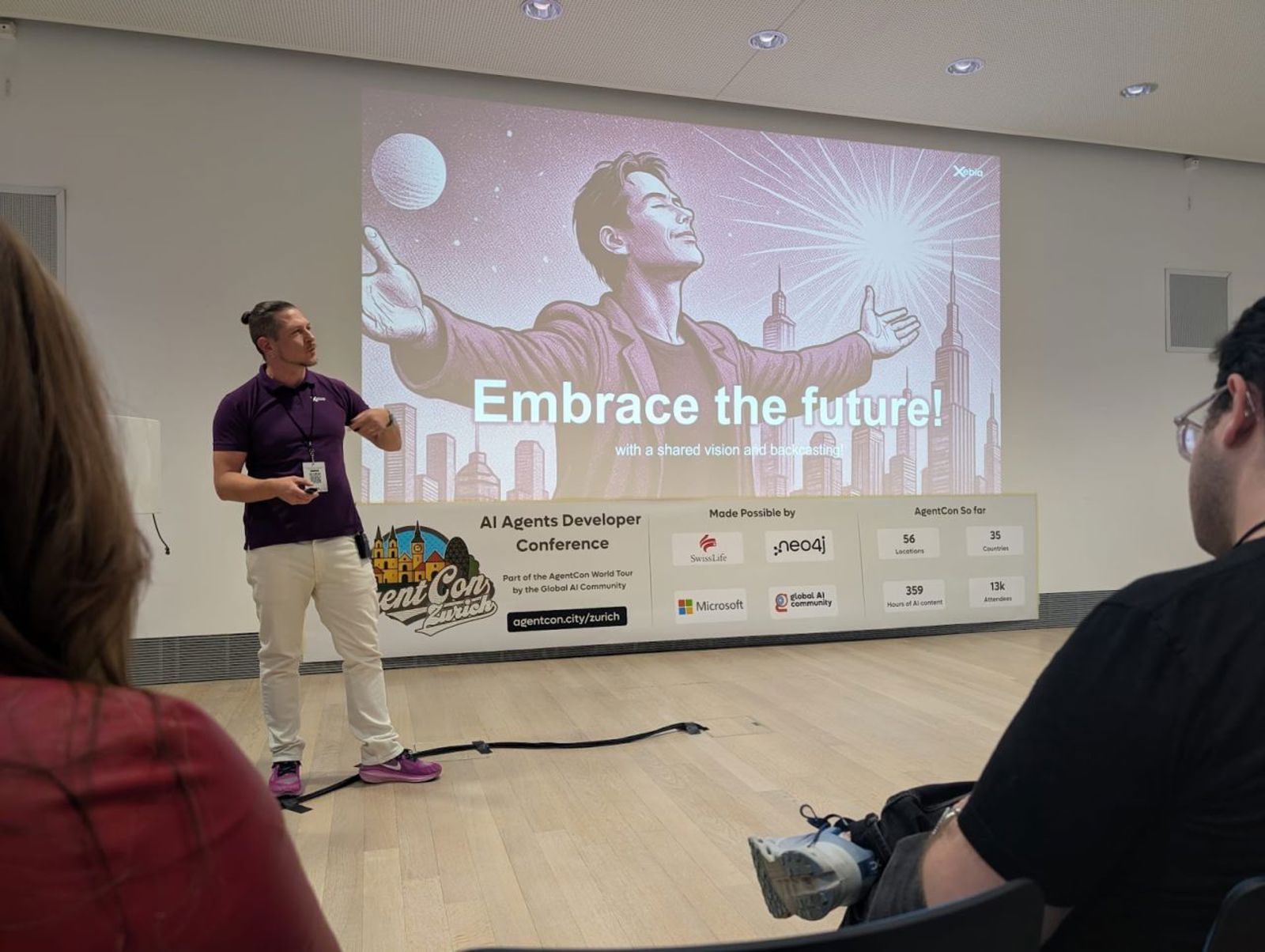
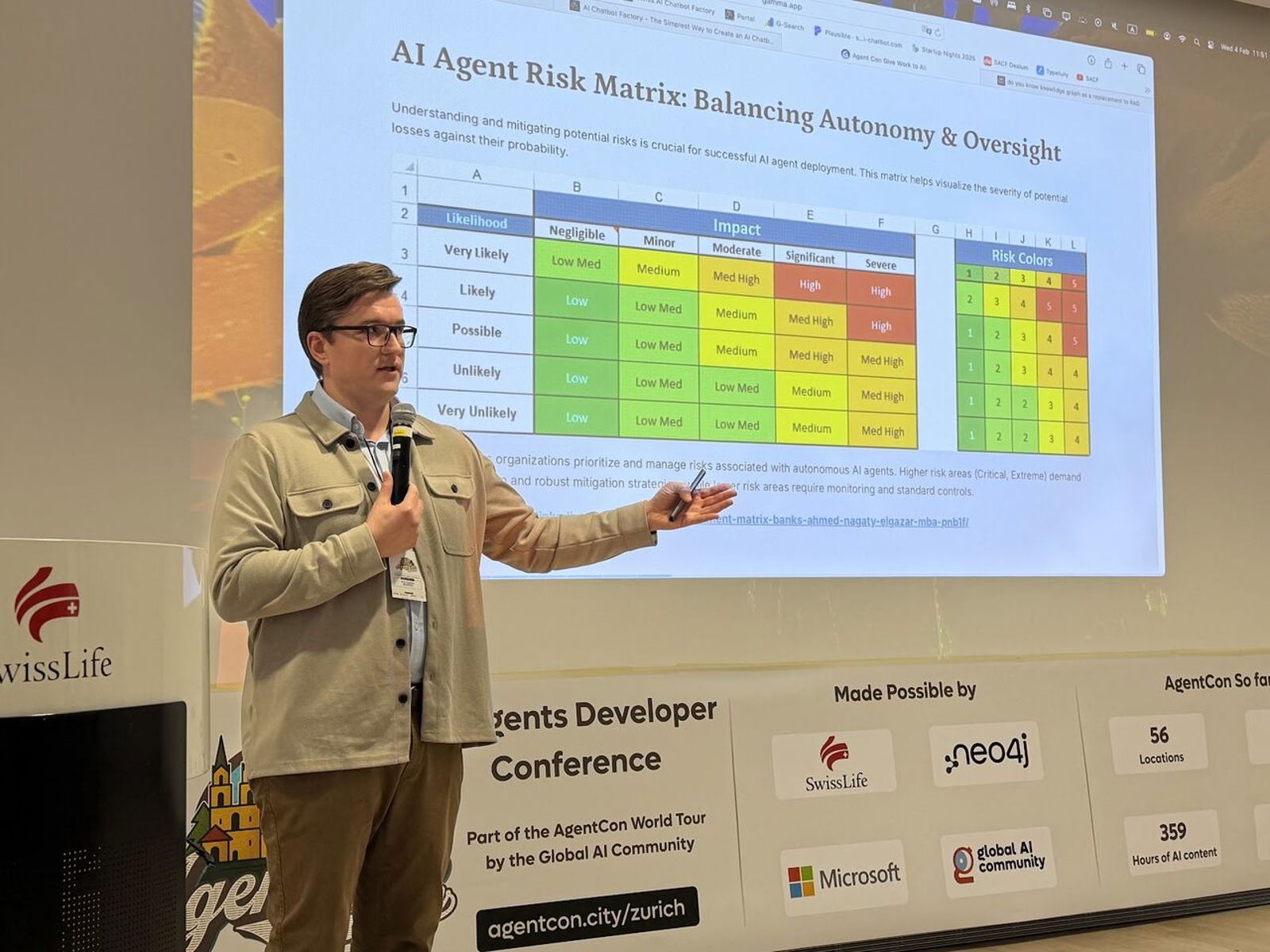
This is how it looked
Made possible by
Made possible by:

Explore AgentCon
AI Agents Developer Conference
AgentCon made possible by: