/Events /AgentCon - Saint Louis
AgentCon - Saint Louis
This event is part of AgentCon, organized by Global AI Saint Louis.
Schedule
About
Join us for the AI Agents World Tour, a global series of one-day conferences designed exclusively for developers building the future with AI agents.
From San Francisco to Singapore, we’re bringing together leading engineers, researchers, and creators to explore the cutting edge of AI agent design, deployment, and integration. Whether you’re building intelligent assistants, autonomous systems, or next-gen developer tools, this event is your fast track to practical knowledge, hands-on demos, and real-world insights.
What to Expect:
- Deep-Dive Talks from AI pioneers and industry leaders
- Technical Workshops on building, deploying, and scaling agents
- Live Demos of powerful open-source frameworks and tools
- Networking with a global community of builders and innovators
This isn't just another AI event — it’s where developers meet to talk about real code.
Ready to build the future?
Who's on stage
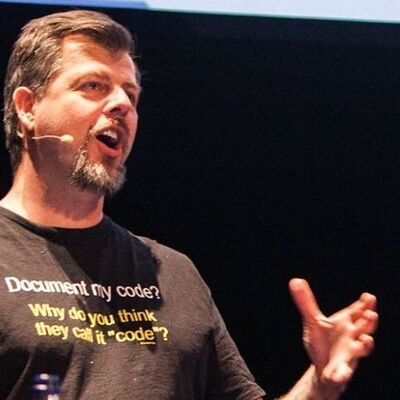
With 20 years of experience in web development, usability, and accessibility, Karl Groves is widely regarded as a pragmatic solution-finder and thought leader in the accessibility industry. In his role as accessibility consultant at AFixt, Karl focuses on pragmatic and efficient ways of improving the accessibility of websites and software.

Doug is a founding and managing partner of Covenant. He has a passion for delivering valuable AI business solutions for our clients. He is a strategic technology and business advisor to executives in diverse industries, including manufacturing, healthcare, and financial services. Prior to Covenant, Doug was responsible for Microsoft’s consulting services in the Central United States. Before Microsoft, Doug was a Partner at Arthur Andersen in their Business Consulting practice.

Sheila Shahpari is a software engineer and Microsoft Business Applications MVP. She has served in many roles within the professional services industry starting her career as a programmer and software development consultant. Sheila also provides technical guidance and services to start-ups in the AI and business application space. She specializes in Enterprise Architecture, Delivery Leadership, Capability Development, CRM, Enterprise Search, AI, and Software Development. In her spare time, she is active in numerous technical communities, and is involved with various nonprofits. In addition, she is an active runner and musician (though not at the same time), and is currently attempting the title of whiskey connoisseur.

Craig Brandt leads business development at ArchitectNow, a Microsoft Solutions Partner that builds custom software, AI applications, and cloud solutions for mid-market and enterprise clients across North America. ArchitectNow holds four Solutions Partner designations (Digital & App Innovation, Data & AI, Azure Infrastructure, and Support Services) plus the AI Apps on Azure Specialization, putting it among a small group of partners with credentials across both the AI and cloud sides of the Microsoft ecosystem. Based in Tampa, Florida, Craig works with executives many industries who are trying to figure out what AI and cloud should actually do for their business. His role puts him at the intersection of sales, strategy, and technology, which is where he developed his point of view on AI: the real opportunity is in giving it complete jobs and letting it execute. He's a salesperson by trade, not an engineer, and that's exactly why his perspective on AI lands with non-technical, and technical audiences. He uses AI in his own work every day, which is where his point of view comes from. He believes the next decade of AI adoption will be defined by business users who are willing to rethink how they work, and use AI as a coworker that you delegate tasks to.
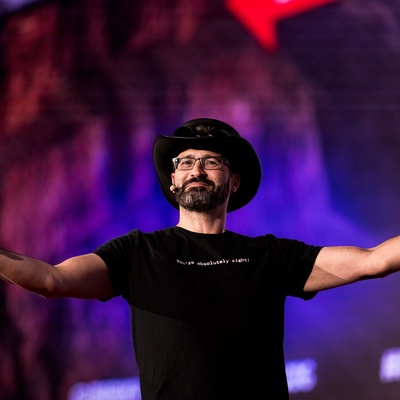
Baruch Sadogursky (@jbaruch) did Java before it had generics, DevOps before there was Docker, and DevRel before it had a name. He built DevRel at JFrog from a ten-person company through IPO, co-authored "Liquid Software" and "DevOps Tools for Java Developers," and is a Java Champion, Microsoft MVP, and CNCF Ambassador alumni. Today, he's obsessed with how AI agents actually write code. At Tessl, an AI agent enablement platform, Baruch focuses on context engineering, management, and sharing. On top of sharing context with AI agents, Baruch also shares knowledge with developers through blog posts, meetups, and conferences like DevNexus, QCon, Kubecon, and Devoxx, mostly about why vibecoding doesn't scale.

Ishan Shah is a Staff Software Engineer with 10+ years of experience designing and delivering large-scale, event-driven, and cloud-native systems across PayPal, Nordstrom, and Securonix. He has built real-time data platforms, CDC pipelines, inventory and decisioning systems, and high-throughput search and analytics infrastructure. His work increasingly sits at the intersection of AI and engineering operations, including AI-assisted development workflows, context engineering, agent guardrails, and AI-native reliability patterns. Ishan is especially interested in practical approaches to autonomous software development, AI SRE, incident-response agents, and “AI gardening” — managing context, memory, and entropy in long-running agentic systems. He mentors teams on reliability, observability, schema governance, and scalable platform design, with deep expertise in Java, Kafka, Debezium, AWS, Redis, Postgres, DynamoDB, and distributed systems.

I’m a Principal Software Engineer at Mastercard with 18 years of experience across software engineering, data analytics, distributed and large-scale systems. I’ve built and optimized software architectures globally in payments, banking, telecom and manufacturing, worked across multiple countries, and mentored engineers and organizations. I explore and practice AI, Payments, HPC, and emerging technologies to create systems that are scalable, high-performance, efficient, reliable and importantly secure systems.

Kevin started developing software in 1985 at the age of 10 when his new Apple IIgs booted to a command prompt and he didn't know what else to do with it. He is now the president of a St. Louis, Missouri based development firm called ArchitectNow (www.architectnow.net). At ArchitectNow, Kevin and his team specialize in a wide variety of tools and technologies while delivering applications across a variety of cloud and mobile platforms. He is an avid Telecaster player, fly fisherman, home brewer, and gamer (including everything from retro arcade games, to board games, to role playing games). When not spending time on any of those hobbies he waits patiently for a second season of Firefly.

Doug Romano is a Software architect at CSG Solutions, where he leads the BargeOps modernization project: converting 195,000+ lines of legacy VB.NET WinForms into ASP.NET Core using a production system of AI agents, skills, and a versioned governance "constitution." Over ten-plus months he's built and refined eighteen specialized agents, an on-demand skill catalog, and executable rule sheets that keep AI-generated code consistent across parallel sessions. He writes regularly at romano.io about agentic development, AI context engineering for .NET teams, and enterprise modernization patterns, including a widely-read series on structuring AI rules that don't drift. He works primarily with ASP.NET, Dapper, and SQL Server, and is interested in the practical governance problems that show up when AI agents do real work at scale.

Spencer Schneidenbach is an AI Architect, President, and CTO of Aviron Labs, an AI and software development firm based in the United States. He has been recognized as a Microsoft MVP for his AI expertise and contributions to the community. Visit our website at https://avironlabs.com for more information.
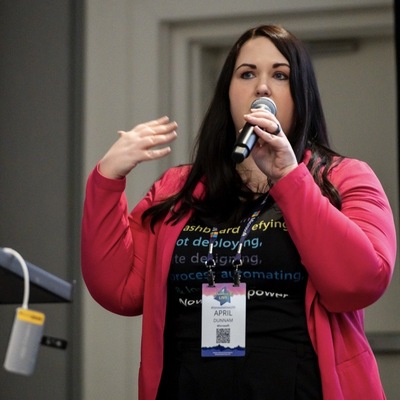
April Dunnam is a Principal Cloud Advocate at Microsoft, Microsoft Certified Trainer, and MVP alumni. Known for her ability to demystify the Power Platform and AI for both developers and makers, she blends deep technical knowledge with a knack for making complex topics approachable and fun. With a passion for community and sharing knowledge, April runs a popular YouTube channel dedicated to Power Platform, AI, and low-code development. She actively contributes to the Microsoft 365 and Power Platform community through sample contributions, community calls, and mentorship. April’s expertise has been recognized with the Microsoft Technology Excellence Award for her innovative Power Platform solutions. She is a frequent speaker at international conferences, helping businesses and developers harness the full potential of AI and the Power Platform. When she’s not advocating for the Power Platform, you can find her performing with her rock band or fueling her caffeine and LEGO building habits.
Jess is a seasoned coach, technologist, speaker, and author with deep tech industry experience since the mid-2000s. She has coached hundreds, combining empathy, real-world insight, and practical expertise. Focused on generative AI and immersive learning dojos, she’s a leading voice in AI-driven team performance. As the author of The Dojo Coach’s Pocket Guide, Jess distills her diverse experience into action, helping teams maximize their performance.

Becky is the owner of Savvy Technical Solutions, a consulting company based in the St. Louis area. She helps her clients build custom solutions on the Microsoft platform of products including Microsoft 365 and the Power Platform. She's a 17-time SharePoint MVP, Microsoft Certified Trainer, and has authored numerous on-demand courses as well as Microsoft exams. Becky is married with 3 children in elementary, middle and high school. Her primary hobby is taking kids to and from after-school activities.

As a Microsoft MVP and Principal AI Architect, I lead a transformative wave, evangelizing AI agents and Low-Code solutions to help organizations achieve high-value business transformation. With over 20 years of experience in this role, I have successfully designed and implemented integrated enterprise solutions that leverage AI Factory, AI/Copilot, Power Platform, Dataverse, Microsoft 365, SharePoint, and Azure technologies. My passion is to support business visionaries in achieving significant and sustainable results by applying my expertise in Artificial Intelligence, Adoption and Change Management, Enterprise Architecture, Cloud Services, and Low-Code Solutions. I also enjoy giving back to the community as an organizer of the Global AI St. Louis Chapter. I hold multiple awards/certifications, including Microsoft MVP and Microsoft Certified Trainer (MCT). CPMAI (Cognitive Project Management for AI), Project Management Professional (PMP), Advanced Project Management, Microsoft Certified Professional.
Sessions & tracks
Registration
Century Room A ·So You're An Agent Boss Now
A few years ago, generative AI felt like a party trick. Now it's in every workflow, every IDE, every meeting. But that was just the warmup. Agents are different. They don't wait for your prompt. They perceive, plan, and act toward a goal, sometimes through dozens of steps, across multiple systems, without you touching a thing. That's not an incremental improvement. It's a fundamentally different relationship between humans and software. In this keynote, we'll look at the full picture: where the agentic stack actually lives today (Azure AI Foundry, Semantic Kernel, AutoGen, MCP, low code tools and beyond), what's already reshaping real industries, and what your role looks like inside all of it. Agents need direction. They need judgment. They need someone who understands what good looks like and can tell when it's going sideways. That's you. The AgentBoss era isn't coming. It's here. The question is whether you're ready to lead it.
April Dunnam is a Principal Cloud Advocate at Microsoft, Microsoft Certified Trainer, and MVP alumni. Known for her ability to demystify the Power Platform and AI for both developers and makers, she blends deep technical knowledge with a knack for making complex topics approachable and fun. With a passion for community and sharing knowledge, April runs a popular YouTube channel dedicated to Power Platform, AI, and low-code development. She actively contributes to the Microsoft 365 and Power Platform community through sample contributions, community calls, and mentorship. April’s expertise has been recognized with the Microsoft Technology Excellence Award for her innovative Power Platform solutions. She is a frequent speaker at international conferences, helping businesses and developers harness the full potential of AI and the Power Platform. When she’s not advocating for the Power Platform, you can find her performing with her rock band or fueling her caffeine and LEGO building habits.
Coding While You Sleep: How I Deliver Real, Paid Projects Running AI Agents Overnight
AI coding tools like Claude Code and OpenAI Codex are powerful amplifiers of existing developer skill. But exactly how far can you take them? Is Ralph really a useful way to write software?
Spencer ran AI agents overnight, letting them tackle complex problems while he slept, for both paid projects (that netted over USD$250k in revenue!) as well as some fun side projects - and he's been doing it long before Ralph was cool.
In this session, Spencer will share the lessons he learned from pushing AI coding agents to their limits. We'll discuss how to structure prompts and tasks for long-running agent sessions, how to set up your projects so agents can work autonomously, and how to review and validate AI-generated code so you're not shipping garbage. We'll also cover the practical, everyday techniques that make you a more effective AI-assisted developer.
If you've been curious about Ralphing but haven't figured out how to make Ralph truly productive, this session will give you a roadmap. Come ready to learn how to put AI agents to work - even while you're off the clock.
Spencer Schneidenbach is an AI Architect, President, and CTO of Aviron Labs, an AI and software development firm based in the United States. He has been recognized as a Microsoft MVP for his AI expertise and contributions to the community. Visit our website at https://avironlabs.com for more information.
Beyond the Transaction: Securing Intent, Identity and Trust in the Agentic Commerce Stack
AI agents are no longer just answering questions but acting on them. Autonomous agents are initiating real payments on real card rails, on behalf of real users. The commerce layer above those rails is fragmenting into at least four competing protocols (AP2, ACP, UCP, and the card networks' agent-aware tokenization). The hard question is not which protocol wins, but how you build a system that is safe regardless of which one, or combination, you speak.
This is my working architect's tour of the Agentic Commerce Stack: payment rails, AP2/ACP/UCP mandates, agent identity, merchant integration, and the seams between them. Where identity lives, where intent lives, where trust must be cryptographically proven, how liability flows.
From an independent security analysis of AP2, eight attack classes are understood. Three are universal across every protocol and framework: intent drift, mandate replay, and over-broad delegation. I frame all eight; I go deep on three.
The industry's response has converged on three frontiers, each mapping to one failure: Cryptographic proof of intent (signed, scoped mandates) answers intent drift. Decentralized agent identity (Know-Your-Agent registries, FIDO attestation) answers impersonation and over-broad delegation. Accountable audit trails across buyer,agent,developer,merchant answer mandate replay and dispute.
I walk an end-to-end transaction for each: discovery, intent capture, delegation, authorization, settlement, dispute. Marking every place a control belongs. Halfway through, I leave the slides. The reference at github.com/phanipendurthi/ap2-jwt-security (Apache 2.0) demonstrates JWT mandate signing, replay defenses, intent-binding tests, and a runnable buyer-agent-merchant-network loop. I run it live, then break each defense.
AP2 and Verifiable Intent landed at FIDO in April 2026. ChatGPT Instant Checkout went live with Stripe in September 2025. Walmart × Google launched UCP at NRF 2026. Builders need a shared threat model fast.
I’m a Principal Software Engineer at Mastercard with 18 years of experience across software engineering, data analytics, distributed and large-scale systems. I’ve built and optimized software architectures globally in payments, banking, telecom and manufacturing, worked across multiple countries, and mentored engineers and organizations. I explore and practice AI, Payments, HPC, and emerging technologies to create systems that are scalable, high-performance, efficient, reliable and importantly secure systems.
Lunch
Century Room A ·From Vibe Coding to Production-Ready: Mastering Spec-Driven Development with GitHub Spec Kit
Stop debugging AI-generated code that "looks right but doesn't work." Join ArchitectNow for an essential exploration of spec-driven development—the methodology transforming how engineering teams work with AI coding assistants like GitHub Copilot and Claude Code. In this hands-on session, you'll discover how to turn vague ideas into detailed specifications that AI agents can reliably implement, eliminating the costly iteration cycles and technical debt that plague traditional "vibe coding" approaches.
Using GitHub's open-source Spec Kit toolkit, we'll demonstrate the complete workflow: establishing constitutional principles that encode your team's standards, creating executable specifications that serve as the source of truth, generating technical plans that respect architectural constraints, and breaking down work into focused tasks that AI agents implement consistently. You'll see a real application built from scratch in under 20 minutes—not a toy demo, but production-quality code with testing, security, and maintainability baked in from the start. We'll cover how to integrate this approach with your existing Git workflows, how specifications become living documentation that survives team turnover, and how early adopters are achieving 3-10x development speed improvements while maintaining architectural consistency.
Whether you're frustrated with inconsistent AI output, struggling to maintain quality as your team adopts AI tools, or looking to scale AI-assisted development across your organization, this webinar provides the practical framework and proven toolkit you need. Learn why organizations from AWS to financial services are adopting specification-driven approaches, and walk away with actionable strategies you can implement immediately to transform your AI coding assistants from unreliable generators into reliable implementation partners.
Who Should Attend:
Software developers and engineers using or evaluating AI coding assistants, engineering managers seeking to improve team productivity and code quality, technical leads responsible for architectural standards and governance, and technology decision-makers exploring sustainable approaches to AI-assisted development.
Kevin started developing software in 1985 at the age of 10 when his new Apple IIgs booted to a command prompt and he didn't know what else to do with it. He is now the president of a St. Louis, Missouri based development firm called ArchitectNow (www.architectnow.net). At ArchitectNow, Kevin and his team specialize in a wide variety of tools and technologies while delivering applications across a variety of cloud and mobile platforms. He is an avid Telecaster player, fly fisherman, home brewer, and gamer (including everything from retro arcade games, to board games, to role playing games). When not spending time on any of those hobbies he waits patiently for a second season of Firefly.
From Curiosity to Competitive Advantage: The Business Case for AI Agents
AI agents are quickly moving from experimentation to board level conversation—but many executive teams are still asking the same questions: Where do agents actually create value? How do we measure ROI? And how do we scale responsibly without introducing risk?
In this session, Doug Meyer explores the business case for AI agents through an executive lens, focusing on outcomes, economics, and governance—not technology for technology’s sake.
Drawing on real world enterprise scenarios, Doug outlines how organizations are using agents to automate high friction work, accelerate decision making, and improve productivity across finance, operations, IT, and customer facing teams. Attendees will learn a practical framework for identifying agent use cases that align to strategic priorities, building a credible ROI model that resonates with the C suite and board, and creating an adoption roadmap that balances speed with security, compliance, and responsible AI principles.
The session also addresses common executive pitfalls—such as over piloting, unclear ownership, and underestimating change management—and how leading organizations avoid them.
This presentation is designed to help executives move from AI interest to confident, outcome driven action.
Key Executive Takeaways • How to identify high value AI agent use cases tied to efficiency, cost reduction, revenue enablement, and risk mitigation • A simple, repeatable ROI framework for AI agents using metrics executives already care about • What successful organizations do differently when moving from pilots to enterprise scale deployment • Governance, security, and human in the loop considerations every executive team must address • How to build an AI agent roadmap aligned to business strategy—not hype
Doug is a founding and managing partner of Covenant. He has a passion for delivering valuable AI business solutions for our clients. He is a strategic technology and business advisor to executives in diverse industries, including manufacturing, healthcare, and financial services. Prior to Covenant, Doug was responsible for Microsoft’s consulting services in the Central United States. Before Microsoft, Doug was a Partner at Arthur Andersen in their Business Consulting practice.
From Prompting to Production: Guardrails for Autonomous Software Development Agents
Many teams can demo coding agents. Far fewer can make them safe enough for real engineering use. This session walks through a production-minded blueprint for autonomous software-development agents that can move from issue understanding to implementation, testing, and PR creation using context engineering, harness-based execution, and guardrails.
What would be covered: • task decomposition and bounded execution • context packaging for repos, tickets, logs, and design docs • harness-based validation in Dockerized test environments • tool permissioning and approval boundaries • generating reviewable PRs instead of unsafe direct changes
Ishan Shah is a Staff Software Engineer with 10+ years of experience designing and delivering large-scale, event-driven, and cloud-native systems across PayPal, Nordstrom, and Securonix. He has built real-time data platforms, CDC pipelines, inventory and decisioning systems, and high-throughput search and analytics infrastructure. His work increasingly sits at the intersection of AI and engineering operations, including AI-assisted development workflows, context engineering, agent guardrails, and AI-native reliability patterns. Ishan is especially interested in practical approaches to autonomous software development, AI SRE, incident-response agents, and “AI gardening” — managing context, memory, and entropy in long-running agentic systems. He mentors teams on reliability, observability, schema governance, and scalable platform design, with deep expertise in Java, Kafka, Debezium, AWS, Redis, Postgres, DynamoDB, and distributed systems.
Registration
Century Room B ·So You're An Agent Boss Now
A few years ago, generative AI felt like a party trick. Now it's in every workflow, every IDE, every meeting. But that was just the warmup. Agents are different. They don't wait for your prompt. They perceive, plan, and act toward a goal, sometimes through dozens of steps, across multiple systems, without you touching a thing. That's not an incremental improvement. It's a fundamentally different relationship between humans and software. In this keynote, we'll look at the full picture: where the agentic stack actually lives today (Azure AI Foundry, Semantic Kernel, AutoGen, MCP, low code tools and beyond), what's already reshaping real industries, and what your role looks like inside all of it. Agents need direction. They need judgment. They need someone who understands what good looks like and can tell when it's going sideways. That's you. The AgentBoss era isn't coming. It's here. The question is whether you're ready to lead it.
April Dunnam is a Principal Cloud Advocate at Microsoft, Microsoft Certified Trainer, and MVP alumni. Known for her ability to demystify the Power Platform and AI for both developers and makers, she blends deep technical knowledge with a knack for making complex topics approachable and fun. With a passion for community and sharing knowledge, April runs a popular YouTube channel dedicated to Power Platform, AI, and low-code development. She actively contributes to the Microsoft 365 and Power Platform community through sample contributions, community calls, and mentorship. April’s expertise has been recognized with the Microsoft Technology Excellence Award for her innovative Power Platform solutions. She is a frequent speaker at international conferences, helping businesses and developers harness the full potential of AI and the Power Platform. When she’s not advocating for the Power Platform, you can find her performing with her rock band or fueling her caffeine and LEGO building habits.
Intro to Copilot Studio
Have you heard of Copilot Studio but never used it? Come learn how to build your first agent using Copilot Studio! In this session we will walk through Copilot Studio and show you how you can build and deploy your first agent. We will also discuss how Copilot Studio can be used with Power Automate and Microsoft 365 Copilot. You will walk away from this session with an overview of the Copilot Studio application and an idea of how you too can get started building your own agent.
Becky is the owner of Savvy Technical Solutions, a consulting company based in the St. Louis area. She helps her clients build custom solutions on the Microsoft platform of products including Microsoft 365 and the Power Platform. She's a 17-time SharePoint MVP, Microsoft Certified Trainer, and has authored numerous on-demand courses as well as Microsoft exams. Becky is married with 3 children in elementary, middle and high school. Her primary hobby is taking kids to and from after-school activities.
Building Copilot Declarative Agents with MCP Apps
Microsoft 365 Copilot is no longer just a chat assistant — it's a platform you can extend with your own agents. In this session, you'll learn how to build a custom Copilot agent and make it genuinely interactive using the new MCP Apps specification. We'll cover what declarative agents are, how to ground them in your own data and actions, and how MCP Apps lets you render real HTML widgets — forms, cards, confirmation screens — directly inside the Copilot chat pane. No context switching, no separate apps. Everything is grounded in a real working sample: a PTO Request agent that guides users through a complete approval workflow, backed by Microsoft Graph and SharePoint, without the user ever leaving Copilot. You'll leave with a clear mental model of how these technologies fit together and a blueprint you can apply to your own scenarios.
As a Microsoft MVP and Principal AI Architect, I lead a transformative wave, evangelizing AI agents and Low-Code solutions to help organizations achieve high-value business transformation. With over 20 years of experience in this role, I have successfully designed and implemented integrated enterprise solutions that leverage AI Factory, AI/Copilot, Power Platform, Dataverse, Microsoft 365, SharePoint, and Azure technologies. My passion is to support business visionaries in achieving significant and sustainable results by applying my expertise in Artificial Intelligence, Adoption and Change Management, Enterprise Architecture, Cloud Services, and Low-Code Solutions. I also enjoy giving back to the community as an organizer of the Global AI St. Louis Chapter. I hold multiple awards/certifications, including Microsoft MVP and Microsoft Certified Trainer (MCT). CPMAI (Cognitive Project Management for AI), Project Management Professional (PMP), Advanced Project Management, Microsoft Certified Professional.
Lunch
Century Room B ·From a 564-Line CLAUDE.md to a Constitution in Production: Agents, Skills, and Rules That Govern 195
Most agent demos work because one person is steering one session. Put eighteen agents and a handful of parallel sessions against the same 195,000-line codebase, and a new failure mode shows up: drift. Each agent learns the codebase a little differently. Every "remember this" update is additive and nobody reviews it. Within weeks, three files give three different answers to the same question, at machine speed.
This is a field report from a real production conversion: 195k+ lines of legacy code, driven by a system of AI agents. I'll trace the actual arc, from a 564-line monolithic instruction file, through a messy "memory file explosion," to a governance model that cut always-loaded context by 82% while the procedural knowledge it captured actually grew.
You'll leave with a concrete, framework-agnostic pattern: a versioned "constitution" as the single source of truth, thin always-loaded agents that route to on-demand skills, executable rule sheets that catch drift in a diff, and a lifecycle that runs the governance for you instead of asking people to remember it. Every version number, agent name, and rule ID in the talk comes straight out of the repo. Nothing is cleaned up for the slides.
Key Takeaways
Attendees will leave able to:
Diagnose agent drift. Recognize why additive, unreviewed "memory updates" quietly produce contradictory output once multiple agents and sessions touch the same context. Separate principles from procedures. Keep always-loaded context minimal (the principles) and push verbose, evolving recipes into on-demand skills, with the token math to back it up (an 82% reduction in always-loaded context). Apply the constitutional model. A five-tier hierarchy (router, constitution, agents, skills, rule sheets) with explicit precedence so every file knows its authority and conflicts resolve the same way every time. Build thin agents, fat skills. Why always-on agents should only declare scope and route, and why procedures belong in skills that page in on demand. Make governance executable. Turn rules into grep-able checks and a command-driven lifecycle (spec, plan, tasks, implement, audit) so the rules enforce themselves on every diff. Steal the one-rule-four-altitudes pattern. State each rule once at the top, derive every lower expression from it, and let an amendment's "blast radius" report tell you every place to update.
Why This Talk / Why Me
This isn't a hello-world agent or a vendor demo. It's eight-plus months of running a real agentic conversion in production, including the parts that got a lot messier than the architecture diagram. The lessons map onto whatever framework the audience uses, whether that's Semantic Kernel, LangChain, AutoGen, CrewAI, or Claude Code, because the underlying problem (keeping many agents coherent against shared context) is universal.
The session hits several CFP topic areas directly: integrating AI agents into real products and workflows, multi-agent collaboration and orchestration patterns, prompt/context engineering and evaluation, and agent governance and monitoring.
Doug Romano is a Software architect at CSG Solutions, where he leads the BargeOps modernization project: converting 195,000+ lines of legacy VB.NET WinForms into ASP.NET Core using a production system of AI agents, skills, and a versioned governance "constitution." Over ten-plus months he's built and refined eighteen specialized agents, an on-demand skill catalog, and executable rule sheets that keep AI-generated code consistent across parallel sessions. He writes regularly at romano.io about agentic development, AI context engineering for .NET teams, and enterprise modernization patterns, including a widely-read series on structuring AI rules that don't drift. He works primarily with ASP.NET, Dapper, and SQL Server, and is interested in the practical governance problems that show up when AI agents do real work at scale.
Vibe Coding Accessibility
This session explores how today’s most powerful AI-based coding tools are shaping the future of accessible technology. With tools like GitHub Copilot, ChatGPT, and other AI code assistants becoming mainstream, developers face both new opportunities and new risks. This session will provide a candid overview of the leading AI coding platforms and evaluate how well they support accessibility—from generating accessible code patterns to avoiding common pitfalls that exclude users with disabilities. We’ll also discuss their role in remediation: Can AI help fix inaccessible code, or does it introduce new challenges? To ground the discussion, we’ll showcase real-world examples of accessible web and native mobile products built with the help of AI tools. Attendees will walk away with practical insights on what AI coding tools can (and can’t) do today, best practices for ensuring accessible outcomes, and a vision for how accessibility professionals and developers can “vibe” with AI to build more inclusive digital experiences.
With 20 years of experience in web development, usability, and accessibility, Karl Groves is widely regarded as a pragmatic solution-finder and thought leader in the accessibility industry. In his role as accessibility consultant at AFixt, Karl focuses on pragmatic and efficient ways of improving the accessibility of websites and software.
Chatbot Killed: Now the Agents Are Lying
You killed the chatbots. Good. The agents you replaced it with are the new problem.
They do real work now. They also make things up, lose the thread, and do the wrong thing with total confidence, and they look great doing all of it. That confidence is why most agent projects stall before production. Nobody can promise the thing will not lie to a customer.
I'm not a developer. I run sales and marketing motions at ArchitectNow. And I delegate a big chunk of some of my day to day tasks to a team of AI agents.
Here's what I learned. Most people try to build one agent smart enough to do the whole job. That's the trap. The version that actually ships looks more like a team you manage: a handful of narrow specialists, a manager over them, and one agent whose only job is to catch the others lying.
This is the case study, with the real system on screen. How I hired the team, the agent that interrogates the rest before anything ships, the dumb checks I trust more than the smart ones, and where I still keep a human in the loop.
One agent does the work. One agent catches it lying. I'll show you exactly how mine fit together.
Craig Brandt leads business development at ArchitectNow, a Microsoft Solutions Partner that builds custom software, AI applications, and cloud solutions for mid-market and enterprise clients across North America. ArchitectNow holds four Solutions Partner designations (Digital & App Innovation, Data & AI, Azure Infrastructure, and Support Services) plus the AI Apps on Azure Specialization, putting it among a small group of partners with credentials across both the AI and cloud sides of the Microsoft ecosystem. Based in Tampa, Florida, Craig works with executives many industries who are trying to figure out what AI and cloud should actually do for their business. His role puts him at the intersection of sales, strategy, and technology, which is where he developed his point of view on AI: the real opportunity is in giving it complete jobs and letting it execute. He's a salesperson by trade, not an engineer, and that's exactly why his perspective on AI lands with non-technical, and technical audiences. He uses AI in his own work every day, which is where his point of view comes from. He believes the next decade of AI adoption will be defined by business users who are willing to rethink how they work, and use AI as a coworker that you delegate tasks to.
Registration
Century Room C (Workshops) ·So You're An Agent Boss Now
A few years ago, generative AI felt like a party trick. Now it's in every workflow, every IDE, every meeting. But that was just the warmup. Agents are different. They don't wait for your prompt. They perceive, plan, and act toward a goal, sometimes through dozens of steps, across multiple systems, without you touching a thing. That's not an incremental improvement. It's a fundamentally different relationship between humans and software. In this keynote, we'll look at the full picture: where the agentic stack actually lives today (Azure AI Foundry, Semantic Kernel, AutoGen, MCP, low code tools and beyond), what's already reshaping real industries, and what your role looks like inside all of it. Agents need direction. They need judgment. They need someone who understands what good looks like and can tell when it's going sideways. That's you. The AgentBoss era isn't coming. It's here. The question is whether you're ready to lead it.
April Dunnam is a Principal Cloud Advocate at Microsoft, Microsoft Certified Trainer, and MVP alumni. Known for her ability to demystify the Power Platform and AI for both developers and makers, she blends deep technical knowledge with a knack for making complex topics approachable and fun. With a passion for community and sharing knowledge, April runs a popular YouTube channel dedicated to Power Platform, AI, and low-code development. She actively contributes to the Microsoft 365 and Power Platform community through sample contributions, community calls, and mentorship. April’s expertise has been recognized with the Microsoft Technology Excellence Award for her innovative Power Platform solutions. She is a frequent speaker at international conferences, helping businesses and developers harness the full potential of AI and the Power Platform. When she’s not advocating for the Power Platform, you can find her performing with her rock band or fueling her caffeine and LEGO building habits.
Agentic Workflows: Design Workshop
This hands-on workshop focuses on designing agentic workflows before jumping into tools or frameworks.
Participants will take a real use case and work step-by-step to define the structure an agent needs to operate successfully, including workflow decomposition, decision points, validation and guardrails, feedback loops, and control.
By the end of the session, each participant will leave with a clear, build-ready agent plan grounded in practical design patterns, not just experimentation. This workshop is ideal for developers, architects, and builders who want to create agent systems that are reliable, scalable, and ready for implementation
Jess is a seasoned coach, technologist, speaker, and author with deep tech industry experience since the mid-2000s. She has coached hundreds, combining empathy, real-world insight, and practical expertise. Focused on generative AI and immersive learning dojos, she’s a leading voice in AI-driven team performance. As the author of The Dojo Coach’s Pocket Guide, Jess distills her diverse experience into action, helping teams maximize their performance.
Lunch
Century Room C (Workshops) ·Build your first AI Agents with Microsoft’s Agent Academy
AI agents are moving fast from buzzword to business reality. Many professionals want to skill up but struggle to find the time, guidance, or structured learning path to get started. Is this you? Is learning how to build and extend agents in Copilot Studio a to-do list item that keeps getting pushed?
Join Sheila Shahpari (10x Microsoft AI & Biz Apps MVP) for a thrilling session of learning...and also earn your AI Agent recruit badge! This workshop brings the official Microsoft Agent Academy curriculum to life in a fun, interactive, and community-driven setting. You’ll leave with both hands-on skills and the confidence to continue your AI journey.
By the end of this workshop, as an attendee, you will be able to: • Understand the fundamentals of AI agents and their role in modern business solutions • Design and build your first working AI agents using Copilot Studio and Power Platform integrations • Connect agents to real-world scenarios, improving productivity and customer engagement • Take home resources, labs, and patterns to continue learning and applying agents after the event • Network with like-minded community members and make new friends who are on the same learning journey as you!
Sheila Shahpari is a software engineer and Microsoft Business Applications MVP. She has served in many roles within the professional services industry starting her career as a programmer and software development consultant. Sheila also provides technical guidance and services to start-ups in the AI and business application space. She specializes in Enterprise Architecture, Delivery Leadership, Capability Development, CRM, Enterprise Search, AI, and Software Development. In her spare time, she is active in numerous technical communities, and is involved with various nonprofits. In addition, she is an active runner and musician (though not at the same time), and is currently attempting the title of whiskey connoisseur.
Skill Issue: How to Write Skills That Actually Work
You've written a dozen skills. Some work, some don't, and you have no way to tell which. The agent says "you're absolutely right" while invoking the wrong one, and you keep re-explaining the same things to it. Without a way to measure what a skill adds, there's no way to find out. Meanwhile, the team next door is writing the same ones you already wrote, because nobody can find yours.
If you get why skills matter but can't get yours to do what you want, this is for you. 301, no "what is a skill," straight to the craft.
Skills are context artifacts: prose for flexible guidance, scripts for deterministic work, rules for hard constraints. Let's make them better:
A context artifact library that grows and patches itself: new skills emerge from agent friction, existing ones get fixed when they drift.
Design evals that grade only what the context adds — scenarios that probe the contribution, rubrics that ignore everything else, guards against state bleed and prompt leakage.
Pair every change with a second-model reviewer that catches regressions before merge. Version the library so rollback costs a checkout, not a postmortem.
Treat skills like code: scan, sign, gate at install. But also, treat them like prompts: add scanners for the attack surface conventional tooling can't see, like injection in the skill body, indirect poisoning through whatever the skill ingests, and tool-abuse paths that didn't exist before the agent had browsing tools.
Build a context artifact supply chain: registry, discovery, telemetry, staged rollout, so the team next door finds your skill instead of writing it for the third time. The same registry that solves discovery solves compliance: one push updates every agent in the org. Measure what proves reuse is real: installation and activation rates, because a skill nobody finds is a skill nobody uses.
Every practice above is itself a skill. "This is how we write context artifacts around here" belongs in the library: versioned, installed on every agent, graded by its own eval. The meta-skill has to earn its tokens too.
Baruch Sadogursky (@jbaruch) did Java before it had generics, DevOps before there was Docker, and DevRel before it had a name. He built DevRel at JFrog from a ten-person company through IPO, co-authored "Liquid Software" and "DevOps Tools for Java Developers," and is a Java Champion, Microsoft MVP, and CNCF Ambassador alumni. Today, he's obsessed with how AI agents actually write code. At Tessl, an AI agent enablement platform, Baruch focuses on context engineering, management, and sharing. On top of sharing context with AI agents, Baruch also shares knowledge with developers through blog posts, meetups, and conferences like DevNexus, QCon, Kubecon, and Devoxx, mostly about why vibecoding doesn't scale.
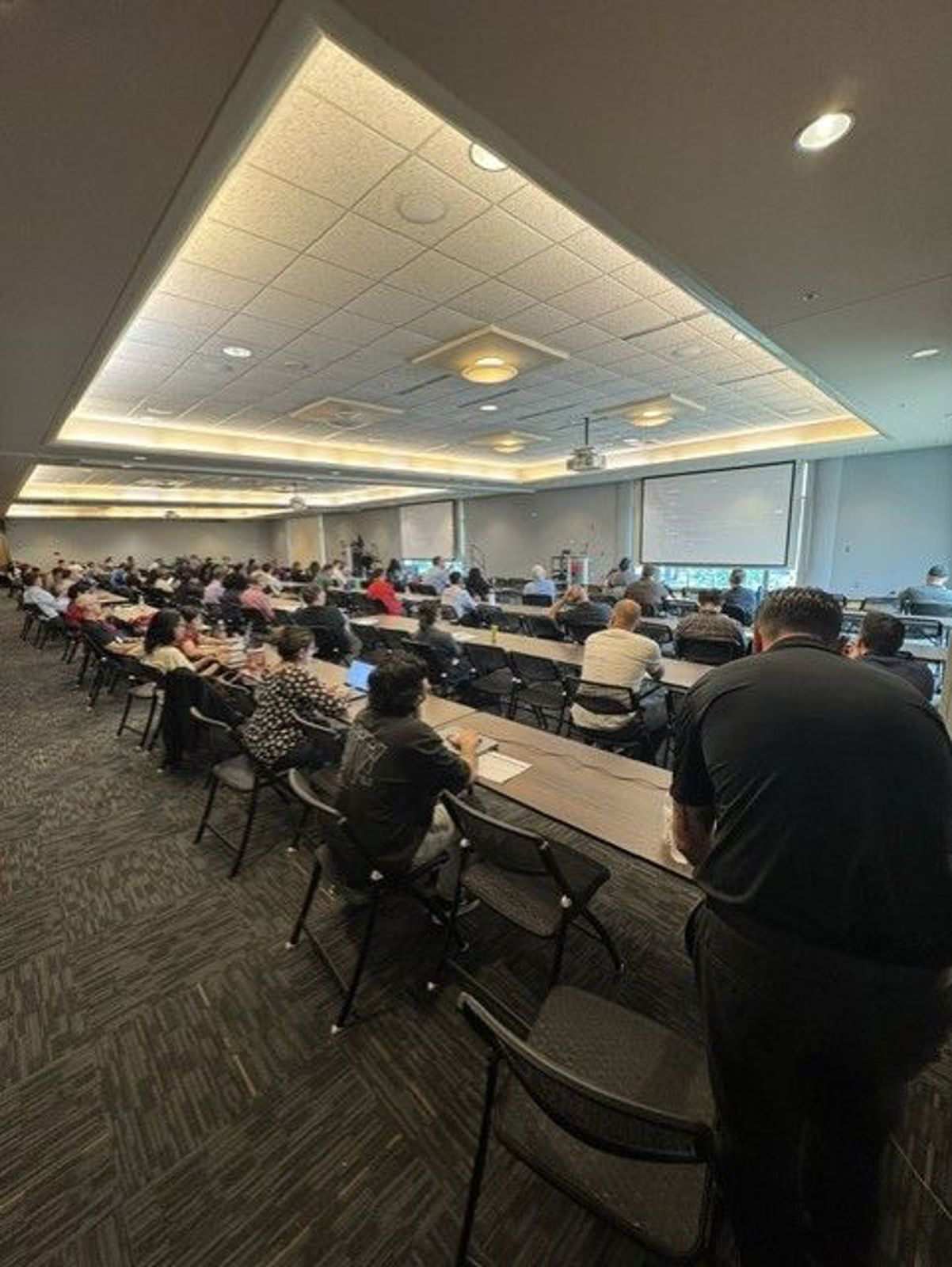
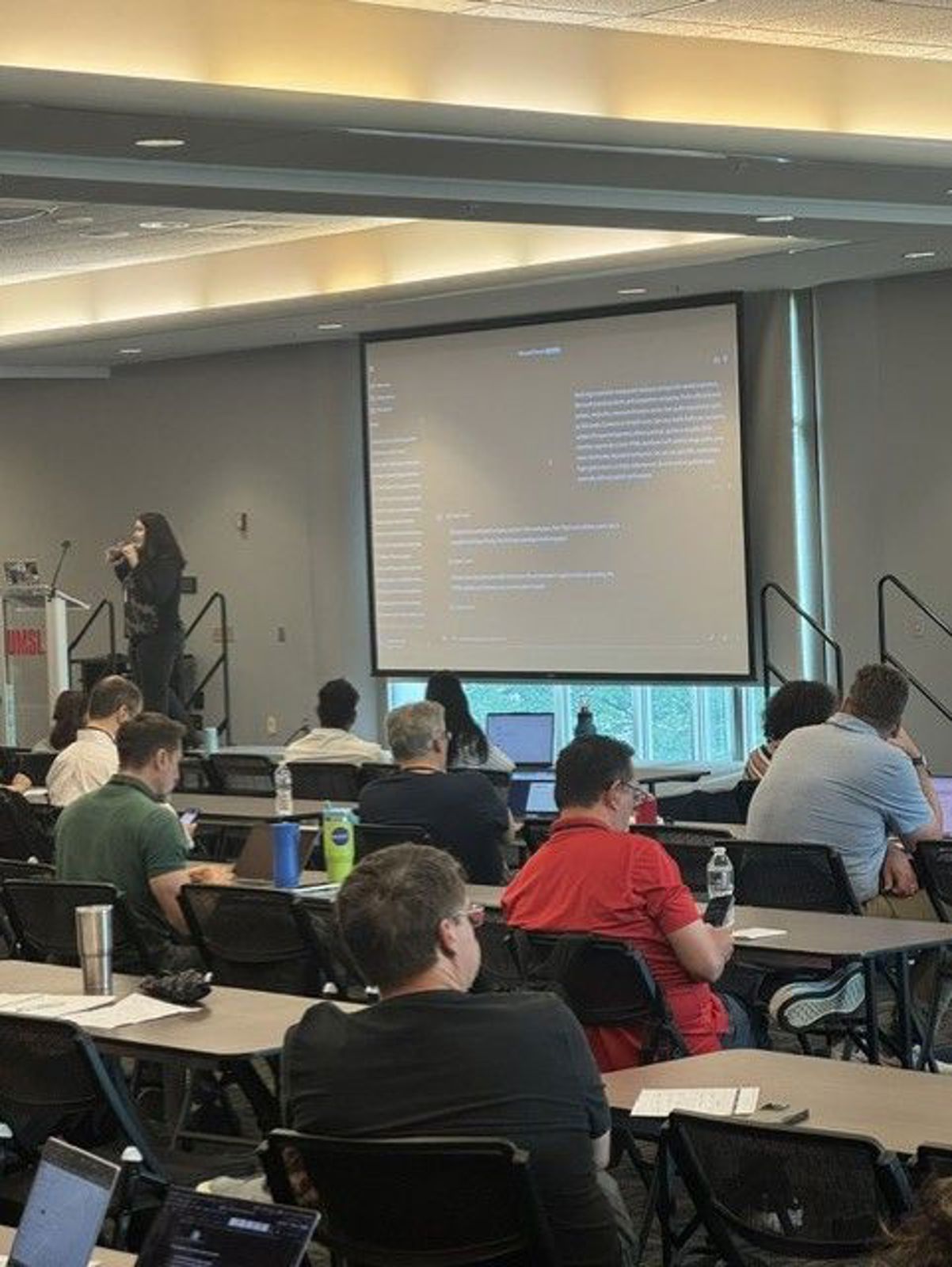
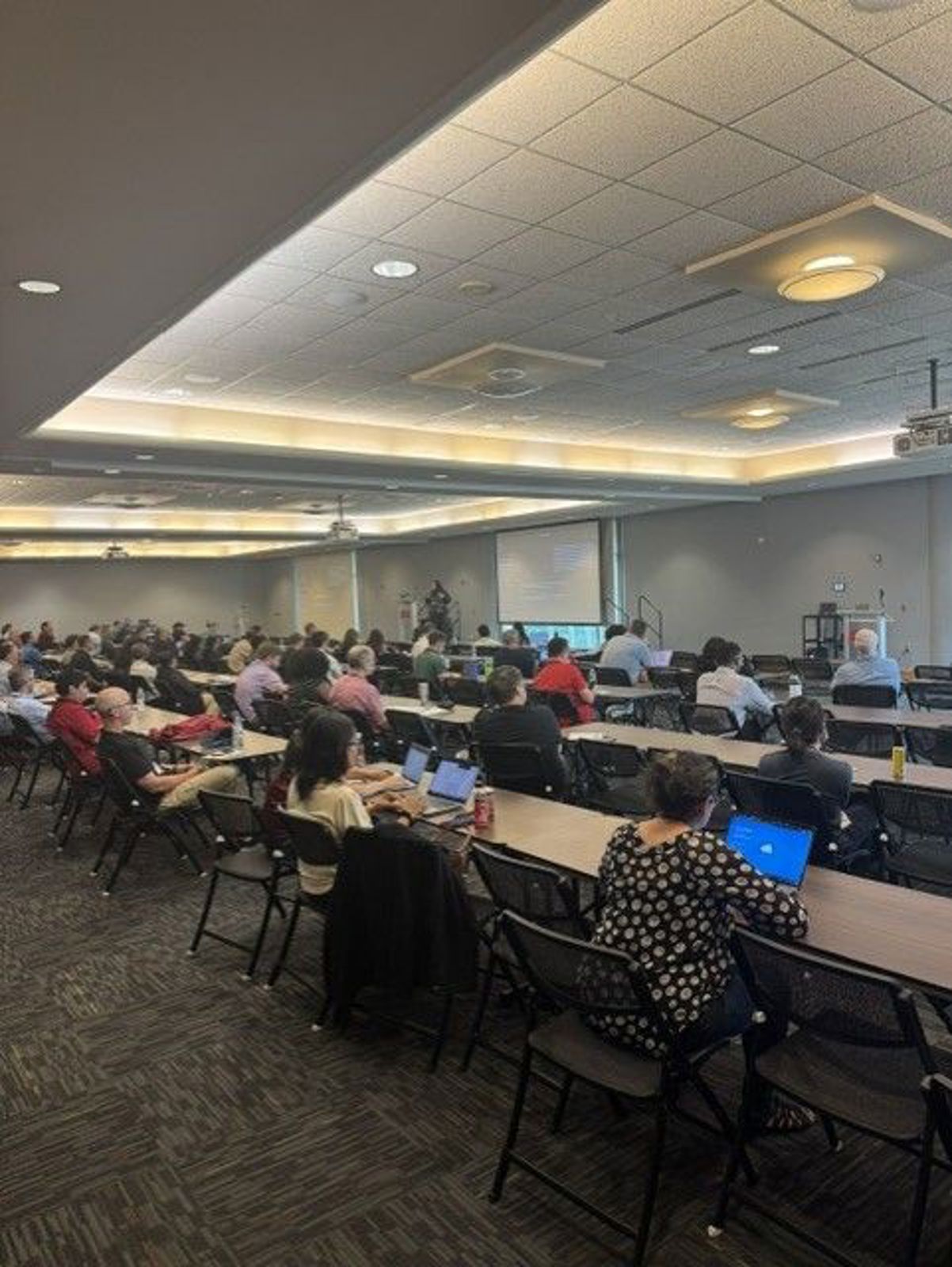
This is how it looked
Made possible by
Gold Sponsors


Explore AgentCon
AI Agents Developer Conference
AgentCon made possible by: