/Events /Global AI Conference Toronto /Schedule
Global AI Conference Toronto
Saturday, September 19
Registration
Plenary ·Opening
MPR A ·Why your AI Agents need an Agent Development Lifecycle
Your agent demo works. It's fast, it's cheap, it's magic in the sandbox. Then you deploy it and everything falls apart. No one agrees on how to test it, monitor it, or improve it, and the token bill doesn't care that it's "still just a pilot."
We solved this exact problem for code decades ago with the SDLC. We solved it again for APIs once the sprawl got out of hand. Now it's agentic AI's turn, and teams are trying to skip the step where you learn from history.
In this talk, I'll break down the Agent Development Lifecycle (ADLC): what it borrows from software and API management, and what to actually consider when designing an agentic system: cost, governance, security, and repeatability.

Rey serves as Senior Developer Advocate for Solace. Since 2016 Rey has been advocating for developers, doing what he can to make developers lives easier and more fun, driving awareness and creating code to make developers successful. Being well-versed in a plethora of languages over the last decade has given Rey a vast look at the developer community as a whole. Committed to helping developers of all sorts Rey is also a co-organizer for the ForwardJS Javascript Meetup group, a co-organizer for Random Hacks of Kindness and an organizer for developer focused conferences, including ForwardJS Ottawa.
From Intent to Enforcement: Hill-Climbing AI Agents
You cannot manage what you cannot measure. For AI agents, evaluation is the same discipline as testing for traditional softwares. It is about how teams manage risk and business outcomes—not just pass a release check—and optimize for safety and quality in a systematic way.
In this two-hour workshop, we will turn business intent into a repeatable eval-fix loop. Using open-source ASSERT, Agent Control Specification (ACS), we will generate targeted tests, trace agent trajectories in OpenTelemetry, ground LLM judge rubrics scoring in your scenario requirements, and choose improvements across deterministic and model-based controls, beyond prompt tuning. We will explore knowledge bases and how retrieval evidence and tool-call traces reveal failures that input/output scoring misses.
Then we will hill-climb: compare changes on frozen cases, measure both unsafe behavior and legitimate work preserved, and include cost and latency in the decision. Use Rego for hard rules, classifiers for nuance, and LLM judges for complex reasoning—within a broader governance model of identity, authorization, containment, and audit evidence.
Leave with an intent → evaluate → diagnose → fix → remeasure workflow, plus a path from production observations to reviewed regression tests and CI/CD gates as well as promoting that pre-deployment judges to monitoring to detect drifts. The goal: continuously improve the agent while maintaining control over what it is allowed to do.

Chang Liu is a Senior Product Manager for Evaluation Tooling at Microsoft CoreAI, where he builds the evaluation and Responsible AI features teams use to find out whether an AI system actually works. His craft is knowing why agents fail and which failures deserve to be a gate. His past experience includes four years quantitative investing interpretable with traditional and machine learning techniques and two years on applied AI at Microsoft, where he earned the daily discipline of separating real signal from noise. He leads ASSERT, which turns a spec developers into executable tests — covering tool use, multi-step workflows, and the failure modes that surface when a model acts as well as answers. He is the co-chair of the Analytics & Scaling workstream of MLCommons’ AI Risk & Reliability working group, which produces the AILuminate safety benchmark. His passion lies in measurement that makes AI reliable enough to do real work. That habit — asking what a test actually proves, and what assumptions it quietly rests on — traces to St. John’s College, where he learned to examine first principles rather than inherit them.
Multi-Agent AI Systems for Enterprise Tax Compliance: From Prototype to Production
Enterprise AI moves beyond experimentation when systems can operate reliably under complex business constraints. Corporate tax compliance presents a compelling example, where rules evolve continuously, calculations span interconnected schedules and jurisdictions, and every automated decision must remain explainable and verifiable. This session explores practical principles for designing multi-agent AI systems that can move from prototype to production in high-stakes enterprise environments.
Drawing from experience architecting a production corporate tax preparation system, the session examines how specialized AI agents can divide complex workflows across data intake, tax determination, validation, and return assembly. It demonstrates why explicit agent responsibilities, contract-driven communication, bounded autonomy, and failure containment are essential when building intelligent systems that cannot rely solely on a general-purpose model.
The session also explores practical approaches to coordination, evaluation, observability, and auditability, showing how these capabilities can be embedded into an AI architecture rather than added after deployment. Attendees will gain reusable architectural patterns for building trustworthy multi-agent applications, understand common failure modes when moving agentic systems into production, and learn how to design AI solutions that balance autonomy, reliability, transparency, and human accountability in enterprise scenarios where correctness matters.
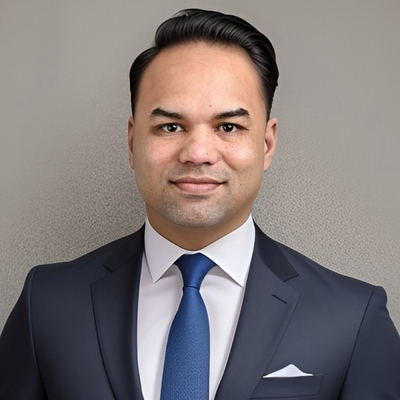
Prashant Devgade is an Enterprise Solution Architect with over 19 years of progressive leadership at the intersection of enterprise architecture, generative AI, multi-agent systems, and corporate tax technology. He has architected mission-critical, enterprise-scale platforms for leading global organizations, including Deloitte, PwC, GE, Tata Consultancy Services, and Hewlett-Packard, automating complex regulatory workflows and accelerating compliance for multinational corporations. His technical expertise spans LangChain, LangGraph, Model Context Protocol (MCP), Agent-to-Agent (A2A) frameworks, RAG pipelines, and cloud architecture across Azure, AWS, and GE Predix. Currently a Solution Architect at Deloitte Tax LLP, Prashant is architecting an enterprise multi-agent AI assistant that transforms federal corporate tax return preparation into a conversational, automation-first experience for U.S. tax professionals. He defines agent orchestration patterns, governance frameworks, and integration architectures for AI systems handling sensitive financial data under strict regulatory requirements. Previously, as Senior Manager of Tax Technology at PwC, he led the architecture of the firm's Federal Tax Return Filing platform, delivering six major automation solutions over eight years, including an AI-powered validation system, an event-driven federal-state data synchronization platform, and a $5M+ cloud cost optimization initiative. At GE Corporate, he built the Global VAT Tool from inception and modernized enterprise knowledge management systems supporting thousands of global users. Prashant holds a Post Graduate Program in AI and Machine Learning from UT Austin (McCombs School of Business) and a B.E. in Instrumentation and Control Engineering . He is a Microsoft Certified Azure AI Engineer Associate and Professional Scrum Master (PSM I), recognized as a technical authority on AI governance and cloud-native tax solutions.
Your New Teammates: Architecting a Multi-Agent Workforce
hamba.nl is a live Dutch travel magazine built with the GitHub Copilot App and run by seven Foundry-hosted agents, orchestrated with Agent Framework, covering the full editorial pipeline from draft to published article.
In this session I'll take you under the hood: how the agents are scoped and orchestrated, how they connect to tools and data through MCP, how content, moderation, and fact-checking roles hand off to each other, and how a human-in-the-loop stays in control of final approval. This is a working system with real failure modes, and you'll leave with a concrete reference architecture for agent teams that run a function, not just generate code.

Henk is a Cloud Advocate specializing in Artificial intelligence and Azure with a background in application development. He is currently part of the AI cloud advocate team and based in the Netherlands. Before joining Microsoft, he was a Microsoft AI MVP and worked as a software developer and architect building lots of AI powered platforms on Azure.
Lunch
MPR A ·Your Agent Is Getting Weird: Testing, Observability, and Lifecycle Patterns for Production AI Agents
An AI agent can work perfectly in a demo and start acting strange in production. Data changes, retrieval gets stale, tools evolve, permissions shift, models update, workflows move, and users discover edge cases nobody tested. Suddenly the helpful assistant is confidently wrong, calling the wrong API, or giving answers nobody trusts. This session shows developers and architects how to detect and prevent agent weirdness before it becomes operational pain. Samantha will cover practical patterns for testing, evaluation, observability, lifecycle ownership, escalation, governance hooks, and retirement so production agents remain useful, secure, maintainable, and aligned as enterprise reality changes daily.

Samantha St-Louis is an AI Engineer & Architect whom occupies Leadership & Executive AI Strategy roles while being an international speaker. A Microsoft MVP and Microsoft Certified Trainer, Samantha is recognized for making complex AI concepts accessible to both business leaders and technologists. Her sessions challenge conventional thinking, replace hype with practical frameworks, and leave audiences with strategies they can immediately apply inside their organizations. She specializing in helping organizations move from isolated AI experiments to scalable, enterprise-wide AI capabilities. Her work spans enterprise architecture, agentic AI, governance, multi-agent orchestration, and AI transformation strategy. Known for bridging the gap between executive strategy and technical implementation, Samantha combines deep technical expertise with a practical business perspective developed through leading enterprise AI initiatives for global organizations. She is the creator of the AI Operating Model and Neuromodular AI Architecture frameworks, helping organizations scale AI without creating technical debt or AI sprawl.
From Model Selection To Agent Optimization with Microsoft Foundry
Building reliable AI agents in this fast-moving landscape requests observability and continuous optimization. In this 90-minute workshop, we'll take you on a hill climbing journey from model selection to agent optimization using Microsoft Foundry. Start by understanding model capabilities for various tasks independently. Then create an agent and walk through the Agent DevOps loop to understand observability features. Finally, we'll explore hill climbing in action using two levers - model router and agent optimizer - and understand how to build more effective agents with Microsoft Foundry models.
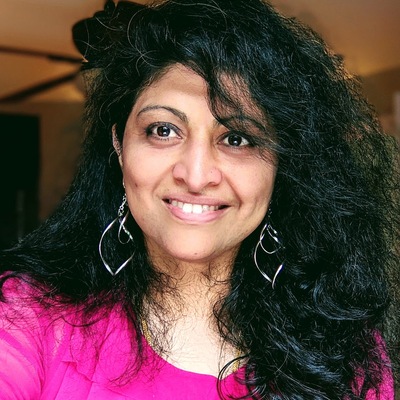
Nitya Narasimhan is a PhD and Polyglot with 25+ years of experience in software research, engineering and advocacy across industry, startups and academia. Her interests span distributed systems, mobile & web development, cloud and AI. She is currently a member of the AI Advocacy team at Microsoft where she works on empowering the application developer ecosystem to build intelligent apps with Azure and AI. Follow her tech adventures @nitya and her visual storytelling journeys @SketchTheDocs.
AI FinOps: The Next Frontier of DevOps Optimization
We spent years optimizing cloud infrastructure, right-sizing VMs, tuning pipelines, and fighting surprise cloud bills. Now a new cost center has entered the chat: AI. Every prompt, every agent interaction, every repository scan, and every generated line of code consumes tokens—and those tokens add up quickly.
AI coding assistants and agents like GitHub Copilot, Claude Code, and OpenAI Codex are transforming how teams build software. But scaling AI adoption without understanding consumption patterns is a bit like giving everyone an unlimited cloud subscription and hoping for the best. (We all know how that story ends.)
In this session, we'll explore AI FinOps practices for enterprise engineering teams: how to measure AI consumption, optimize token usage, improve agent workflows, manage context efficiently, choose the right models, and get more value from every AI interaction.
Through practical examples with GitHub Copilot and modern AI coding agents, we'll apply familiar DevOps principles—visibility, optimization, governance, and continuous improvement—to the next generation of software delivery.

A passionate and forward-thinking DevOps guy, Max brings over 20+ years of experience helping organizations modernize how they build and deliver software. As a Senior DevOps consultant, he partners with clients across public and private sectors to implement scalable infrastructure, continuous delivery practices, and—more recently—AI-augmented development workflows. With a Master’s degree in Computer Science and a deep appreciation for the craft of software development, Max blends hands-on technical expertise with a practical, results-driven mindset. He’s also a self-proclaimed “dilettante librarian,” holding a Master’s in Library and Information Science—fueling his curiosity and love for organizing complex systems. Known for his collaborative approach and relentless problem-solving, Max brings energy, clarity, and a touch of humor to every challenge. A lifelong learner, he’s especially passionate about helping teams embrace emerging paradigms like Agentic SDLC—where humans and AI work together to build better software, faster.
World Models: How Generative AI Learns to Simulate Reality
Generative AI is moving beyond text and images into simulating entire environments. This session breaks down "world models," AI systems that learn to represent scenes, predict how situations evolve, and generate realistic synthetic data. We'll cover the core architectural building blocks behind leading approaches and recent published results showing double digit gains in accuracy and output quality. The concepts apply directly to synthetic data generation and scenario testing in any AI heavy domain.
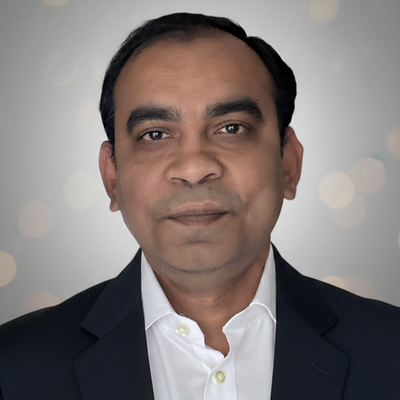
Tamoghna Das is an engineering leader with more than 20 years of experience in autonomous driving simulation, artificial intelligence, control systems, and automotive software engineering. He currently serves as Product Owner for Autonomous Driving and ADAS Virtual Simulation Platform at Aptiv, where he leads the architecture and development of end-to-end closed-loop simulation platforms that integrate autonomous driving software stacks with high-fidelity sensor models, virtual ECUs, and industry-standard simulation frameworks. His expertise spans autonomous driving simulation, AI-assisted scenario generation, sim-to-real technologies, neural scene reconstruction, and machine learning applications for virtual validation. He has extensive experience with ASAM standards, including Open Simulation Interface (OSI), OpenSCENARIO, and OpenDRIVE, and has led the development of interoperable simulation platforms that support advanced driver assistance systems such as Automatic Emergency Braking, Adaptive Cruise Control, and automated parking. His work also includes applying NVIDIA COSMOS, Neural Radiance Fields (NeRF), and Neural Reconstruction (NuRec) to bridge the gap between simulation and real-world driving environments. Before Aptiv, Tamoghna held engineering leadership and technical roles at Valeo, Magneti Marelli, Denso International, KPIT Cummins Infosystems, and the Indian Space Research Organisation (ISRO), where he contributed to functional safety, hardware-in-the-loop validation, automotive control systems, and mission-critical aerospace control technologies. Tamoghna holds a Master of Science (Research) in Control and Automation from the Indian Institute of Technology (IIT) Delhi and a Bachelor of Engineering in Electrical Engineering from Bengal Engineering College. He has also completed advanced nanodegree programs in Deep Reinforcement Learning, Self-Driving Car Engineering, and Deep Learning, along with professional certifications in Machine Learning and Self-Driving Cars. He is the author of multiple peer-reviewed publications in adaptive control systems, fuzzy logic, and robotics, reflecting his long-standing contributions to intelligent control and autonomous systems research.
Enforced by Hope: The Hard Parts of Building a Codegen Agent
We ship an agent that builds .NET apps; the agent itself is .NET and runs in your browser as WebAssembly. This talk is a from-the-trenches tour of the harness behind Uno Platform Studio, built on Microsoft.Extensions.AI and Microsoft Agent Framework. The decisions that survived production, with the numbers that drove them.
The centrepiece is a migration story. App generation began as one conversational agent with phase ordering written in prose, enforced by hope, and became a network of typed workflow graphs. You'll see why the LLM router we designed never shipped. Why scaffolding the app, applying themes, and the phase orchestration all became plain code. How that refactor happened, and how that meant a second production pipeline cost us a constructor rather than a new architecture.
Build, Measure, Delete: The skills system we engineered onto a strict context budget, the framework feature that came too late, and the day we reversed it all. Deleting our own machinery for the framework's native Agent Skills, watching the old failure return on cue, and settling it with one routing line.
We'll finish with questions that we still need to explore, how we might scale out further inside of our agent, and perhaps some final reflections on why LLM codegen is harder than it looks.
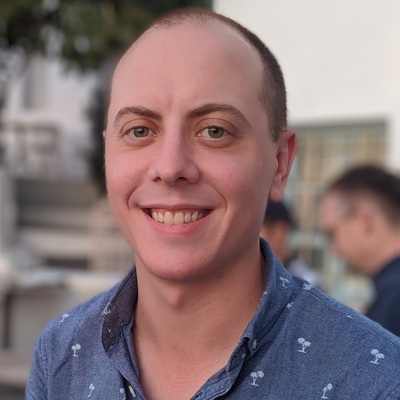
Steve is a Senior Engineer, Agentic Development Lead, and one of the core maintainers of the open-source Uno Platform project. When not at his computer, he is either watching the Montreal Canadiens lose or asleep on the couch.