/Events /Global AI Conference Chennai /Schedule
Global AI Conference Chennai
Sunday, September 27
Registration, Networking and Morning Coffee
Vendhar Hall ·Opening
Vendhar Hall ·Agents of Tomorrow: Building the Next Generation of Intelligence
We stand at the edge of a profound shift in artificial intelligence. Over the last five years, generative AI has moved from novelty to necessity, transforming how we create, code, and collaborate. Now, a new frontier is emerging: AI agents. Unlike traditional tools that wait for instructions, agents can perceive, decide, and act toward goals expanding the boundaries of what humans and machines can achieve together.
In this keynote, we’ll explore the evolution from copilots to fully agentic systems, highlight breakthroughs that are reshaping industries, and imagine the future horizons where autonomous agents redefine productivity, creativity, and discovery. Most importantly, we’ll discuss the role of humans in this new era—not as bystanders, but as leaders guiding how agents operate, align with our values, and amplify our potential.
The Agents of Tomorrow are here and the future will be built by those bold enough to partner with them.

Henk is a Cloud Advocate specializing in Artificial intelligence and Azure with a background in application development. He is currently part of the AI cloud advocate team and based in the Netherlands. Before joining Microsoft, he was a Microsoft AI MVP and worked as a software developer and architect building lots of AI powered platforms on Azure.
Operationalising AI Agents at Scale: Microsoft Foundry Hosted Agents with MCP Tooling
As AI agents move from experimentation to production, the challenge shifts from model capability to orchestration, governance, and scale. This session explores how Microsoft Foundry Hosted Agents and Model Context Protocol (MCP) tooling enable developers to build, deploy, and operate production-ready agent systems using standardised, composable interfaces.
We will show how MCP connects agents, tools, and external systems, while Foundry provides a managed runtime with enterprise-grade security, identity, and observability. Attendees will learn how to design modular, reproducible architectures aligned with DevOps and GitOps practices.
Through a practical walkthrough, we will demonstrate MCP tool integration within hosted agents, enabling dynamic tool use, external system connectivity, and multi-agent coordination. We will also cover key operational considerations including RBAC boundaries, data-plane versus control-plane access, and debugging strategies.
This session is for AI engineers and developers looking to move beyond prototypes and build scalable, reliable agent systems.

As part of Microsoft’s Developer Relations organization, Lee leads a global team driving innovation in Artificial Intelligence and Azure. Their work centres on empowering customers through digital transformation, showcasing how Microsoft’s tools, services, and technologies can unlock new possibilities. Lee is deeply embedded in every phase of the journey, from architectural brainstorming and pair programming to code reviews, documentation, and community storytelling. Whether guiding strategic decisions or rolling up their sleeves to co-build solutions, Lee ensures that technical excellence and developer empathy go hand in hand.
How Docusign Built an Autonomous Coding Agent for Repetitive Engineering Tasks
Every engineering team has a backlog of repetitive tasks that consume real time but require little judgment. At Docusign, we built an autonomous coding agent to handle that work, ensuring humans review it at every step. Here's how we built it and how it built itself.
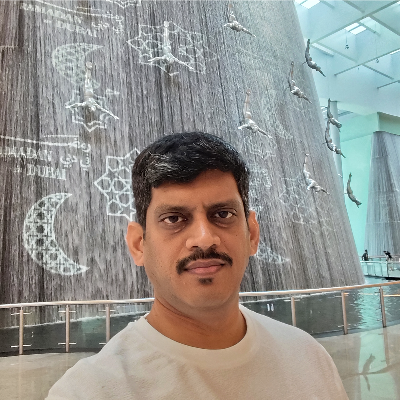
Balaji Jayaraman is a Senior Programmer Writer within the Developer Content and Advocacy team at Docusign, joining the company in 2025. Combining his background in software development and technical writing, Balaji acts as a bridge between complex code and creator success. He is passionate about developer advocacy and specializes in producing comprehensive developer documentation, API guides, and tools. His recent initiatives focus on integrating AI with Docusign such as MCP connector—to streamline, simplify, and enhance the overall developer experience.
The Agent Development Lifecycle: What Every Framework Agrees On, and the One Thing They Miss
Building an agent that works in a notebook is a solved problem. Running one in production is not. Gartner expects more than 40% of agentic projects to be scrapped by 2027. The fix isn't a better model. It's operational discipline, now called the Agent Development Lifecycle. But every vendor defines it differently. This talk maps where the field actually agrees, covering eval-driven development, human-in-the-loop, and continuous improvement, then exposes what they all leave implicit: how agents actually communicate. Chain them synchronously and you hit the same wall microservices hit a decade ago. Vendor-neutral, production-first.
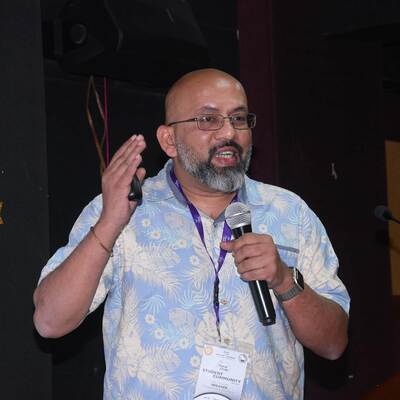
Giri Venkatesan is a Developer Advocate and Architect at Solace, focused on building the future of AI-native, real-time enterprise systems using Agentic AI, event-driven architecture (EDA), and API-first integration. With decades of experience across enterprise integration, Giri has driven architectural evolution from legacy EAI and B2B integration models to modern cloud-native microservices and real-time event streaming. Today, Giri’s work centers on Agentic AI - helping organizations design and operationalize autonomous AI agents that can reason, plan, and take action across distributed systems. He advocates for using events and messaging as the nervous system for AI agents, enabling them to respond instantly to changing business conditions, coordinate workflows across services, and execute tasks reliably at scale. His expertise spans integration technologies, asynchronous APIs (AsyncAPI), REST APIs, open-source ecosystems, and event-driven patterns that make AI-powered systems more scalable, resilient, and observable. Giri is passionate about turning AI from “experiments and prototypes” into production-ready agent-driven architectures that improve productivity, accelerate innovation, and unlock new automation opportunities. He regularly shares insights on LinkedIn, Medium, and DEV Community - educating architects and developers on building real-world systems where AI agents, APIs, and real-time events work together to deliver smarter digital experiences and business agility.
Lunch
Vendhar Hall ·Tokenmaxxing to Valuemaxxing
Shipping a multi-agent system into production — a network of orchestrator, sub-agents, tool calls, and shared memory is easy. The system works beautifully. Then the bill arrives. In this session, we'll dissect where tokens actually go in multi-agent architectures and reveal the hidden multipliers — context replay, coordination loops, verbose reasoning — that silently 10-100x your costs. Through a side-by-side demo on refactoring, you'll see the same use case drop by XX times using practical design patterns: tiered model routing, selective context passing, prompt caching, and token-aware guardrails on AI stack. Walk away with a decision framework you can apply before writing a single line of agent code — because the cheapest token is the one you never send.
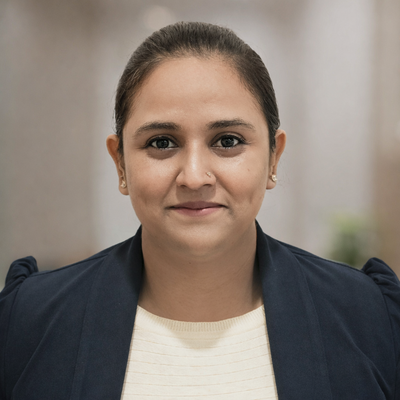
I am an AI Engineer and Architect specializing in Agentic systems, production-grade GenAI, and Responsible AI design. As a GenAI Developer/Advocate at AWS, I work at the intersection of building multi-agent architectures, observability, and real-world AI deployment to helping developers move from demos to scalable, trustworthy systems. Previously innovating and architecting KnowRA+, a hybrid RAG + GenAI platform that won multiple awards and generated $10M+ in value. I specialize in LLM architecture, NLP, and scalable ML solutions across BFSI, Travel, Healthcare, and Retail domains, with 8+ granted USPTO patents.
Building an Agent-First Experience for Azure Cosmos DB
In this demo-driven session, I’ll introduce DevGlobe and show how an agent-first approach simplifies working with Azure Cosmos DB. We’ll explore how MCP, tools, skills, and real database context work together to help agents understand data, generate queries, and take useful actions. I’ll also share lessons from building the experience, including where agents shine, where they struggle, and how we keep developers in control.
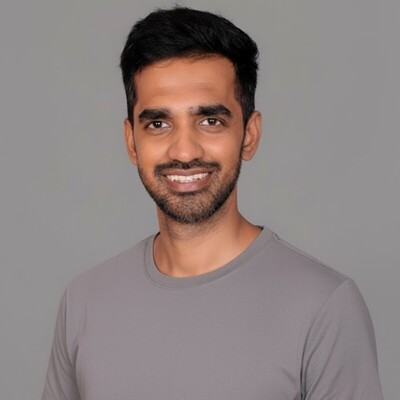
Principal Product Manager passionate about empowering developers with exceptional tools and experiences. Currently part of the Azure Cosmos DB team, driving developer-focused features like JavaScript SDK, integrations, and tooling for local development etc. Interested in web development or cloud? Let’s connect!
Coffee
Vendhar Hall ·320 Billion Parameters , One GPU, Zero Leaks: Self-Hosted RAG with GLM-5.3-Flash
Most teams that want AI working on their own data hit the same wall: the capable models live behind someone else's API, and the data you'd have to send them is exactly the data you can't send. This session takes another route. GLM-5.3-Flash is a 320-billion-parameter open-weight model, and thanks to its Mixture-of-Experts design and modern quantization, it runs on a single GPU. On top of it we build a retrieval-augmented generation system that reads scanned pages, understands images, and answers in English and Tamil, with every answer cited to its source.
Security and governance are designed in from the start. We'll show access control enforced at retrieval, a live prompt-injection attack hidden inside a document (and how to stop it), a full audit trail, and finally the same app moving from a cloud endpoint to our own GPU with a one-line change, then continuing to work with outbound internet blocked.

Aravind Baranitharan is an AI Engineer at TCS, where he works on bringing large language models into real enterprise settings. His focus is on retrieval-augmented generation, open-source model deployment, and the security and governance questions that come up when AI meets sensitive data. He enjoys taking models that sound out of reach and making them run on practical hardware, and he believes the future of enterprise AI is open, auditable, and self-hosted.