/Events /MCP Community Connect - Bengaluru /Schedule
MCP Community Connect - Bengaluru
Saturday, September 26
Check-in | High Tea | Networking
Plenary ·Opening Remarks
Plenary ·What World Are They Getting?
Four boys. One question at two in the morning.
We have been here before, more often than you think. But never quite like this.
Now the machines do not just know things. They act.
Everything can be handed over. Almost.
The future is not a forecast. Someone is deciding it.
Come find out who.
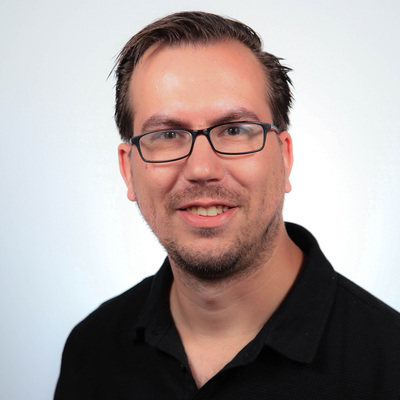
Henk is a Cloud Advocate specializing in Artificial intelligence and Azure with a background in application development. He is currently part of the AI cloud advocate team and based in the Netherlands. Before joining Microsoft, he was a Microsoft AI MVP and worked as a software developer and architect building lots of AI powered platforms on Azure.
From Prototype to Production: Engineering Agent Systems with MCP, Multi-Agent Patterns and Real Work
MCP is quickly becoming the standard way for AI agents to interact with tools, APIs, and external systems. However, connecting a model to a tool is the easy part. The real challenge begins when agents must make decisions, coordinate workflows, recover from failures, and operate reliably in production environments.
In this fast-paced, demo-driven session, we'll explore the engineering patterns that transform MCP-powered prototypes into production-ready agent systems. Using real-world examples built with Microsoft Agent Framework, Microsoft Foundry, and MCP, we'll demonstrate how agents can safely interact with tools, orchestrate workflows, and deliver meaningful outcomes beyond simple chatbot scenarios.
Through live demonstrations, attendees will see common agent orchestration patterns including sequential workflows, supervisor routing, multi-agent collaboration, and human-in-the-loop approvals. We'll also examine practical lessons learned around tool design, observability, debugging, identity, security, and governance.
Rather than focusing on prompts alone, this session concentrates on the software engineering practices required to build reliable agent applications. Attendees will leave with a clear understanding of where MCP fits into modern agent architectures, the patterns that work in production, and the mistakes that commonly prevent agent projects from moving beyond the prototype stage.
Key Takeaways Understanding MCP's role in modern agent architectures Choosing the right agent orchestration pattern for a workload Designing effective MCP tools and integrations Observability and debugging techniques for agent systems Security, governance, and human-in-the-loop considerations Lessons learned from deploying real-world agent applications
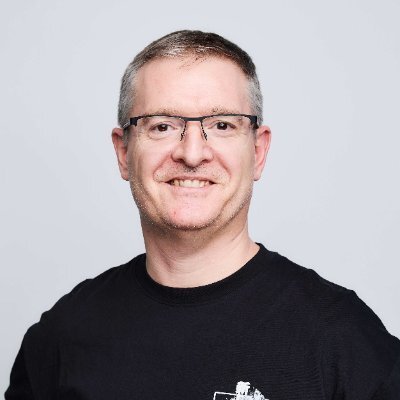
As part of Microsoft’s Developer Relations organization, Lee leads a global team driving innovation in Artificial Intelligence and Azure. Their work centres on empowering customers through digital transformation, showcasing how Microsoft’s tools, services, and technologies can unlock new possibilities. Lee is deeply embedded in every phase of the journey, from architectural brainstorming and pair programming to code reviews, documentation, and community storytelling. Whether guiding strategic decisions or rolling up their sleeves to co-build solutions, Lee ensures that technical excellence and developer empathy go hand in hand.
Workshop: Neo4j & GenerativeAI Fundamentals
This session will cover why graph databases are a reliable option for grounding GenAI models, using Neo4j to provide factual, reliable information to stop the LLM from giving false information, also known as hallucination.
You will learn about embeddings and vector indexes, how they are used in GenAI, and how to use them in Neo4j. RAG (Retrieval Augmented Generation) and how GraphRAG builds on it to provide a graph-based approach to providing context to Generative AI models. How to use the Neo4j GraphRAG for Python package to interact with AI models and Neo4j.

Vasundhara Shukla is a Developer Advocate at Neo4j, where she leads Developer Relations across the APAC region, helping developers build intelligent applications with graph technology, GenAI, and modern AI architectures. With a background in software engineering, developer experience, and cloud-native technologies, she has spent her career building developer tools, contributing to open source, and simplifying complex technical concepts through talks, workshops, and technical content. Her expertise spans Golang, Kubernetes, graph databases, GraphRAG, AI agents, Model Context Protocol (MCP), and developer platforms. A passionate community builder, Vasundhara has organized developer meetups, mentored aspiring engineers, spoken at national and international conferences, and collaborated with developer communities across the ecosystem. She enjoys creating hands-on demos that bridge theory and practice, enabling developers to adopt emerging technologies with confidence. When she's not speaking or writing code, you'll find her exploring new technologies, practicing Bharatanatyam, or planning her next adventure.
Beyond the Demo: Making MCP Reliable and Safe in Production
Connecting an LLM to tools via Model Context Protocol (MCP) is straightforward—but making it dependable, safe, and enterprise-ready for real users is an entirely different engineering challenge. In this session, Arvind Kurmi shares how Docusign runs MCP at scale. Learn how Docusign tackle model drift using MCP-Apps for deterministic paths, reduce regression testing from ~80 hours to under 2 hours with Promptfoo, and shift security left to catch prompt injections and tool poisoning before production.
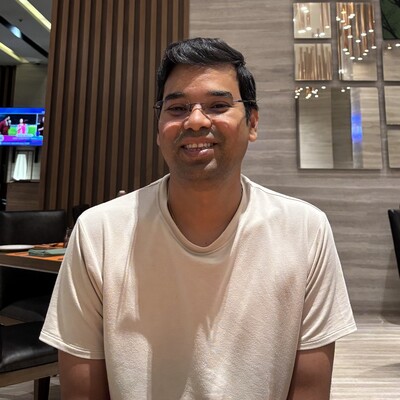
Arvind Kurmi is an Engineering Leader at Docusign leading the MCP server initiative, dedicated to bringing secure and dependable agentic AI directly into everyday customer workflows. Arvind focuses on turning experimental AI into mission-critical business software—ensuring high-stakes transactions remain seamless, predictable, and strictly protected against security vulnerabilities. His team’s work enables organizations to safely automate complex agreement operations and let AI agents perform real-world tasks without compromising on enterprise compliance or customer trust.
Stop Tracing Tool Calls, Start Tracing Context
When an AI agent fails, tool calls can seem like the obvious place to start. The server responded, the request succeeded, and the trace looks complete. But the agent still made the wrong decision.
An MCP server can return the right resource or tool result, yet the agent can still act as if it never saw it. The missing link is what happens after the MCP response: working memory, long-term memory, retrieved context, and instructions compete during selection and prompt assembly. Without those answers, developers end up debugging agent behavior by reading logs and guessing.
In this session, we'll build a trace for the full context lifecycle: what was retrieved and selected in the current working session, and what action followed. We'll connect those signals to task evaluations, token usage, and latency. The goal is not more logs, but a clearer way to understand why an agent did what it did, what it remembered, and what to change when it gets the answer wrong.
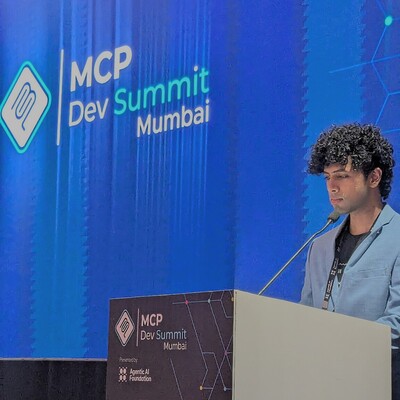
Ashwin Hariharan is a Developer Advocate at Redis, with over eight years of experience as a full-stack software engineer. He's passionate about making complex ideas simple, helping developers build faster, more reliable systems, and understand the "why" behind the tools they use. His current work focuses on applied AI, and exploring how intelligent, real-time applications can be built using retrieval-augmented generation, vector search, agentic AI, and other emerging technologies.
MCP: From Protocol to Production — An Architect's Guide to Secure Deployments
The Model Context Protocol (MCP) standardizes how AI models connect to enterprise data, but migrating from a local developer environment to mission-critical infrastructure fundamentally expands the enterprise attack surface. Without rigorous architectural boundaries, an MCP server transitions from a context-provider into a vector for network-level and execution-level exploits.
This session serves as the definitive architect's guide to the MCP lifecycle. We will cut through the AI hype to deconstruct the protocol’s architecture, mapping the exact threat models and operational realities of "Day 2" production environments.
Rather than theoretical use cases, this talk focuses on the mechanical realities of the protocol. We will explore how autonomous reasoning loops interact with transport layers, unpack recent SDK vulnerabilities, and define the architectural patterns required to operate multi-tenant data agents securely.
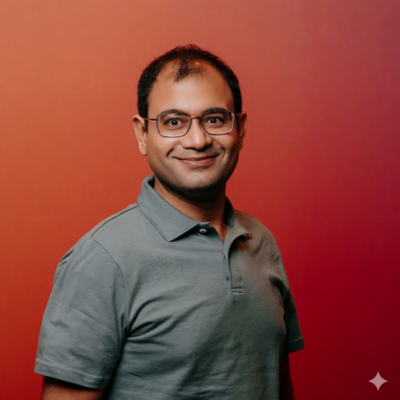
Shuva is a Senior Principal Engineer at Palo Alto Networks architecting secure enterprise AI platforms. He is authoring two upcoming books: Engineering the Data Agent Control Plane (O'Reilly) and Agent Skills in Action (Manning). An open-source contributor and former OpenDaylight committer, his work bridges experimental AI and 'Day 2' production reality. He is a Confluent Community Catalyst Nominate for 2026 and a speaker at OpenSource Summit, GDG Events, IEEE conferences on scalable, zero-trust data architectures.
Lunch
Main Hall (Sessions) ·Observing AI Agents in Production: How We Built Tracing for MCP-Based Systems
Agents based on multi-purpose computation protocols open doors for automation, but if those agents start failing silently, re-running unpredictably, or returning non-repeatable results, observability techniques traditionally employed become insufficient. This talk will provide an industry-validated solution for instrumentation of MCP-based agents leveraging OTel in a way that does not require changing any agent code.
The talk covers the following topics: tracing multi-step processes within agents, capturing tool invocations through spans, propagating trace context between MCP server boundaries, measuring LLM latency and token count, and exposing failures that occur deep inside toolchains. In addition, this talk will examine design patterns for multi-turn and multi-tool interaction spans, instrumentation of MCP servers, and shortcomings of conventional HTTP traces in agentic workloads.

Navin Pai is Director of Engineering at StackGen, where he leads the team building Aiden, an agentic operating system for all things Ops. You'll often find him on the internet, getting into flamewars about AI-native engineering paradigms, large scale system design, observability and open source software
Extending MCP: Writing Custom Protocol Extensions Without Breaking Compatibility
MCP's real power lies not just in what it defines, but in what it leaves room for. As teams push MCP into production, the need to add custom capabilities streaming responses, domain-specific metadata, proprietary auth flows runs headfirst into the risk of breaking existing clients and servers. This talk walks through the practical discipline of extending MCP without fracturing compatibility: how to use capability negotiation correctly, where to extend vs. where to fork, how to version custom extensions gracefully, and how to contribute extensions upstream without waiting for a spec cycle. Real examples from building extensions in the wild what worked, what silently broke things, and what the spec doesn't yet have a good answer for. Attendees leave with a working mental model for extension design and a checklist for evaluating whether a custom extension is safe to ship
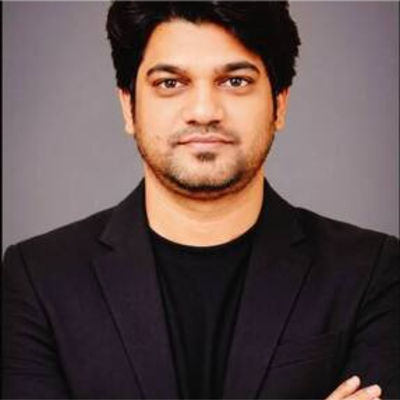
Saurabh Mishra is a Cloud Evangelist and technology enthusiast specializing in cloud architecture, DevOps, automation, and Agentic AI. Through active community engagement, he shares practical knowledge on cloud-native solutions, AI-powered workflows, security best practices, and multi-cloud ecosystems. As a seasoned speaker and mentor, Saurabh has presented at conferences, meetups, and workshops, empowering teams to drive innovation, modernize their platforms, and unlock business value through cloud and AI technologies
Workshop: Build MCP agents locally
A 90-minute, hands-on workshop for building with the Model Context Protocol (MCP) on a prebuilt Windows VM. The lab uses Indian travel examples and runs fully offline during the event.
As part of Microsoft’s Developer Relations organization, Lee leads a global team driving innovation in Artificial Intelligence and Azure. Their work centres on empowering customers through digital transformation, showcasing how Microsoft’s tools, services, and technologies can unlock new possibilities. Lee is deeply embedded in every phase of the journey, from architectural brainstorming and pair programming to code reviews, documentation, and community storytelling. Whether guiding strategic decisions or rolling up their sleeves to co-build solutions, Lee ensures that technical excellence and developer empathy go hand in hand.
Where MCP Ends and A2A Begins: and Why That Seam Is Breaking Your Agents
Everyone's heard the AAIF framing: MCP handles agent-to-tool, A2A handles agent-to-agent. Clean in theory. In practice, every multi-agent system lives at the boundary of both, and that boundary has no standard. Context gets dropped. Errors go silent. A state that survived an entire A2A task lifecycle vanishes the moment it crosses into an MCP tool call. Nobody is talking about this publicly. This session replaces the "vertical vs horizontal" mental model with something more honest: a precise seam diagram showing what each protocol guarantees, what it doesn't, and what falls into the gap. We'll go deep on MCP's Tasks primitive (SEP-1686)- including its two admitted gaps: no retry semantics, no expiry policies. We'll map the real failure modes developers are hitting today, drawn from open GitHub issues across both protocol repos. Then a live demo using Google's open-source A2A sample repo: no custom code. We'll run a real multi-agent task, cross the protocol boundary, sever the trace header, and watch the silent failure happen in real time. You'll leave with a clear mental model, a three-point failure checklist, and a concrete picture of what the spec needs next.

Arushi Garg is a platform engineer and researcher working at the intersection of AI systems and cloud-native infrastructure. She has industry experience at Adobe, building and scaling backend platforms in production. Alongside engineering, she contributes to AI research with peer-reviewed publications in deep learning and focuses on bridging AI research with secure, scalable Kubernetes-based systems.
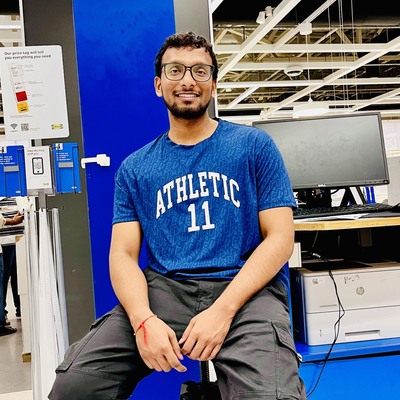
Shiva is a software engineer on the gRPC team at Google.
Beyond CRUD: Designing MCP Tools Around Trust and Consent
xposing data through MCP is straightforward. Deciding what an agent should be allowed to discover, infer, and act on is much harder.
While building DevGlobe, a developer-discovery platform, I chose not to expose a general database interface. Instead, I designed four domain-specific MCP tools across two trust levels: anonymous tools for public discovery and authenticated tools for consent-controlled introductions.
In this implementation deep dive, I will demonstrate an agent finding developers using structured public evidence while being unable to initiate contact silently. We will examine typed tool contracts, bounded results, authentication, structured errors, data freshness, rate limits, and the consent state machine behind introduction requests. I will also explain how a stateless MCP server coordinates a stateful workflow without leaking private contact information.
Attendees will leave with a practical framework for deciding when to expose database, platform, or domain-level tools, and how to make human approval a real system boundary rather than just another instruction in a prompt.
Key Takeaways
Choose MCP tools based on trust boundaries, not API convenience. Separate read-only discovery from consequential actions. Model consent as durable application state. Return evidence and freshness instead of unsupported agent conclusions. Use authentication, least privilege, and bounded contracts together.
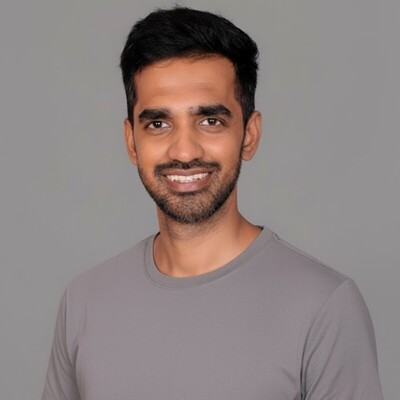
Principal Product Manager passionate about empowering developers with exceptional tools and experiences. Currently part of the Azure Cosmos DB team, driving developer-focused features like JavaScript SDK, integrations, and tooling for local development etc. Interested in web development or cloud? Let’s connect!
Governing MCP with Agent Governance Toolkit
As Model Context Protocol (MCP) servers unlock unprecedented capabilities by connecting autonomous agents directly to enterprise databases, APIs, and local tools, they also introduce significant security blind spots and risk surfaces. This session explores how to establish rigorous enterprise-grade control over agentic ecosystems using the Agent Governance Toolkit. Discover how to implement policy enforcement, runtime guardrails, and audit logging to manage tool invocation, prevent unauthorized data access, and maintain compliance without sacrificing the agility of your AI agents.
Key Takeaways for Attendees
The MCP Risk Surface: Understand the security and compliance challenges introduced when agents dynamically discover and invoke tools via MCP servers.
Architecture & Enforcement: See how the Agent Governance Toolkit intercepts, inspects, and validates agent-to-tool interactions in real time.
Practical Implementation: Walk through architectural patterns for enforcing runtime guardrails, managing permissions, and tracing agentic decisions.

Shreyan is an Senior Executive at KPMG India, specializing in AI, IoT, Cloud and emerging technologies like Blockchain, Extended Reality (XR), and Low-Code Platforms. A passionate tech enthusiast and speaker, Shreyan brings a dynamic blend of technical expertise and clear communication to every engagement. He is also a Microsoft Most Valuable Professional. His experience spans developing and implementing innovative solutions, exploring the practical applications of cutting-edge technologies, and advocating for open-source contributions. As a former Microsoft Gold Student Ambassador, Shreyan is committed to sharing his knowledge and inspiring others in the tech community.
Practitioner Guide to building MCP Servers at a Trillion Token Scale
MCP bites you back once you deploy in production.
Every tool definition a server exposes is a token and context cost the model pays on every request. It compounds fast across servers. And it compounds hardest when your full-time job is building a coding agent against thousands of MCPs at trillion-token scale.
In this session, we will cover the code-execution pattern that the ecosystem has converged on, where the real trade-offs lie when building in production and when a plain tool call is still the right answer. We'll look at:
- Tool-selection reliability, security, and optimization techniques for your agents.
- MCP server design choices that decide whether an agent stays dependable as you scale
- Workflow-shaped tooling instead of wrapped API endpoints
- Production-ready return shapes, and descriptions treated as load-bearing rather than documentation.
- Then the big one: the 2026-07-28 specification, the largest revision since auth landed. MCP is now stateless, and what does that mean for you?
You will leave being able to design MCP servers that stay reliable at scale, choose between direct tool calls and code execution deliberately, and plan for the stateless spec with clear eyes. This talk is for developers, platform teams, and agent builders who already know what a tool call is and want a production-ready, forward-looking view of the protocol.
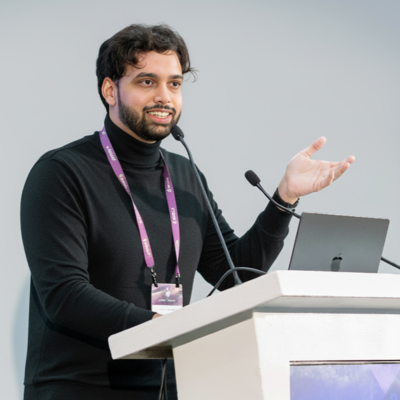
Vipul Gupta is a seasoned engineer with niche expertise in building harnesses, hardtech products, and scalable pipelines. For his community contributions to open-source of over 10+ years, he's been awarded the GitHub Star. Occasionally reads, meticulously documents, and continuously automates, Vipul has been part of programs like Google Summer of Code, ALiAS AMA program & Google Code-in. He runs a 3000+ students community - ALiAS, and he's the co-organizer for the GitTogether Delhi-NCR (14k+ Devs) among many other social initiatives.