/Events /AgentCon - Silicon Valley
AgentCon - Silicon Valley
This event is part of AgentCon, organized by Global AI San Francisco.
Schedule
About
AgentCon Silicon Valley is a free, one-day, in-person conference for developers building with AI agents. Part of the Global AI AgentCon world tour, it brings engineers, researchers, and founders together to dig into what's actually working in agent design, deployment, and integration. Deep-dive talks, hands-on workshops, technical sessions, live demos, and real conversations with other practitioners. Less marketing, more real code.
Top 3 reasons to join AgentCon Silicon Valley
- Learn from the people building the tools. Founders and engineers behind PydanticAI, Mendral, Edgee, and frameworks from Microsoft and Neo4j share what's actually working in production, not slideware.
- Hands-on, not hand-wavy. Workshops, live demos, and technical deep-dives on shipping and scaling agents. You leave with code and patterns you can use on Monday.
- Free ticket, and the Computer History Museum is included. One of the best computing collections anywhere, on the house. Come early, stay late.
Free ticket includes:
- Access to keynotes and all sessions
- Access to workshops (pre-registration needed)
- Access to the Computer History Museum, the venue itself
- A free lunch (vouchers handed out at registration)
- Coffee, tea and water during the day
- Networking with fellow attendees in the hallway track
Who's on stage
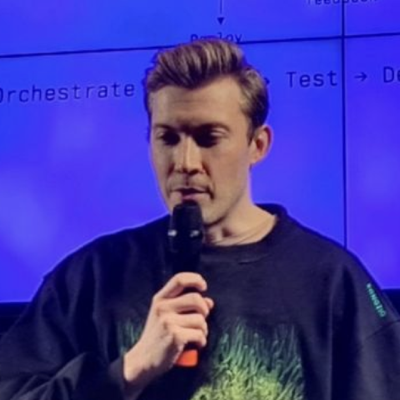
Builder with deep experience in productizing generative AI since 2020. Co-founded and built Flowrite (acquired), the original email assistant. Trained and released small evaluation model Flow Judge 3.8B as open-source. Currently at Flow AI to reinvent the way in which efficient data products are built in the age of agents.

Andrea Luzzardi is co-founder and CTO of Mendral (YC W26), an AI agent for software delivery that fixes CI failures automatically. He wrote the first lines of Docker in 2011 and later built its first CI system. After 7 years at Docker, he co-founded Dagger (YC W19) to make pipelines portable. Andrea has spent 15+ years working on developer infrastructure and previously held roles at Google and Microsoft.

Drew Breunig writes about AI, technology, and culture, and thinks AI should be more boring and more useful. He's the cofounder and CEO of cmpnd, which builds tools for compound AI.

Chris Latimer is the co-founder and CEO of Vectorize, where he helps companies solve their hardest AI data challenges. As an AI researcher, Chris has advanced the industry with his work on embedding models and agent memory. Prior to Vectorize, Chris spent over 20 years working in technology as a software engineer, architect and product manager at companies such as Google, Apigee, and DataStax.

Jonathan “Peli” de Halleux is created GitHub Agentic Workflows(opens in new tab). Peli is one of the creator of MakeCode(opens in new tab). In the past, Peli worked on GenAIScript(opens in new tab), DeviceScript(opens in new tab), Jacdac(opens in new tab), Fakes(opens in new tab) in Visual Studio 2012, rise4fun(opens in new tab), TouchDevelop(opens in new tab), Code Hunt(opens in new tab), Pex and Code Digger(opens in new tab).

Samuel Colvin is a Python and Rust developer and Founder of Pydantic Inc., backed by Sequoia to build Pydantic Logfire — developer first observability. The Pydantic library, which he created is downloaded over 300M/month and is a dependency of virtually every GenAI Python libraries including the OpenAI SDK, the Anthropic SDK, the Google Gen AI SDK, Langchain and LlamaIndex.

Kumar Allamraju, Principal Cloud Solutions Architect at Microsoft Azure - Working with Strategic and Enterprise customers to accelerate their digital transformation to Azure. - Certified in AZ-103, AZ-300, AZ-301 and AZ-201 - Microsoft Openhack Coach on Migration and Containers

Tate is a Senior Product Marketing Manager at Pendo, focused on connecting product value to customer needs.

Rakesh Angi is a Senior Cloud Solution Architect at Microsoft with over 25 years of experience building and evolving software systems across industries. His work today focuses on designing practical, end-to-end cloud and AI solutions that move beyond prototypes into real-world impact. He works closely with teams to bring together infrastructure, data, and application layers, with a growing focus on agentic AI systems. Rakesh enjoys staying hands-on with the technology, from experimenting with models to shaping architectures that scale. He is particularly interested in how AI can be applied thoughtfully and responsibly to solve complex business problems.

I'm Harald Kirschner, a Principal Product Manager at Microsoft working on Visual Studio Code and GitHub Copilot, supporting over 40 million active developers code faster and more efficiently across virtually any programming language. Before Microsoft, I led Developer Experience at Mozilla, where I led Firefox DevTools and helped deliver Firefox Quantum, which doubled browser performance. My background in software engineering, including early work on MooTools, gives me hands-on insight into the challenges developers face daily. When I'm not working, I enjoy hiking California's coastal trails and experimenting with generative art. As a speaker at the AI Engineer Summit, I'm excited to share insights from our work on AI coding tools and Model Context Protocol to help developers achieve flow state even in complex environments.

Jetashree Ravi leads part of the Applied MLE team at Fireworks who spends her time making sure inference runs fast and fine-tuned models actually land well in production. She works across the full stack-- from getting deployments to not fall over under load, to making fine-tuning feel less like a black box. If something's slow, flaky, or just not behaving, she's usually already on it.

Laurie Voss is Head of Developer Relations at Arize AI, the leading company for AI observability and evaluations. He has been a developer for over 30 years and was co-founder of npm, Inc.. He believes passionately in making the web bigger, better, and more accessible for everyone.

Software Engineer. Multi-published author (turns out fiction writing is really useful in software!). Owner of the fashion brand Prima Dona studios. Aspiring sommelier at Side Hustle Wines. Dyslexic but Dealing. Believer that tech upskilling is the ultimate equalizer. Always ready to get on a plane.

Jason is Google’s Web AI lead for client side AI, and has been part of the company's evolution for over 15 years. He has publications and patents ranging from digital teleportation to the future of the agentic internet itself. Currently Jason represents teams such as LiteRT.js, DeepMind (Gemma web models), Chrome, TensorFlow.js, and MediaPipe, helping developers globally apply machine learning in JavaScript to the industries that they work within - with a focus on privacy, low latency results, and lower costs. He is also the author of the first Web AI course on Google Developers and EdX, that have enabled over 100K developers to start their journey with Machine Learning in the browser, and is also the creator of the world’s first Web AI Summit bringing together top minds in the field. He combines his knowledge of the technical and creative worlds to develop innovative prototypes for Google's largest customers and internal teams with 20+ years experience working at the intersection of web engineering and emerging technologies. Jason loves sharing knowledge online which has attracted a global following. Connect with Jason: LinkedIn: https://www.linkedin.com/in/WebAI/ Twitter: https://twitter.com/jason_mayes Github: https://github.com/jasonmayes Discord: https://discord.com/invite/hkfpPkk YouTube: https://www.youtube.com/jasonmayes

Rob Zuber is a 20-year veteran of software startups; a three-time founder, and five-time CTO. Since joining CircleCI, Rob has seen the company through multiple rounds of funding and an acquisition, while leading a team of 200+ engineers distributed worldwide. While he’s not solving complex software problems, Rob enjoys snowboarding, playing the guitar, and spending time with his wife and two children. He holds a Bachelor’s degree in Applied Science from Queen’s University in Kingston, Ontario, and lives in Oakland, California.
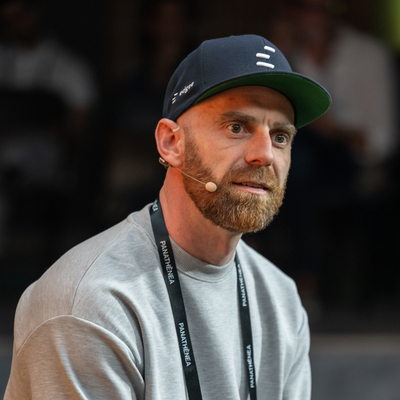
Sacha Morard is a French technology entrepreneur and executive renowned for his significant impact in the digital media and tech sectors. Morard is recognized for his expertise in web performance, cloud infrastructure, and blending creativity with technological innovation. Known for having been the CTO of Le Monde Group for six years, he then co-founded Edgee in 2024 to advance edge computing solutions.

Nyah Macklin is a seasoned researcher and speaker on topics around AI, ML, Ethics, Governance, and Responsibility. Nyah serves as a Senior Developer Advocate for Artificial Intelligence at Neo4j, specializing in context engineering, knowledge graphs, and AI-driven developer tooling where Nyah has built high-impact technical communities and led initiatives that advance a critical understanding of AI and its use cases. They are also the Founder & CTO of Afros in AI, a technical community dedicated to showcasing the multifaceted nature of artificial intelligence. Beyond Nyah's technical expertise, Nyah has a background in government leadership and technology policy, having served as Chief of Staff in the U.S. state government, where they helped shape tech-driven legislative initiatives and equity-driven legislation. When not immersed in their work, Nyah cares about empowering, teaching, and tutoring engineers, live-streaming technical deep dives, and building open-source tools that make software more accessible, explainable, and community-driven.

As a Data Analytics and ML/AI Specialist, my mission is to break down complex concepts into easily understandable terms and practical, production-ready code. I create hands-on tutorials, open-source projects, and live demos that help developers build real-world solutions with Python—from RAG systems and agentic workflows to multimodal applications. Through conference talks, workshops, and accessible educational resources, I empower developers to confidently implement advanced technologies in their projects, regardless of their starting skill level. My goal is simple: turn complex AI/ML theory into deployable solutions that developers can use immediately.
Senior Cloud Solution Architect with 28+ years of expertise delivering secure, scalable, business-critical SaaS and cloud-native solutions across Microsoft Azure and AWS. Proven ability to drive customer outcomes by translating complex business requirements into production-ready architectures. Specializing in Agentic AI applications, high-scale cloud migrations, and deep technical problem-solving to maximize consumption and ROI.
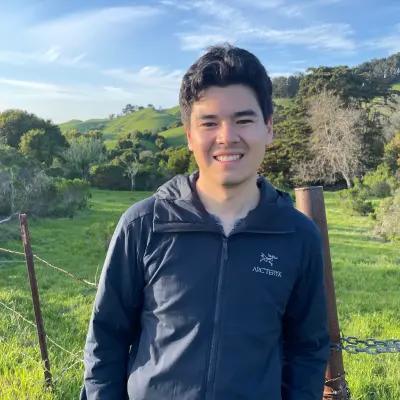
Kevin is Head of AI Strategy & Developer Experience at Descope, where he leads the team building the identity layer for AI agents. He's spent the last few years deep in OAuth, MCP, and what it actually takes to authenticate agents in production — and most of his time is split between product work on Descope's Agentic Identity Hub, the docs and content developers learn from, and the partnerships that put Descope in front of the right engineers. He started his career as a software engineer and has always cared more about how customers use the tools he builds than the code itself, which is what pulled him toward DevRel. Before Descope, he was a Lead Software Engineer at BoostUp.ai working on the mobile app and third-party integrations, and earlier a data engineer building revenue forecasting pipelines. When he's not talking to customers or shipping code, Kevin is usually driving fast up a twisty mountain road, reading historical fiction, or planning the next trip somewhere he hasn't been.
TBC
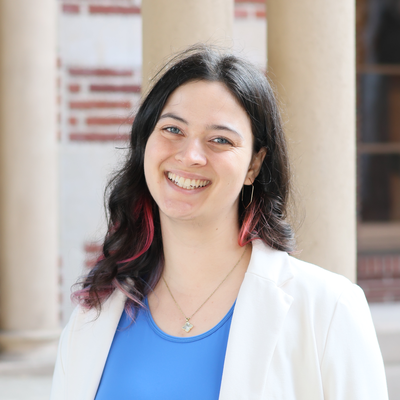
Shannon Brownlee is the cofounder and CTO at Valence AI, a startup classifying emotions via vocal tone analysis for conversational intelligence, contact centers, and voice agents. With a background in AI and software engineering, Shannon’s work focuses on machine learning applications within biology and signal processing. Her focus at Valence is on foundation model development and product engineering. She was previously at Microsoft and Lucid Circuit, and her past research includes AI for neuroscience, genomics, oncology, and epidemiology. She is passionate about using AI to promote social good and human connection.

Chloe Duckworth is the co-founder and CEO of Valence AI, where she applies her background in computational neuroscience to develop emotion AI that supports mental health and human connection. Valence’s models analyze vocal tone to detect emotional states in conversation, enabling applications from therapeutic support to early detection of distress in both human- and AI-mediated interactions. Chloe previously worked in neurotechnology at BrainMind, exploring the intersection of brain science and technology for social good. She is also the co-founder of Hope Hearted, a California nonprofit providing supplies and PPE to protect unhoused people from COVID and other infectious diseases.


Patrick Chanezon leads the Cloud Developer Advocacy team in Developer Relations at Microsoft, helping developers and technology communities achieve more with AI on Microsoft Cloud. Previously, at Docker Inc., he helped to build Docker, the world’s leading software container platform, for developers and sysadmins. He helped establish open source and standards organizations such as Open Container Initiative, Cloud Native Computing Foundation or Green Software Foundation. Software developer and storyteller, he spent 8 years building platforms at Netscape & Sun, then 19 years evangelizing platforms at Google, VMware & Microsoft. His main professional interest is in building and kickstarting the network effect for these wondrous two-sided markets called Platforms. He has worked on platforms for AI, Cloud, Distributed Systems, Web, Social, Commerce, Ads, and Portals.
Sessions & tracks
Registration
HAHN AUDITORIUM ·Welcome to AgentCon
HAHN AUDITORIUM ·Will The Real Autonomous Agent Please Stand Up
"I have 45 Agents that are running autonomously and never make mistakes." Who has heard this? Who BELIEVES this? No one believes it because as we have learned, BUILDING an Agent is not the hardest part of the AI-verse. After much trial, error, drama and tears, we have learned that figuring out which activities could use an Agent, getting our data in order, giving Agents the right set of instructions and guardrails and BABYSITTING the Agent are actually the hard parts.
And let's not even get started on the next gen problem that will soon become very real: How do we build FOR Agents?In this AgentCon keynote, come and learn about how to think and REthink about building AI Agents and see some demos of how we did it to solve REAL work problems!
Patrick Chanezon leads the Cloud Developer Advocacy team in Developer Relations at Microsoft, helping developers and technology communities achieve more with AI on Microsoft Cloud. Previously, at Docker Inc., he helped to build Docker, the world’s leading software container platform, for developers and sysadmins. He helped establish open source and standards organizations such as Open Container Initiative, Cloud Native Computing Foundation or Green Software Foundation. Software developer and storyteller, he spent 8 years building platforms at Netscape & Sun, then 19 years evangelizing platforms at Google, VMware & Microsoft. His main professional interest is in building and kickstarting the network effect for these wondrous two-sided markets called Platforms. He has worked on platforms for AI, Cloud, Distributed Systems, Web, Social, Commerce, Ads, and Portals.
Software Engineer. Multi-published author (turns out fiction writing is really useful in software!). Owner of the fashion brand Prima Dona studios. Aspiring sommelier at Side Hustle Wines. Dyslexic but Dealing. Believer that tech upskilling is the ultimate equalizer. Always ready to get on a plane.
Your agent needs a sandbox, not a desert
Everyone agrees agents need code execution.
That agreement lasts right up until you ask how to do it.
The default answer is usually something like "My agent needs a full Linux VM to succeed". That's a very convenient answer for sandbox providers, but I think it's often incorrect.
In many real-world agent workflows, the model does not need a whole computer. It does not need arbitrary packages, shell access, CPython, node, let alone awk sed and gcc. It needs a small amount of safe, expressive compute: enough to write code, call tools, and keep intermediate state out of the context window.
That is the idea behind Monty: a minimal Python interpreter, written in Rust, designed specifically for running code written by agents.
In this talk, I'll argue that for a surprisingly large class of agent systems, a curated set of tools in a custom runtime is better than a full sandbox. Not because full sandboxes are bad, but because they solve a much larger problem than most embedded agents actually have. And you pay for that mismatch in complexity, cost, operational pain, and 100,000X higher latency.
Sandboxes are great, but there's such a thing as too much sand - in many scenarios the constraints and limitations of a custom built, minimal sandbox are a feature, not a bug.
Samuel Colvin is a Python and Rust developer and Founder of Pydantic Inc., backed by Sequoia to build Pydantic Logfire — developer first observability. The Pydantic library, which he created is downloaded over 300M/month and is a dependency of virtually every GenAI Python libraries including the OpenAI SDK, the Anthropic SDK, the Google Gen AI SDK, Langchain and LlamaIndex.
Stop vibe-testing: run real agent evals
Most teams ship AI agents the same way: run a few prompts, eyeball the output, decide it "looks good," ship it. That isn't testing, that's vibes. Vibes don't catch regressions, don't survive a prompt change, and don't tell you whether a new model is actually better. Agents are too complicated and unpredictable for vibes-based testing to work. In this talk I walk you through what real agent evaluation looks like: what evals are, why they're necessary, what separates a useful eval from one that just produces noise, and how to use eval results to actually ship better agents. You'll leave with a concrete framework for closing the loop: instrument, trace, evaluate, validate the evaluator, iterate.
Laurie Voss is Head of Developer Relations at Arize AI, the leading company for AI observability and evaluations. He has been a developer for over 30 years and was co-founder of npm, Inc.. He believes passionately in making the web bigger, better, and more accessible for everyone.
Agents Don’t Know What They Don’t Know
The bottleneck in agentic development isn't the model. It's the feedback loop.
When a developer writes code, the inner loop is tight: write, run, fix, repeat. When an agent writes code, that loop collapses and expands at the same time. Agents iterate fast. But without real feedback, they iterate confidently in the wrong direction.
This talk traces the evolution of that problem and what CircleCI is building to address it. We'll walk through three primitives: stop hooks that pause agent execution at key decision points, review skills that bring automated judgment into the loop, and remote validation that moves CI infrastructure into the development environment instead of waiting for a push.
We'll demo the progression hands-on: validate manually first, then let the agent take over that work automatically, then back it with remote compute. Each step is a forcing function toward the same goal: agents that fail fast, fix early, and ship code you can actually trust.
The tools are already changing. The pipelines and workflows your team depends on are next.
Rob Zuber is a 20-year veteran of software startups; a three-time founder, and five-time CTO. Since joining CircleCI, Rob has seen the company through multiple rounds of funding and an acquisition, while leading a team of 200+ engineers distributed worldwide. While he’s not solving complex software problems, Rob enjoys snowboarding, playing the guitar, and spending time with his wife and two children. He holds a Bachelor’s degree in Applied Science from Queen’s University in Kingston, Ontario, and lives in Oakland, California.
Lunch
HAHN AUDITORIUM ·Lessons from a No-Code Library
The allure of Spec-Driven Development (SDD) is that you bring the specs and tests and the code comes for free. In reality, SDD presents a new challenge: keeping the specs, tests, and code in sync as you move forward.
This talk distills lessons from shipping a no-code library and studying the first wave of SDD projects, which largely leaned on existing software as sources of truth. That approach shines in a specific shape of problem: tightly-defined surfaces like APIs, plugin systems, and conformance suites, where behavior is testable and the spec can credibly stand in for the code. It's also a promising model for open source maintainers who want to seed community contribution: ship the spec and tests, let contributors bring their own agents and intent.
But the second wave of SDD is pushing past that genre into territory where no external validator exists, and there the sync problem compounds fast. We've been here before: the 1968 Software Crisis was our inability to manage codebases larger than one engineer's head, and the answer then was process. Agents have triggered a second crisis (more code than humans can review) and the answer now is also process.
Thankfully, we have AI to help this time
Drew Breunig writes about AI, technology, and culture, and thinks AI should be more boring and more useful. He's the cofounder and CEO of cmpnd, which builds tools for compound AI.
Securing Coding Agents: Sandboxes, Guardrails, and Real-World Attacks
While most coding agents have "sandboxes" and "permissions", did you know that they are easily bypassed? And it's rare that a day goes by without hearing how Claude or Codex or Copilot or insert new agent here has leaked credentials or deleted a filesystem. So, how do we fix this? In this talk, we'll talk about the various ways in which things can go wrong and how Docker's been building tooling to combat these issues. At the end of the day, Docker wants to help developers get the full power of agents, but provide the proper guardrails and observability. We'll dive into Docker Sandboxes, the MCP Toolkit, and get a sneak peek of upcoming features. There will be lots of demos (both good and bad!) of blocking various attacks, ranging from filesystem deletion, to API token leaks, and various prompt injections. It should be a lot of fun!
TBC
Agents All the Way Down: How the VS Code Team Builds with What It Ships
Commits doubled. Issues closed tripled. Releases went from monthly to weekly — same team size. The VS Code team wired agents into the full product cycle: a PM turns social feedback into a working PR before the next meeting, an EM kicks off parallel agent sessions from his calendar each morning, and issue triage runs as an agent loop in GitHub Actions. Custom agents, parallel workflows, and the patterns you can steal.
I'm Harald Kirschner, a Principal Product Manager at Microsoft working on Visual Studio Code and GitHub Copilot, supporting over 40 million active developers code faster and more efficiently across virtually any programming language. Before Microsoft, I led Developer Experience at Mozilla, where I led Firefox DevTools and helped deliver Firefox Quantum, which doubled browser performance. My background in software engineering, including early work on MooTools, gives me hands-on insight into the challenges developers face daily. When I'm not working, I enjoy hiking California's coastal trails and experimenting with generative art. As a speaker at the AI Engineer Summit, I'm excited to share insights from our work on AI coding tools and Model Context Protocol to help developers achieve flow state even in complex environments.
Beyond the Uncanny Valley: Emotionally-Intelligent Voice Agents
Attention is shifting to the next frontier of AI agents: voice. Unlike text, voice carries dense paralinguistic signals like emotional cues that are often lost in traditional NLP systems, contributing to the uncanny valley in voice agents. By adding in emotional context, agents can not only produce better intonations, but also give more empathetic responses. This talk will dive into the research behind Valence’s approach to real-time emotion detection at scale, where deep learning models detect emotional shifts across diverse speakers and environments. Shannon and Chloe will outline the ways in which emotion feeds into multiple pieces of the voice stack and demo agents that sound and behave in emotionally-intelligent ways.
Shannon Brownlee is the cofounder and CTO at Valence AI, a startup classifying emotions via vocal tone analysis for conversational intelligence, contact centers, and voice agents. With a background in AI and software engineering, Shannon’s work focuses on machine learning applications within biology and signal processing. Her focus at Valence is on foundation model development and product engineering. She was previously at Microsoft and Lucid Circuit, and her past research includes AI for neuroscience, genomics, oncology, and epidemiology. She is passionate about using AI to promote social good and human connection.
Chloe Duckworth is the co-founder and CEO of Valence AI, where she applies her background in computational neuroscience to develop emotion AI that supports mental health and human connection. Valence’s models analyze vocal tone to detect emotional states in conversation, enabling applications from therapeutic support to early detection of distress in both human- and AI-mediated interactions. Chloe previously worked in neurotechnology at BrainMind, exploring the intersection of brain science and technology for social good. She is also the co-founder of Hope Hearted, a California nonprofit providing supplies and PPE to protect unhoused people from COVID and other infectious diseases.
RAG is Dead. Long Live Agent Memory.
RAG solved a problem: how to ground LLMs in external knowledge. This was useful for basic chatbots. But in a world where we want autonomous agents to solve business problems, RAG fundamentally doesn't fit.
Agent memory systems are emerging as the new standard in AI architectures to solve problems like inconsistency, context rot, and hallucinations.
In this talk, we'll identify the root causes of these problems and explain how agent memory allows you to build robust, accurate agents that learn over time.
We'll do a deep dive into Hindsight, an open source agent memory system that achieves state of the art accuracy on benchmarks and in production. We'll see how Hindsight uses biomimetic data structures to produce agent memory that works more like human memory - and how you can use these capabilities to deliver agents you can trust in production.
Chris Latimer is the co-founder and CEO of Vectorize, where he helps companies solve their hardest AI data challenges. As an AI researcher, Chris has advanced the industry with his work on embedding models and agent memory. Prior to Vectorize, Chris spent over 20 years working in technology as a software engineer, architect and product manager at companies such as Google, Apigee, and DataStax.
GitHub Agentic Workflows
Imagine a world where improvements to your repositories are automatically delivered each morning, ready for you to review. Issues are automatically triaged, CI failures analyzed, documentation maintained and tests improved. All defined via simple markdown files.
GitHub Agentic Workflows deliver this: repository automation, running the coding agents you know and love, in GitHub Actions, with strong guardrails and security-first design principles.
Use GitHub Copilot, Claude by Anthropic or OpenAI Codex for event-triggered and scheduled jobs to improve your repository. GitHub Agentic Workflows augment your existing, deterministic CI/CD with Continuous AI capabilities.
Developed by GitHub Next and Microsoft Research, workflows run with added guardrails, using safe outputs and sandboxed execution to help keep your repository safe.
Jonathan “Peli” de Halleux is created GitHub Agentic Workflows(opens in new tab). Peli is one of the creator of MakeCode(opens in new tab). In the past, Peli worked on GenAIScript(opens in new tab), DeviceScript(opens in new tab), Jacdac(opens in new tab), Fakes(opens in new tab) in Visual Studio 2012, rise4fun(opens in new tab), TouchDevelop(opens in new tab), Code Hunt(opens in new tab), Pex and Code Digger(opens in new tab).
Client side Web AI Agents for the agentic internet of the future
AI is everywhere, and Web AI usage in JavaScript on the front end is growing exponentially - but where is it going and how will this change websites of the future? In this talk see how you can use the latest generative AI models from Google that run entirely client side on the front end (no cloud) to perform agentic behaviors to get common tasks done faster than ever before on any website giving you an edge over your competition.
Jason is Google’s Web AI lead for client side AI, and has been part of the company's evolution for over 15 years. He has publications and patents ranging from digital teleportation to the future of the agentic internet itself. Currently Jason represents teams such as LiteRT.js, DeepMind (Gemma web models), Chrome, TensorFlow.js, and MediaPipe, helping developers globally apply machine learning in JavaScript to the industries that they work within - with a focus on privacy, low latency results, and lower costs. He is also the author of the first Web AI course on Google Developers and EdX, that have enabled over 100K developers to start their journey with Machine Learning in the browser, and is also the creator of the world’s first Web AI Summit bringing together top minds in the field. He combines his knowledge of the technical and creative worlds to develop innovative prototypes for Google's largest customers and internal teams with 20+ years experience working at the intersection of web engineering and emerging technologies. Jason loves sharing knowledge online which has attracted a global following. Connect with Jason: LinkedIn: https://www.linkedin.com/in/WebAI/ Twitter: https://twitter.com/jason_mayes Github: https://github.com/jasonmayes Discord: https://discord.com/invite/hkfpPkk YouTube: https://www.youtube.com/jasonmayes
The Grand Closing: Raffle & Community Quiz
What better way to end the day than with a little friendly competition and a lot of good energy? Our closing session brings the whole community together for a fun-filled raffle and quiz — a celebration of everything we've explored and discussed today.
Put your AI knowledge to the test, cheer on your fellow attendees, and keep your fingers crossed as we draw our raffle winners. Prizes, laughs, and great company guaranteed. See you at the finish line!
Registration
BOOLE ROOM ·Welcome to AgentCon
BOOLE ROOM ·Will The Real Autonomous Agent Please Stand Up
"I have 45 Agents that are running autonomously and never make mistakes." Who has heard this? Who BELIEVES this? No one believes it because as we have learned, BUILDING an Agent is not the hardest part of the AI-verse. After much trial, error, drama and tears, we have learned that figuring out which activities could use an Agent, getting our data in order, giving Agents the right set of instructions and guardrails and BABYSITTING the Agent are actually the hard parts.
And let's not even get started on the next gen problem that will soon become very real: How do we build FOR Agents?In this AgentCon keynote, come and learn about how to think and REthink about building AI Agents and see some demos of how we did it to solve REAL work problems!
Patrick Chanezon leads the Cloud Developer Advocacy team in Developer Relations at Microsoft, helping developers and technology communities achieve more with AI on Microsoft Cloud. Previously, at Docker Inc., he helped to build Docker, the world’s leading software container platform, for developers and sysadmins. He helped establish open source and standards organizations such as Open Container Initiative, Cloud Native Computing Foundation or Green Software Foundation. Software developer and storyteller, he spent 8 years building platforms at Netscape & Sun, then 19 years evangelizing platforms at Google, VMware & Microsoft. His main professional interest is in building and kickstarting the network effect for these wondrous two-sided markets called Platforms. He has worked on platforms for AI, Cloud, Distributed Systems, Web, Social, Commerce, Ads, and Portals.
Software Engineer. Multi-published author (turns out fiction writing is really useful in software!). Owner of the fashion brand Prima Dona studios. Aspiring sommelier at Side Hustle Wines. Dyslexic but Dealing. Believer that tech upskilling is the ultimate equalizer. Always ready to get on a plane.
Unit Tests for Model Training: The Missing Layer in Compound AI
Industry leaders-- including Fireworks AI CEO Lin Qiao-- have been making the case that the future of AI is compound: smaller specialized models, open models you own and train, agents orchestrating them together. But if training is now a core part of shipping AI, where are the tests? This talk surveys what teams actually use today to test their training-- benchmarks, LLM-as-judge, human review, vibe checks-- and where each falls short. It then introduces Eval Protocol, Fireworks AI's open-source framework built so any eval system can talk to any training system, giving teams structured, composable, repeatable evaluations wired directly into the training loop. Practical, honest, and ready to use today.
Jetashree Ravi leads part of the Applied MLE team at Fireworks who spends her time making sure inference runs fast and fine-tuned models actually land well in production. She works across the full stack-- from getting deployments to not fall over under load, to making fine-tuning feel less like a black box. If something's slow, flaky, or just not behaving, she's usually already on it.
How to Build Auditable Agents Using Context Graphs
Your AI agent just denied someone's loan application. Or it approved a $100K credit line increase. Or it rejected a prior authorization for medical treatment. Now you’re in court. And someone asks you to explain its decision. What are you going to say?
In production, AI agents are making real decisions that impact real people's lives, and when those decisions get challenged by customers, compliance teams, auditors, or courts, you need answers.
This session will teach the best techniques to build AI agents that will pass an audit, using context graphs. Instead of black-box reasoning, you get complete decision traceability showing what information the agent considered, which factors influenced its choice, what alternatives it evaluated, and exactly how it reached its conclusion. I'll demo an AI agent evaluating a credit line increase request, then we'll trace the complete reasoning chain from input to output. We aren’t building this agent to simply explain itself (or hallucinate when explaining itself) after the fact. We are building it to capture decision-making as queryable graph structures, and get working code for building agents that can actually justify their decisions. So the next time anyone asks why your agent made that decision, you'll have a real answer.
Nyah Macklin is a seasoned researcher and speaker on topics around AI, ML, Ethics, Governance, and Responsibility. Nyah serves as a Senior Developer Advocate for Artificial Intelligence at Neo4j, specializing in context engineering, knowledge graphs, and AI-driven developer tooling where Nyah has built high-impact technical communities and led initiatives that advance a critical understanding of AI and its use cases. They are also the Founder & CTO of Afros in AI, a technical community dedicated to showcasing the multifaceted nature of artificial intelligence. Beyond Nyah's technical expertise, Nyah has a background in government leadership and technology policy, having served as Chief of Staff in the U.S. state government, where they helped shape tech-driven legislative initiatives and equity-driven legislation. When not immersed in their work, Nyah cares about empowering, teaching, and tutoring engineers, live-streaming technical deep dives, and building open-source tools that make software more accessible, explainable, and community-driven.
Identity Best Practices to Secure and Scale Agentic AI / MCP Deployments
As organizations adopt agentic AI systems and MCP-based architectures, strong identity foundations become essential—not just for security, but for reliability, governance, and scale. This session explores the modern identity patterns that enable safe, compliant, and high-performance AI deployments. We’ll break down practical strategies for implementing scope-based access control that keeps agents precisely permissioned; robust token management and secure storage workflows that reduce exposure risks; and user consent management models that ensure transparency, trust, and regulatory alignment.
Attendees will walk away with a clear understanding of the architectural building blocks, operational guardrails, and best-practice identity controls needed to protect sensitive data, enforce least privilege, and confidently scale agentic AI across their organization.
Kevin is Head of AI Strategy & Developer Experience at Descope, where he leads the team building the identity layer for AI agents. He's spent the last few years deep in OAuth, MCP, and what it actually takes to authenticate agents in production — and most of his time is split between product work on Descope's Agentic Identity Hub, the docs and content developers learn from, and the partnerships that put Descope in front of the right engineers. He started his career as a software engineer and has always cared more about how customers use the tools he builds than the code itself, which is what pulled him toward DevRel. Before Descope, he was a Lead Software Engineer at BoostUp.ai working on the mobile app and third-party integrations, and earlier a data engineer building revenue forecasting pipelines. When he's not talking to customers or shipping code, Kevin is usually driving fast up a twisty mountain road, reading historical fiction, or planning the next trip somewhere he hasn't been.
Lunch
BOOLE ROOM ·AI Agents Are Everywhere. Knowing How Users Experience Them Is Not
Most AI teams can tell you how their agent was built. Far fewer can tell you how users actually experience it: what they ask, where they get stuck, and whether the agent is delivering on its promise. This session introduces Pendo Agent Analytics, a free tool that gives product and AI teams real visibility into agent conversations and user behavior. We'll walk through what it is, what it shows you, and why shipping without it means shipping without direction. Join our separate 60 minute, hands-on workshop to set it up yourself.
Tate is a Senior Product Marketing Manager at Pendo, focused on connecting product value to customer needs.
AI Agent for CI: What We Learned Processing Billions Log Lines per Week
Every week, one of our customers runs 575K CI jobs, produces over a billion log lines, and executes 33 million tests. Even with a 99.98% pass rate, the noise is real. We built an AI agent that diagnoses failures, traces flaky tests to their root cause, and opens PRs with fixes. This talk covers what we learned shipping it in production: why you can't just throw logs at a model and hope for the best, why letting the agent pull its own context beats injecting it, how a multi-model architecture made our costs go down when we upgraded to a more expensive model, and the infrastructure we built to make it all reliable at scale. Includes a live demo with real data.
Andrea Luzzardi is co-founder and CTO of Mendral (YC W26), an AI agent for software delivery that fixes CI failures automatically. He wrote the first lines of Docker in 2011 and later built its first CI system. After 7 years at Docker, he co-founded Dagger (YC W19) to make pipelines portable. Andrea has spent 15+ years working on developer infrastructure and previously held roles at Google and Microsoft.
Making Your SaaS Assistant-Native: Architecture for AI Agent Access to Production Data
AI assistants like Claude and ChatGPT can answer questions — but only if they can access the right data. For data-heavy B2B SaaS companies, this is the hard problem: how do you give agents secure, structured, multi-tenant access to production data without rebuilding your product from scratch?
In this talk, Karolus Sariola, CTO of Flow AI, walks through the architecture behind turning an existing SaaS product into an assistant-native platform. Drawing from real production deployments, he covers:
- The semantic context layer: How to model your data so that AI agents can reason about it, not just query it
- MCP integration in practice: What it actually takes to expose your SaaS to Claude, ChatGPT, and other AI runtimes via Model Context Protocol
- Multi-tenancy and agent profiles: How to scope data access per customer, per user role, and per agent intent. How to ensure and verify data isolation.
- Authorization at the data layer: Defining what an agent can and cannot do, and how to enforce it
- Production realities: What breaks when you move from demo to production, and how to design for reliability from day one
This is a ground-level look at the infrastructure decisions that determine whether your AI data interfacing agents work in production or only in demos.
Builder with deep experience in productizing generative AI since 2020. Co-founded and built Flowrite (acquired), the original email assistant. Trained and released small evaluation model Flow Judge 3.8B as open-source. Currently at Flow AI to reinvent the way in which efficient data products are built in the age of agents.
From One-Shot to Agentic: Optimizing Shop Intelligence with DSPy
Learn how Shopify evolved their approach to extracting structured data from millions of merchant stores. One-shot LLM calls hit quality and cost ceilings fast, so the team shifted to an agentic architecture where the model explores stores on its own to find answers.
By using DSPy to define, optimize, and run specialized sub-agents, they improved both reliability and maintainability. The shift from GPT-5 to a self-hosted Qwen model cut costs by roughly 75x while improving quality, enabling full coverage across all Shopify shops instead of just a subset.
Tired of wasting tokens?
First, you make it work. Then you make it efficient. We've spent the last two years proving that LLMs can write code, run agents, and orchestrate complex workflows. Today, Claude Code, Codex, OpenClaw, and others are the modern platforms for executing computational tasks, and tokens represent their new bandwidth.
Token compression is about using that bandwidth wisely and accounting for costs from an engineering perspective.
This is a hands-on session on the key techniques and a framework for reasoning about this as a fundamental property of the systems you ship, not an afterthought. Attendees will leave with concrete actions they can implement this week, and a mental model for thinking about token efficiency as a compounding infrastructure advantage rather than a line-item cost.
Sacha Morard is a French technology entrepreneur and executive renowned for his significant impact in the digital media and tech sectors. Morard is recognized for his expertise in web performance, cloud infrastructure, and blending creativity with technological innovation. Known for having been the CTO of Le Monde Group for six years, he then co-founded Edgee in 2024 to advance edge computing solutions.
Reduce AI Agents Costs and Mistakes with Semantic tool Selection
AI agents with many tools face a dual problem: they pick the wrong tool and waste tokens because tool descriptions get serialized into the context on every call. As agents scale to 50+ tools, errors increase and costs explode.
Semantic tool selection filters tools before they reach the LLM context using vector search, reducing errors and token costs. Join me as I build a live travel agent demo showing how to implement this with minimal Ptython code and production patterns for multi-turn conversations.
As a Data Analytics and ML/AI Specialist, my mission is to break down complex concepts into easily understandable terms and practical, production-ready code. I create hands-on tutorials, open-source projects, and live demos that help developers build real-world solutions with Python—from RAG systems and agentic workflows to multimodal applications. Through conference talks, workshops, and accessible educational resources, I empower developers to confidently implement advanced technologies in their projects, regardless of their starting skill level. My goal is simple: turn complex AI/ML theory into deployable solutions that developers can use immediately.
Client side Web AI Agents for the agentic internet of the future
AI is everywhere, and Web AI usage in JavaScript on the front end is growing exponentially - but where is it going and how will this change websites of the future? In this talk see how you can use the latest generative AI models from Google that run entirely client side on the front end (no cloud) to perform agentic behaviors to get common tasks done faster than ever before on any website giving you an edge over your competition.
Jason is Google’s Web AI lead for client side AI, and has been part of the company's evolution for over 15 years. He has publications and patents ranging from digital teleportation to the future of the agentic internet itself. Currently Jason represents teams such as LiteRT.js, DeepMind (Gemma web models), Chrome, TensorFlow.js, and MediaPipe, helping developers globally apply machine learning in JavaScript to the industries that they work within - with a focus on privacy, low latency results, and lower costs. He is also the author of the first Web AI course on Google Developers and EdX, that have enabled over 100K developers to start their journey with Machine Learning in the browser, and is also the creator of the world’s first Web AI Summit bringing together top minds in the field. He combines his knowledge of the technical and creative worlds to develop innovative prototypes for Google's largest customers and internal teams with 20+ years experience working at the intersection of web engineering and emerging technologies. Jason loves sharing knowledge online which has attracted a global following. Connect with Jason: LinkedIn: https://www.linkedin.com/in/WebAI/ Twitter: https://twitter.com/jason_mayes Github: https://github.com/jasonmayes Discord: https://discord.com/invite/hkfpPkk YouTube: https://www.youtube.com/jasonmayes
The Grand Closing: Raffle & Community Quiz
What better way to end the day than with a little friendly competition and a lot of good energy? Our closing session brings the whole community together for a fun-filled raffle and quiz — a celebration of everything we've explored and discussed today.
Put your AI knowledge to the test, cheer on your fellow attendees, and keep your fingers crossed as we draw our raffle winners. Prizes, laughs, and great company guaranteed. See you at the finish line!
Registration
LOVELACE ROOM ·Welcome to AgentCon
LOVELACE ROOM ·Will The Real Autonomous Agent Please Stand Up
"I have 45 Agents that are running autonomously and never make mistakes." Who has heard this? Who BELIEVES this? No one believes it because as we have learned, BUILDING an Agent is not the hardest part of the AI-verse. After much trial, error, drama and tears, we have learned that figuring out which activities could use an Agent, getting our data in order, giving Agents the right set of instructions and guardrails and BABYSITTING the Agent are actually the hard parts.
And let's not even get started on the next gen problem that will soon become very real: How do we build FOR Agents?In this AgentCon keynote, come and learn about how to think and REthink about building AI Agents and see some demos of how we did it to solve REAL work problems!
Patrick Chanezon leads the Cloud Developer Advocacy team in Developer Relations at Microsoft, helping developers and technology communities achieve more with AI on Microsoft Cloud. Previously, at Docker Inc., he helped to build Docker, the world’s leading software container platform, for developers and sysadmins. He helped establish open source and standards organizations such as Open Container Initiative, Cloud Native Computing Foundation or Green Software Foundation. Software developer and storyteller, he spent 8 years building platforms at Netscape & Sun, then 19 years evangelizing platforms at Google, VMware & Microsoft. His main professional interest is in building and kickstarting the network effect for these wondrous two-sided markets called Platforms. He has worked on platforms for AI, Cloud, Distributed Systems, Web, Social, Commerce, Ads, and Portals.
Software Engineer. Multi-published author (turns out fiction writing is really useful in software!). Owner of the fashion brand Prima Dona studios. Aspiring sommelier at Side Hustle Wines. Dyslexic but Dealing. Believer that tech upskilling is the ultimate equalizer. Always ready to get on a plane.
Integrate Azure OpenAI into Your App
In this hands-on lab, you will explore how to harness the power of Azure OpenAI Service to build intelligent applications like chatbots and custom language models that understand and respond to natural human language. Designed for developers, AI engineers, and solution architects, this lab empowers you to work with pre-trained models, leverage APIs, and experiment with prompts to create meaningful AI solutions. By the end of this lab, you will be equipped to apply these capabilities in real-world scenarios, such as enhancing customer service or automating content generation
Kumar Allamraju, Principal Cloud Solutions Architect at Microsoft Azure - Working with Strategic and Enterprise customers to accelerate their digital transformation to Azure. - Certified in AZ-103, AZ-300, AZ-301 and AZ-201 - Microsoft Openhack Coach on Migration and Containers
Lunch
LOVELACE ROOM ·Build Custom Copilot Application using Microsoft Foundry
In this hands-on lab, you run Chat Copilot locally by connecting it with your Azure OpenAI Service values, setting up dependencies, and launching the app from the GitHub repository. You interact with the Copilot using your own uploaded documents, receiving responses grounded in context and backed by citations. Designed for developers, AI enthusiasts, and solution architects, this lab empowers you to explore how generative AI can be tailored to real use cases like customer support or knowledge retrieval. By the end of this lab, you will be ready to integrate and extend Chat Copilot for your own scenarios
Rakesh Angi is a Senior Cloud Solution Architect at Microsoft with over 25 years of experience building and evolving software systems across industries. His work today focuses on designing practical, end-to-end cloud and AI solutions that move beyond prototypes into real-world impact. He works closely with teams to bring together infrastructure, data, and application layers, with a growing focus on agentic AI systems. Rakesh enjoys staying hands-on with the technology, from experimenting with models to shaping architectures that scale. He is particularly interested in how AI can be applied thoughtfully and responsibly to solve complex business problems.
Is Your Agent Driving Real User Value or Creating Friction? Find Out in 60 Minutes.
Building a great AI agent is only half the job. The other half is understanding how real users actually experience it: what they ask, how they navigate it, and where it breaks down. It’s what separates agents that scale from pilots that never take off. In this hands-on workshop, you'll connect Pendo Agent Analytics to a real agent and start seeing actual user conversation data. We'll guide you through the full setup, walk through the insights together, and make sure you leave with a system to scale with confidence. No prior Pendo experience needed. Complete the pre-workshop setup beforehand and we'll hit the ground running. https://pendo-agentcon.lovable.app/
Tate is a Senior Product Marketing Manager at Pendo, focused on connecting product value to customer needs.
Developing a Multimodal RAG Solution
In this hands-on lab, you will build and automate a Retrieval-Augmented Generation (RAG) solution, working with real-world data to create smarter, more context-aware applications. Designed for developers, data professionals, and AI practitioners, this lab enables you to integrate AI models with enterprise data using techniques like text embeddings and generative reasoning. With this experience, you will be prepared to build intelligent systems that enhance search, streamline decision-making, and solve business problems more effectively. By the end of this lab, you will have the skills to design AI-powered solutions that combine relevance with real-time insights
Senior Cloud Solution Architect with 28+ years of expertise delivering secure, scalable, business-critical SaaS and cloud-native solutions across Microsoft Azure and AWS. Proven ability to drive customer outcomes by translating complex business requirements into production-ready architectures. Specializing in Agentic AI applications, high-scale cloud migrations, and deep technical problem-solving to maximize consumption and ROI.
Client side Web AI Agents for the agentic internet of the future
AI is everywhere, and Web AI usage in JavaScript on the front end is growing exponentially - but where is it going and how will this change websites of the future? In this talk see how you can use the latest generative AI models from Google that run entirely client side on the front end (no cloud) to perform agentic behaviors to get common tasks done faster than ever before on any website giving you an edge over your competition.
Jason is Google’s Web AI lead for client side AI, and has been part of the company's evolution for over 15 years. He has publications and patents ranging from digital teleportation to the future of the agentic internet itself. Currently Jason represents teams such as LiteRT.js, DeepMind (Gemma web models), Chrome, TensorFlow.js, and MediaPipe, helping developers globally apply machine learning in JavaScript to the industries that they work within - with a focus on privacy, low latency results, and lower costs. He is also the author of the first Web AI course on Google Developers and EdX, that have enabled over 100K developers to start their journey with Machine Learning in the browser, and is also the creator of the world’s first Web AI Summit bringing together top minds in the field. He combines his knowledge of the technical and creative worlds to develop innovative prototypes for Google's largest customers and internal teams with 20+ years experience working at the intersection of web engineering and emerging technologies. Jason loves sharing knowledge online which has attracted a global following. Connect with Jason: LinkedIn: https://www.linkedin.com/in/WebAI/ Twitter: https://twitter.com/jason_mayes Github: https://github.com/jasonmayes Discord: https://discord.com/invite/hkfpPkk YouTube: https://www.youtube.com/jasonmayes
The Grand Closing: Raffle & Community Quiz
What better way to end the day than with a little friendly competition and a lot of good energy? Our closing session brings the whole community together for a fun-filled raffle and quiz — a celebration of everything we've explored and discussed today.
Put your AI knowledge to the test, cheer on your fellow attendees, and keep your fingers crossed as we draw our raffle winners. Prizes, laughs, and great company guaranteed. See you at the finish line!
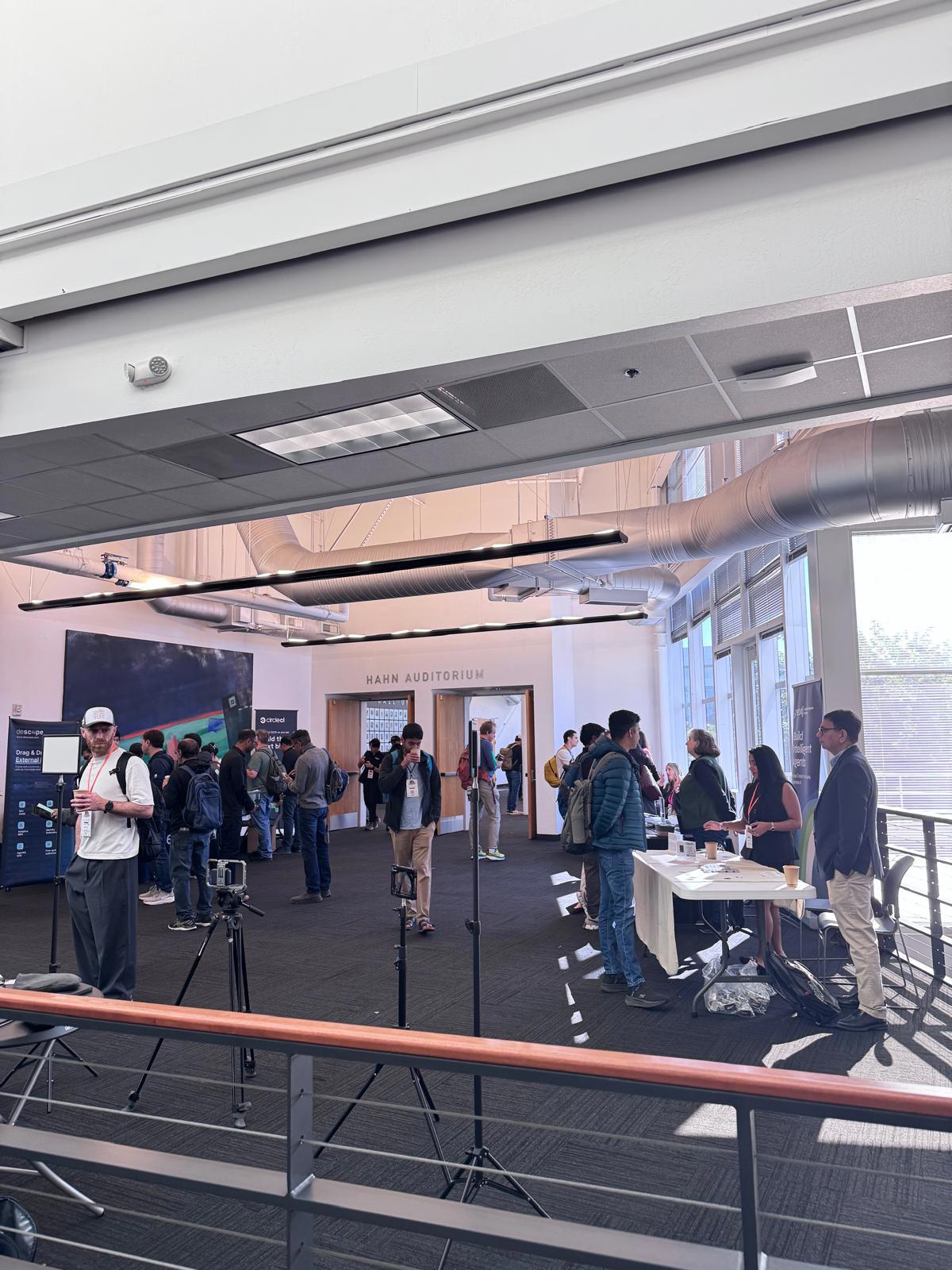
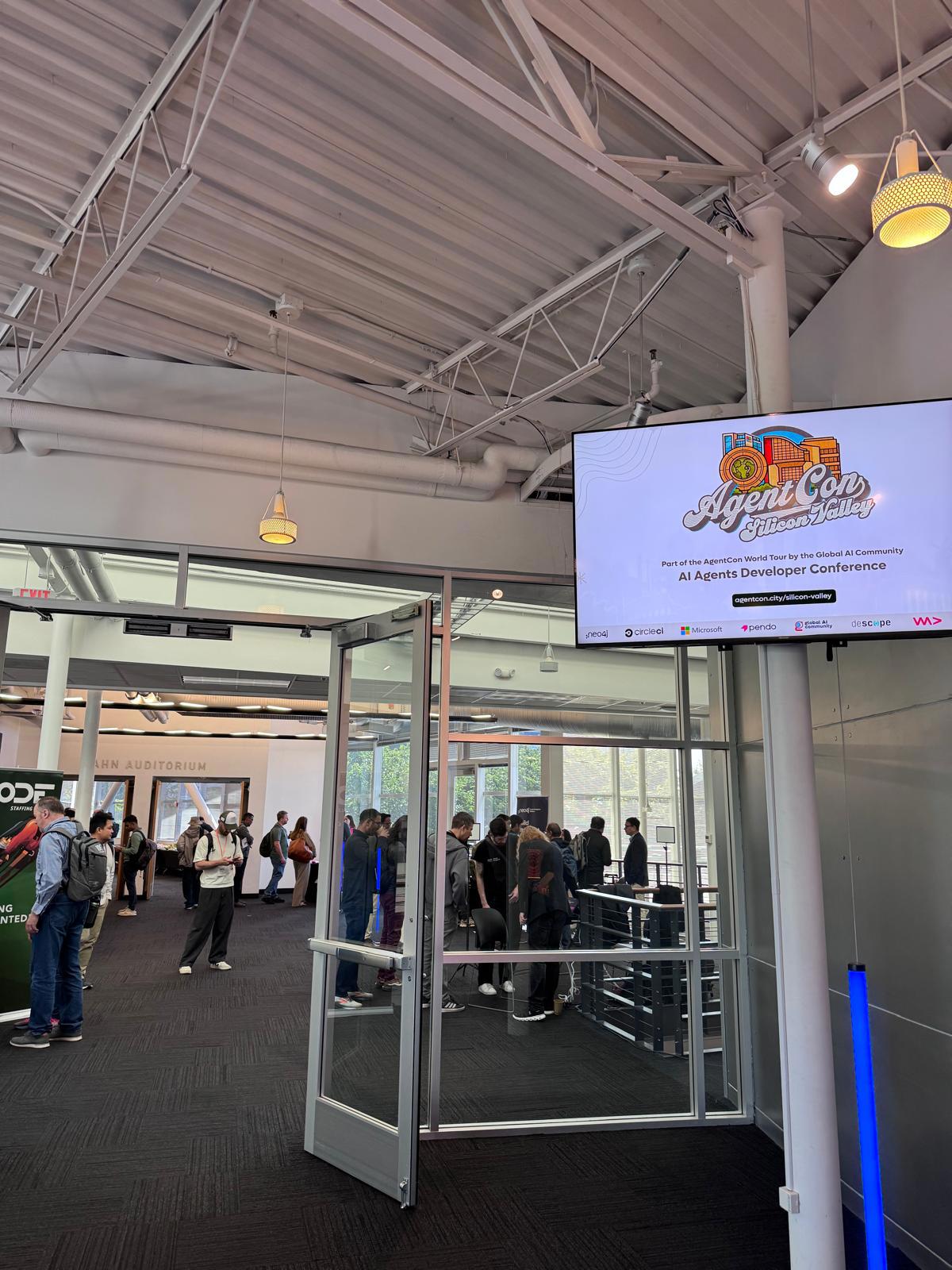
Sponsor booths & Networking
History Museum
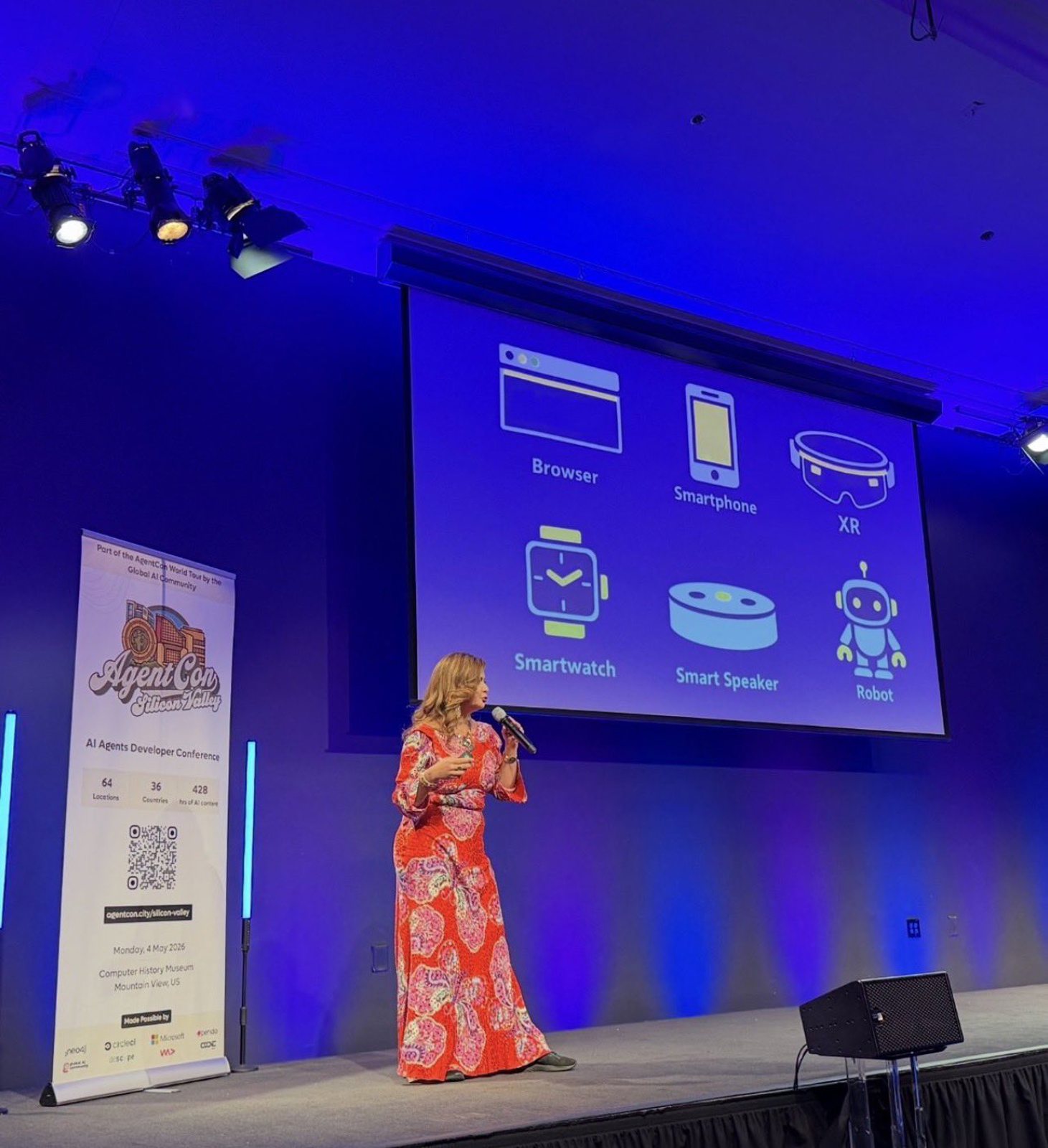
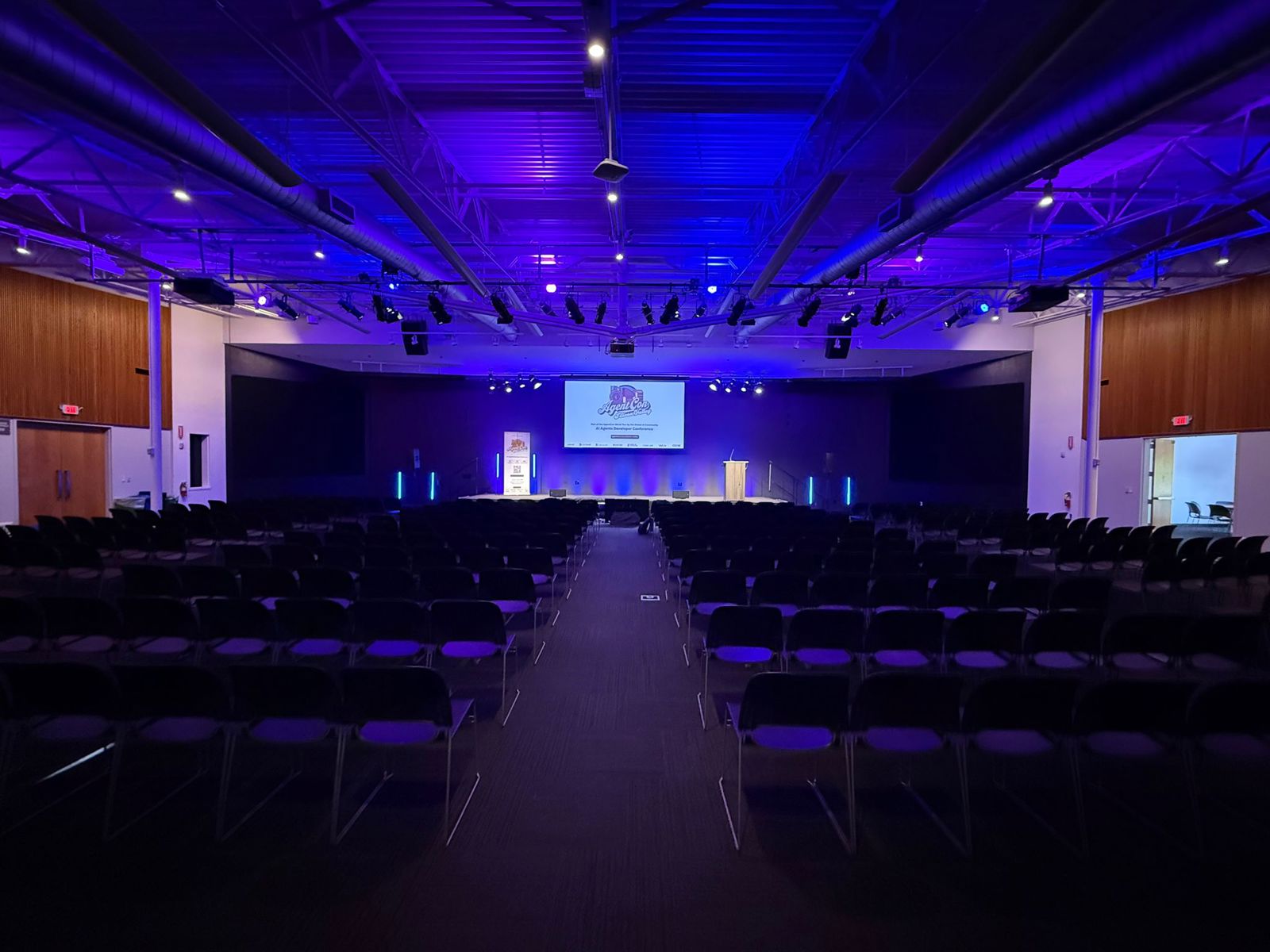
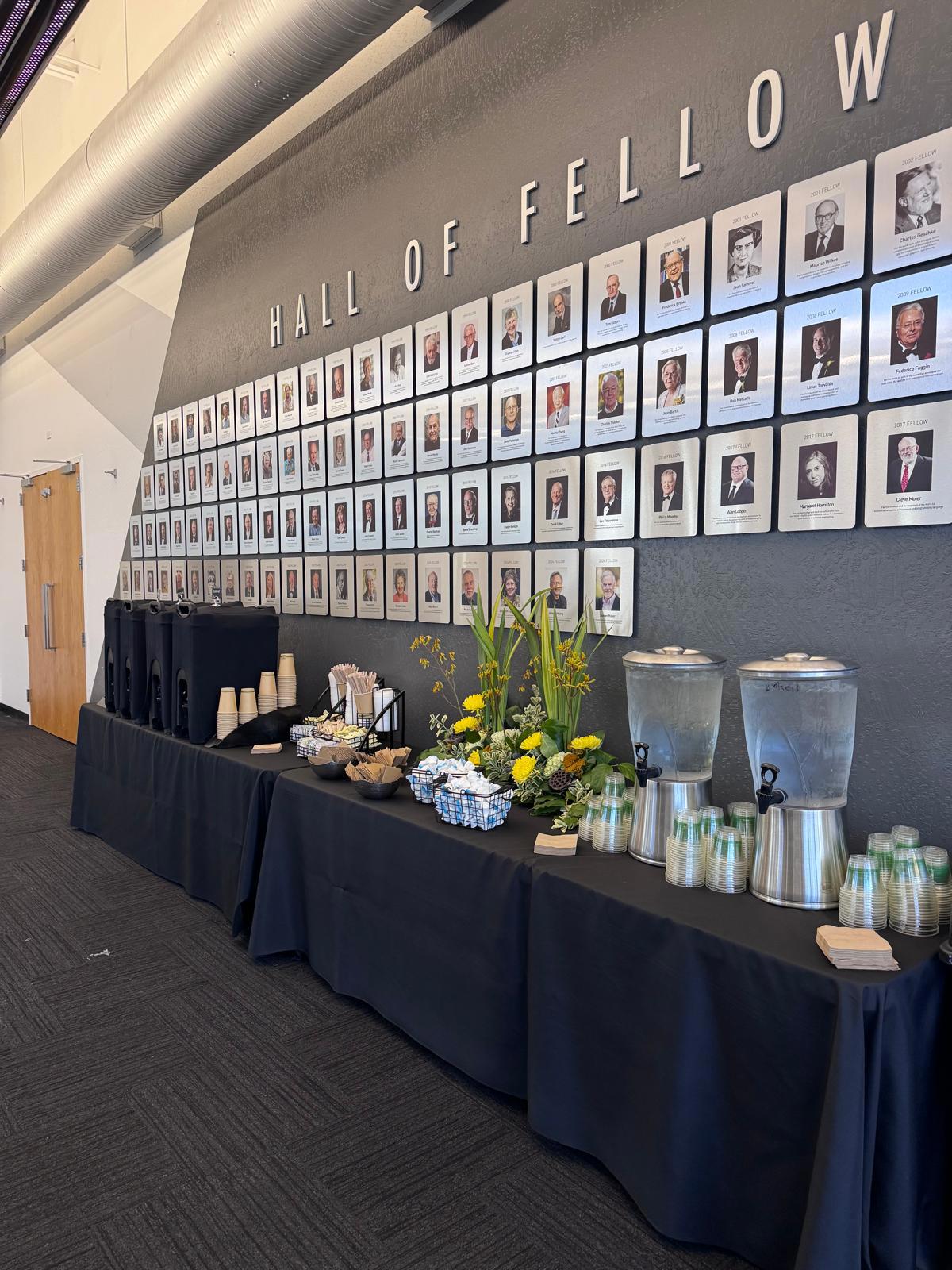
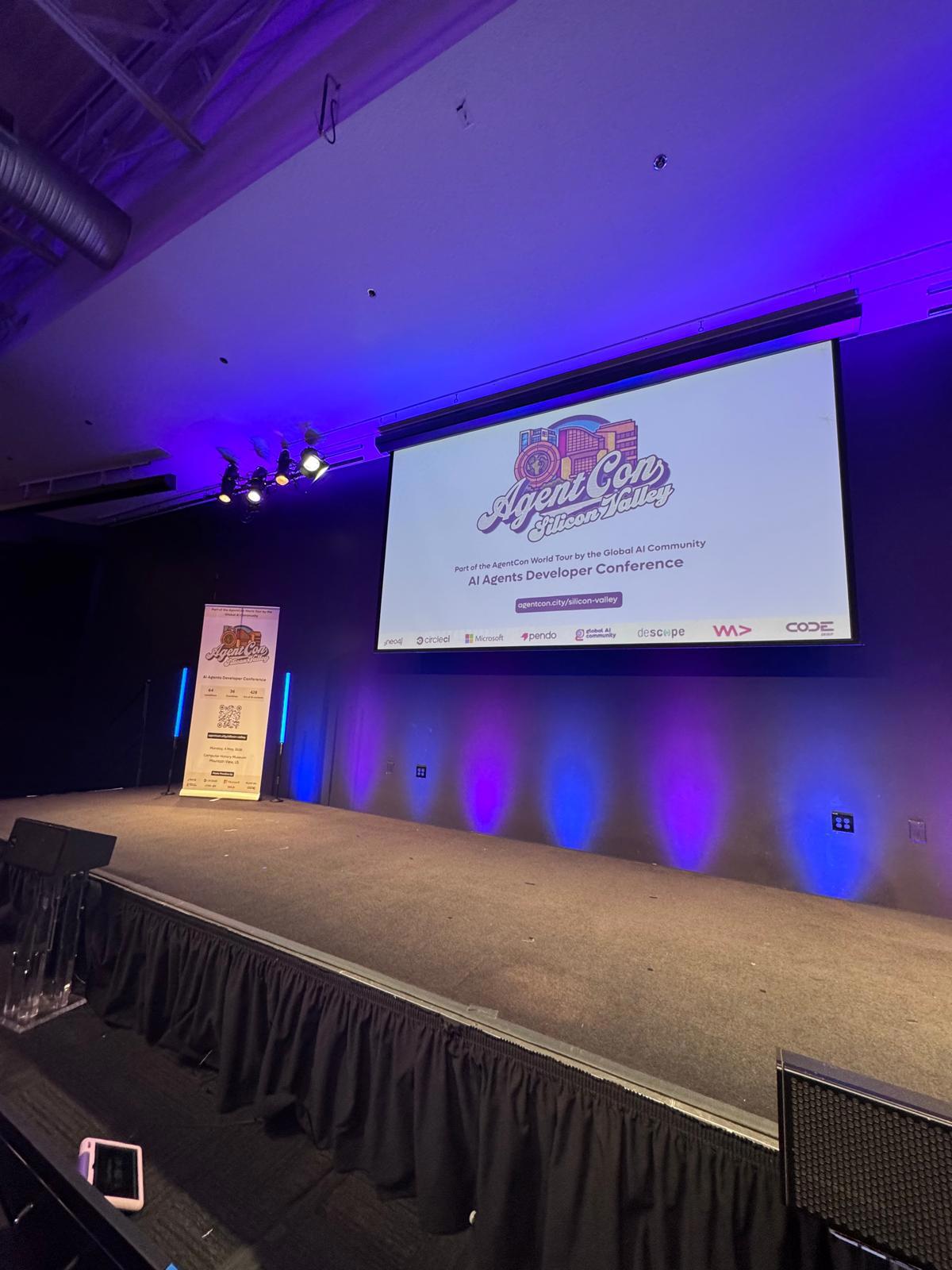
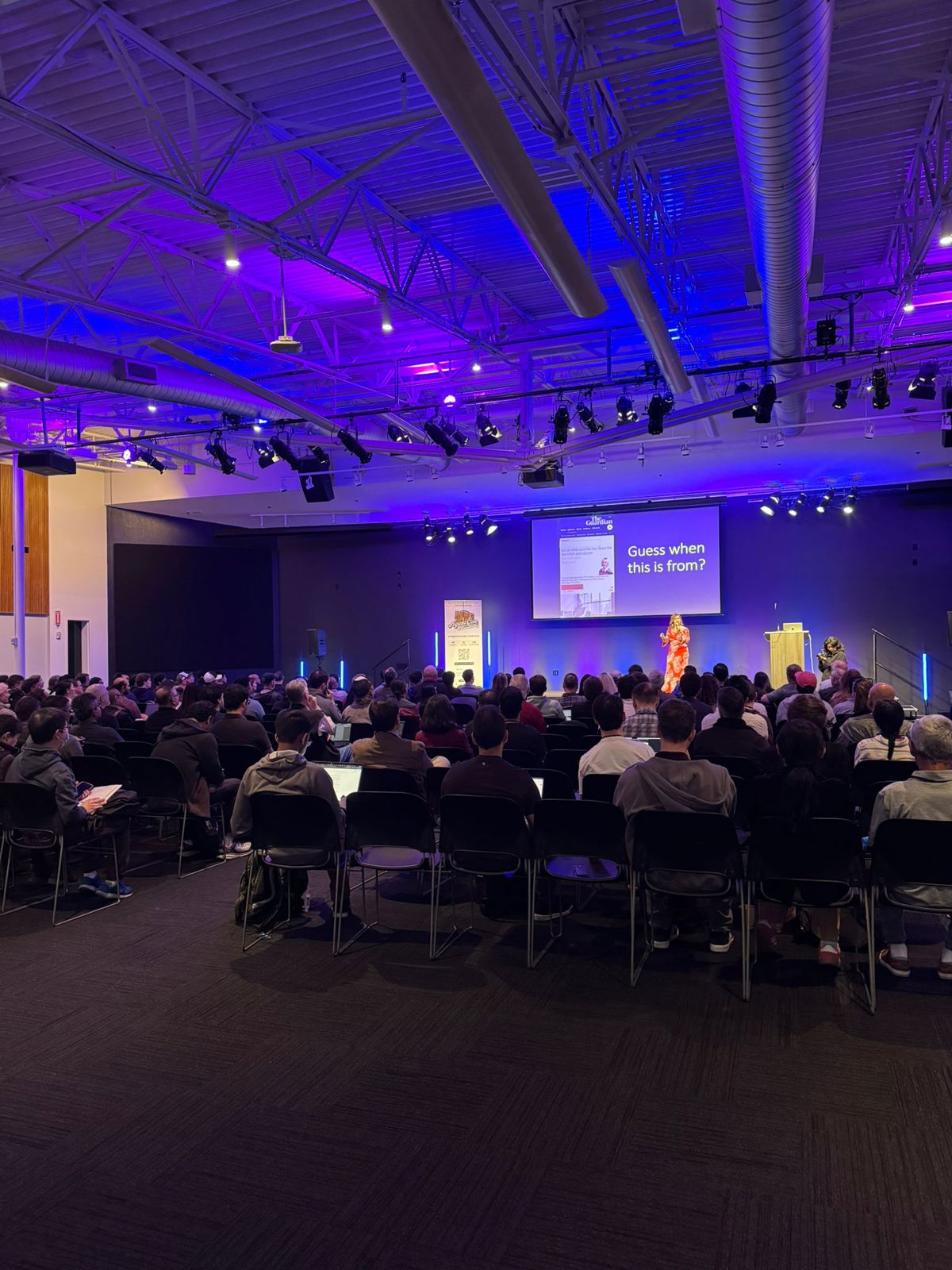
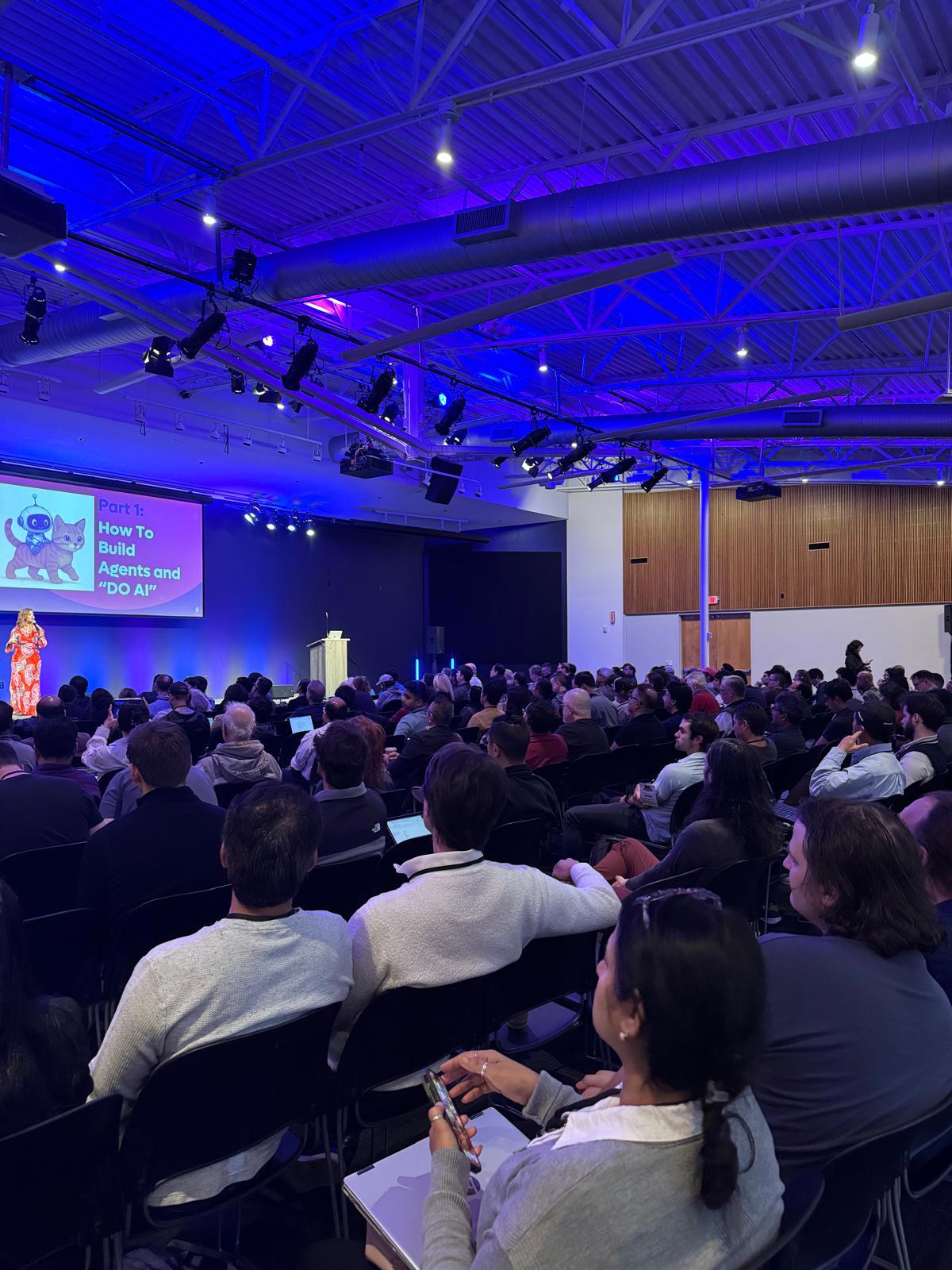
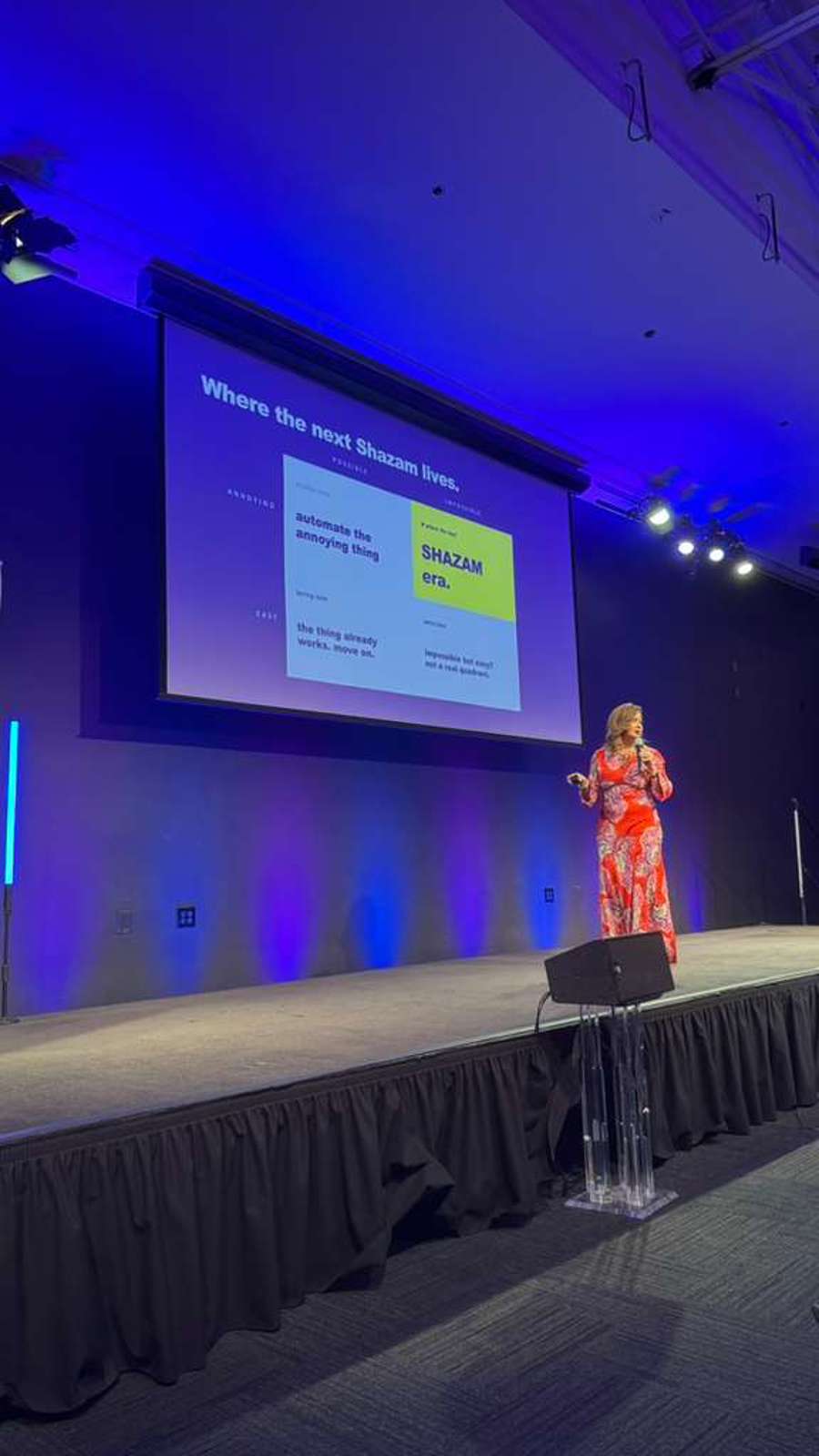
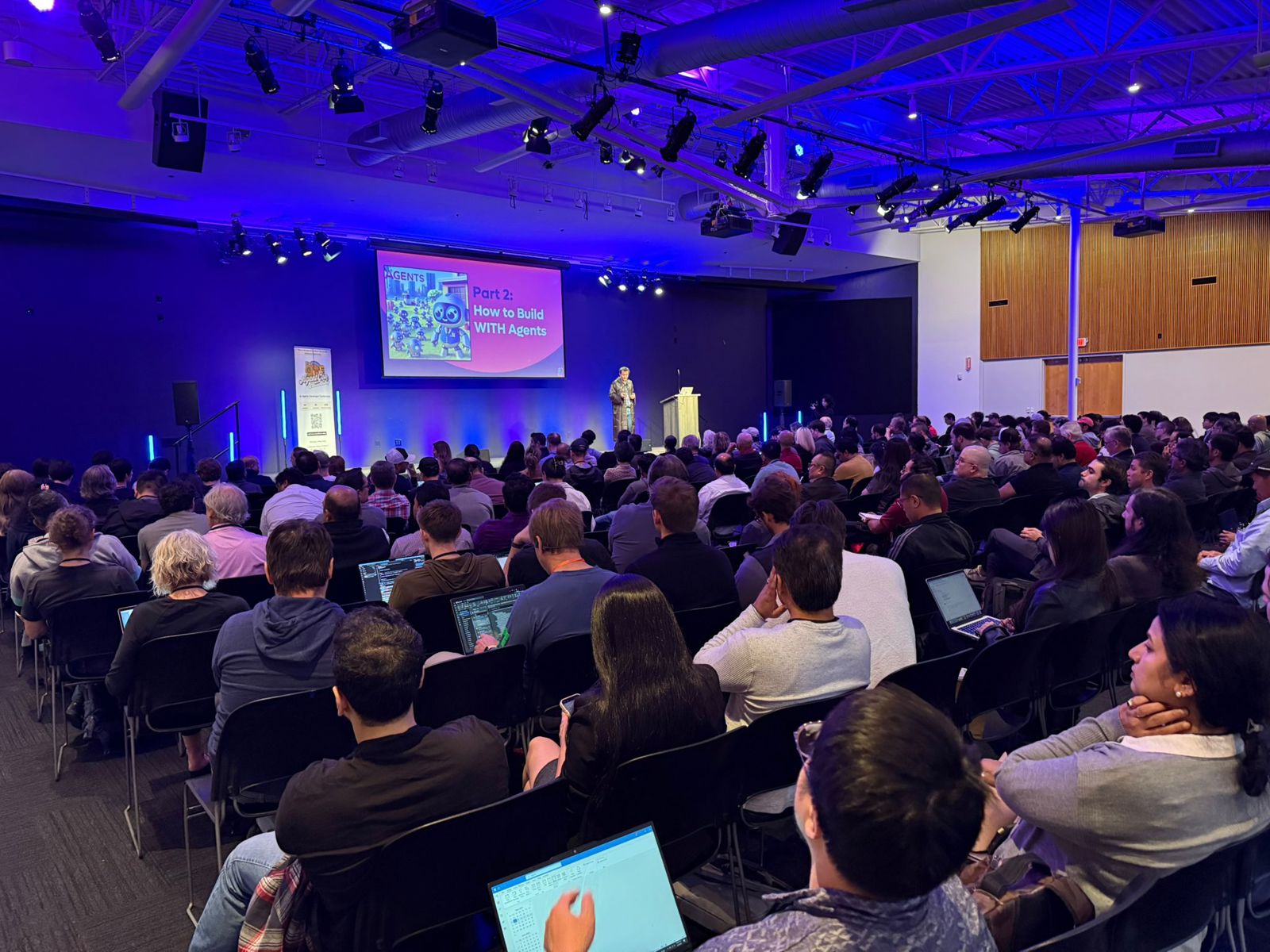
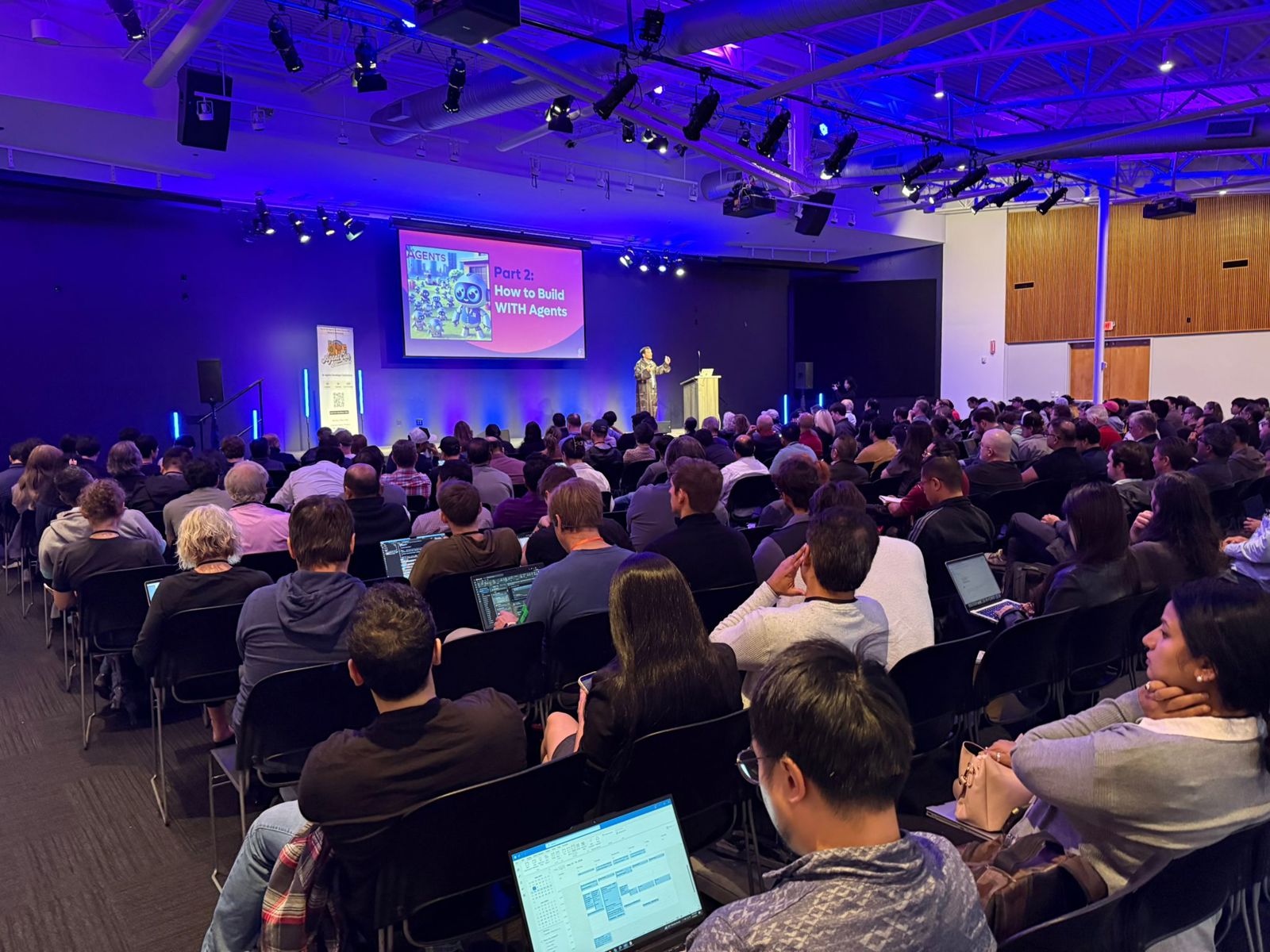
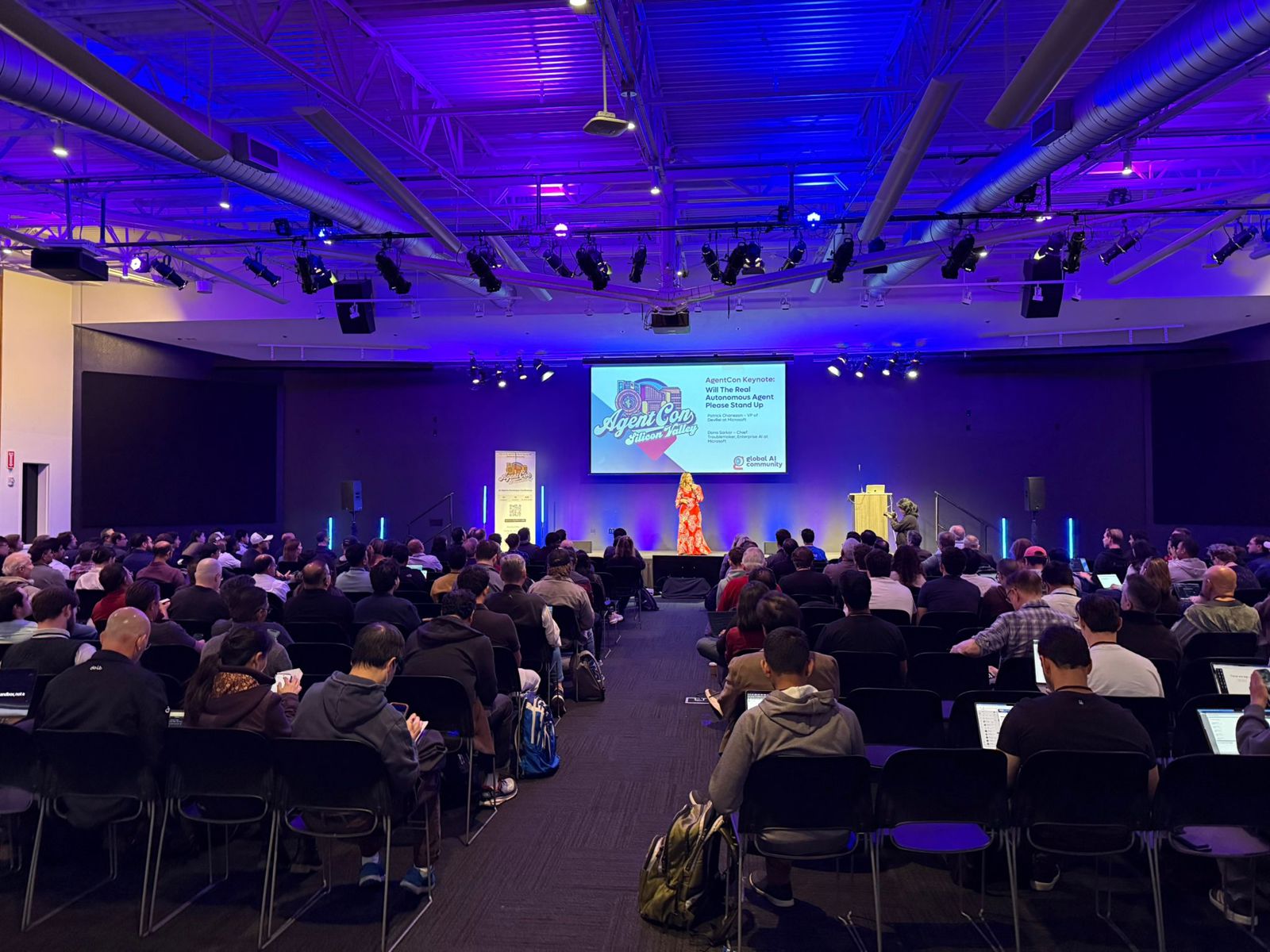
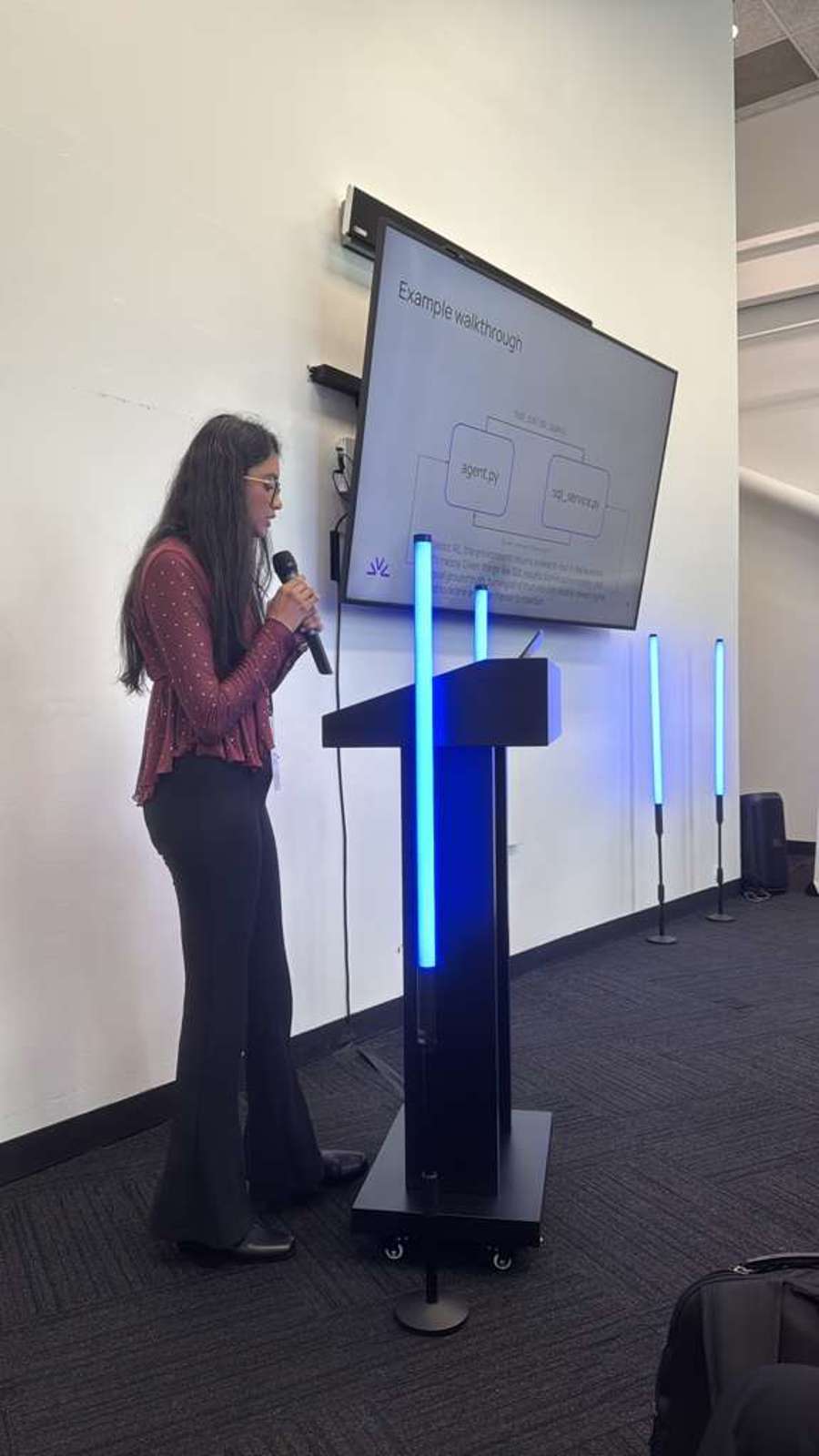
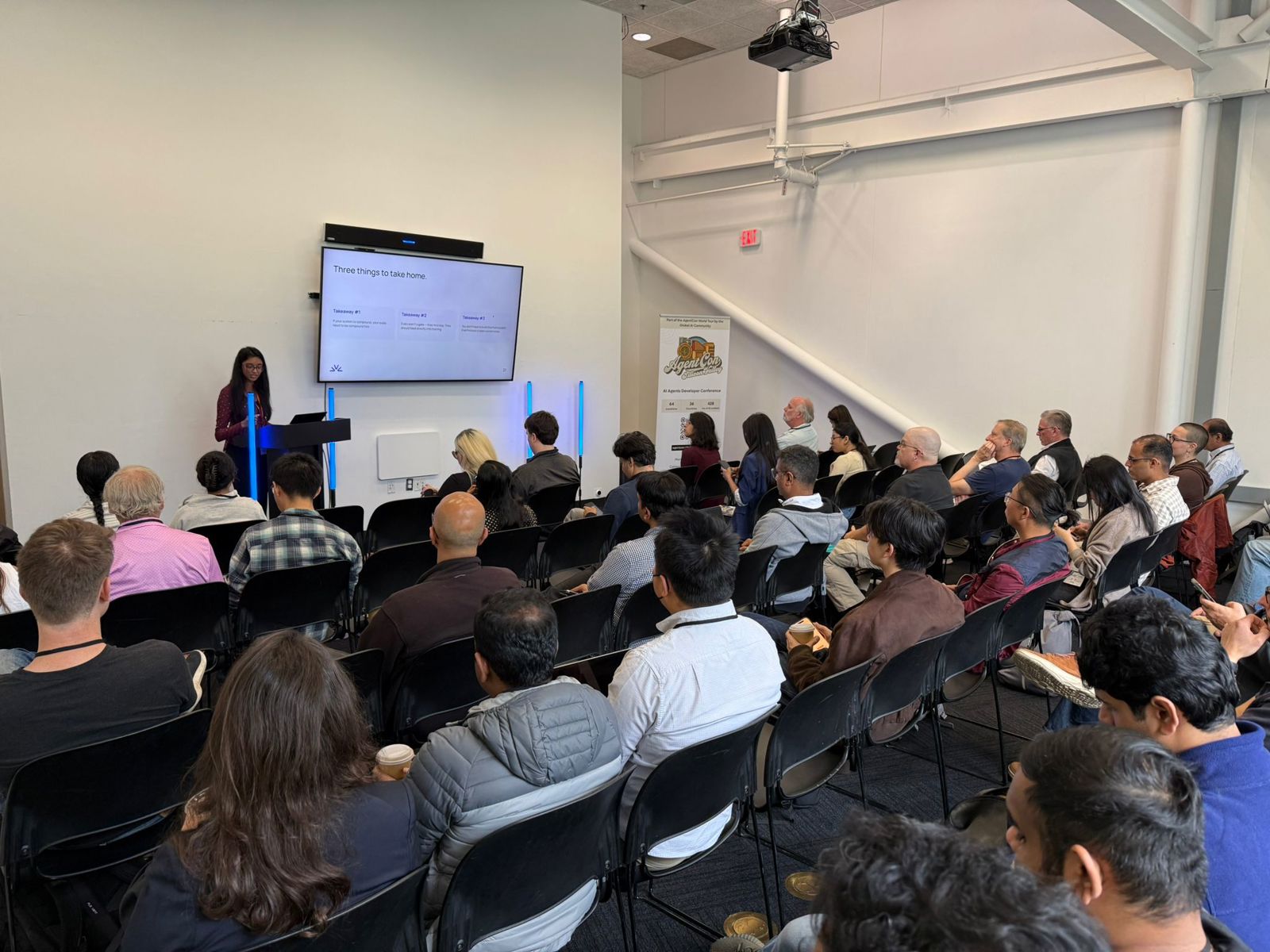
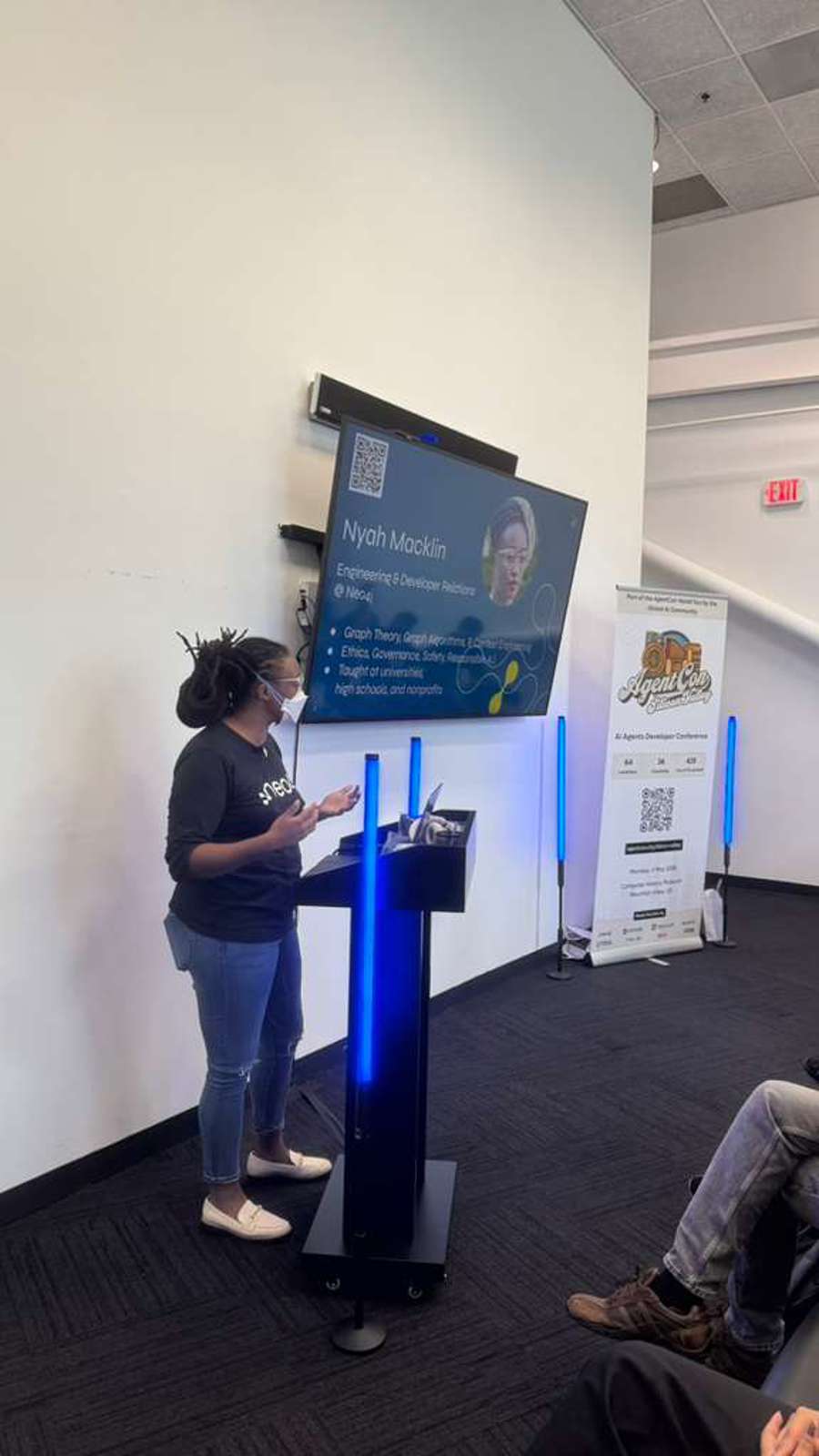
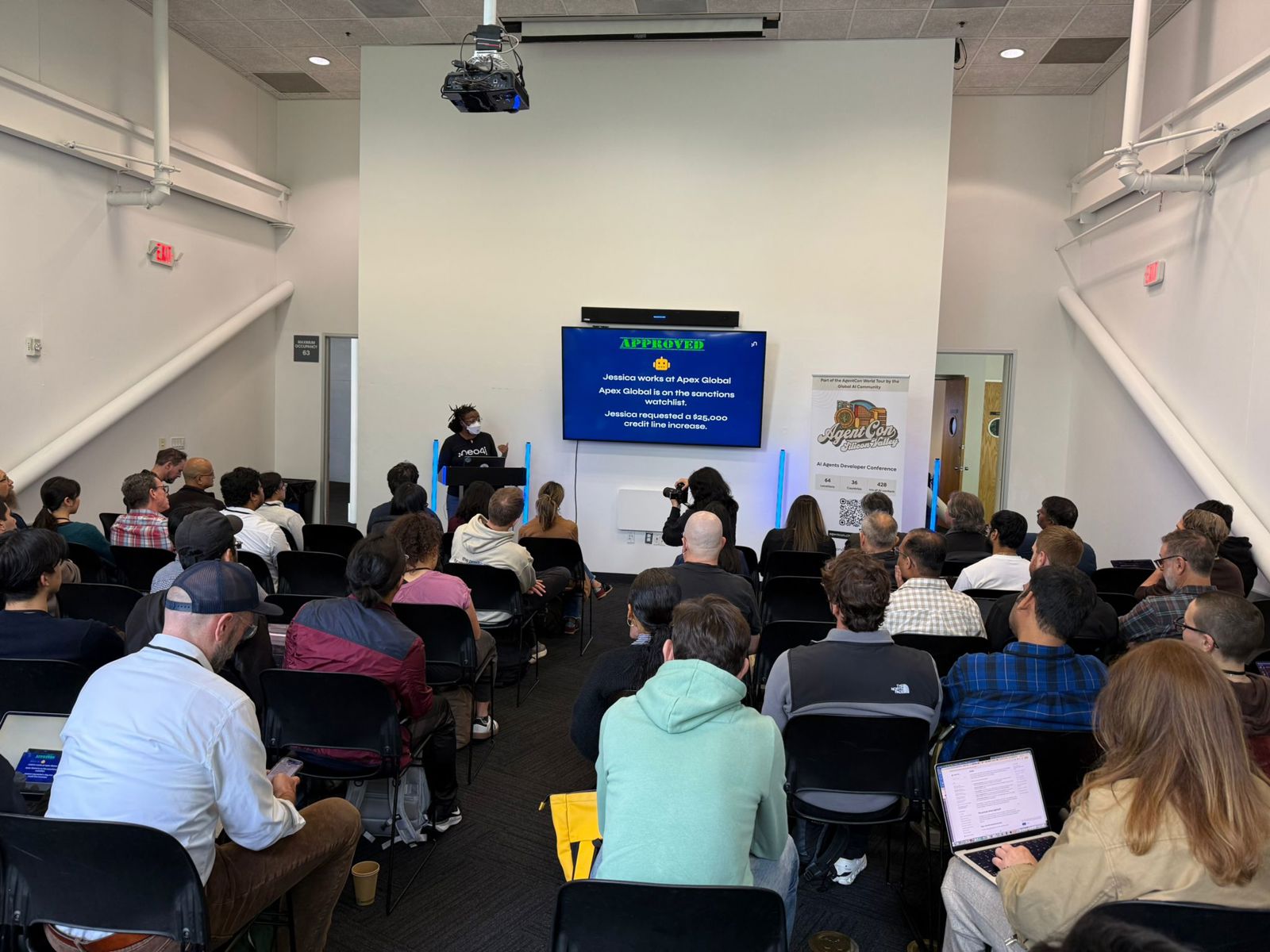
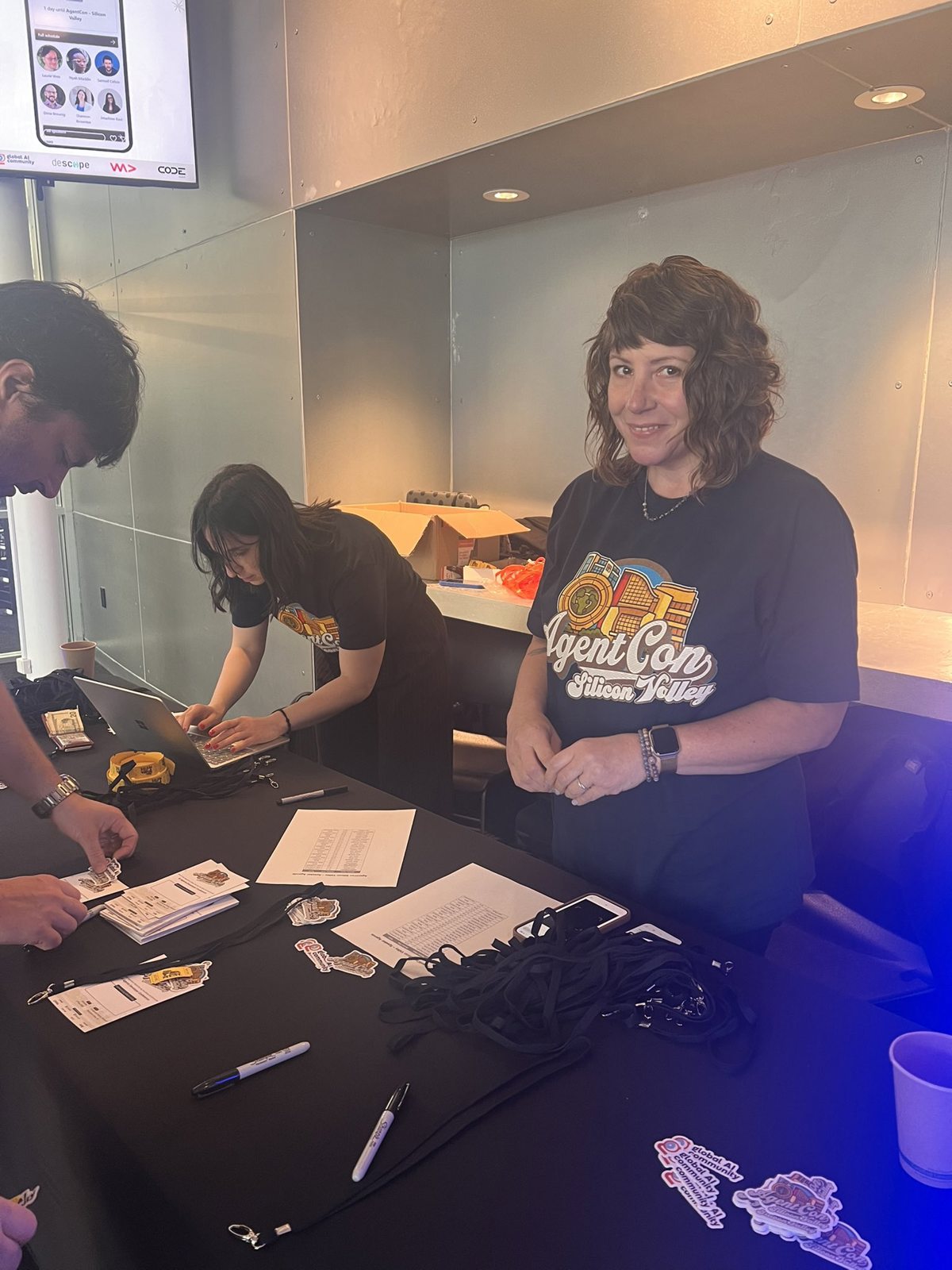
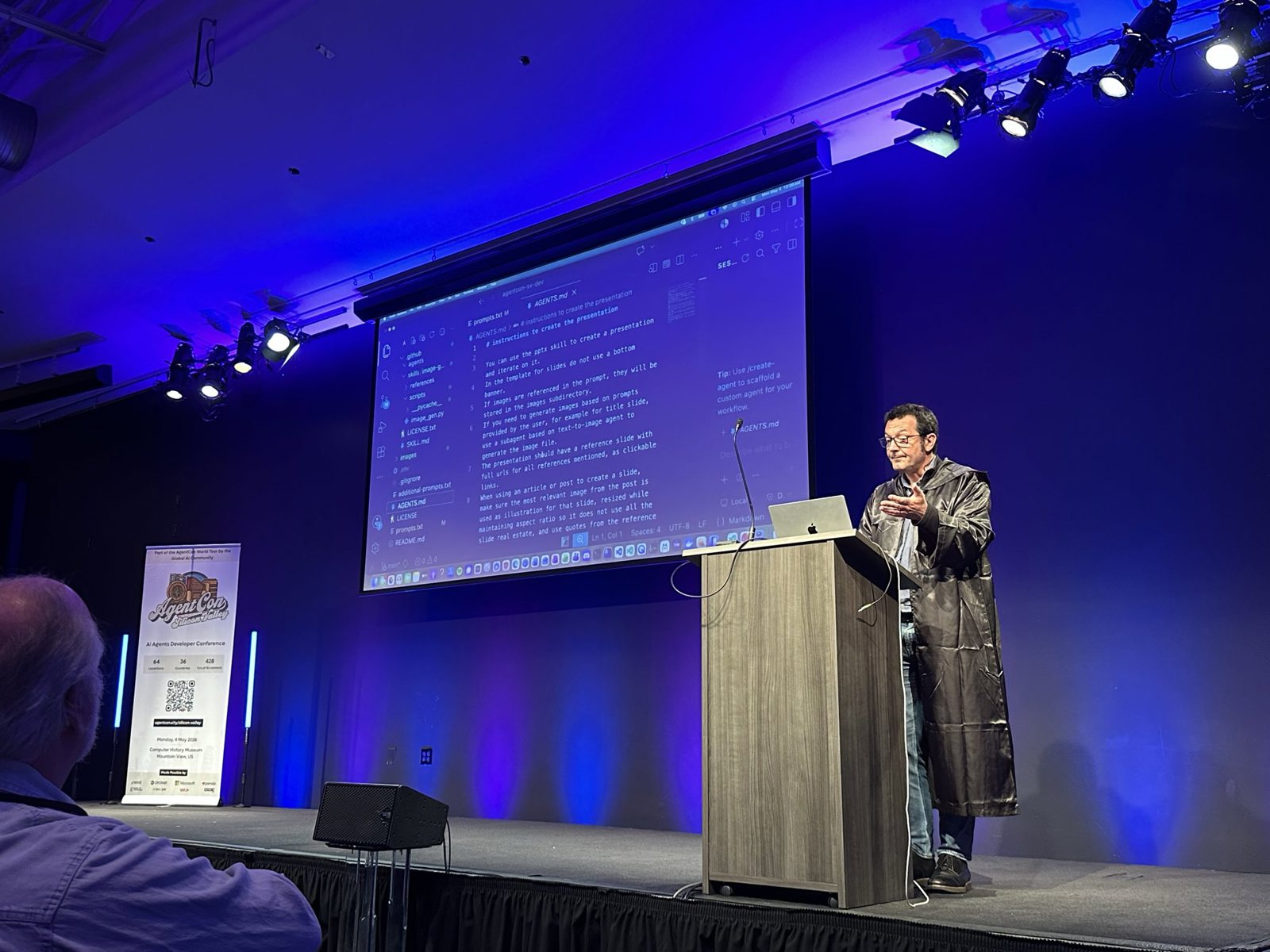
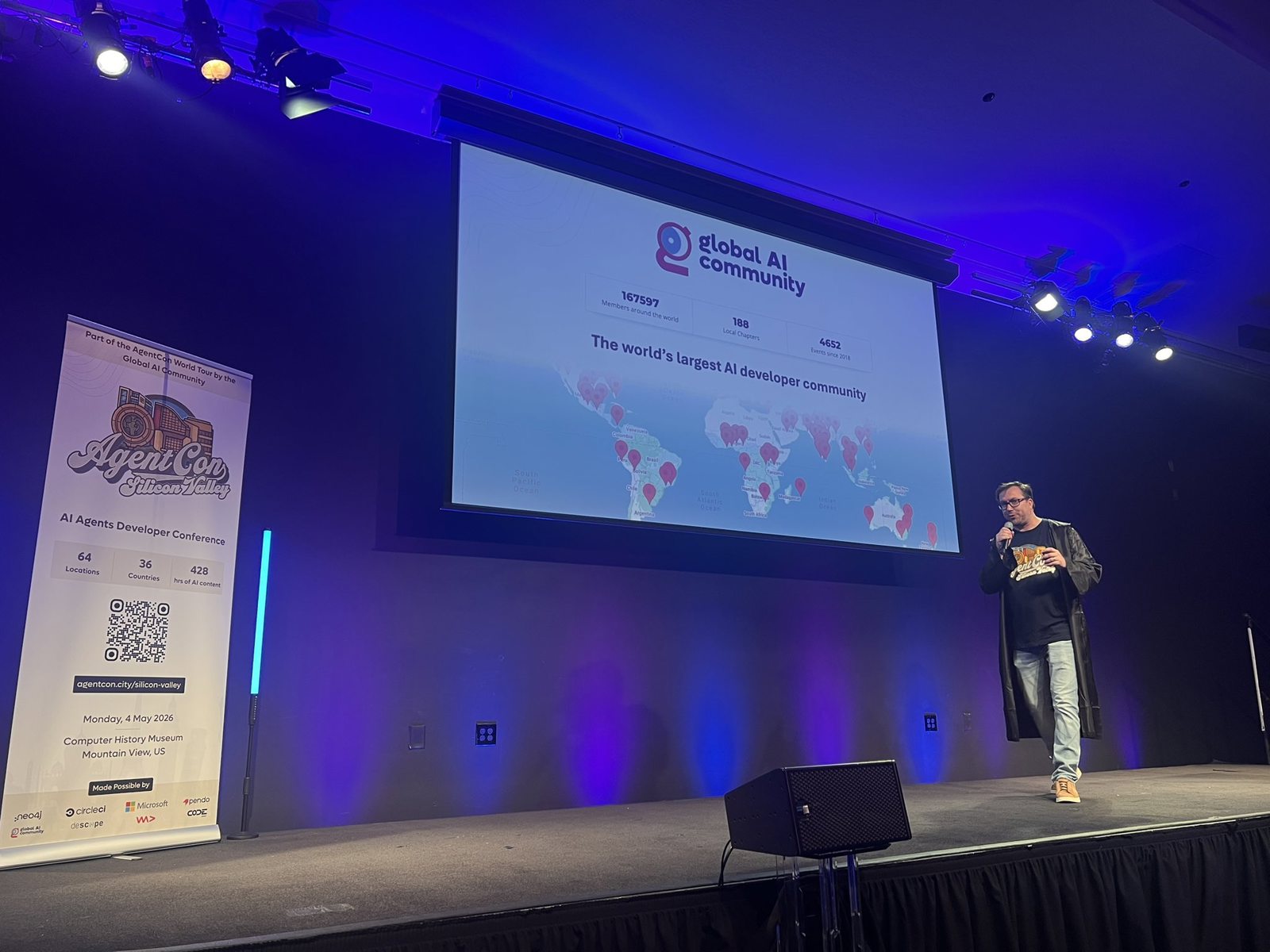
This is how it looked
Made possible by
Made possible by:








Explore AgentCon
AI Agents Developer Conference
AgentCon made possible by: