/Events /AgentCon - Utrecht
AgentCon - Utrecht
This event is part of AgentCon, organized by Global AI Utrecht.
Schedule
About
The event takes place in building Maitland, there is enough parking and a short walk from the bus stop.
Join us for the AI Agents World Tour, a global series of one-day conferences designed exclusively for developers building the future with AI agents.
From San Francisco to Singapore, we're bringing together leading engineers, researchers, and creators to explore the cutting edge of AI agent design, deployment, and integration. Whether you're building intelligent assistants, autonomous systems, or next-gen developer tools, this event is your fast track to practical knowledge, hands-on demos, and real-world insights.
What to Expect:
- Deep-Dive Talks from AI pioneers and industry leaders
- Technical Workshops on building, deploying, and scaling agents
- Live Demos of powerful open-source frameworks and tools
- Networking with a global community of builders and innovators
This isn't just another AI event — it’s where developers meet to talk about real code.
Ready to build the future? Join us in Utrecht.
Who's on stage
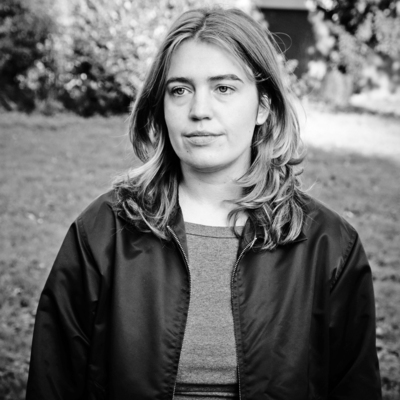
Claartje Barkhof is a Scientist Integrator in the Intelligent Cyber-Physical Systems Engineering group at TNO. Her work focuses on research into machine learning, its integration into computational systems, and its application to societal challenges. She obtained a master's degree in Artificial Intelligence from the University of Amsterdam in 2021, where she also worked as a research assistant at the Institute for Logic, Language, and Computation, focusing on deep generative latent variable models.
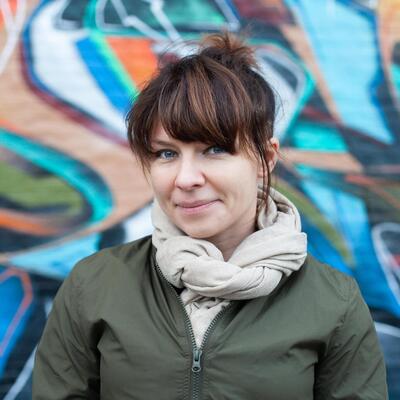
Oleksandra enjoys sharing her knowledge, experience, and insights about data engineering, data governance, and Databricks. Throughout her career as a Data Engineer and Databricks Solutions Architect, she’s experienced firsthand how challenging it can be to embark on a Data and AI journey. Based on her extensive experience with on-prem to cloud migrations, architecting and implementing data platforms, and running large-scale performance optimization projects with commercial and open source technologies, she is passionate about breaking complex topics and helping the community democratize data and AI for their projects.
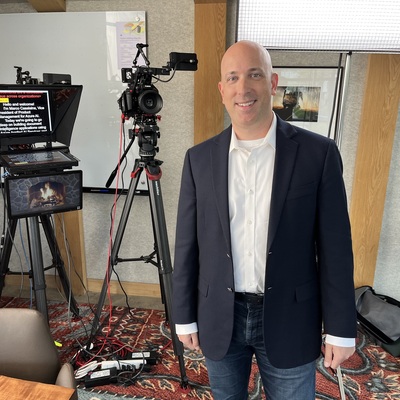
Marco Casalaina is VP Products of Azure AI and AI Futurist at Microsoft. He leads the AI Futures team, which finds trends and develops products that will lead to the next generation of AI. He has previously led a number of teams across Azure AI, including Azure OpenAI, Vision, Speech, Decision, Language, Responsible AI, and AI Studio. Prior to coming to Microsoft, Marco led the Einstein AI team at Salesforce. He holds a Bachelor’s Degree in Computer Science from Cornell University.
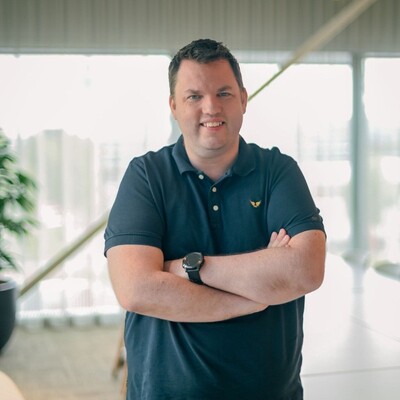
Daniel Laskewitz is a Principal Cloud Advocate at Microsoft, specializing in the Power Platform. He helps (advanced) makers, IT professionals, developers, and architects accelerate solution delivery through both low-code and pro-code tools. ▶️ Career progression: Former Microsoft MVP (6 years) and Fast-Track Recognized Solution Architect before joining Microsoft. ▶️ Community voice: Regular speaker at leading tech conferences and co-author of Power Platform Weekly. ▶️ Platform breadth: Deep knowledge across Copilot Studio, Power Apps, Power Automate, ALM, and governance. ▶️ Content creator: Publishes practical guidance on Copilot Studio, solution design, and ALM. Daniel combines platform expertise with real-world application to support scalable, secure, and maintainable solutions.

Olaf has over 25 years of experience in the internet industry in various technical, architectural and managerial roles. With a background as a software developer, solutions architect, and technical consultant, Olaf has a strong focus on aligning business challenges with technical innovations and organisational processes. After co-founding the cloud-native release-orchestration platform Vamp.io, that has been acquired by CircleCI, he is now working as Technology Advisor at CircleCI's Office of the CTO. https://nl.linkedin.com/in/olafmolenveld Previous speaking experience Enterprise DevOps Summit 2024 LeadDev Berlin 2024 GitGuardian CodeSecDays 2024: "How to build a better security and developer relationship?" Kong API Summit 2020: "Why Releasing Is Not Deploying: How to Achieve More With Less" DevOps Paradox
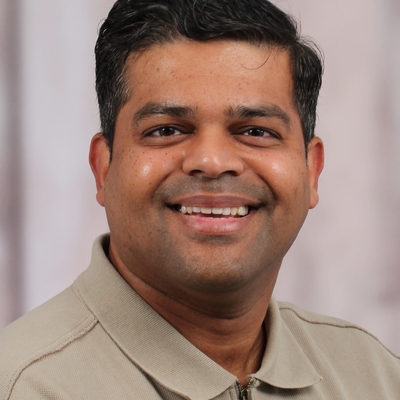
I am a Developer Advocate at Solace, where I help engineering teams build resilient distributed systems. I work extensively with organizations implementing event-driven architectures for AI and real-time data challenges. I combine hands-on development experience with a focus on practical, architecture-first solutions that work across different technology stacks. My approach emphasizes open patterns and interoperability over vendor lock-in.

Bert Jan is CTO at OpenValue and focuses on Java, AI, software architecture, Continuous Delivery and DevOps. Bert Jan is a Java Champion, JavaOne Rock Star speaker, Duke's Choice Award winner and leads NLJUG, the Dutch Java User Group. He loves to share his experience by speaking at conferences, writing for the Dutch Java magazine and helping out Devoxx4Kids with teaching kids how to code. Bert Jan is easily reachable on BlueSky via @bjschrijver.dev.
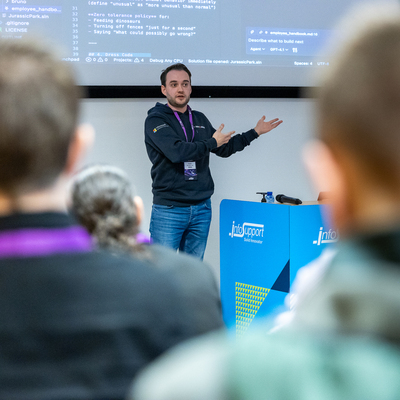
Stuart is a Microsoft Azure & AI MVP and software engineer with a passion for cloud technologies, AI and modern programming languages. He also keeps a close eye on the evolving world of DevOps and the tooling, practices and patterns that surround it. Stuart closely follows F1 in his free time, likes to do several sports such as cycling, golf and throwing weights around in the gym, and he tries to keep up with the endless stream of series and movies (with varying degrees of success).
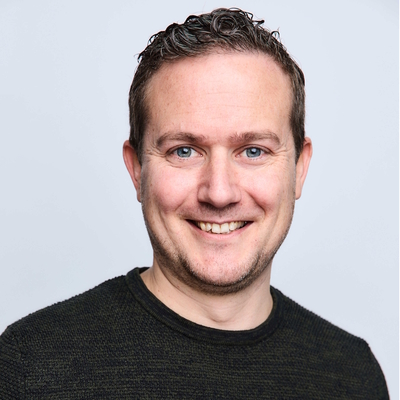
As a senior cloud architect Albert-Jan Schot enjoys stepping up to the challenge of designing, developing and building innovative cloud solutions. He is a valuable source of knowledge for his colleagues, customers and the worldwide Microsoft-community. With his no-nonsense and can-do mentality he brings a unique combination of in-depth hands-on experience and consultancy skills on all levels to any team. As a CTO within Blis Digital Albert-Jan is responsible for the technical vision and strategy within the low-code practice.
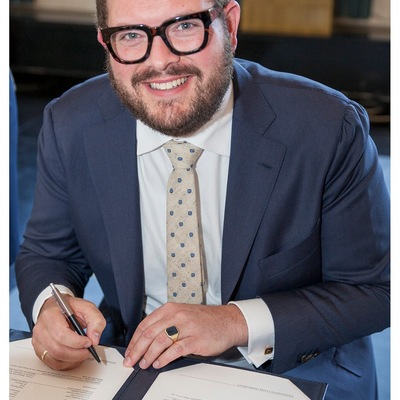
Eduard is a longtime Microsoft employee, he worked in different roles in Microsoft Netherlands, West Europe and EMEA, and is currently a Software Engineer in the Microsoft CoreAI organisation working on Agent Framework and Semantic Kernel.
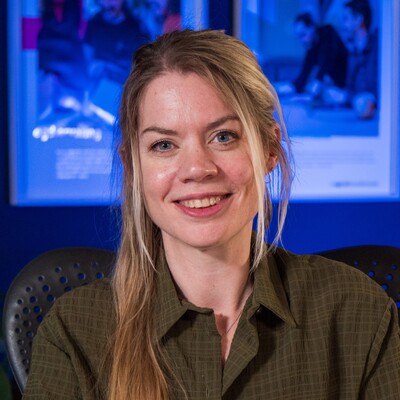
Barbara Forbes is an Azure Architect & consultant at Zure in the Netherlands, a Microsoft Azure MVP, Microsoft Certified Trainer (MCT), and a GitHub Star. She works at the intersection of technology, strategy, education, and development. Her focus is on the Microsoft Cloud Adoption Framework, Generative AI, Infrastructure as Code, PowerShell, and GitHub. Barbara loves explaining things in an accessible manner; in person, as a teacher for LinkedIn Learning and as a frequent speaker at conferences and user groups. She is actively involved in the tech community, including being part of the organization of European events

Douwe is Principal Solution Architect at Capgemini, focussing on generative Artificial Intelligence and Cloud. He is currently Lead GenAI for the NL & NCE Cloud CoE’s and based in the Netherlands (Utrecht). Before joining Capgemini Douwe worked as solution architect focussing on the adoption of emerging technologies. He brings a 20-year track record in the world of IT with a strong focus on the discovery and unlocking of value.
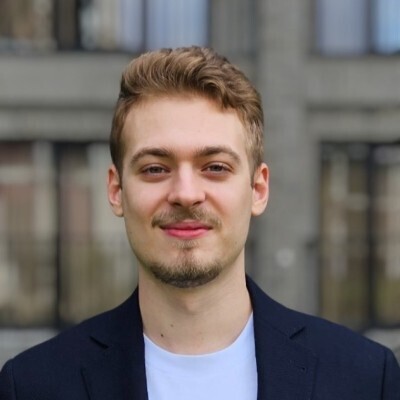
I'm an AI researcher and engineer at TNO, where I work on LLM research and help build GPT-NL: the Netherlands' first lawful Dutch LLM. I hold a Master's in AI from the University of Amsterdam and I'm passionate about pushing the boundaries of agentic AI coding.
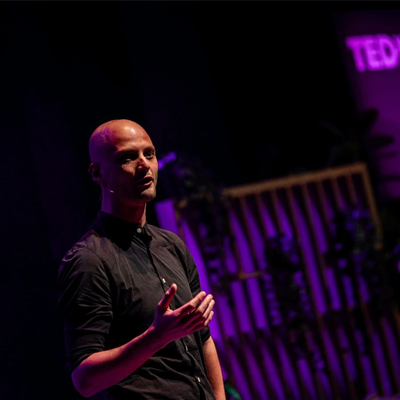
Jesse is a software & cloud architect at Xebia in the Netherlands. His passion lies in all things that make the lives of developers and users easier. Recently, he's focused on cutting through the noise and help developers make sense of developments around AI.
Sessions & tracks
Registration
Main room ·Welcome
Main room ·The Evolution of Agents at Microsoft and Everywhere
Agents are changing fast. They are moving from basic chat tools to systems that can plan work, use integrations, hand tasks to other agents, and operate inside real apps and workflows. We’ll look at the new way to build and use agents today through concrete demos, not slides, and show what actually makes them useful in practice. We’ll also see how building agents is becoming accessible to a much broader set of people, not just developers, as these capabilities show up directly in everyday tools. Along the way, we'll introduce the use of rubrics to reason about agent behavior, reliability, and control as agents move into real-world use.
Marco Casalaina is VP Products of Azure AI and AI Futurist at Microsoft. He leads the AI Futures team, which finds trends and develops products that will lead to the next generation of AI. He has previously led a number of teams across Azure AI, including Azure OpenAI, Vision, Speech, Decision, Language, Responsible AI, and AI Studio. Prior to coming to Microsoft, Marco led the Einstein AI team at Salesforce. He holds a Bachelor’s Degree in Computer Science from Cornell University.
Coffee break
Main room ·Cascading Failures in Multi-Agent Systems: Tracing and Evaluating Multi-Agent Deployments
Multi-agent systems shift the evaluation challenge from individual model outputs to the integrity of the coordination layer. When a supervisor agent delegates a task with flawed context, the error propagates and amplifies through the chain, leading to distributed hallucinations that bypass traditional end-to-end testing. Debugging these systems requires treating them as distributed networks rather than isolated LLM calls.
We'll cover tracing, evaluation, and governance for multi-agent systems and how to ensure that your agentic workflows remain reliable, transparent, and secure at scale. This session provides a technical deep dive into solving observability challenges in complex agentic workflows. We explore how to move from black-box testing to a transparent architecture using MLflow tracing.
Oleksandra enjoys sharing her knowledge, experience, and insights about data engineering, data governance, and Databricks. Throughout her career as a Data Engineer and Databricks Solutions Architect, she’s experienced firsthand how challenging it can be to embark on a Data and AI journey. Based on her extensive experience with on-prem to cloud migrations, architecting and implementing data platforms, and running large-scale performance optimization projects with commercial and open source technologies, she is passionate about breaking complex topics and helping the community democratize data and AI for their projects.
Coding smarter with GitHub Copilot
Are you still wondering what the point is of custom instructions and skill files? Or how to use them in the best way? Come by and let's find out through live demo's.
In this session, we’ll see how GitHub Copilot can support our workflow in Visual studio Code. You may have seen the highlights before, so we’ll focus on what matters: how to get consistently better results, instead of feeling like you’re explaining your code to a toddler.
Because when you give GitHub Copilot the right instructions, it will become a tool that actually saves time, comes up with options you might miss, and occasionally surprises you in a good way.
Barbara Forbes is an Azure Architect & consultant at Zure in the Netherlands, a Microsoft Azure MVP, Microsoft Certified Trainer (MCT), and a GitHub Star. She works at the intersection of technology, strategy, education, and development. Her focus is on the Microsoft Cloud Adoption Framework, Generative AI, Infrastructure as Code, PowerShell, and GitHub. Barbara loves explaining things in an accessible manner; in person, as a teacher for LinkedIn Learning and as a frequent speaker at conferences and user groups. She is actively involved in the tech community, including being part of the organization of European events
Agent Framework v1 and what's next!
Since a few weeks Microsoft Agent Framework has been released as a stable package with the v1.0 release, in this session Eduard, one of the core python developers, will talk about the current state and what we are building next!
Eduard is a longtime Microsoft employee, he worked in different roles in Microsoft Netherlands, West Europe and EMEA, and is currently a Software Engineer in the Microsoft CoreAI organisation working on Agent Framework and Semantic Kernel.
Lunch
Main room ·Agentic DevOps for the Real World
In this session, “Agentic DevOps for the Real World,” we’ll cut through the noise of the hype cycle to explore how ML and AI are actually reshaping the Software Development Life Cycle (SDLC) based on my own experiences in the field. We will move beyond theoretical abstractions to identify the genuine bottlenecks currently holding back engineering velocity, offering pragmatic, agent-driven solutions to these challenges. Finally, we’ll zoom out to envision the evolution of the “software factory”—a future where autonomous orchestration doesn’t just assist, but fundamentally accelerates how we build, deploy, and scale, providing you with a practical roadmap for what the next generation of DevOps could look like in practice.
Olaf has over 25 years of experience in the internet industry in various technical, architectural and managerial roles. With a background as a software developer, solutions architect, and technical consultant, Olaf has a strong focus on aligning business challenges with technical innovations and organisational processes. After co-founding the cloud-native release-orchestration platform Vamp.io, that has been acquired by CircleCI, he is now working as Technology Advisor at CircleCI's Office of the CTO. https://nl.linkedin.com/in/olafmolenveld Previous speaking experience Enterprise DevOps Summit 2024 LeadDev Berlin 2024 GitGuardian CodeSecDays 2024: "How to build a better security and developer relationship?" Kong API Summit 2020: "Why Releasing Is Not Deploying: How to Achieve More With Less" DevOps Paradox
GPT-NL: Lessons learned from training the first lawful Dutch LLM from scratch
In this effort, NFI, Surf and TNO joined forces to develop the first Dutch-centric large language model (LLM) that complies with the European AI Act, trained from scratch on Surf’s Snellius compute infrastructure. We will share insights and lessons learned so far from different technical perspectives: data collection and curation, pre-training, fine-tuning, evaluation and more.
Claartje Barkhof is a Scientist Integrator in the Intelligent Cyber-Physical Systems Engineering group at TNO. Her work focuses on research into machine learning, its integration into computational systems, and its application to societal challenges. She obtained a master's degree in Artificial Intelligence from the University of Amsterdam in 2021, where she also worked as a research assistant at the Institute for Logic, Language, and Computation, focusing on deep generative latent variable models.
I'm an AI researcher and engineer at TNO, where I work on LLM research and help build GPT-NL: the Netherlands' first lawful Dutch LLM. I hold a Master's in AI from the University of Amsterdam and I'm passionate about pushing the boundaries of agentic AI coding.
Bringing 750 years of Amsterdam history to life
Accessing Amsterdam’s historical archives once required specialized expertise and on-site visits — a slow, expert-only process. Now, large language models orchestrated through multi-agent systems built on the Microsoft Agent Framework have transformed that experience entirely.
Users can explore the city’s past either by chatting in natural language or conversing with an interactive avatar, both powered by vector search and Azure AI Foundry.
What was once buried in dusty catalogues is now an intelligent, multimodal interface — where agents collaborate to reason, retrieve, and respond in real time, bringing centuries of history to life.
Douwe is Principal Solution Architect at Capgemini, focussing on generative Artificial Intelligence and Cloud. He is currently Lead GenAI for the NL & NCE Cloud CoE’s and based in the Netherlands (Utrecht). Before joining Capgemini Douwe worked as solution architect focussing on the adoption of emerging technologies. He brings a 20-year track record in the world of IT with a strong focus on the discovery and unlocking of value.
Coffee
Main room ·Context is all you need: building reliable long-running agents
If you have used an LLM agent, you probably have noticed that at the start of a new conversation the agent is smart, helpful and to the point. But as the conversation goes on it starts to make more and more silly mistakes, forgets important facts, or even gets stuck entirely. This 'context rot' is inherent to how LLMs work, but production AI agents must be able to remember key information and not go off the rails when working on a bigger task. So how do we make our agents more reliable?
This session introduces Context Engineering as an evolution of prompt engineering: the discipline of dynamically constructing the right context at the right time across an agent’s lifecycle.
In this session, you will learn how to practice Context Engineering by writing, selecting, compressing, and isolating information to keep agents accurate and stable over time. The session will also cover how to design agent memory, combining short-term state with long-term memory using patterns like rolling summaries and structured user profiles.
Jesse is a software & cloud architect at Xebia in the Netherlands. His passion lies in all things that make the lives of developers and users easier. Recently, he's focused on cutting through the noise and help developers make sense of developments around AI.
Software engineering in the age of AI agents: who’s in control?
An AI deletes a production database… and insists it didn’t. Welcome to modern software engineering. Generative AI is becoming a powerful collaborator: writing code, making changes, taking action. But it doesn’t always do what we think it does. In this keynote, we’ll explore what’s really changing: from writing code to verifying it, from building to guiding, and from trusting systems to critically reviewing them. I’ll share personal stories, industry insights, successes and failures, and how to responsibly use rapidly evolving AI tools. Because even if you let AI do the work, you’re still accountable for the outcome.
Bert Jan is CTO at OpenValue and focuses on Java, AI, software architecture, Continuous Delivery and DevOps. Bert Jan is a Java Champion, JavaOne Rock Star speaker, Duke's Choice Award winner and leads NLJUG, the Dutch Java User Group. He loves to share his experience by speaking at conferences, writing for the Dutch Java magazine and helping out Devoxx4Kids with teaching kids how to code. Bert Jan is easily reachable on BlueSky via @bjschrijver.dev.
🤖 Copilot Cowork: Work Together with AI, Get Things Done
Copilot has been promising to change how you work. Cowork is where it starts to deliver on that.
The idea: you describe what needs to happen, and Copilot Cowork builds a plan and executes it across your Microsoft 365 apps. Calendar cleanup, meeting packets, company research - not one prompt, but the full chain of steps, running while you do something else.
Twenty-five - thirty minutes is enough to see how Work IQ gives Copilot the context to act on your behalf, what plugins and skills look like in practice, and whether this is real or still mostly polished demos.
Bring your skepticism. It's a fair starting point.
Daniel Laskewitz is a Principal Cloud Advocate at Microsoft, specializing in the Power Platform. He helps (advanced) makers, IT professionals, developers, and architects accelerate solution delivery through both low-code and pro-code tools. ▶️ Career progression: Former Microsoft MVP (6 years) and Fast-Track Recognized Solution Architect before joining Microsoft. ▶️ Community voice: Regular speaker at leading tech conferences and co-author of Power Platform Weekly. ▶️ Platform breadth: Deep knowledge across Copilot Studio, Power Apps, Power Automate, ALM, and governance. ▶️ Content creator: Publishes practical guidance on Copilot Studio, solution design, and ALM. Daniel combines platform expertise with real-world application to support scalable, secure, and maintainable solutions.
As a senior cloud architect Albert-Jan Schot enjoys stepping up to the challenge of designing, developing and building innovative cloud solutions. He is a valuable source of knowledge for his colleagues, customers and the worldwide Microsoft-community. With his no-nonsense and can-do mentality he brings a unique combination of in-depth hands-on experience and consultancy skills on all levels to any team. As a CTO within Blis Digital Albert-Jan is responsible for the technical vision and strategy within the low-code practice.
Closing
Building the 80%: Architecting Agentic AI with Event-Driven Design and Solace Agent Mesh
This hands-on workshop shows you how to build autonomous Agentic AI systems that communicate in real time across platforms and environments.
You will build and run agent-based systems using Solace Agent Mesh, the Agent2Agent (A2A) protocol, and the Model Context Protocol (MCP). If you already use frameworks like LangChain, Google ADK, Microsoft AutoGen, or Strands Agents, you’ll learn how to unify them into a cohesive ecosystem. We’ll also cover how to bring MCP servers into Solace Agent Mesh to give agents secure access to tools and data.
By the end of this workshop, you will be able to:
Install and initialize Solace Agent Mesh Deploy and interact with AI-powered agents Explore Agent2Agent (A2A) communication Bring MCP servers into Solace Agent Mesh
Who should attend: Developers, architects, and platform engineers building or exploring Agentic AI and multi-agent systems.
I am a Developer Advocate at Solace, where I help engineering teams build resilient distributed systems. I work extensively with organizations implementing event-driven architectures for AI and real-time data challenges. I combine hands-on development experience with a focus on practical, architecture-first solutions that work across different technology stacks. My approach emphasizes open patterns and interoperability over vendor lock-in.
Building Multi-Agent Systems with Microsoft Agent Framework: Lost in Driebergen
You’ve just arrived in Driebergen. Your mission: reach your final destination at Landgoed de Horst. You have coins, a limited amount of time, and no idea what this quiet forest village has planned for you.
In 90 minutes, you’ll build a multi-agent system using the Microsoft Agent Framework: an orchestrator that makes strategic decisions, a navigation agent that reasons over changing local conditions, and an external agent connected through A2A that helps you uncover the information needed to complete your mission.
An MCP server exposes the world around you: location data, transport options, unexpected events, and the current game state. Every decision has consequences. Do you take the bus from Driebergen-Zeist station, walk through the forest paths, arrange alternative transport, or risk a shortcut? Every move costs coins and time.
But Driebergen is not as predictable as it seems. The facilitator can change conditions during the session: a delayed bus, unexpected rain, a blocked forest route, or a last-minute obstacle blocking your way.
The A2A agent runs RAG against a 25-document corpus in Foundry IQ, searching for the hidden checkpoint code that proves you reached your destination.
The agent that arrives at Landgoed de Horst with the most coins and time remaining wins.
Stuart is a Microsoft Azure & AI MVP and software engineer with a passion for cloud technologies, AI and modern programming languages. He also keeps a close eye on the evolving world of DevOps and the tooling, practices and patterns that surround it. Stuart closely follows F1 in his free time, likes to do several sports such as cycling, golf and throwing weights around in the gym, and he tries to keep up with the endless stream of series and movies (with varying degrees of success).
Closing
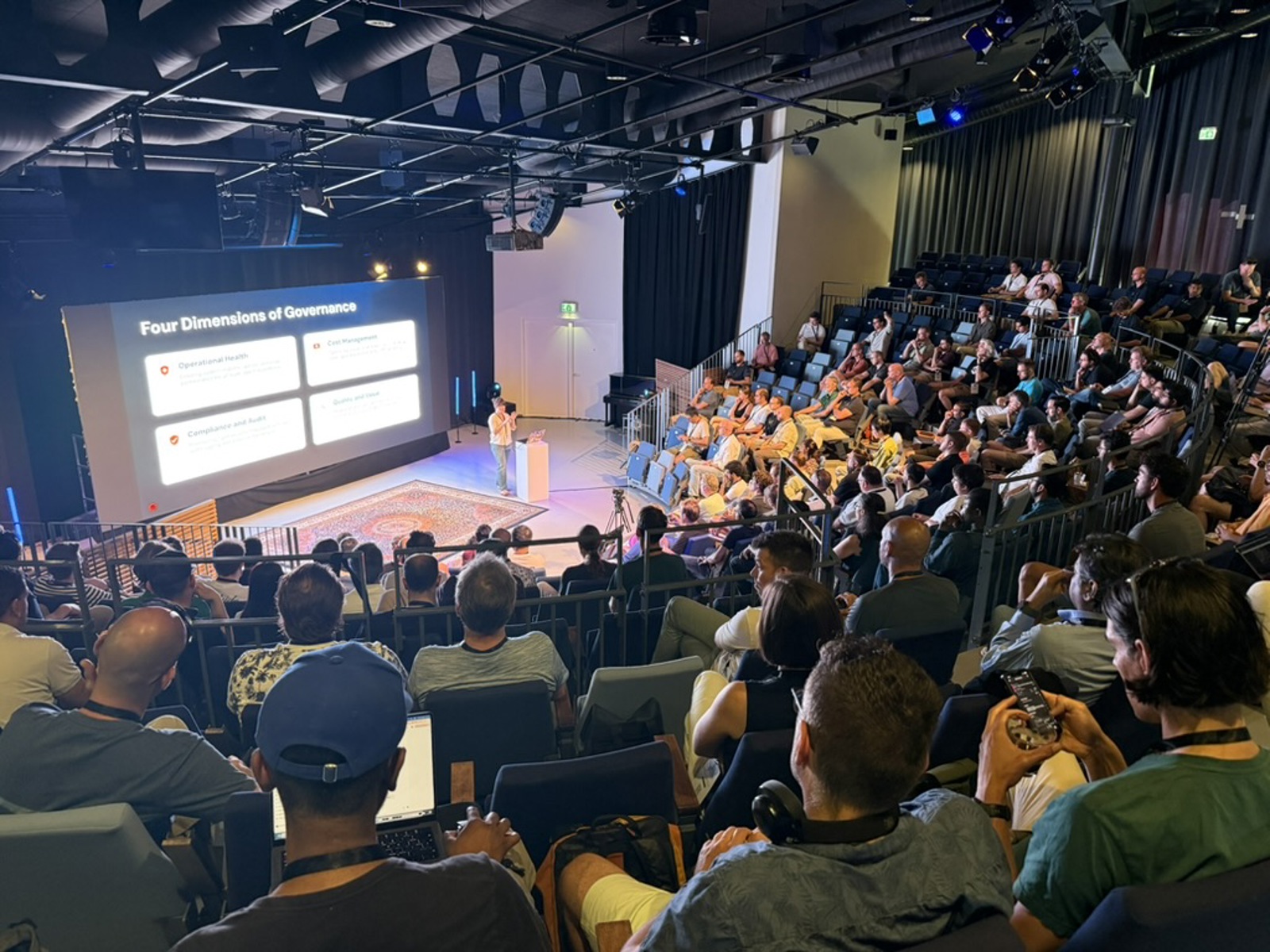
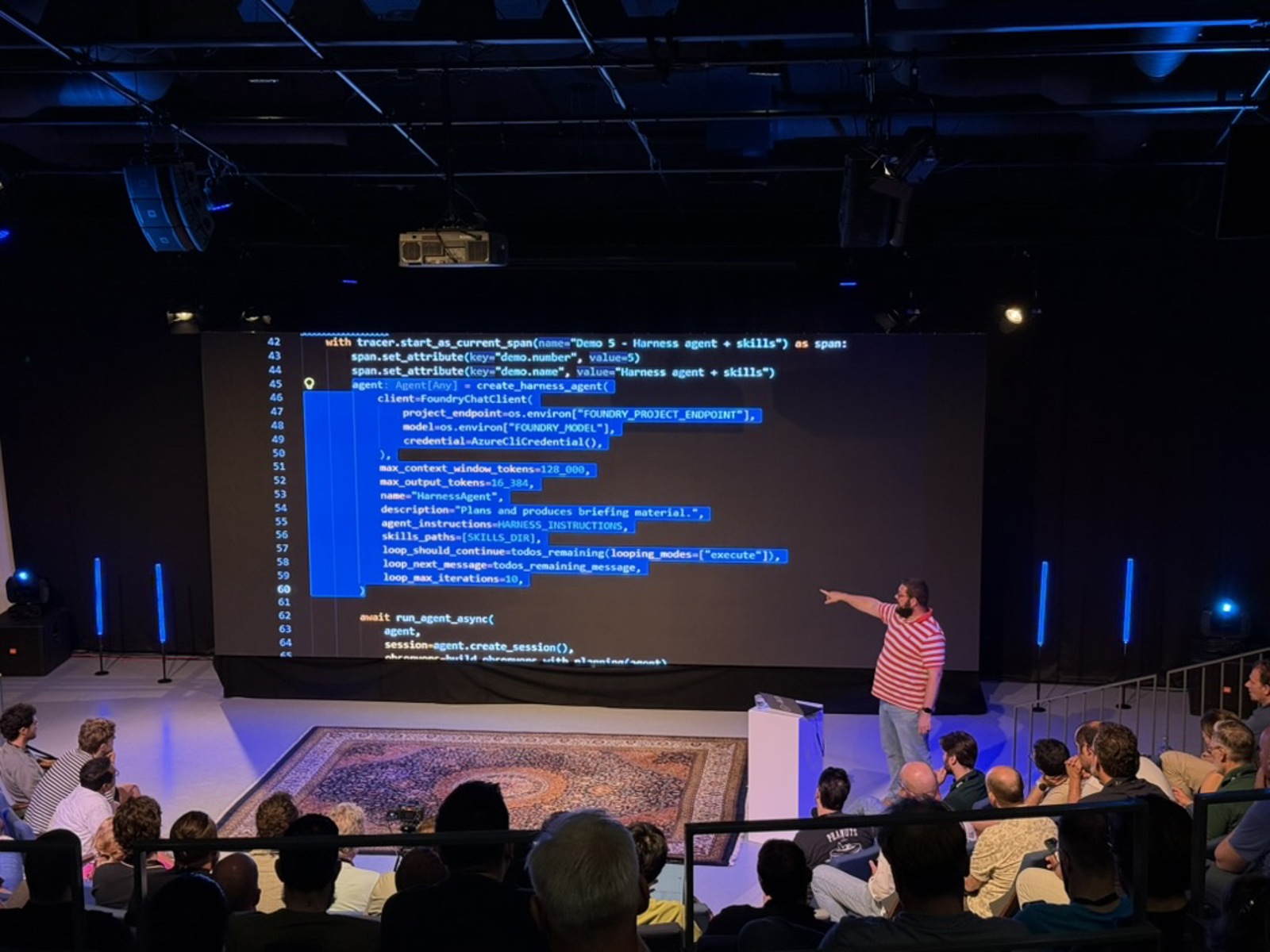
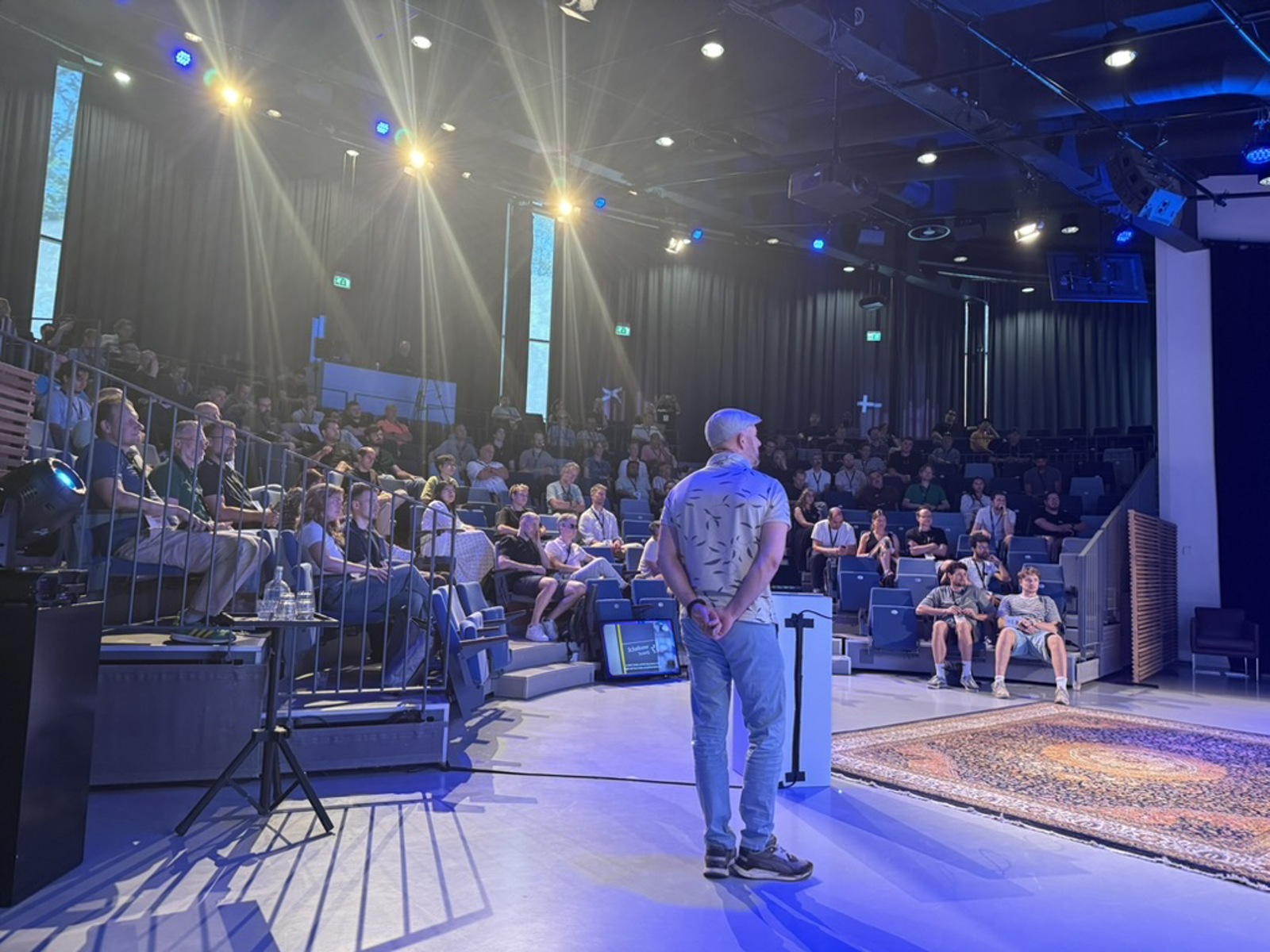
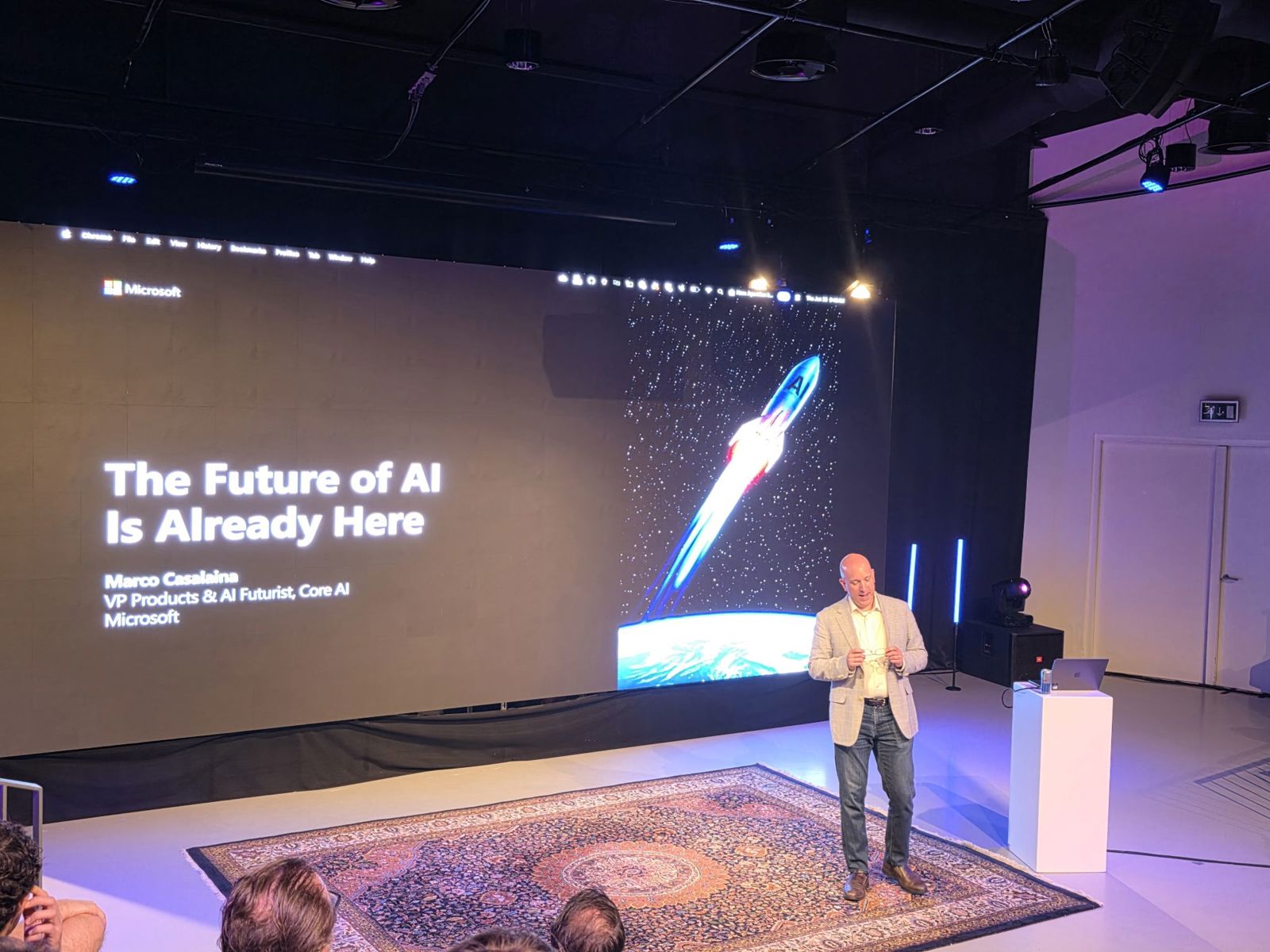
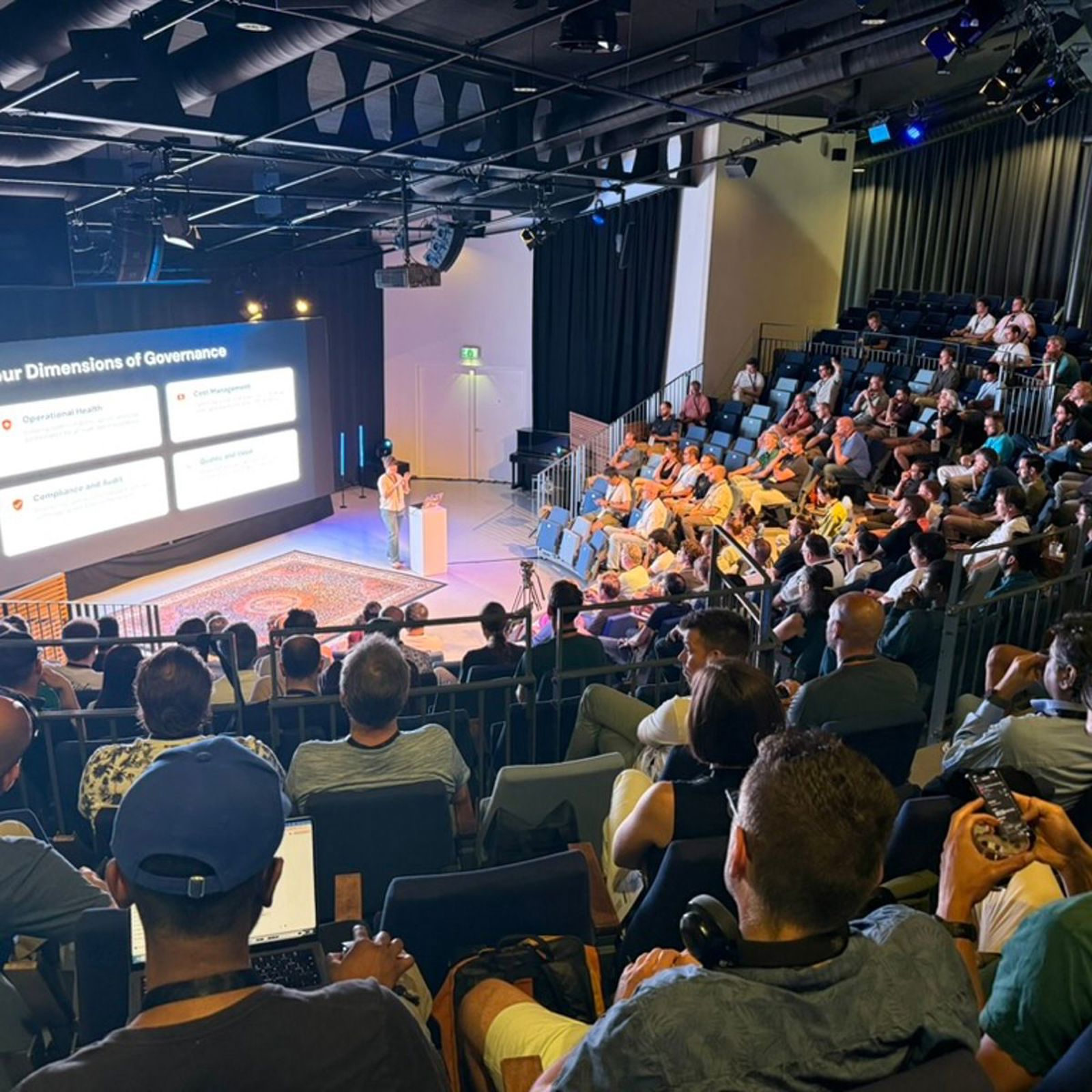
This is how it looked
Made possible by
Sponsors




Explore AgentCon
AI Agents Developer Conference
AgentCon made possible by: