/Events /AgentCon - Nairobi
AgentCon - Nairobi
This event is part of AgentCon, organized by Global AI Nairobi.
Schedule
About
Join us for the AI Agents World Tour, a global series of one-day conferences designed exclusively for developers building the future with AI agents.
From San Francisco to Singapore, we're bringing together leading engineers, researchers, and creators to explore the cutting edge of AI agent design, deployment, and integration. Whether you're building intelligent assistants, autonomous systems, or next-gen developer tools, this event is your fast track to practical knowledge, hands-on demos, and real-world insights.
What to Expect:
- Deep-Dive Talks from AI pioneers and industry leaders
- Technical Workshops on building, deploying, and scaling agents
- Live Demos of powerful open-source frameworks and tools
- Networking with a global community of builders and innovators
- Complimentary lunch, so you can stay fueled and focused all day
This isn't just another AI event — it’s where developers meet to talk about real code.
Ready to build the future?
Who's on stage

Patrick Wahlmueller is an IT professional, Microsoft MVP, and Community Organizer of Experts Live Austria, with a strong focus on AI-driven automation and Microsoft cloud technologies. His background spans classic IT operations and service management as well as modern, cloud-native and low-code solutions. Today, Patrick works primarily with Copilot Studio, GitHub Copilot, Microsoft Foundry, and intelligent automation, helping organizations move beyond AI hype toward practical, secure, and responsible implementations. He is especially interested in how large language models can be integrated into existing IT landscapes to simplify processes, improve decision-making, and create measurable value. Known for his clear, pragmatic approach, Patrick enjoys breaking down complex technical topics and making them accessible to both technical and non-technical audiences. As a long-time community contributor and conference organizer, he strongly believes in knowledge sharing, open discussion, and continuous learning. Based in Austria, Patrick regularly speaks at events and conferences across Europe, sharing hands-on insights on AI, automation, security, and the future of IT.
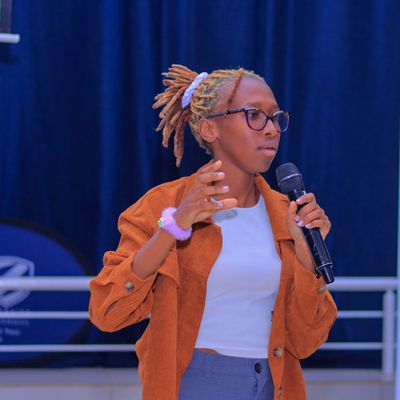
Bethany loves crafting user stories and enhancing user experiences! She strives to make a positive impact on people's lives through her skills in design, code, and leadership. As a Cloud Advocate at Microsoft, she engages with students, aspiring developers, and entrepreneurs to help them learn and grow in Artificial Intelligence (AI). She does this through writing articles, hosting workshops, and speaking at events about AI and cloud computing. She has a strong background in community and skilling others, thanks to her previous roles as a Program Coordinator at Andela and Gold Microsoft Learn Student Ambassador which built her passion for community and skilling others. She comes from a community of marathon runners but decided to run code instead. Outside tech she defines herself as creative. You will find her testing out new hobbies, sketching or deeply engrossed in a book.

Henk is a Cloud Advocate specializing in Artificial intelligence and Azure with a background in application development. He is currently part of the AI cloud advocate team and based in the Netherlands. Before joining Microsoft, he was a Microsoft AI MVP and worked as a software developer and architect building lots of AI powered platforms on Azure.
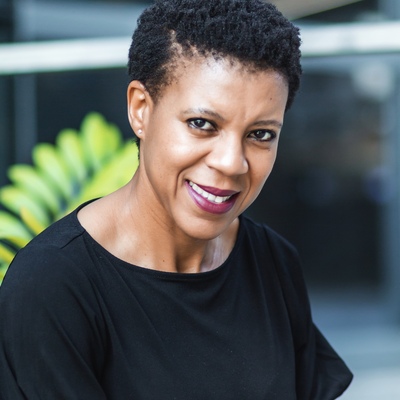
I am a Senior Developer Advocate working especially with - but not limited to - developers in the sub-Saharan Africa region. Formerly an AWS Community Hero - first woman out of Africa, to be named an AWS Hero. My tech background includes software developer, business and systems analysis, solutions architecture and cloud engineering. I love working with those who are new to tech in general - and currently focusing on those who are new to AWS.
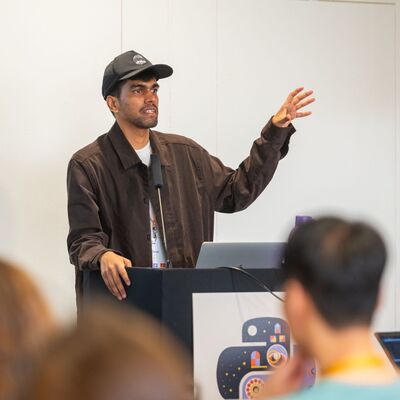
I am Tarun Jain, Founding Engineer at Kaivid Labs and YouTuber with 4.06K+ subscribers on AI with Tarun. A two-time Google Summer of Code alum (2023 at caMicroscope, 2024 at Red Hen Lab) and Google Developer Expert in AI. I'm an active speaker in the PyCon APAC region. Spoke at EuroPython, PyCon: Singapore, Hong Kong, Malaysia, and Australia. Portfolio: https://tarunjain.netlify.app/

Kevin Tuei is an ALX Gold Fellow, Cloud consultant and Certified educator with 7 years of experience. With experience as a Cloud Consultant, Kevin assists in migrating on-premise workloads to the cloud. He is passionate about Data, AI, and Blockchain, and has expertise in the Cloud Adoption Framework and AWS Well-Architected Framework. He also specializes in training on industry certifications from major technology providers and excels in co-creation, data analytics, user experience, and problem-solving. Kevin is on a career mission to grow into Technical Program/Project Management and use these skills to lead 500 successful projects targeting the SDGs on Education and Gender Equality.
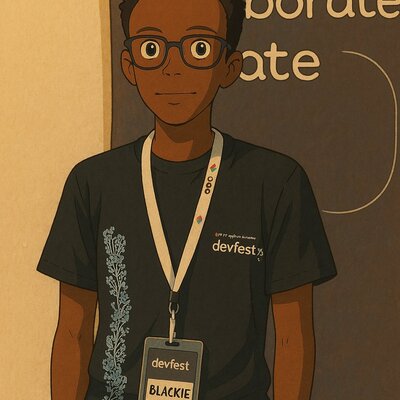
Network whisperer by day, code conjurer by night—living the double life of an NOC engineer and software developer.

Efe Omoregie is an Associate Staff Engineer at Yellow Card, where he builds AI applications and leads fintech projects across Africa. With nearly a decade of software engineering experience, he has worked on payment systems, healthcare platforms, and cloud infrastructure. Previously, Efe led payment integrations at Yellow Card, scaling fiat payment rails across 20+ countries, and held engineering roles at GeroCare, Skooleeo, Code4TEEN, and Web Fuse. He holds a Master’s degree in Information Technology from the University of Lagos, a Bachelor’s degree in Computer Science, and a Diploma in Networking and System Security from Benson Idahosa University. Outside of work, Efe enjoys swimming and cycling.
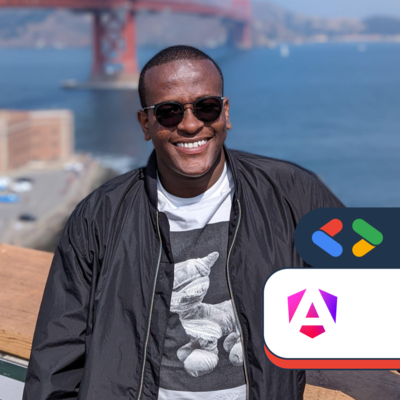
Wayne Gakuo is a Frontend Engineer who is constantly learning the best practices of architecting software using Angular, while having scalability, maintainability, and user needs in mind. Aside from work, Wayne leads Angular Kenya which trains budding developers to become proficient Angular developers. In his free time, Wayne loves watching documentaries and playing video games, trying to get better at FIFA.

Software Engineer and postgraduate researcher located in Nairobi, Kenya. His professional endeavors lie at the convergence of applied software engineering principles, systems design and development, and real-world deployment. He has a career emphasis on applied Software Engineering with AI, Agentic AI Systems, Automation and Robotics. He possesses a Bachelor of Science degree in Information Technology from Zetech University and is presently engaged in postgraduate studies, concentrating his research on investigating the ways in which AI agents can tailor and enhance student learning outcomes within Learning Management Systems in educational settings.. Professionally, he holds the position of Software Engineer at Arifalab Technologies, where he plays a significant role in the development of Kqimble, a cybersecurity platform designed to ensure the security and efficiency of IT infrastructure. He has been honored as the Best Innovator of the Year 2024 by Zetech University and has also received a Bronze Medal in the AI League at the Pan-African Robotics Competition 2025.
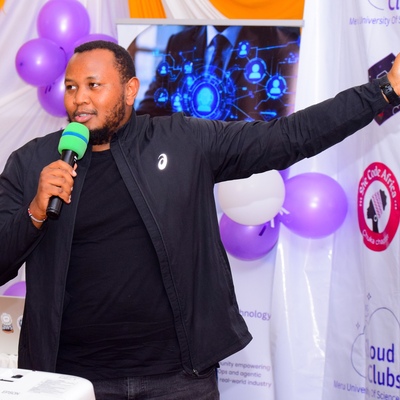
Murithi is an AWS Solutions Architect with over a decade of experience in technology, focused on cloud operations, best practices, and the future of AI-powered systems. He partners with organizations to unlock their full potential on AWS, from foundational cloud journeys to the cutting edge of agentic cloud operations, bringing both strategic depth and hands-on expertise to every engagement.
Sessions & tracks
Registration
Theater ·Welcome
Theater ·Lunch
Theater ·Agents of Tomorrow: Building the Next Generation of Intelligence
We stand at the edge of a profound shift in artificial intelligence. Over the last five years, generative AI has moved from novelty to necessity—transforming how we create, code, and collaborate. Now, a new frontier is emerging: AI agents. Unlike traditional tools that wait for instructions, agents can perceive, decide, and act toward goals—expanding the boundaries of what humans and machines can achieve together.
In this keynote, we’ll explore the evolution from copilots to fully agentic systems, highlight breakthroughs that are reshaping industries, and imagine the future horizons where autonomous agents redefine productivity, creativity, and discovery. Most importantly, we’ll discuss the role of humans in this new era—not as bystanders, but as leaders guiding how agents operate, align with our values, and amplify our potential.
The Agents of Tomorrow are here—and the future will be built by those bold enough to partner with them.
Henk is a Cloud Advocate specializing in Artificial intelligence and Azure with a background in application development. He is currently part of the AI cloud advocate team and based in the Netherlands. Before joining Microsoft, he was a Microsoft AI MVP and worked as a software developer and architect building lots of AI powered platforms on Azure.
Building agents with Vercel AI SDK
The Vercel AI SDK makes it simple to build production-ready AI applications and agents with just a few lines of code. In this session, we’ll explore how the SDK unifies access to multiple AI providers (OpenAI, Anthropic, Google, xAI, Hugging Face, and more), enables structured outputs with type safety, supports real-time streaming, and even allows building autonomous AI agents. Whether you’re building chatbots, dev tools, or AI-driven dashboards, the AI SDK provides a fast track from idea to deployment.The Vercel AI SDK makes it simple to build production-ready AI applications and agents with just a few lines of code. In this session, we’ll explore how the SDK unifies access to multiple AI providers (OpenAI, Anthropic, Google, xAI, Hugging Face, and more), enables structured outputs with type safety, supports real-time streaming, and even allows building autonomous AI agents. Whether you’re building chatbots, dev tools, or AI-driven dashboards, the AI SDK provides a fast track from idea to deployment.
Network whisperer by day, code conjurer by night—living the double life of an NOC engineer and software developer.
Long Term Memory for Agentic Workflows
AI Agents have improved at reasoning, planning, and executing tasks, but most developers overlook a critical flaw: memory persistence and how it's structured. Traditional retrieval treats memory as a simple document lookup, yet real-world context requires understanding relationships, not just retrieving facts.
In this session, you will learn about building knowledge graphs for AI memory, enabling multi-hop reasoning, temporal awareness to track how entities and relationships evolve over time, and maintaining persistent state across sessions.
Note: For the knowledge graph visualization demo, we will use Cognee and Streamlit. Even Microsoft’s AI Agents repository includes Cognee as the memory layer.
I am Tarun Jain, Founding Engineer at Kaivid Labs and YouTuber with 4.06K+ subscribers on AI with Tarun. A two-time Google Summer of Code alum (2023 at caMicroscope, 2024 at Red Hen Lab) and Google Developer Expert in AI. I'm an active speaker in the PyCon APAC region. Spoke at EuroPython, PyCon: Singapore, Hong Kong, Malaysia, and Australia. Portfolio: https://tarunjain.netlify.app/
From FAQs to Fully Autonomous: Deploying AI Agents for University-Scale Web & WhatsApp Support
Have you ever retrieved a phone number from a University Website and called only to be greeted by an unavailable tone or someone who has no idea how they can help? They tell you they will get back to you, only to have to follow up repeatedly, leaving you frustrated.
As universities and colleges scale digital services, general enquiries across websites and messaging platforms quickly overwhelm administrative teams. This session presents a real-world implementation of Jotform AI Agents at Tharaka University to autonomously handle student, applicant, and stakeholder enquiries via the institutional website and WhatsApp channels. The agent has handled over 3,800 conversations, providing information through Retrieval-Augmented Generation (RAG) and autonomous training.
The talk walks through the full technical lifecycle: problem framing, knowledge base structuring, prompt architecture, channel integration, guardrails, monitoring, and continuous optimization.
Attendees will see how structured institutional data (FAQs, admission policies, course information, fee structures, academic calendars) was transformed into an intelligent agent that delivers accurate, context-aware responses 24/7/365.
Kevin Tuei is an ALX Gold Fellow, Cloud consultant and Certified educator with 7 years of experience. With experience as a Cloud Consultant, Kevin assists in migrating on-premise workloads to the cloud. He is passionate about Data, AI, and Blockchain, and has expertise in the Cloud Adoption Framework and AWS Well-Architected Framework. He also specializes in training on industry certifications from major technology providers and excels in co-creation, data analytics, user experience, and problem-solving. Kevin is on a career mission to grow into Technical Program/Project Management and use these skills to lead 500 successful projects targeting the SDGs on Education and Gender Equality.
Building and deploying your first AI Agent using open source tools
Ready to dive into agentic AI? This hands-on session guides you through building and deploying your first AI agent from scratch using open source frameworks. We'll use the Strands framework together with Amazon Bedrock AgentCore to build an agent that can understand context, make decisions, and take actions autonomously. You'll learn the fundamental concepts of agent architecture, how to structure agent workflows, and best practices for deployment. Whether you're new to AI agents or looking to expand your toolkit, you'll leave with practical skills and a working agent you can build upon for your own projects.
I am a Senior Developer Advocate working especially with - but not limited to - developers in the sub-Saharan Africa region. Formerly an AWS Community Hero - first woman out of Africa, to be named an AWS Hero. My tech background includes software developer, business and systems analysis, solutions architecture and cloud engineering. I love working with those who are new to tech in general - and currently focusing on those who are new to AWS.
Orchestrating Safe & Adaptive Learning with Multi-Agent Systems
As educators deploy AI assistants at scale, critical questions emerge: How do we move beyond single-prompt chatbots to systems that can plan, reflect, and adapt?
How do we prevent hallucinations through architecture rather than prompts? How do we personalize learning without losing pedagogical control?
This session presents a research-backed framework for building reliable educational AI using Multi-Agent Systems (MAS). Drawing from the von Neumann Multi-Agent Framework (vNMF) and Agentic Workflow for Education (AWE), we'll explore how decomposing AI agents into modular components; Control, Logic, Memory, and I/O, enables sophisticated orchestration patterns for adaptive learning.
What You'll Learn:
The vNMF Architecture: How four modules (Control Unit, Logic Unit, Memory Unit, I/O Devices) map to educational workflows, enabling state management and multi-step reasoning.
From Individual to Swarm Intelligence: How Multi-Agent Debate (MAD) and collaborative reflection reduce hallucinations and improve output quality through emergent intelligence.
The Dual Enhancement Cycle: Understanding how agents improve through inner circulation (swarm learning) while students benefit from outer circulation (scaffolded knowledge construction).
Practical Orchestration Patterns: Real implementations of Chain-of-Thought (CoT), ReAct (Reasoning + Acting), and Reflexion for self-correcting agents in educational contexts.
Deployment Readiness: Distinguishing Robust Technologies (RT) like self-reflection from Emerging Technologies (ET) like autonomous task planning to make informed implementation decisions.
Software Engineer and postgraduate researcher located in Nairobi, Kenya. His professional endeavors lie at the convergence of applied software engineering principles, systems design and development, and real-world deployment. He has a career emphasis on applied Software Engineering with AI, Agentic AI Systems, Automation and Robotics. He possesses a Bachelor of Science degree in Information Technology from Zetech University and is presently engaged in postgraduate studies, concentrating his research on investigating the ways in which AI agents can tailor and enhance student learning outcomes within Learning Management Systems in educational settings.. Professionally, he holds the position of Software Engineer at Arifalab Technologies, where he plays a significant role in the development of Kqimble, a cybersecurity platform designed to ensure the security and efficiency of IT infrastructure. He has been honored as the Best Innovator of the Year 2024 by Zetech University and has also received a Bronze Medal in the AI League at the Pan-African Robotics Competition 2025.
Building kinder and cost effective agents through fine tuning
Learn how to customize AI models for a retail customer service agent using Microsoft Foundry. In this session we will discuss how you can optimize your model through options such as SFT and distillation to reduce latency and token costs and improve the tone of your models. I will also cover how you can synthetically generate your data and create a custom grader to give our model proper guidance for fine tuning. Lastly, we will talk about production, how you can deploy and evaluate your retail customer service agent.
Bethany loves crafting user stories and enhancing user experiences! She strives to make a positive impact on people's lives through her skills in design, code, and leadership. As a Cloud Advocate at Microsoft, she engages with students, aspiring developers, and entrepreneurs to help them learn and grow in Artificial Intelligence (AI). She does this through writing articles, hosting workshops, and speaking at events about AI and cloud computing. She has a strong background in community and skilling others, thanks to her previous roles as a Program Coordinator at Andela and Gold Microsoft Learn Student Ambassador which built her passion for community and skilling others. She comes from a community of marathon runners but decided to run code instead. Outside tech she defines herself as creative. You will find her testing out new hobbies, sketching or deeply engrossed in a book.
Registration
Workshop Space ·Welcome
Workshop Space ·Knowledge Graphs for AI Agents: Structured Memory That Scales
This session covers how to build and maintain knowledge graphs that agents can query, update, and reason over. We'll cover graph schema design for agent memory, integrating Neo4j or other graph databases with LLM workflows, and techniques for agents to extract entities and relationships from conversations.
I'll also cover how to implement graph-based retrieval that understands context and connections, enables agents to perform multi-hop reasoning across related concepts, and maintains graph consistency as agents learn new information.
The session includes a live demo of an agent that builds its knowledge graph in real-time, plus practical patterns for when graphs outperform vector search and when to use hybrid approaches.
Efe Omoregie is an Associate Staff Engineer at Yellow Card, where he builds AI applications and leads fintech projects across Africa. With nearly a decade of software engineering experience, he has worked on payment systems, healthcare platforms, and cloud infrastructure. Previously, Efe led payment integrations at Yellow Card, scaling fiat payment rails across 20+ countries, and held engineering roles at GeroCare, Skooleeo, Code4TEEN, and Web Fuse. He holds a Master’s degree in Information Technology from the University of Lagos, a Bachelor’s degree in Computer Science, and a Diploma in Networking and System Security from Benson Idahosa University. Outside of work, Efe enjoys swimming and cycling.
Building Multi-Agent Systems using Google's Agent Development Kit (ADK)
In this workshop, participants will go beyond simple chatbots and build a distributed multi-agent system.
While a single LLM can answer questions, real-world complexity often requires specialized roles. You don't ask your backend engineer to design the UI, and you don't ask your designer to optimize database queries. Similarly, we can create specialized AI agents that focus on one task and coordinate with each other to solve complex problems.
Participants will build a Course Creation System consisting of:
- Researcher Agent: Using "google_search" to find up-to-date information.
- Judge Agent: Critiquing the research for quality and completeness.
- Content Builder Agent: Turning the research into a structured course.
- Orchestrator Agent: Managing the workflow and communication between these specialists.
Wayne Gakuo is a Frontend Engineer who is constantly learning the best practices of architecting software using Angular, while having scalability, maintainability, and user needs in mind. Aside from work, Wayne leads Angular Kenya which trains budding developers to become proficient Angular developers. In his free time, Wayne loves watching documentaries and playing video games, trying to get better at FIFA.
Lunch
Workshop Space ·From Zero to Agent: Creating Your First AI Agent in Microsoft Foundry
In this session, you’ll learn step by step how to create your first AI agent using Microsoft Foundry—no prior experience required. From the initial idea to a working agent, you’ll get a practical, hands-on introduction to the core building blocks. Perfect for anyone ready to go from zero to agent.
Patrick Wahlmueller is an IT professional, Microsoft MVP, and Community Organizer of Experts Live Austria, with a strong focus on AI-driven automation and Microsoft cloud technologies. His background spans classic IT operations and service management as well as modern, cloud-native and low-code solutions. Today, Patrick works primarily with Copilot Studio, GitHub Copilot, Microsoft Foundry, and intelligent automation, helping organizations move beyond AI hype toward practical, secure, and responsible implementations. He is especially interested in how large language models can be integrated into existing IT landscapes to simplify processes, improve decision-making, and create measurable value. Known for his clear, pragmatic approach, Patrick enjoys breaking down complex technical topics and making them accessible to both technical and non-technical audiences. As a long-time community contributor and conference organizer, he strongly believes in knowledge sharing, open discussion, and continuous learning. Based in Austria, Patrick regularly speaks at events and conferences across Europe, sharing hands-on insights on AI, automation, security, and the future of IT.
From Code to Production: Operationalizing AI Agents the Well-Architected Way
Deploying an AI agent is just the beginning.....keeping it running reliably, securely, and efficiently in production is where the real work starts. In this session, we apply the Operational Excellence pillar of the Well-Architected Framework to the full agent deployment lifecycle. We'll walk through a production-grade reference architecture that combines a centralized agent registry for governance and discoverability, a secure serverless agent runtime that eliminates undifferentiated heavy lifting, automated CI/CD pipelines that remove manual toil from every deployment, continuous vulnerability scanning baked directly into the pipeline, and secretless, least-privilege authentication that removes long-lived credentials from the equation entirely. Whether you're a developer shipping your first agent or an architect standardizing agent operations at scale, you'll leave with a repeatable, framework-agnostic blueprint for deploying agents you can actually trust in production.
Murithi is an AWS Solutions Architect with over a decade of experience in technology, focused on cloud operations, best practices, and the future of AI-powered systems. He partners with organizations to unlock their full potential on AWS, from foundational cloud journeys to the cutting edge of agentic cloud operations, bringing both strategic depth and hands-on expertise to every engagement.
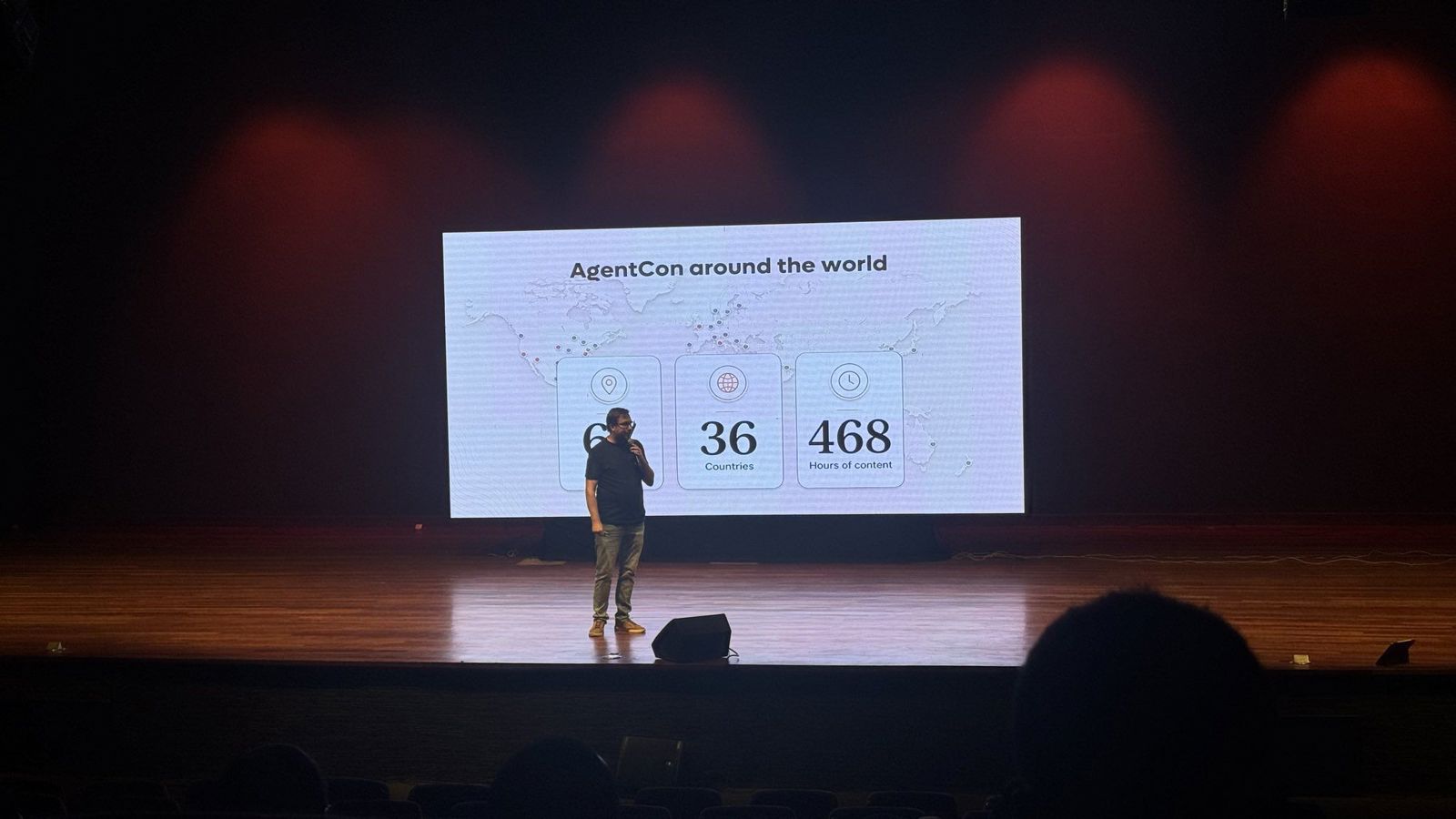
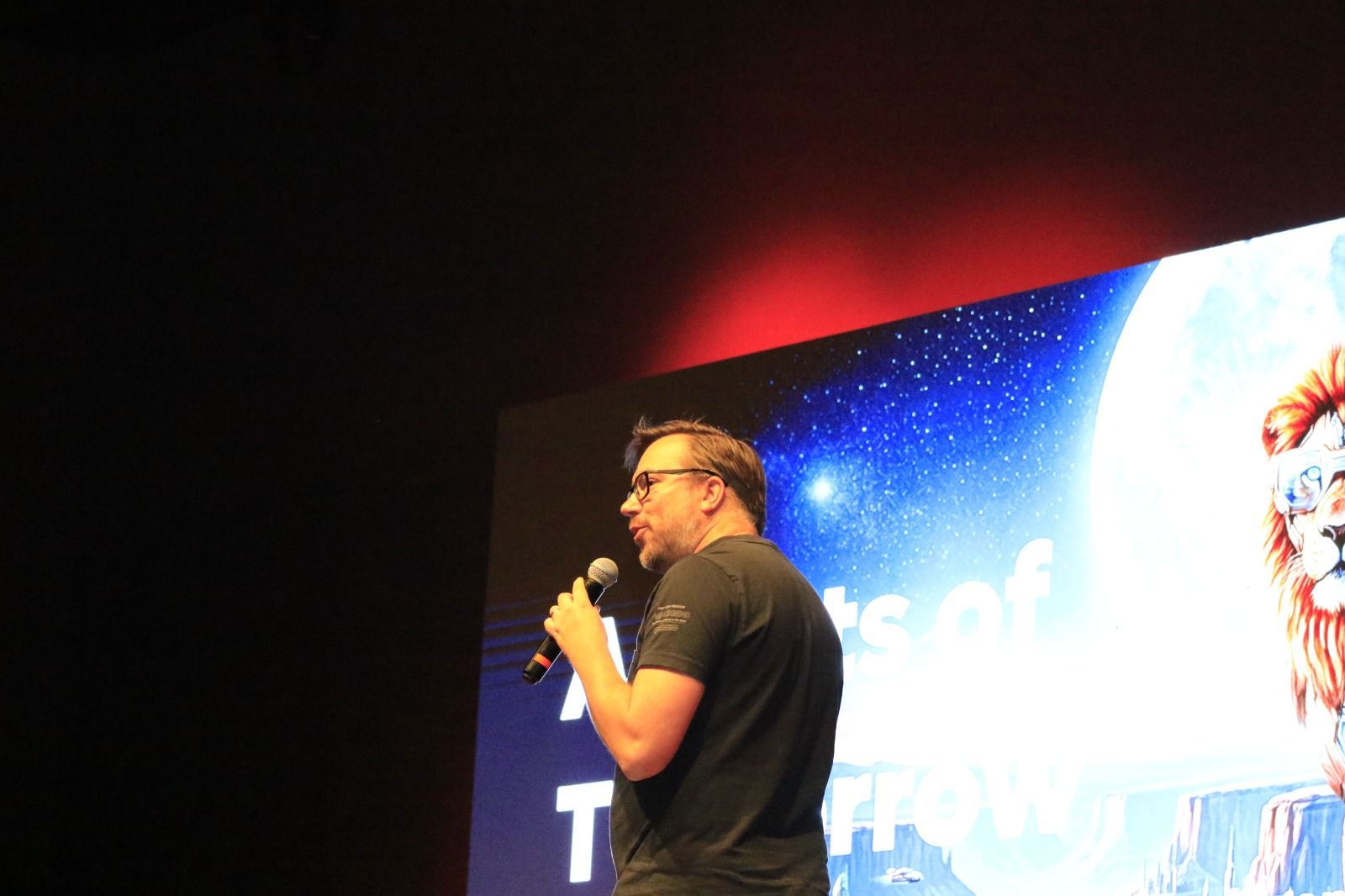
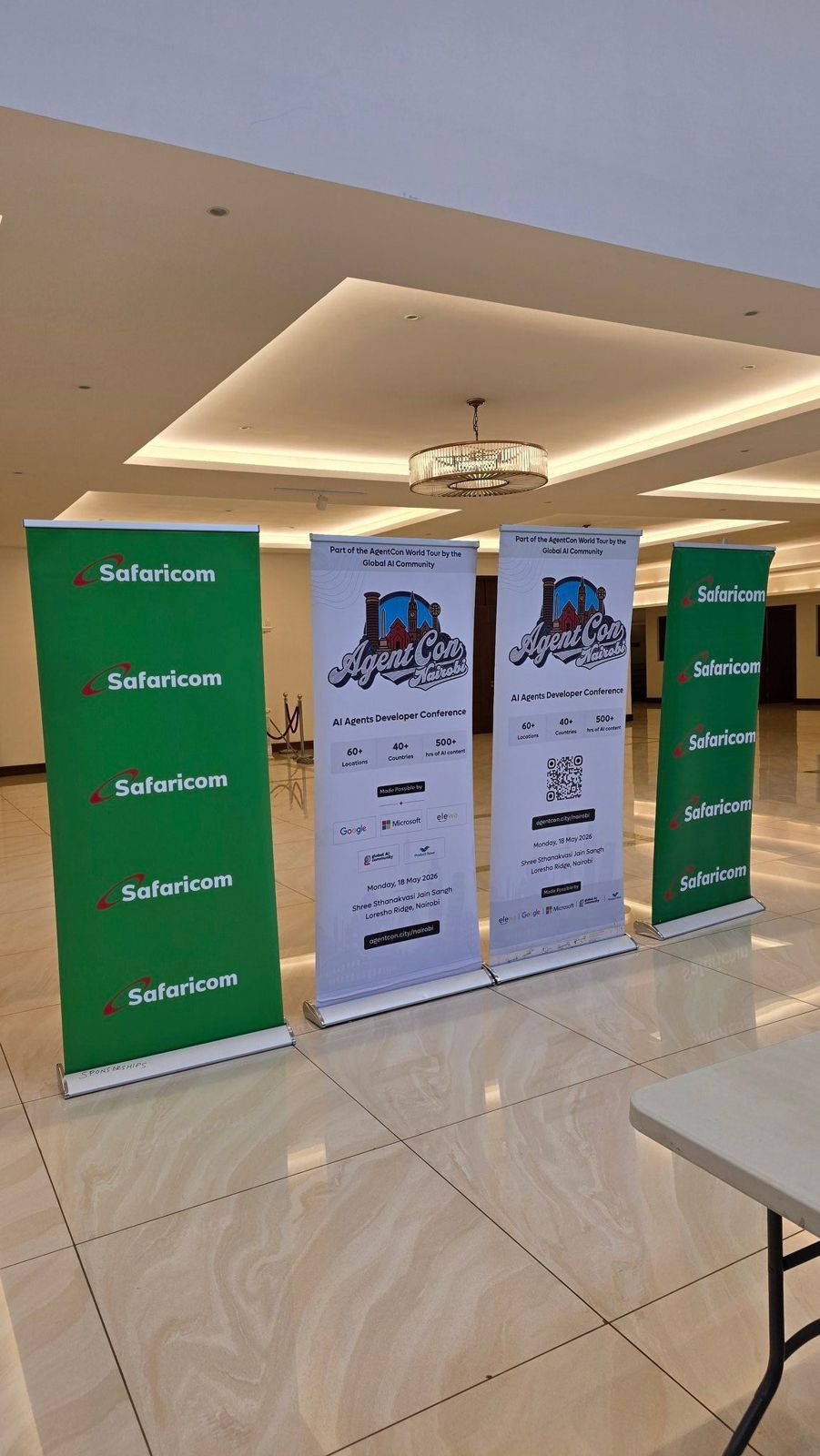
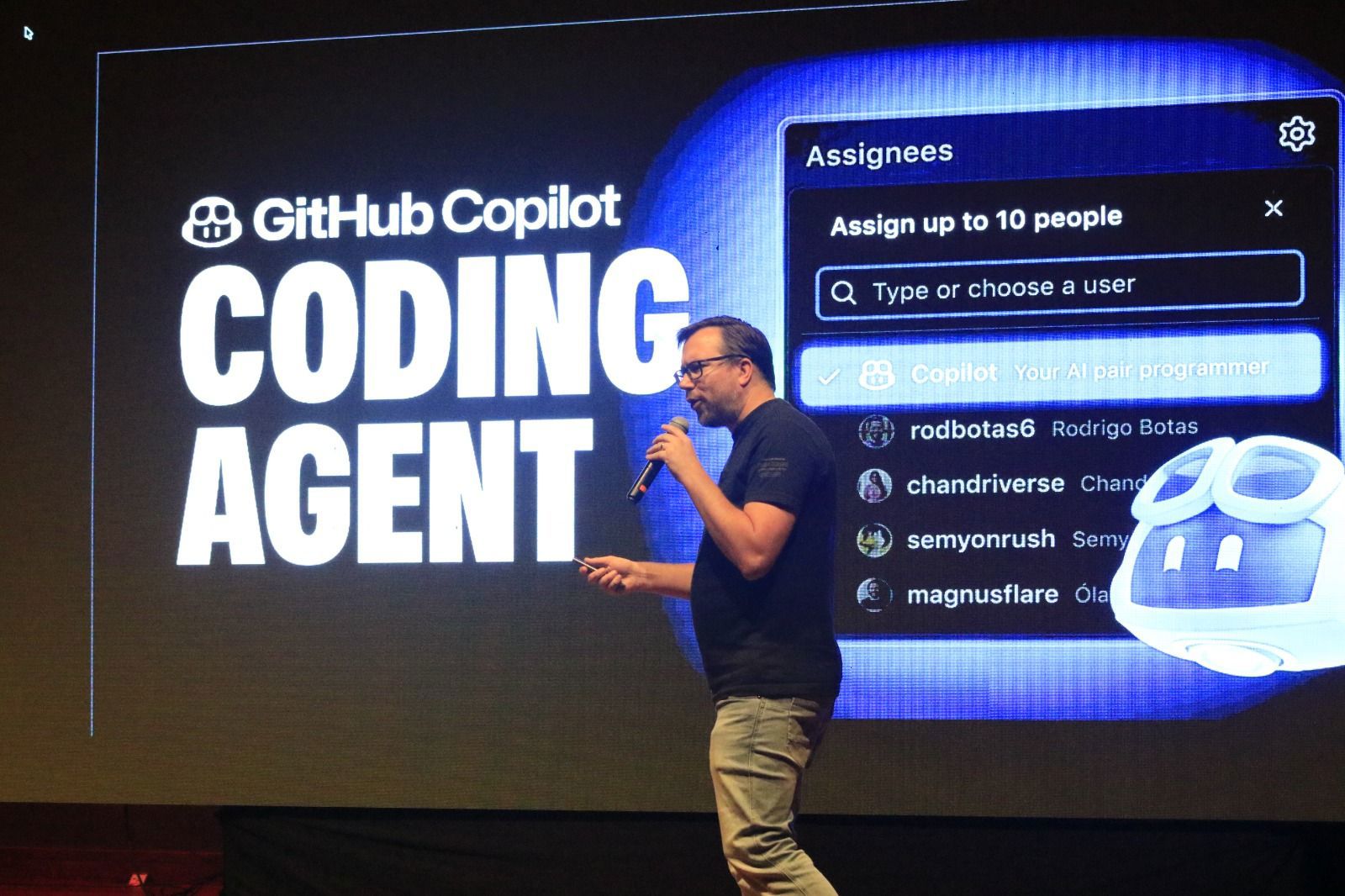
This is how it looked
Made possible by
Made possible by:






Explore AgentCon
AI Agents Developer Conference
AgentCon made possible by: