/Events /AgentCon Oslo

About
Join us for the AI Agents World Tour, a global series of one-day conferences designed exclusively for developers building the future with AI agents.
From San Francisco to Singapore, we’re bringing together leading engineers, researchers, and creators to explore the cutting edge of AI agent design, deployment, and integration. Whether you’re building intelligent assistants, autonomous systems, or next-gen developer tools, this event is your fast track to practical knowledge, hands-on demos, and real-world insights.
What to Expect:
- Deep-Dive Talks from AI pioneers and industry leaders
- Technical Workshops on building, deploying, and scaling agents
- Live Demos of powerful open-source frameworks and tools
- Networking with a global community of builders and innovators
This isn't just another AI event — it’s where developers meet to talk about real code.
Ready to build the future?
Who's on stage

Technology lover and enthusiast, I have been working within the fields of Education, Telecommunications, IoT and Data Insights for the last 15 years as a Senior Full-Stack Dev/Ops, and now as Cloud Architect at Google

25 years building on the Microsoft stack — from LOB applications in .NET to deploying AI agents on Azure. Founder of AgentBrew Oslo, a 250+ member AI practitioner community. Focused on how enterprises can safely adopt open-source AI tools within Microsoft environments without compromising governance or security.
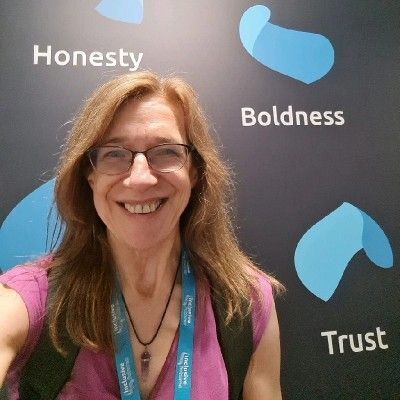
I'm a dual Microsoft Business Applications MVP in Customer Experience and Customer Service. An expert Microsoft Certified Dynamics 365 Solution Architect, who's led the delivery and implementation of several tailored and value-oriented solutions to meet diverse global and national business requirements, that lead to positive customer outcomes. 15x Microsoft Certified and Success by Design Accredited, I use its principles that blend strategic design, rigorous gap analysis, and the pursuit of excellence in service delivery, to craft pathways to success for customers. As Founder of the UK Charity HeuristicDev: The Mentoring Hub and regular Community contributor through my HeuristicDev blog posts and public speaking, I have a 'thing' for learning, a thirst for knowledge, and a desire for sharing both to uplift and empower all.

Mihail Mateev is an owner, Solution Architect, Senior Technical Evangelist at SoftProject, responsible for .Net, IoT and cloud solutions. Mihail currently works as a Senior Solution Architect at EPAM Systems. He also worked many years like a Technical evangelist in the Infragistics. Last years Mihail was focused on various areas related to technology Microsoft: Visual Studio , ASP.Net, Windows client apps, MS SQL Server and Microsoft Azure.

Oleksandra enjoys sharing her knowledge, experience, and insights about data engineering, data governance, and Databricks. Throughout her career as a Data Engineer and Databricks Solutions Architect, she’s experienced firsthand how challenging it can be to embark on a Data and AI journey. Based on her extensive experience with on-prem to cloud migrations, architecting and implementing data platforms, and running large-scale performance optimization projects with commercial and open source technologies, she is passionate about breaking complex topics and helping the community democratize data and AI for their projects.
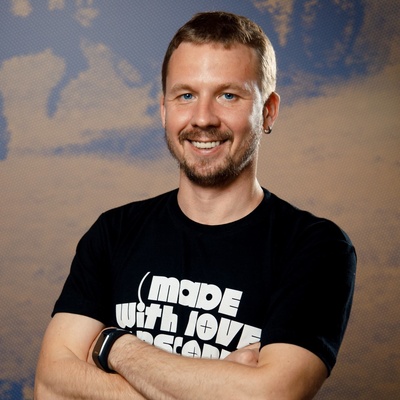
Sasha is a software developer with over 20 years in multiple technologies and domains. A tech lead, architect, and mobile solutions expert, he specializes in AI integrations for mobile apps, focusing on on-device AI. He excels in Flutter, Firebase, and generative AI for robust, scalable apps. Sasha is Chief Software Engineer and Head of Flutter Discipline at EPAM, GDE for AI, Firebase, Flutter, Dart, and co-organizes Flutter Berlin Community
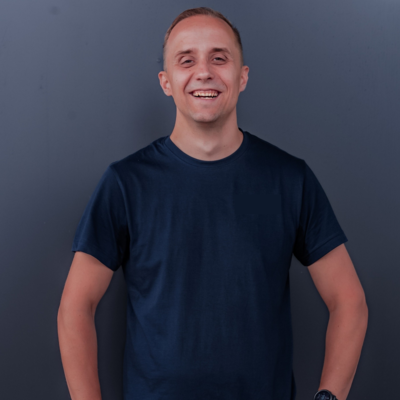
As a Microsoft 365 Solution Advisor, I help clients get the most out of their Microsoft Cloud solutions. I started my journey as a SharePoint developer in Belgium and later transitioned into a more business consulting role. Today, I focus on guiding organizations to optimize their processes and drive successful adoption of Microsoft 365 tools.

Wario Wario is a Microsoft-certified Agentic AI Solutions Architect and Power Platform Solutions Architect specializing in enterprise AI governance and production-scale Copilot Studio deployments across the Microsoft ecosystem. As a former Cloud Solution Architect at Microsoft, Wario helped Fortune 500 organizations architect and secure mission-critical AI business solutions. He bridges architecture, security, and platform strategy to transform fragmented AI experiments into governed, enterprise-grade Copilot and agent systems that meet compliance and operational standards.

Bernhard Merkle works as a Software Specialist and Technology Scout for Gen AI, AI, ML, Cloud, XOps related technologies in the central Research & Development Department at SICK AG, one of the world’s leading producers of sensors and sensor solutions. He is a Microsoft MVP for AI, loves Python and serves as internal consultant for new Software Development Technologies. In his spare time he gives a lecture about development with Models and AI. He writes technical articles and also gives sessions at various conferences (e.g. ACCU, PyConUK, , QCon, OOPSLA, EclipseCon and OOP).

Software Engineer. Multi-published author (turns out fiction writing is really useful in software!). Owner of the fashion brand Prima Dona studios. Aspiring sommelier at Side Hustle Wines. Dyslexic but Dealing. Believer that tech upskilling is the ultimate equalizer. Always ready to get on a plane.

Sina has over a decade of experience working with databases, analytics & machine learning. He helps companies modernize their data analytics platforms and develop advanced AI practices to drive business innovation and success.

Frode Stenstrøm is a technology entrepreneur, advisor, and speaker with a deep passion for digital transformation and artificial intelligence. He is a founder and partner at ProsessPilotene, where he works closely with organizations to design and improve customer processes, communication, and modern digital solutions. With a background spanning software development, project leadership, and business development, Frode has spent his career at the intersection of technology and human collaboration. Over the past few years, artificial intelligence has become a central part of his daily work — not just as a tool, but as a strategic partner in learning, problem-solving, and value creation.

As a Principal Architect with a specialization in Azure and AI, Arin excels at pioneering new services in Azure, bringing innovative solutions to his clients. He is dedicated to keeping the developer community updated with new technology, advocating for best practices, and fostering a culture of continuous learning and innovation. He combines his expertise in Azure and AI with a passion for mentoring and leadership, driving technological excellence and community engagement. He is also deeply passionate about the Microsoft Development Ecosystem and .NET, integrating these technologies seamlessly into his projects to deliver optimal results.
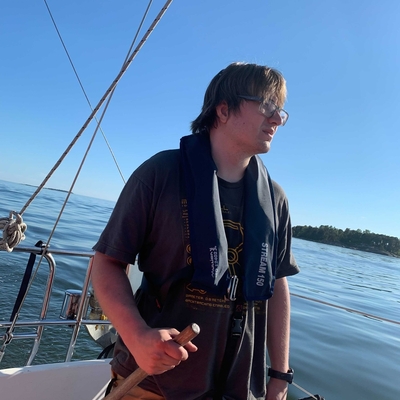
Kalle works as CTO of Managed Services, making sure Eficode delivers the best possible offering for our service customers. Having worked in the Eficode Managed Services team for many years his experience is wide and deep; he is familiar with maintenance, upgrades and migrations of services to cloud as well as the challenges related to adopting new ways of working.
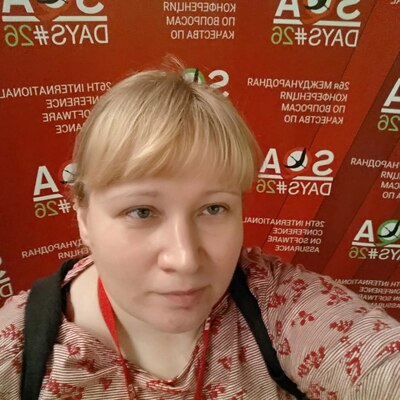
Kate is an experienced QA Engineer. Kate is passionate about cloud and self-driving cars. She is #IamRemarkable workshop facilitator, WTM Ambassador, mentor for Women in Tech community. ISTQB, Google cloud, Azure Cloud and PSM certified. Kate is an avid traveler who dreams of visiting every part of our world. She also plays in the amateur theater.
Sessions & tracks
The Rise of the Agent Manager
Stop worrying about “whether AI will take your job.” This year, in the new era of AI, every one of us will take on a brand-new identity — the manager of AI agents! Join us as we explore how to prepare for this transformation and welcome the era that truly belongs to you: the Age of the Agent Manager.
Software Engineer. Multi-published author (turns out fiction writing is really useful in software!). Owner of the fashion brand Prima Dona studios. Aspiring sommelier at Side Hustle Wines. Dyslexic but Dealing. Believer that tech upskilling is the ultimate equalizer. Always ready to get on a plane.
Break
Room 1 ·Securing the Future of AI Agents and MCP
While the promise of AI suggests a 20x efficiency boost in the software business, the reality is that 91% of organizations feel unprepared to implement it fully. We are moving beyond simple "Phase 1" chat assistants into a complex era of multi-agent workflows, but we are currently stalled by fears of job displacement, security compliance, and a lack of clear business cases.
This session explores the transition from isolated "Islands of Automation" to a fully governed, AI-orchestrated software lifecycle. We will dive deep into the Model Context Protocol (MCP) as the standardized connector for AI agents, while rigorously examining the new attack surfaces it exposes—from Server-Side Request Forgery (SSRF) and prompt injections to "Shadow AI" and hallucinated actions.
Attendees will leave with a concrete "Agent Orchestration Platform Blueprint". We will discuss how to move beyond vendor lock-in by implementing a central orchestration core that manages identity, policy, and audit trails, ensuring that AI becomes a secure asset rather than an unmanaged risk.
Kalle works as CTO of Managed Services, making sure Eficode delivers the best possible offering for our service customers. Having worked in the Eficode Managed Services team for many years his experience is wide and deep; he is familiar with maintenance, upgrades and migrations of services to cloud as well as the challenges related to adopting new ways of working.
Responsible AI: Ethical and Fair approach
In this talk, we will dive into the critical aspects of responsible AI. As AI technologies continue to evolve and integrate into various sides of our lives, it becomes highly important to address the ethical considerations and fairness in AI development.
Key topics covered:
Ethical considerations in AI:
• Understanding the moral implications of AI decisions.
• Ensuring transparency and accountability in AI.
• Addressing privacy concerns and data protection.
Fairness in AI:
• Identifying and mitigating biases in AI.
• Promoting inclusivity and diversity in AI.
• Ensuring equitable outcomes for all users.
Join for a comprehensive discussion on how to build AI solutions that are not only innovative but also ethical and fair. This talk aims to equip AI enthusiasts with the knowledge to create responsible AI apps that benefit society as a whole.
Kate is an experienced QA Engineer. Kate is passionate about cloud and self-driving cars. She is #IamRemarkable workshop facilitator, WTM Ambassador, mentor for Women in Tech community. ISTQB, Google cloud, Azure Cloud and PSM certified. Kate is an avid traveler who dreams of visiting every part of our world. She also plays in the amateur theater.
From Star Wars to the Workday: My Personal Journey with Artificial Intelligence
What happens when a childhood fascination with robots and science fiction collides with real-world artificial intelligence?
In this talk, Frode Stenstrøm shares a personal, story-driven journey that spans more than 40 years — from growing up on American elementary school science fiction, dreaming about robots and the future, to working today in a world where AI has become a daily collaborator.
Rather than focusing on technical details, this session explores how artificial intelligence has changed the way we work: how we think, learn, collaborate, sell, lead projects, and build trust — both with technology and with each other. Frode reflects on how AI has moved from being a curious new tool to a sparring partner, a research assistant, and a catalyst for deeper human interaction.
The talk also looks ahead, examining how AI will reshape education, knowledge work, public administration, and business models — not by replacing humans, but by changing what it means to create value. At its core, this session is about adaptation, mindset, and the human choices that will define the future of work.
This is a talk for leaders, professionals, and anyone curious about how artificial intelligence is not just transforming technology — but transforming us.
Frode Stenstrøm is a technology entrepreneur, advisor, and speaker with a deep passion for digital transformation and artificial intelligence. He is a founder and partner at ProsessPilotene, where he works closely with organizations to design and improve customer processes, communication, and modern digital solutions. With a background spanning software development, project leadership, and business development, Frode has spent his career at the intersection of technology and human collaboration. Over the past few years, artificial intelligence has become a central part of his daily work — not just as a tool, but as a strategic partner in learning, problem-solving, and value creation.
Lunch
Room 1 ·The Google Agent Stack: Building Agents with Gemini, ADK, and Agent Engine
Building a reliable agent is a software engineering challenge, not just a prompting exercise. Google has introduced a developer-first, "well-lit path" that prioritizes modularity and transparency.
In this technical session, we dive into the Agent Development Kit (ADK)—an open-source, model-agnostic framework designed to make agent orchestration feel like modern software development.
Attendees will walk away with a clear understanding of the Google-recommended stack for building agents that are predictable, debuggable, and ready for the real world.
Sina has over a decade of experience working with databases, analytics & machine learning. He helps companies modernize their data analytics platforms and develop advanced AI practices to drive business innovation and success.
From Idea to Production: End-to-End AI Application Development with Databricks Agent Bricks
End-to-end AI application development with Databricks Agent Bricks empowers teams to create, evaluate, and deploy production-grade AI agents on enterprise data, all within a unified, governed platform. This talk will walk participants through the complete workflow: ingesting and preparing domain-specific data, rapidly building agents with Agent Bricks’ interface, evaluating the performance of individual agents and the multi-agent system as a whole.
Attendees will learn how to configure single- and multi-agent systems, integrate with Databricks’ Unity Catalog and Vector Search for secure data access, and leverage built-in observability, evaluation, and deployment to endpoint workflows that meet production requirements for security, scalability, and reliability. Live demo will demonstrate this workflow in practice, illustrating best practices as well as common pitfalls in deploying agentic AI applications at scale.
Oleksandra enjoys sharing her knowledge, experience, and insights about data engineering, data governance, and Databricks. Throughout her career as a Data Engineer and Databricks Solutions Architect, she’s experienced firsthand how challenging it can be to embark on a Data and AI journey. Based on her extensive experience with on-prem to cloud migrations, architecting and implementing data platforms, and running large-scale performance optimization projects with commercial and open source technologies, she is passionate about breaking complex topics and helping the community democratize data and AI for their projects.
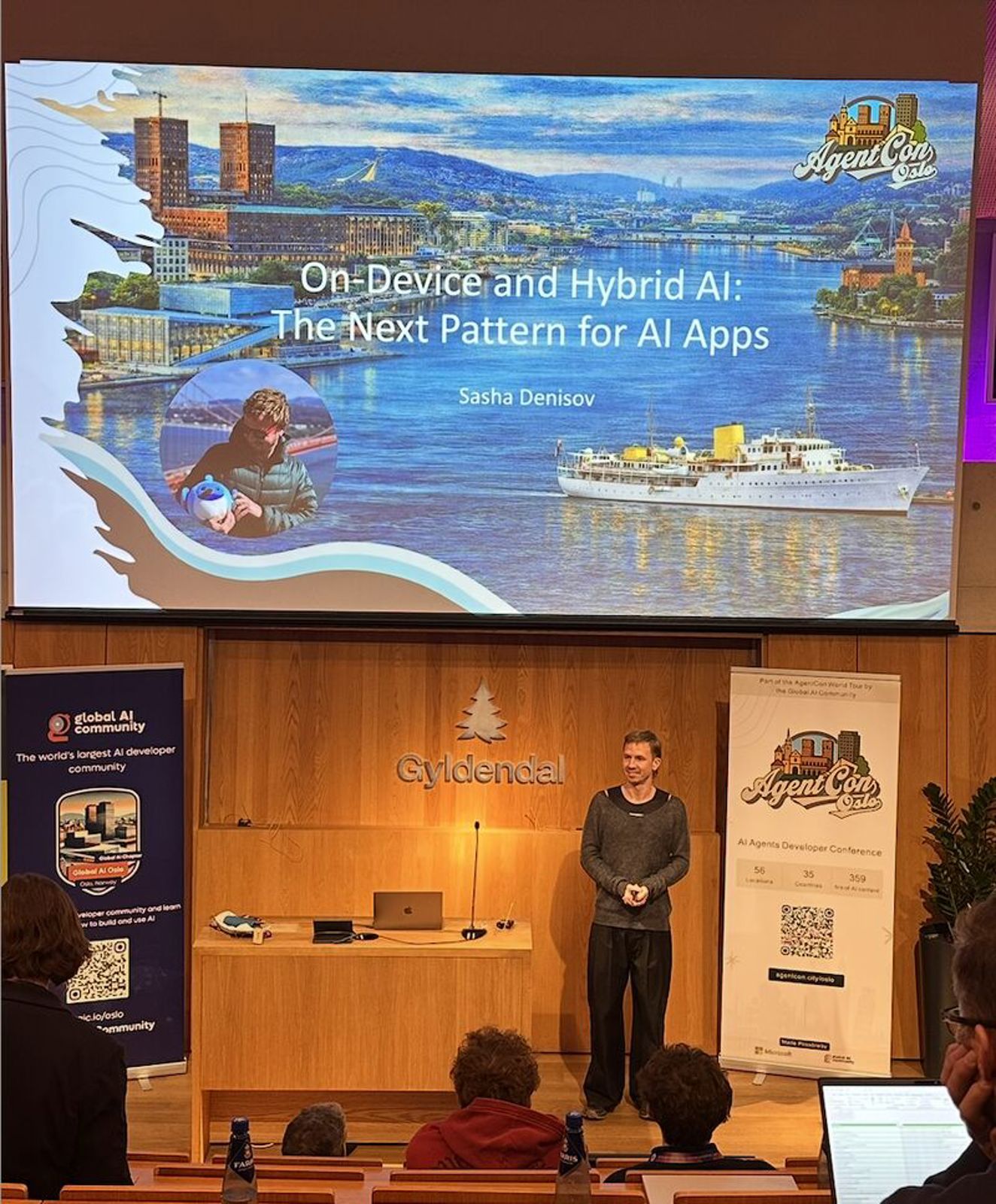
On-Device and Hybrid AI: The Next Pattern for AI Applications
Building AI agents no longer means the cloud is mandatory. Models can now run directly in browsers and on mobile devices — no internet required, no per-request costs, full data privacy.
This talk explores on-device AI (Edge AI) as an emerging architectural pattern. We'll look at lightweight open models like Gemma, Llama, and DeepSeek that serve as the "brain" for offline-capable agents.
But this isn't just about simple inference. We'll cover full agent capabilities on-device:
On-device Function Calling: Teaching the model to interact with local APIs — contacts, calendar, sensors — without cloud roundtrips.
On-device RAG: Querying local data (documents, notes, emails) for context-aware answers that never leave the device.
Hybrid patterns: When to run on-device, when to use cloud, and how to combine both for the best of each — privacy and offline capability from edge, power and scale from cloud.
We'll discuss architecture decisions, practical implementation steps, and honest trade-offs: model size vs capability, performance vs privacy, and when each approach makes sense
Sasha is a software developer with over 20 years in multiple technologies and domains. A tech lead, architect, and mobile solutions expert, he specializes in AI integrations for mobile apps, focusing on on-device AI. He excels in Flutter, Firebase, and generative AI for robust, scalable apps. Sasha is Chief Software Engineer and Head of Flutter Discipline at EPAM, GDE for AI, Firebase, Flutter, Dart, and co-organizes Flutter Berlin Community
Break
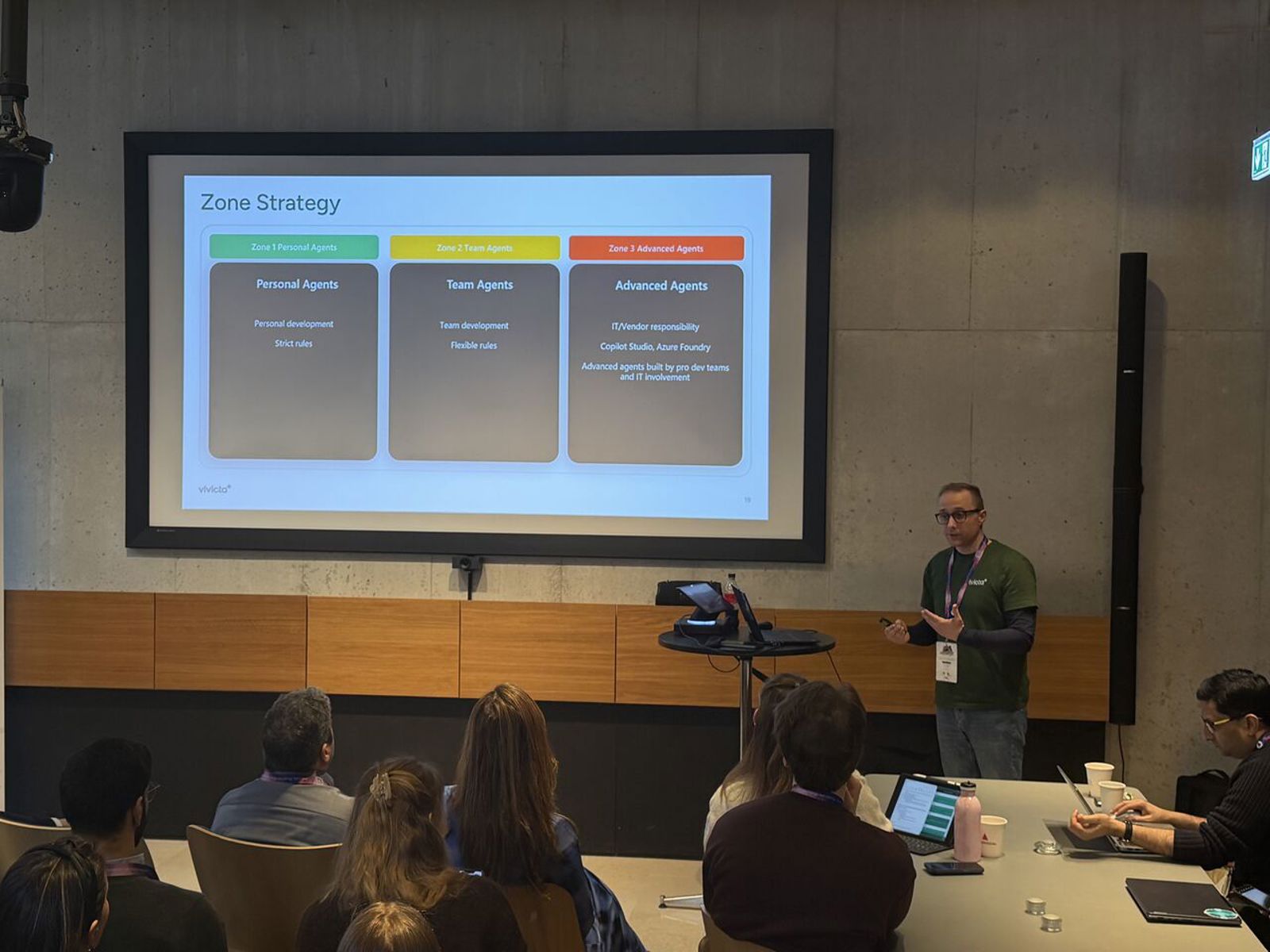
Room 1 ·Building a Robust Copilot Studio Strategy
Organizations deploying Copilot Studio face a critical inflection point: continue with fragmented, ungoverned agents or architect for enterprise scale. This session delivers the production-ready blueprint for the latter.
Explore proven architecture patterns for designing, deploying, and operating Copilot Studio across the enterprise, covering environment and DLP strategy, connector governance, ALM pipelines, compliance frameworks, and production monitoring.
Attendees leave with a comprehensive understanding of Copilot Studio governance across all five critical phases. Discovery, Architecture, Build, Deployment, and Monitoring, backed by a practical reference architecture and decision-making framework validated across Fortune 500 deployments.
Wario Wario is a Microsoft-certified Agentic AI Solutions Architect and Power Platform Solutions Architect specializing in enterprise AI governance and production-scale Copilot Studio deployments across the Microsoft ecosystem. As a former Cloud Solution Architect at Microsoft, Wario helped Fortune 500 organizations architect and secure mission-critical AI business solutions. He bridges architecture, security, and platform strategy to transform fragmented AI experiments into governed, enterprise-grade Copilot and agent systems that meet compliance and operational standards.
Enhancing Multimodal RAG with Cosmos DB Vector Search and Azure AI Image Embeddings
This session explores how Cosmos DB Vector Search, combined with Azure AI-generated image embeddings, enhances multimodal retrieval-augmented generation (RAG) systems using GPT and Vision. It compares image embeddings generated via the Azure AI Model Inference API with the latest multimodal embeddings from Computer Vision v4.0. The presentation highlights how these new multimodal embeddings integrate image and text data to improve cross-modal retrieval. It also examines the role of Contrastive Language-Image Pre-training (CLIP) embeddings within the Azure ecosystem and their impact on accuracy and relevance in multimodal RAG applications. Through a comparative analysis, we demonstrate how Azure AI and Cosmos DB optimize image-centric AI workflows, unlocking new possibilities for advanced multimodal AI systems.
Mihail Mateev is an owner, Solution Architect, Senior Technical Evangelist at SoftProject, responsible for .Net, IoT and cloud solutions. Mihail currently works as a Senior Solution Architect at EPAM Systems. He also worked many years like a Technical evangelist in the Infragistics. Last years Mihail was focused on various areas related to technology Microsoft: Visual Studio , ASP.Net, Windows client apps, MS SQL Server and Microsoft Azure.
break
Room 1 ·OpenClaw Meets the Enterprise: AI Agents in Microsoft Stacks
Most enterprises running Microsoft stacks are watching the open-source AI agent revolution from the sidelines — excited by the potential, terrified by the risk. OpenClaw represents some of the most powerful agentic AI capabilities available today, but deploying it in environments governed by Azure AD, compliance requirements, and change management processes feels impossible.
It doesn't have to be. Drawing on 25 years of Microsoft enterprise experience and hands-on work with bleeding-edge AI agent frameworks, this session provides practical patterns for safely adopting OpenClaw and similar open-source agents within Azure, .NET, and Power Platform environments. We'll cover sandboxing strategies, enterprise guardrails, governance considerations, and the architectural decisions that let you innovate without compromising enterprise safety.
This is not a vendor pitch. It's a practitioner's field report from someone who bridges both the open-source AI world and the Microsoft enterprise world — and believes you shouldn't have to choose between them.
25 years building on the Microsoft stack — from LOB applications in .NET to deploying AI agents on Azure. Founder of AgentBrew Oslo, a 250+ member AI practitioner community. Focused on how enterprises can safely adopt open-source AI tools within Microsoft environments without compromising governance or security.
Break
Room 1 ·Panel
Room 1 ·Closing
Break
Room 2 ·Intelligent Apps Demystified: Turning AI Buzzwords into Business Value
Have you heard the term Intelligent Apps but aren't quite sure what it means - or how to explain it to your customers?
Or curious about what makes an App "Intelligent" and how AI-powered solutions built within Dynamics 365 and Power Platform can drive real business outcomes for Frontier Firms?
This session explains the core characteristics of Intelligent Apps: data-driven, context-aware, adaptive and absorptive, and explores how tools like Copilot, Autonomous Agents, and the Microsoft Dataverse and Graph come together to deliver strategic value in transforming customer experience and operational efficiency.
You’ll see Well Architected examples of the Three Horizons of AI Transformation in action, including: • a customer service app that triages incoming cases, recommends resolutions and updates records without switching tools, • a sales app that monitors pipeline health, suggests proactive actions and qualifies leads, and • a field service app that uses AI to optimize technician scheduling.
Whether you're a functional consultant, community contributor, or someone looking to confidently engage business leaders in conversations about AI, this session will give you the clarity, language, and architectural insights to lead with impact.
I'm a dual Microsoft Business Applications MVP in Customer Experience and Customer Service. An expert Microsoft Certified Dynamics 365 Solution Architect, who's led the delivery and implementation of several tailored and value-oriented solutions to meet diverse global and national business requirements, that lead to positive customer outcomes. 15x Microsoft Certified and Success by Design Accredited, I use its principles that blend strategic design, rigorous gap analysis, and the pursuit of excellence in service delivery, to craft pathways to success for customers. As Founder of the UK Charity HeuristicDev: The Mentoring Hub and regular Community contributor through my HeuristicDev blog posts and public speaking, I have a 'thing' for learning, a thirst for knowledge, and a desire for sharing both to uplift and empower all.
Govern your Copilot Agents before they get out of control
More Copilot Agents are being built across organizations, and without proper oversight, things can quickly get messy resulting in duplicate agents or lost data. Governance is key to keeping control and protecting business-critical information. Join me if you’re an M365 administrator or Agent builder who wants to ensure Copilot Agents are used safely across your organization.
In this session, we explore how to track agent usage using the available reports, apply Data Loss Prevention (DLP) policies tailored to Copilot Agents, review the overload of checkboxes for Copilot Agents, and use Microsoft Purview to secure data and enforce compliance. I’ll share examples and tips to help structure governance so Copilot Agent usage stays safe and aligned with organizational rules.
You’ll get a clear view of the available governance tools, how they fit together, and best practices to manage Copilot Agents without slowing down the configuration process.
As a Microsoft 365 Solution Advisor, I help clients get the most out of their Microsoft Cloud solutions. I started my journey as a SharePoint developer in Belgium and later transitioned into a more business consulting role. Today, I focus on guiding organizations to optimize their processes and drive successful adoption of Microsoft 365 tools.
Lunch
Room 2 ·TypeAgent: From RAG to Structured RAG: Building Long-Context, Precise, and Fast AI Systems
Retrieval-Augmented Generation (RAG) has become the de-facto method for grounding Large Language Models in enterprise data. But classic RAG quickly reaches its limits: conversations drift, pronouns lose their meaning, long-term state becomes ambiguous, and complex multi-step queries often fail. In this talk, we introduce Structured RAG, a next-generation approach implemented in TypeAgent, an open-source framework prototype by Microsoft Research. Structured RAG keeps conversation context well-organized, reduces hallucinations, improves retrieval precision, and allows AI agents to handle multi-turn dialogues and complex instructions—while remaining fast and highly scalable.
We walk through the core architecture of Structured RAG, including typed conversations, semantic memory layers, indexing strategies, and automatic disambiguation of historical references. Live demos show how TypeAgent enables long-running AI agents that remain accurate over dozens of turns. Attendees will gain a deep understanding of how to move beyond vanilla RAG and how to incorporate Typed Conversations into real-world systems.
I am an active contributor to typeagent-py, which is the python port of TypeAgent initially done by Guido van Rossum. TypeAgent is an open-source framework initiated by Umesh Madan and Steven Lucco for building typed conversational agents and Structured RAG systems. I work on large-scale AI deployments, document understanding pipelines, and knowledge-graph-driven retrieval systems in industrial environments.
Bernhard Merkle works as a Software Specialist and Technology Scout for Gen AI, AI, ML, Cloud, XOps related technologies in the central Research & Development Department at SICK AG, one of the world’s leading producers of sensors and sensor solutions. He is a Microsoft MVP for AI, loves Python and serves as internal consultant for new Software Development Technologies. In his spare time he gives a lecture about development with Models and AI. He writes technical articles and also gives sessions at various conferences (e.g. ACCU, PyConUK, , QCon, OOPSLA, EclipseCon and OOP).
Break
Room 2 ·Build, Orchestrate, and Deploy: Hands-on with the Open-Source Agent Development Kit (ADK)
In this 90-minute deep dive, we move past the chat interface and into the code. We will use the open-source Agent Development Kit (ADK) to build a multi-agent system designed for the real world.
The ADK is a flexible, model-agnostic framework that treats agent development like modern software engineering. We will walk through the "well-lit path" of defining specialized agents, giving them tools to interact with the web and data, and orchestrating their collaboration.
Requirements: Attendees should have a basic grasp of Python. We will provide the environment and boilerplate code so we can focus on the architectural patterns.
Technology lover and enthusiast, I have been working within the fields of Education, Telecommunications, IoT and Data Insights for the last 15 years as a Senior Full-Stack Dev/Ops, and now as Cloud Architect at Google
Sina has over a decade of experience working with databases, analytics & machine learning. He helps companies modernize their data analytics platforms and develop advanced AI practices to drive business innovation and success.
Break
Room 2 ·MCP vs API – Unlocking Seamless AI Integration with Model Context Protocol
As AI adoption accelerates across industries, the need for intelligent applications to interact with real-world tools and data has never been greater. Yet, traditional API-based integrations often introduce complexity, rigidity, and scalability challenges, especially when applied to Large Language Models (LLMs). This session introduces the Model Context Protocol (MCP), an open standard designed to simplify and secure these connections, enabling LLMs to dynamically discover and interact with enterprise resources. Through a mix of technical deep dives, live demos, and practical examples, attendees will learn how MCP transforms integration workflows by:
- Wrapping existing APIs with schema-rich context for AI-native access
- Enabling real-time tool discovery and composable orchestration
- Supporting scalable, secure, and maintainable AI-powered systems
We’ll compare MCP with traditional API models, highlighting key differences in architecture, lifecycle, and developer experience. Participants will gain hands-on insights into setting up MCP servers, registering tools, and using official SDKs to build AI-integrated solutions that are robust and future-proof.
Who Should Attend: Solution architects, AI developers, Platform Engineers, and Technical decision-makers looking to streamline AI development and reduce integration overhead.
Key Takeaways:
- Understand the limitations of APIs in AI workflows and how MCP addresses them
- Learn how to implement MCP in real-world environments
- Discover how MCP enables smarter, more agile AI applications
Join me to explore why MCP is not just an evolution of APIs but a paradigm shift in how intelligent systems connect with the world.
As a Principal Architect with a specialization in Azure and AI, Arin excels at pioneering new services in Azure, bringing innovative solutions to his clients. He is dedicated to keeping the developer community updated with new technology, advocating for best practices, and fostering a culture of continuous learning and innovation. He combines his expertise in Azure and AI with a passion for mentoring and leadership, driving technological excellence and community engagement. He is also deeply passionate about the Microsoft Development Ecosystem and .NET, integrating these technologies seamlessly into his projects to deliver optimal results.
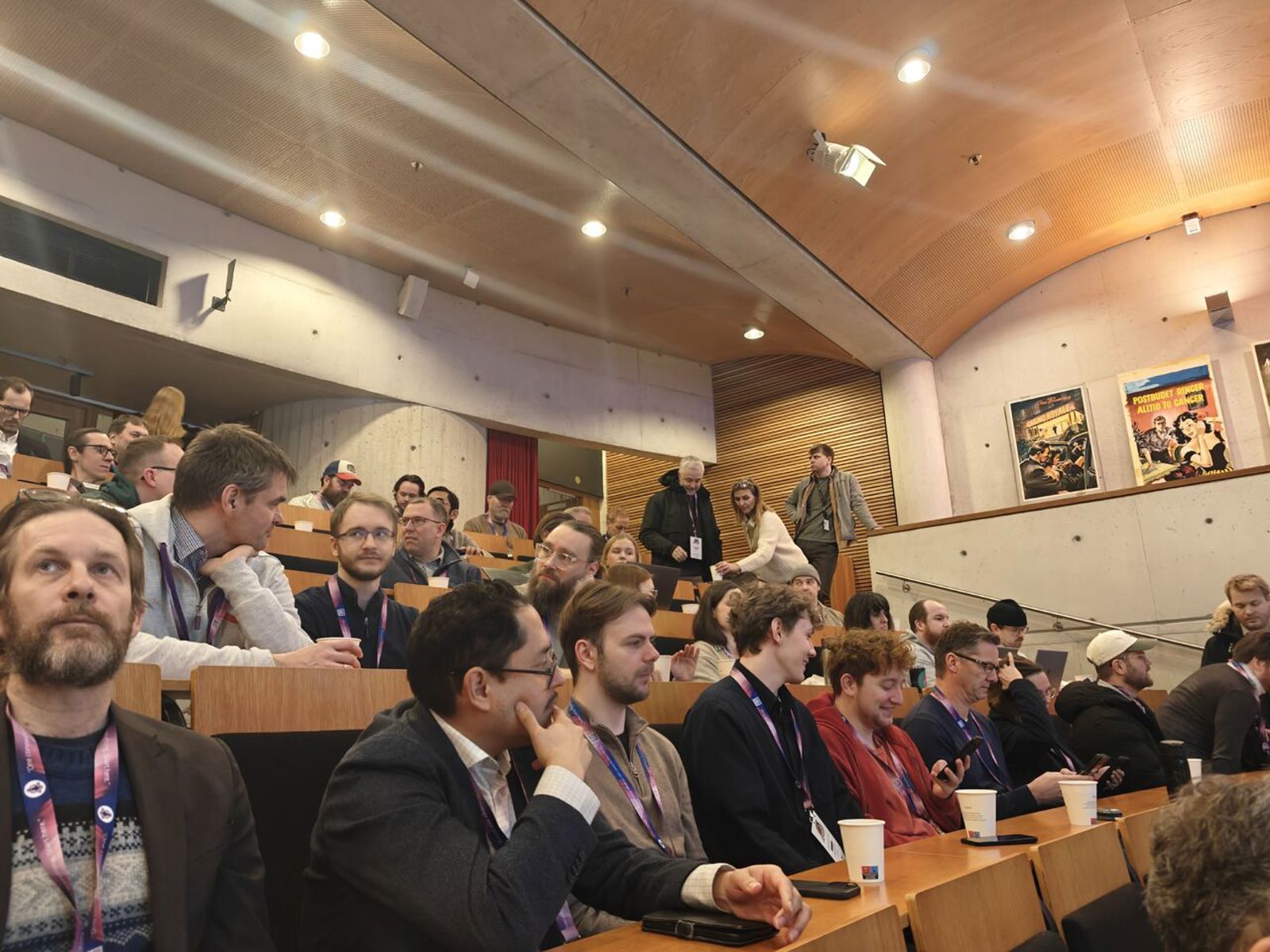
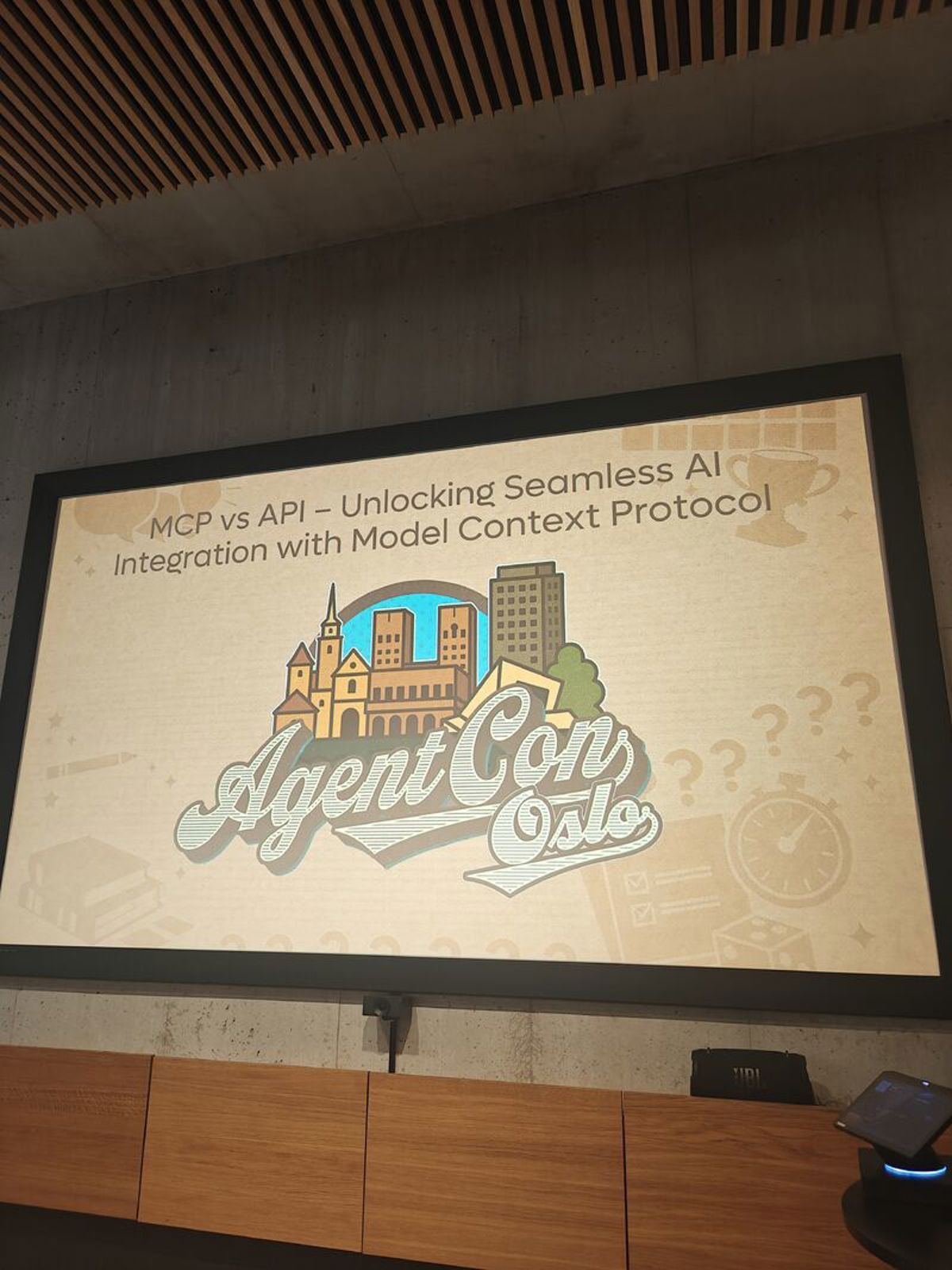
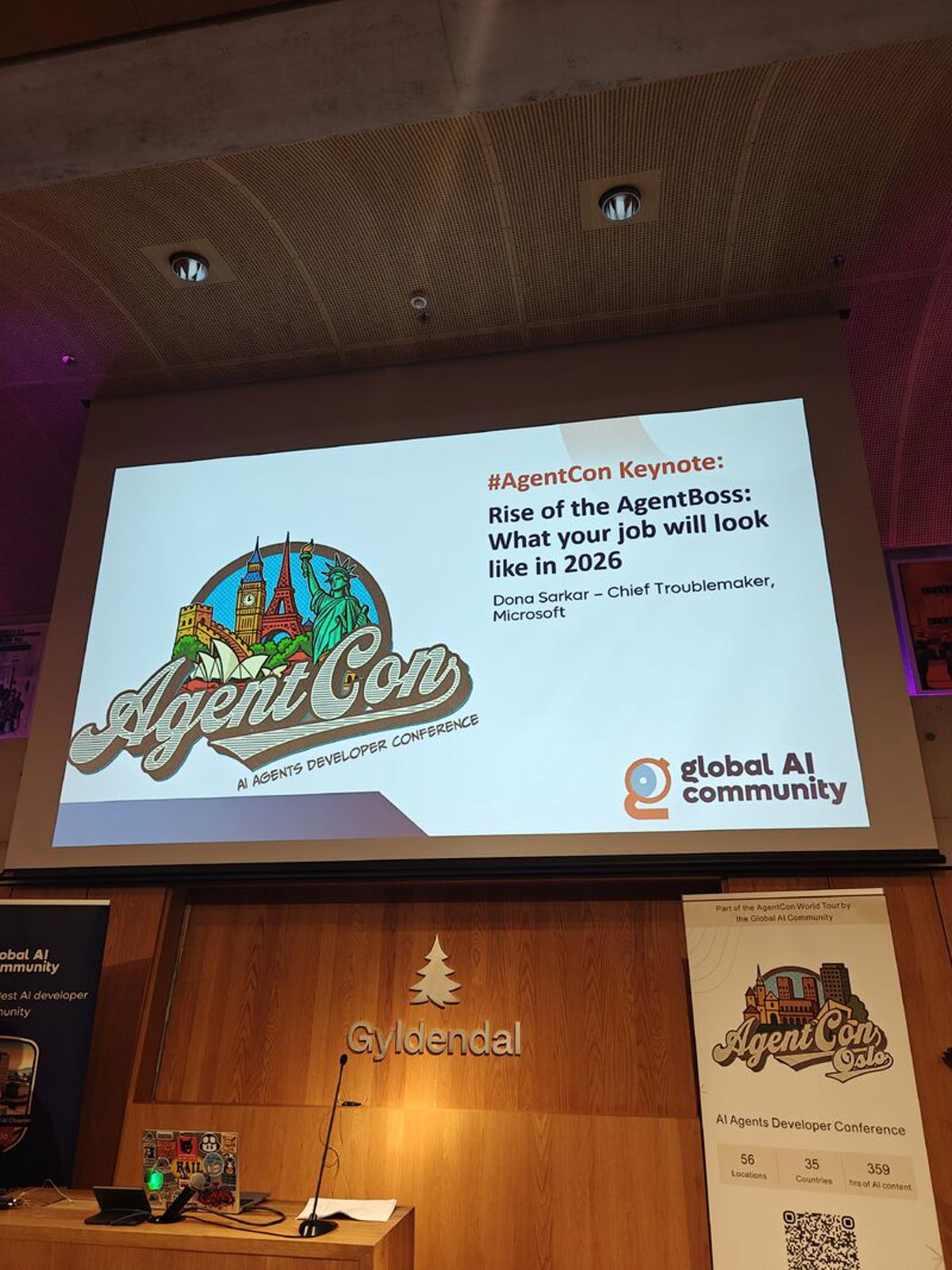
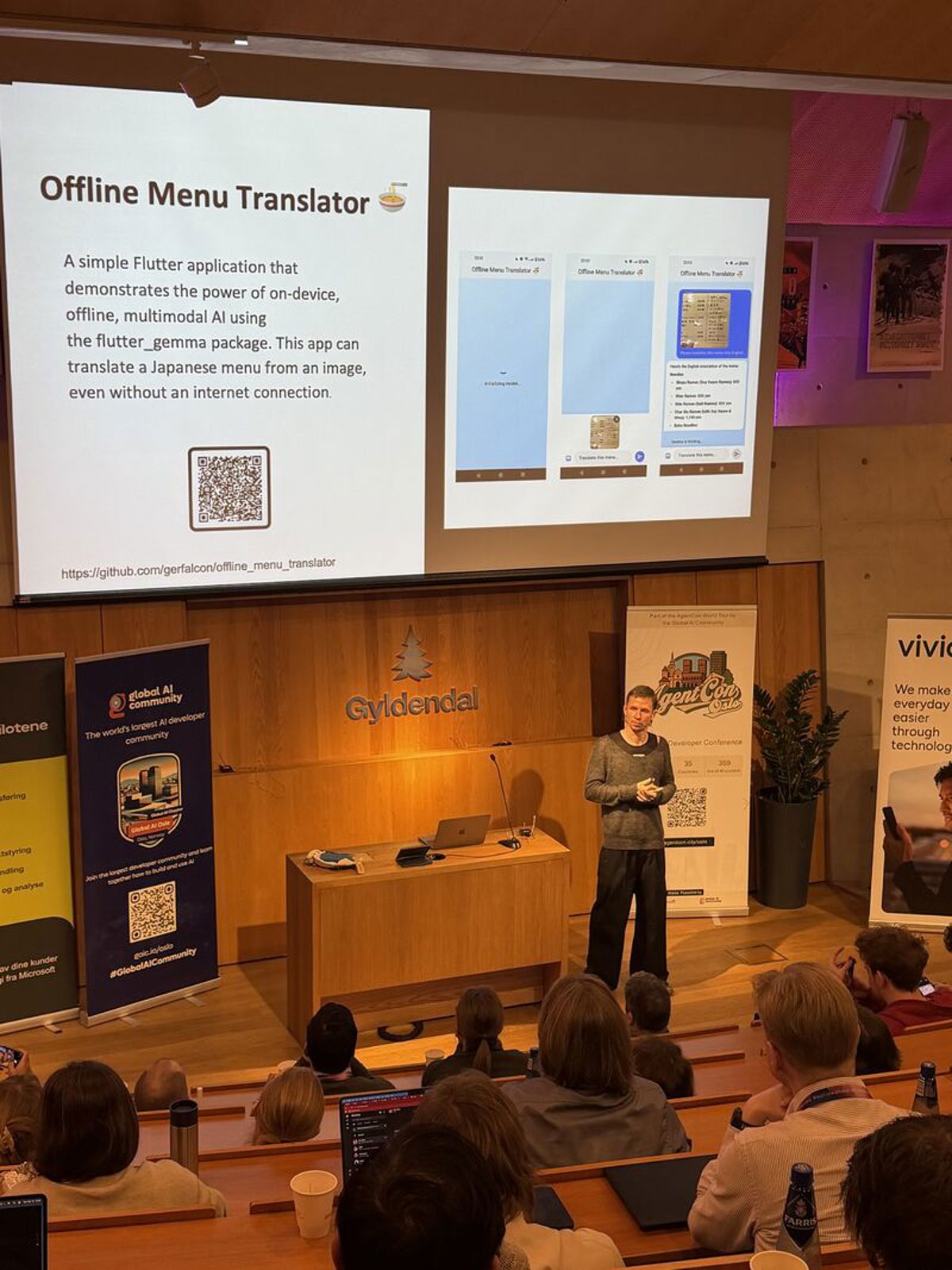
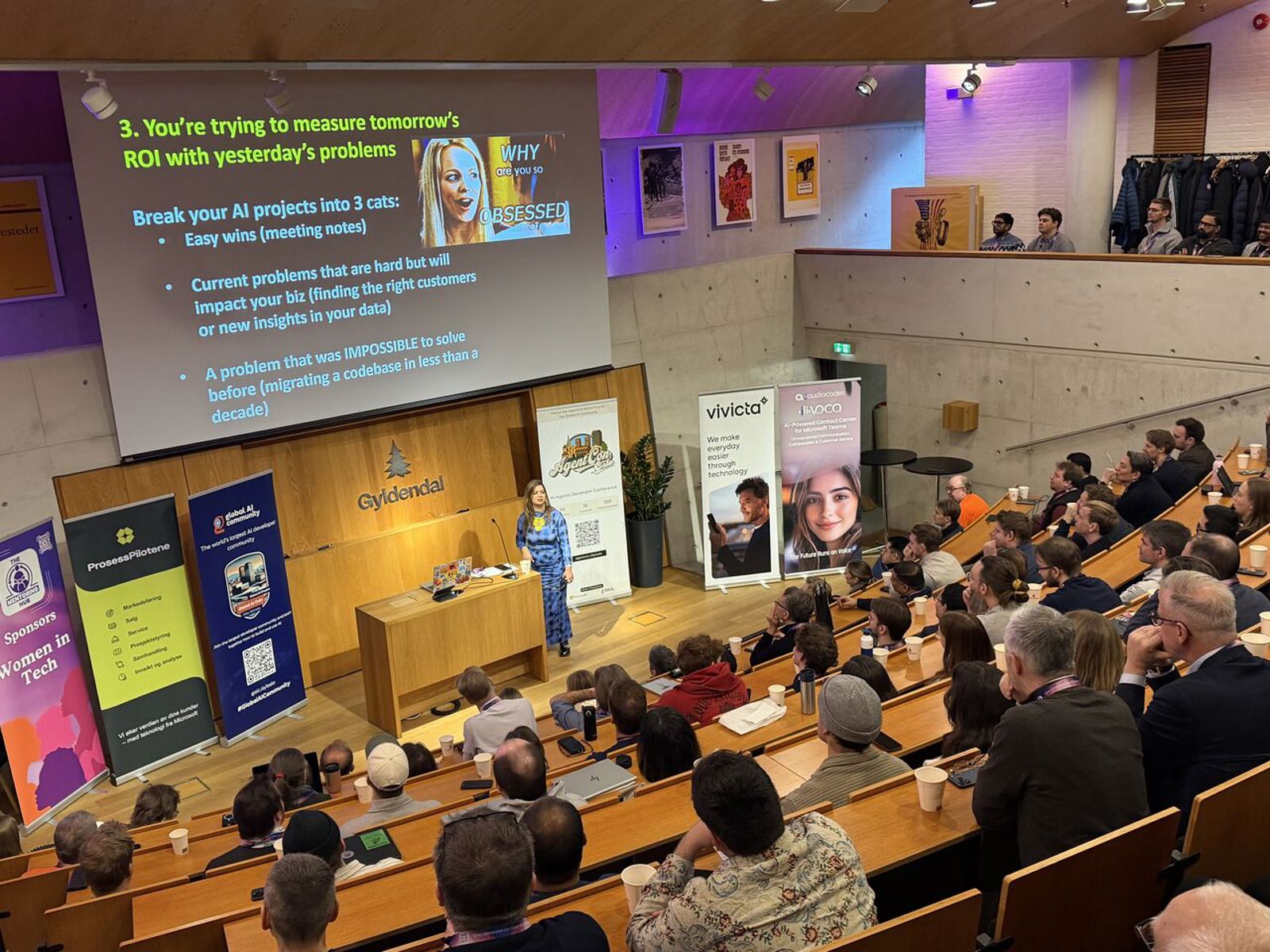
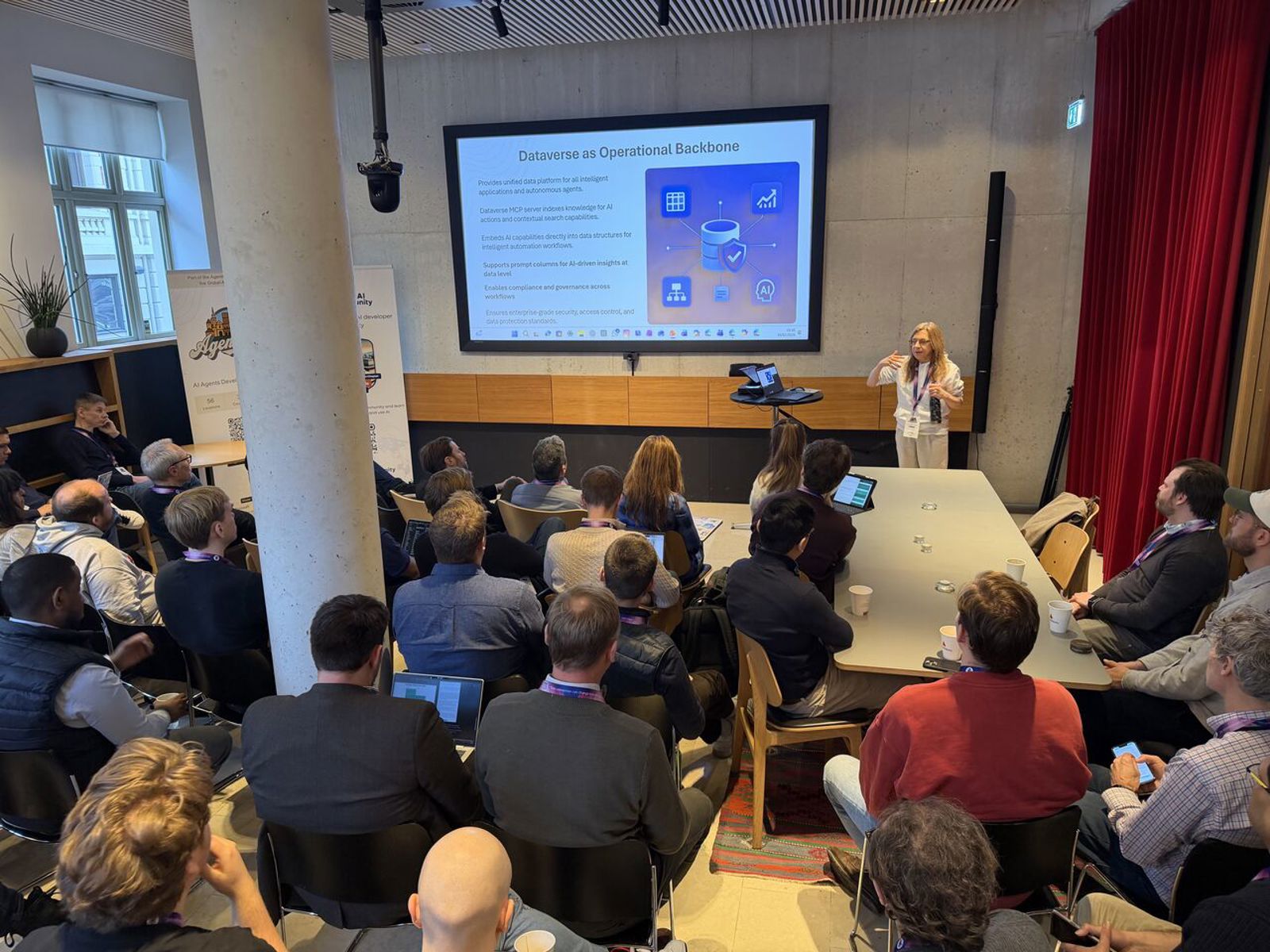
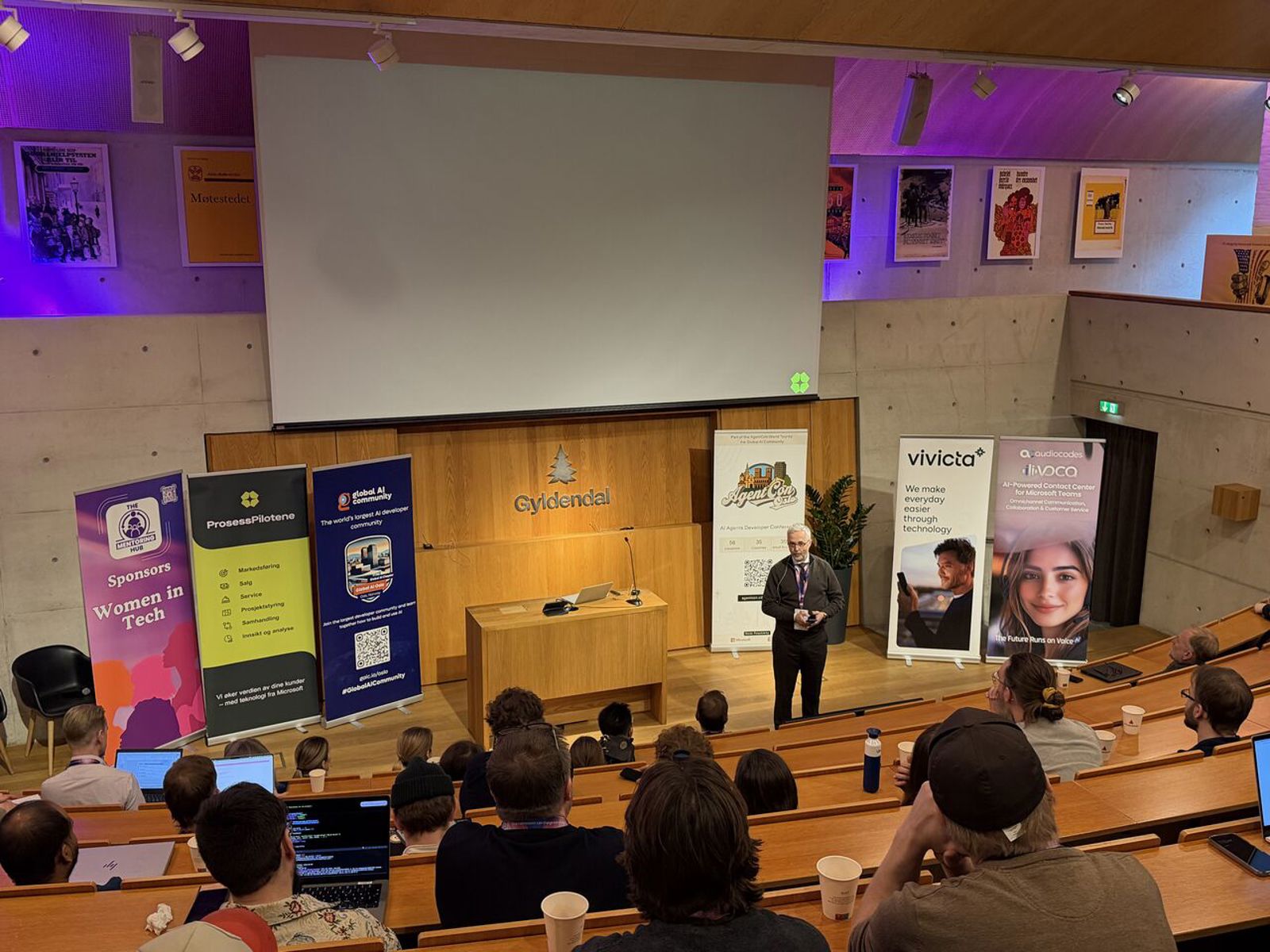
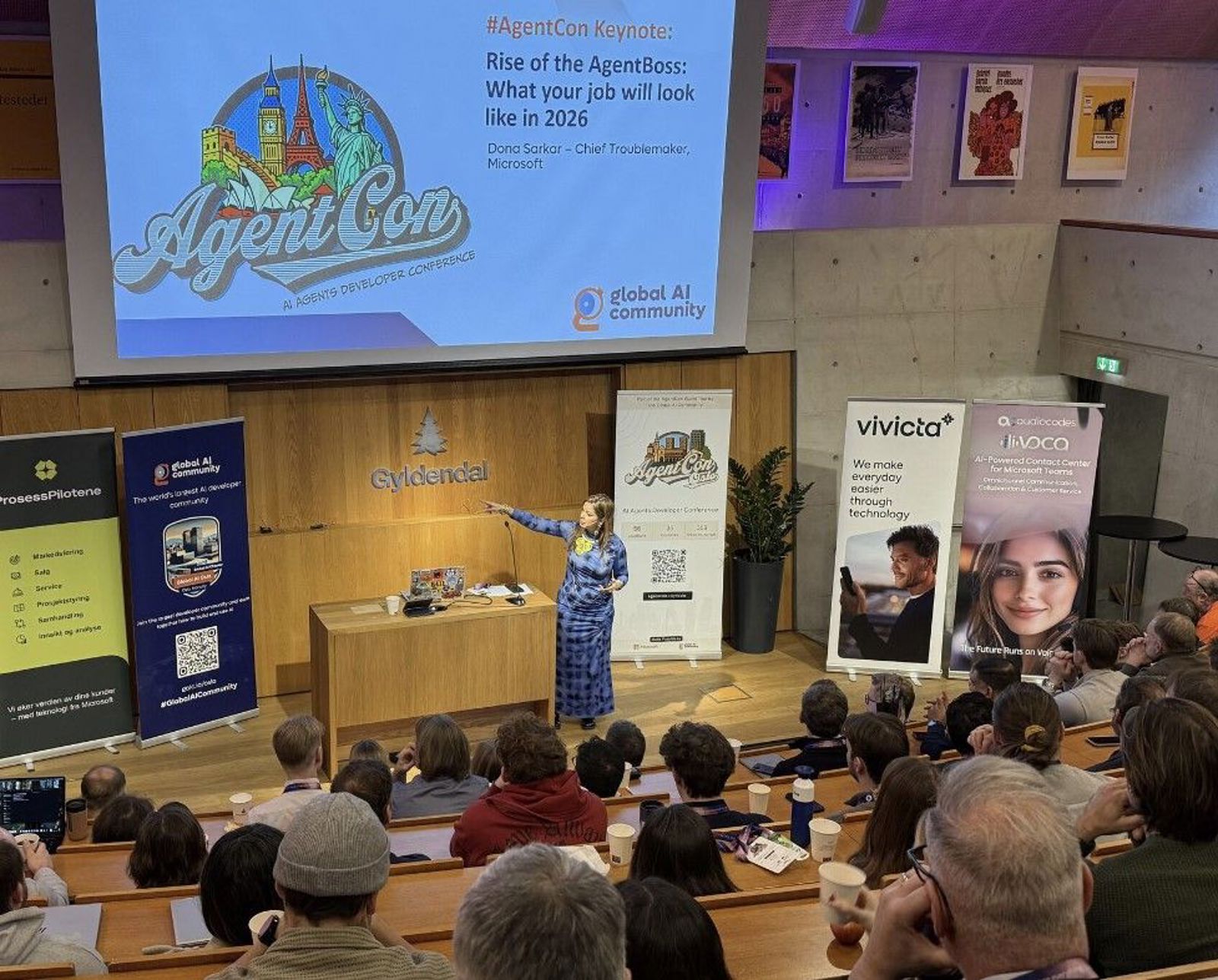
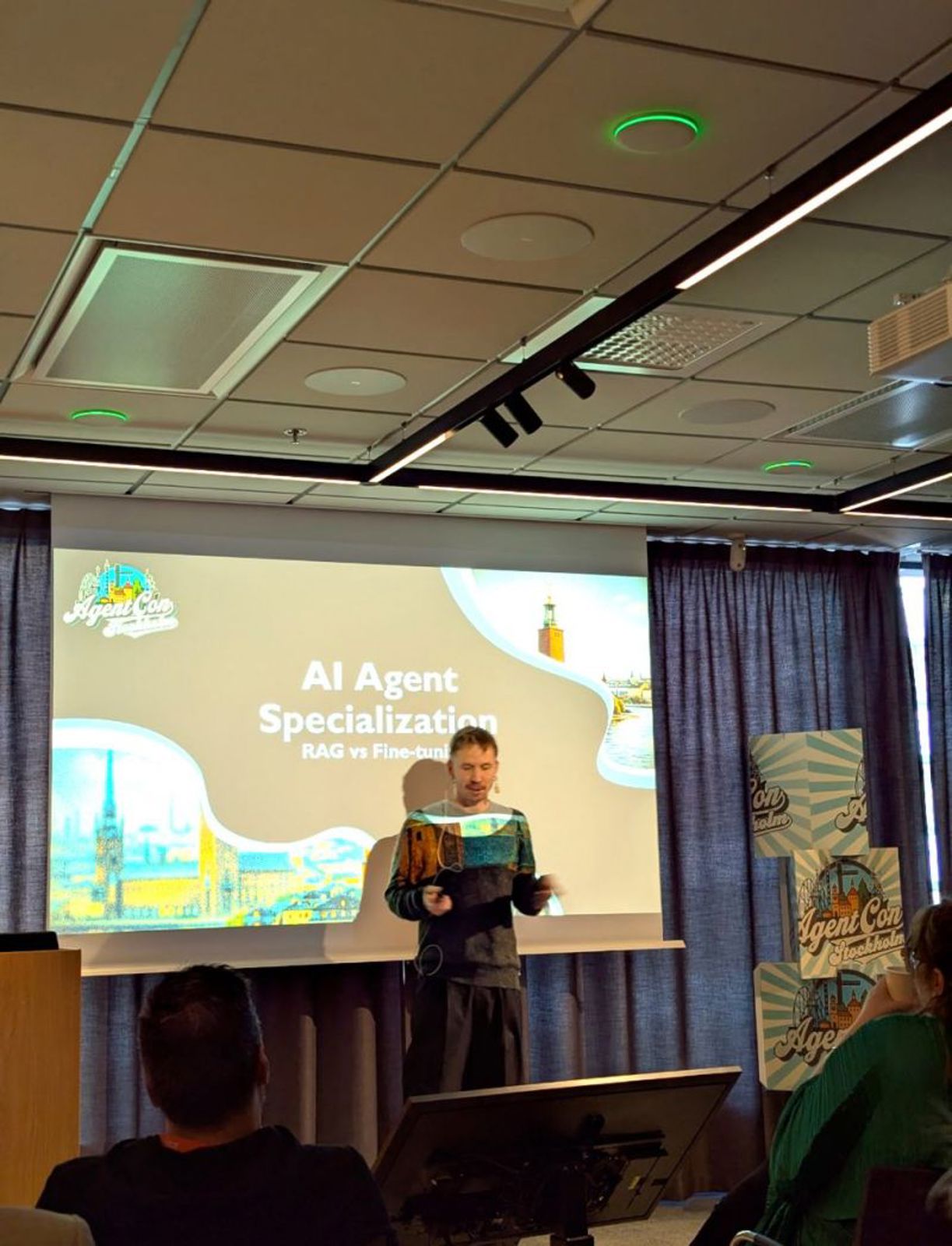
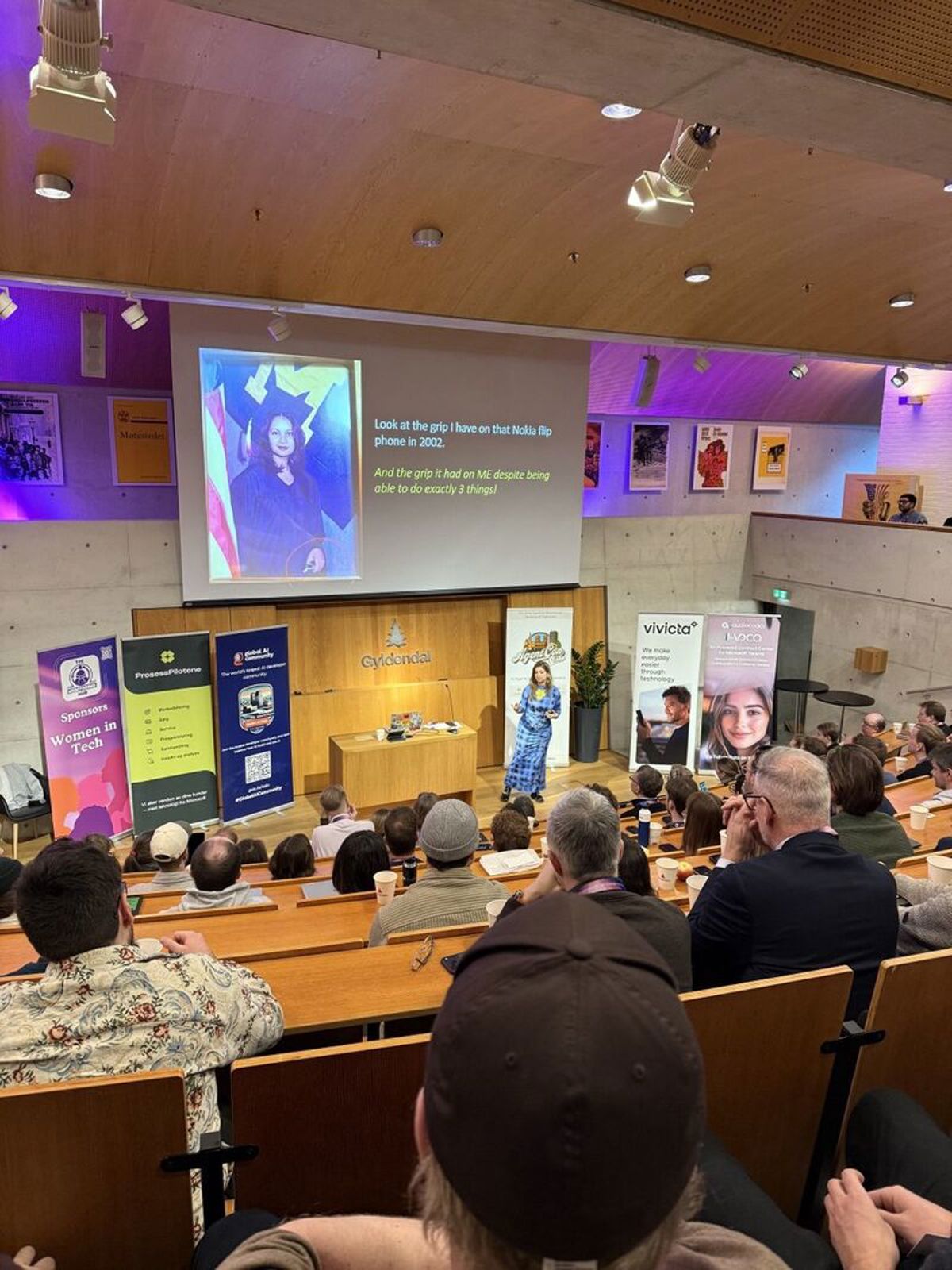
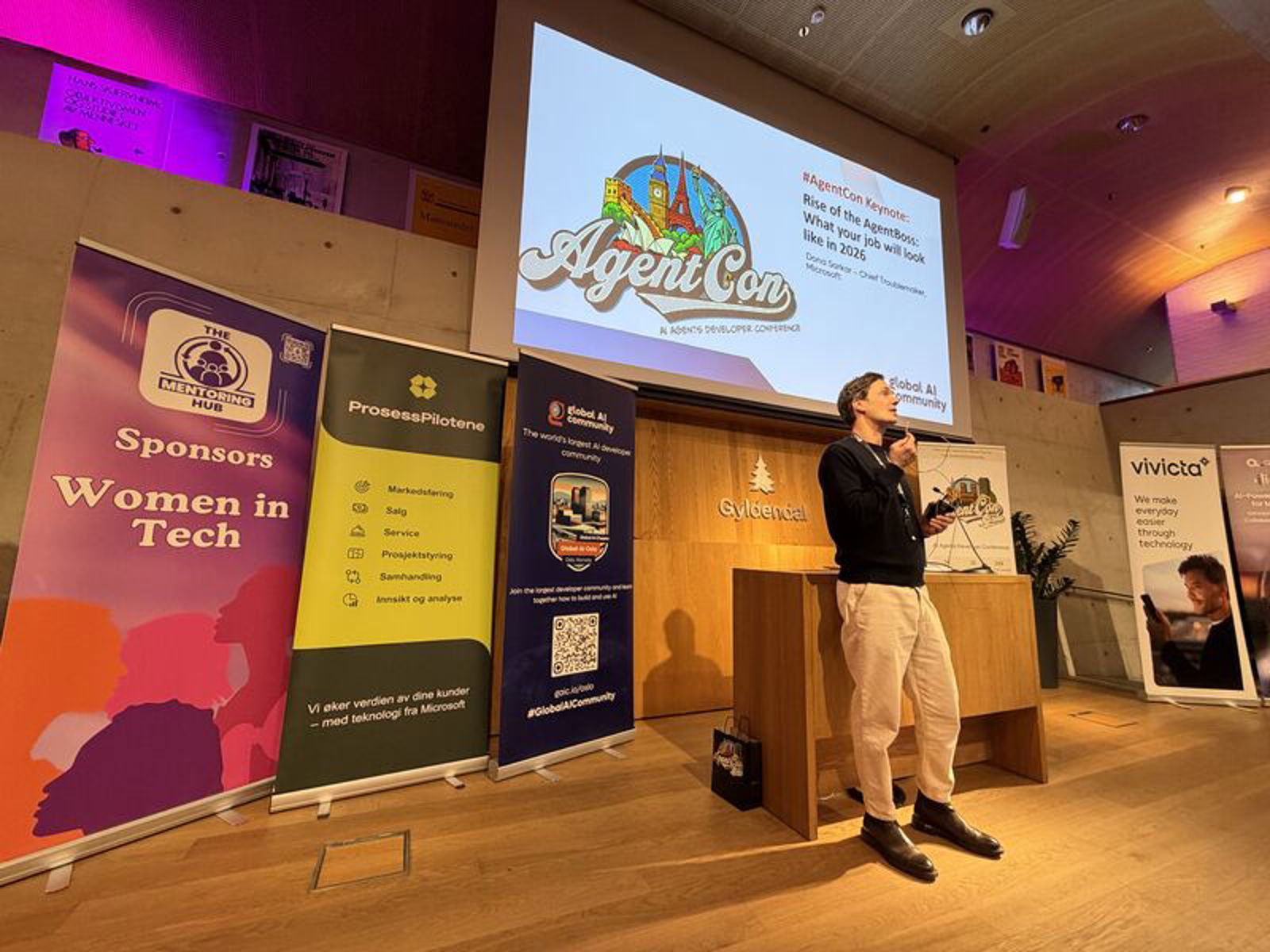
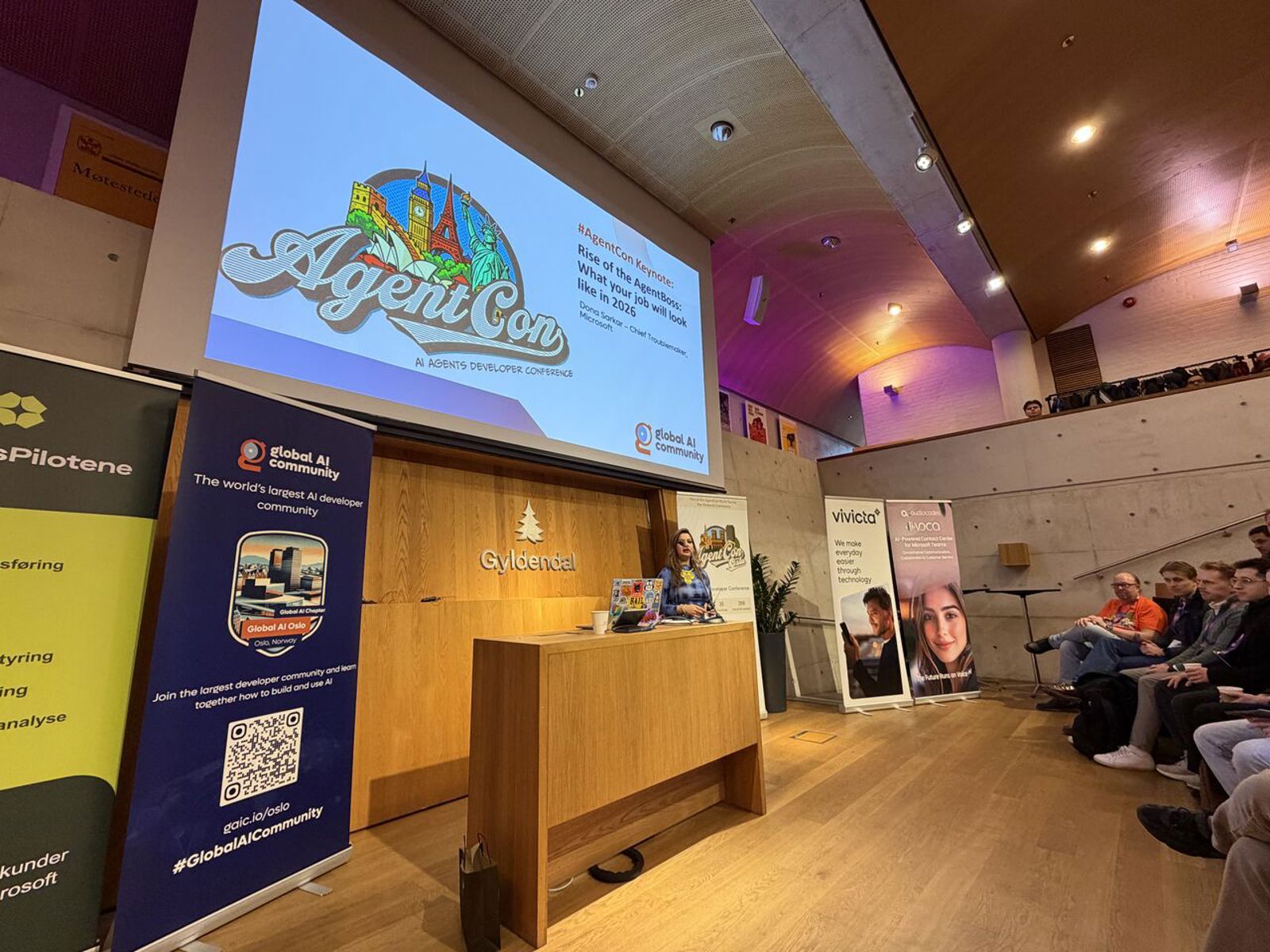
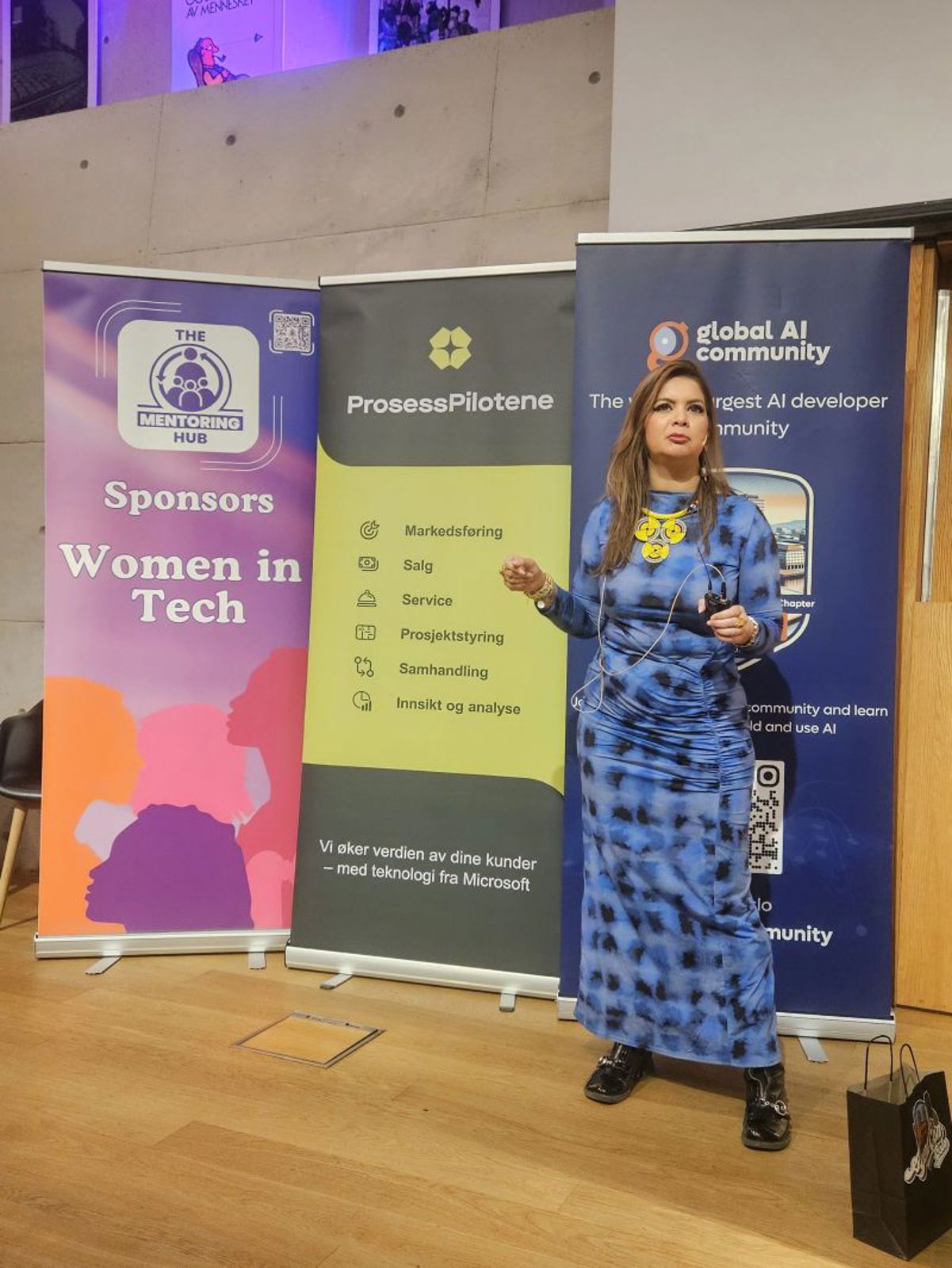
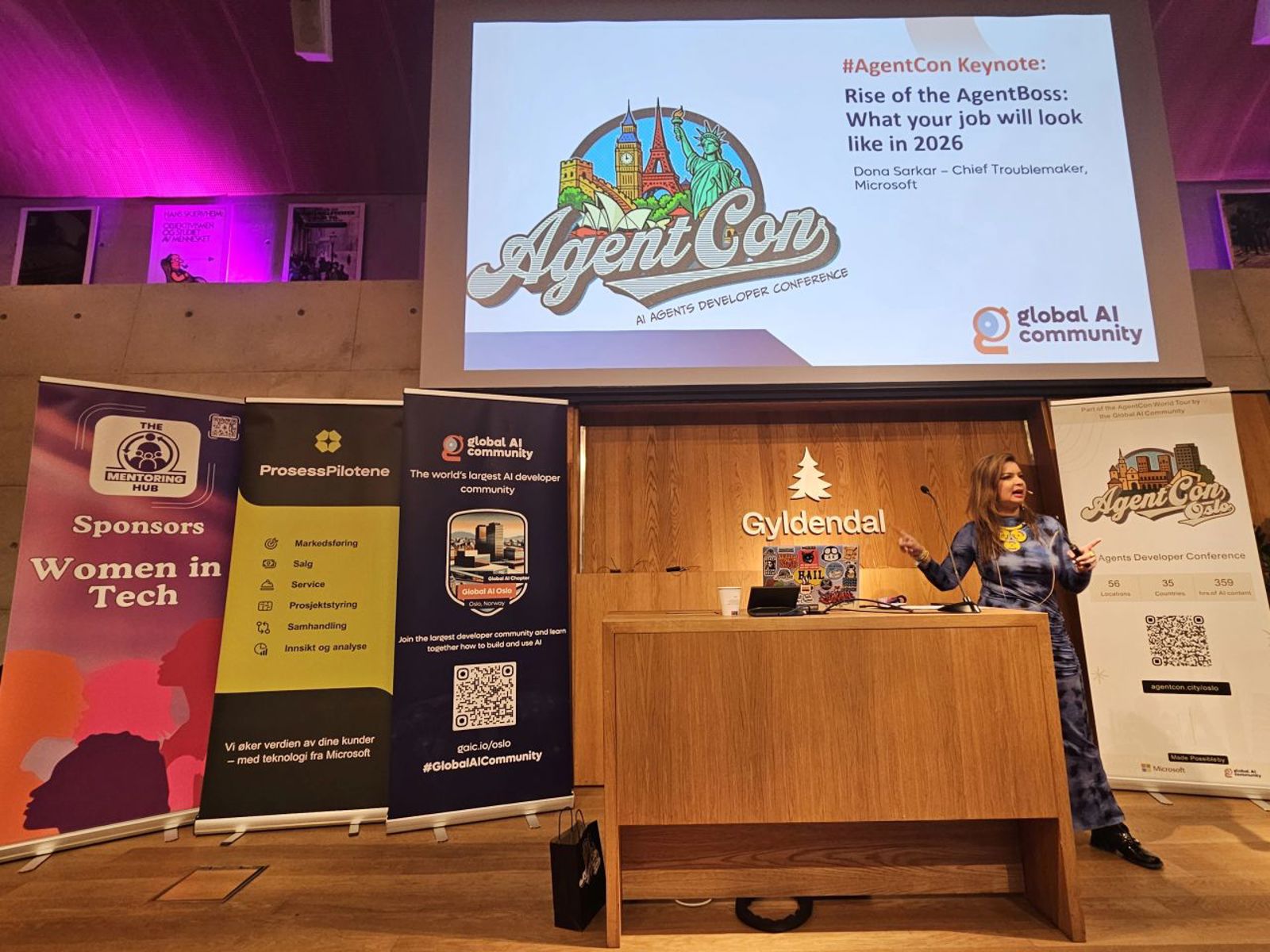
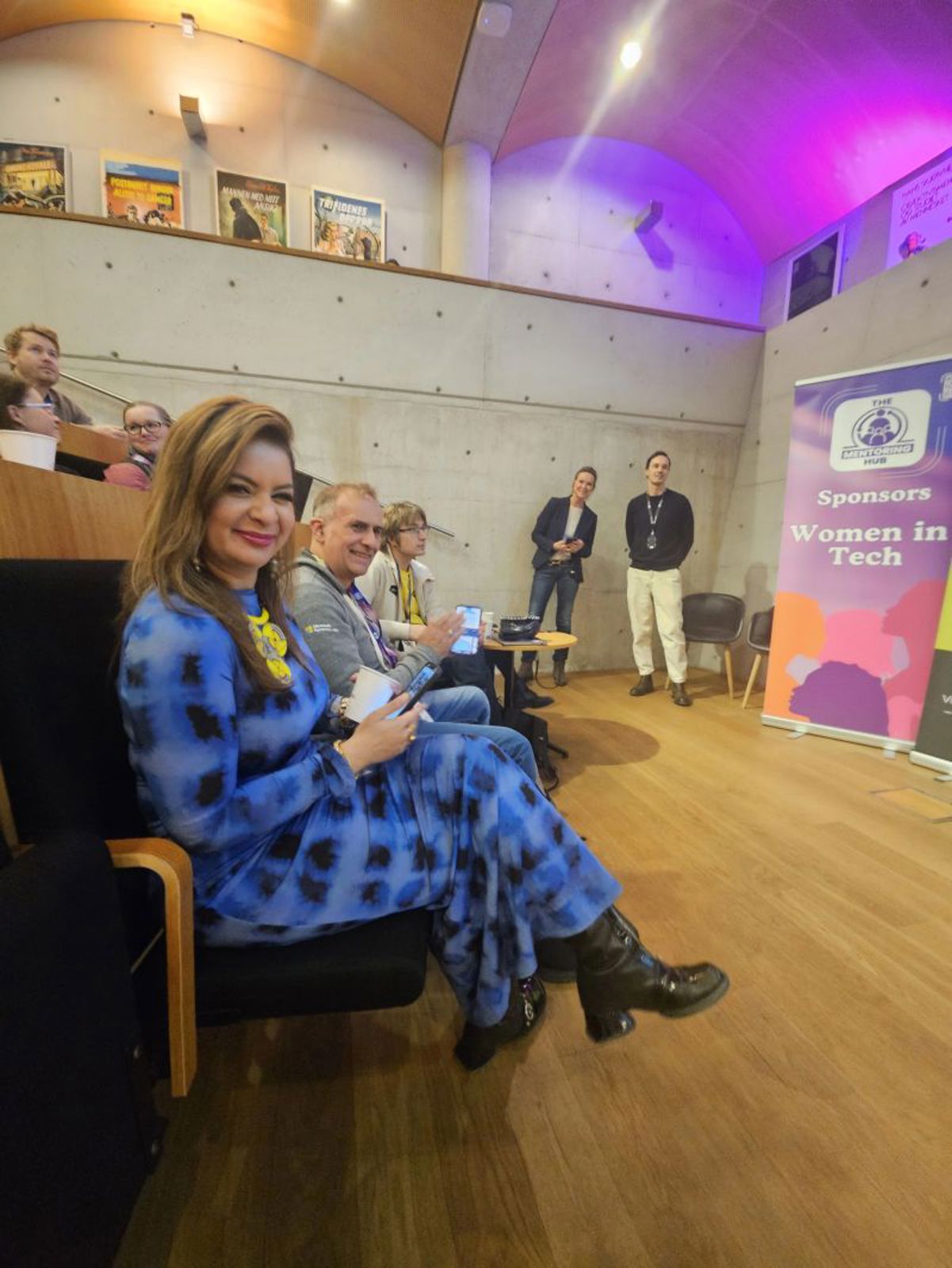
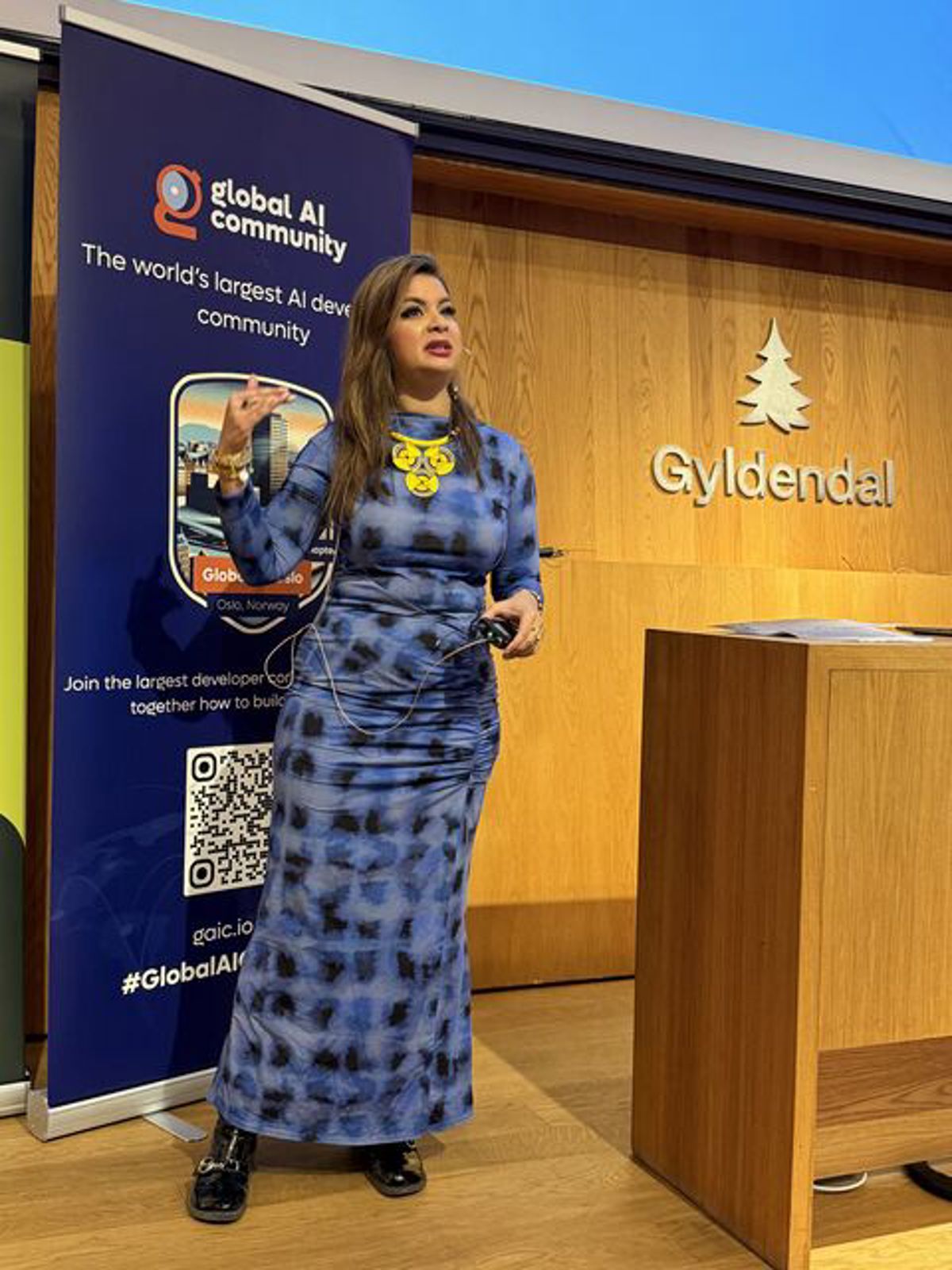
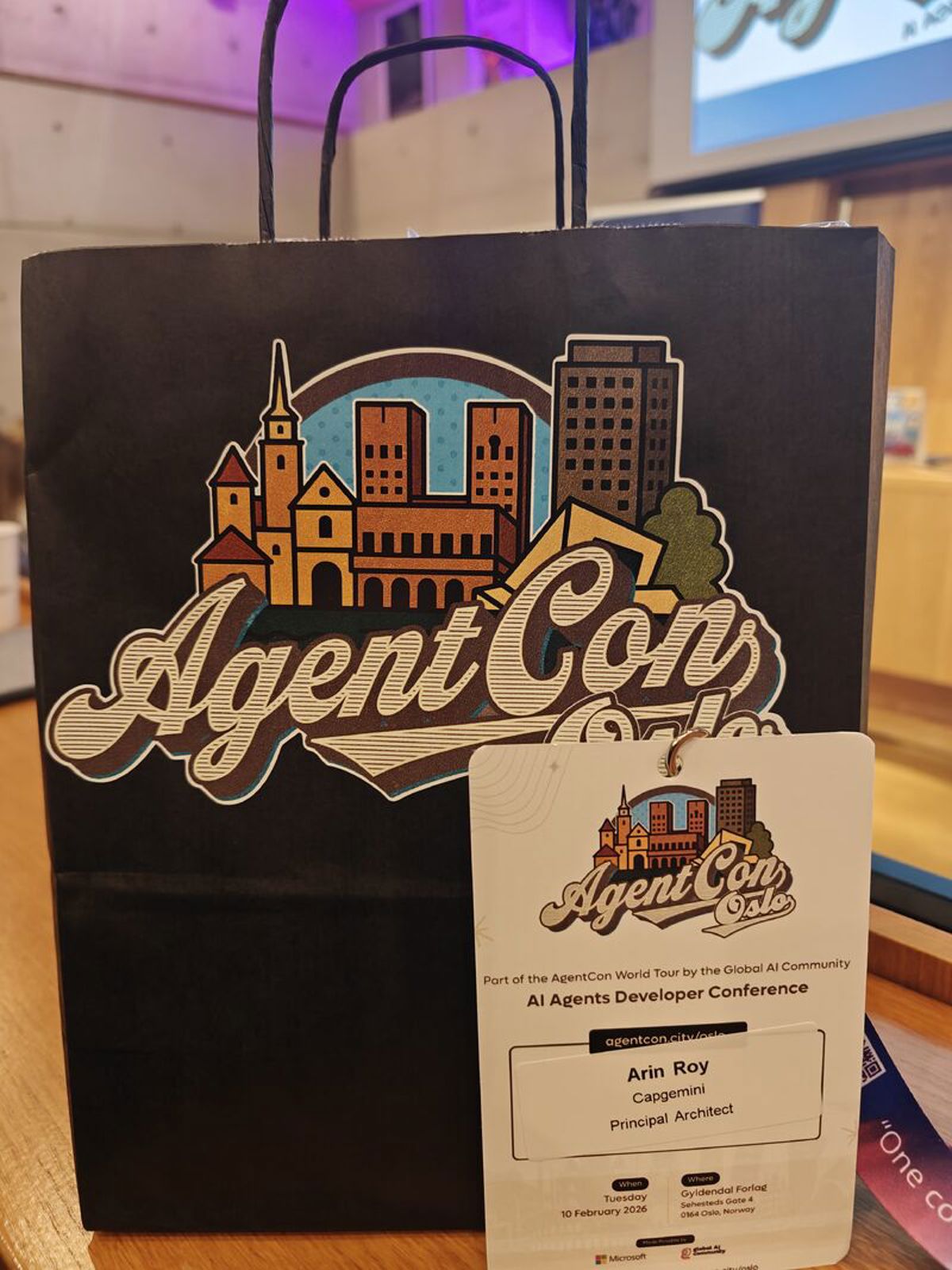
This is how it looked
Made possible by
Made possible by:







Explore AgentCon
AI Agents Developer Conference
AgentCon made possible by: