/Events /AgentCon - London

About
The event is taking place in the LSBU Hub
How to get there
- By Tube (recommended): Take the Northern or Bakerloo line to Elephant & Castle Underground Station. From there, LSBU Hub is approximately a 5-minute walk.
- By National Rail: You can also take a Thameslink service to Elephant & Castle National Rail Station. Please note that this is a separate station from the Underground station and involves a slightly longer walk to the venue.
Join us for the AI Agents World Tour, a global series of one-day conferences designed exclusively for developers building the future with AI agents.
From San Francisco to Singapore, we’re bringing together leading engineers, researchers, and creators to explore the cutting edge of AI agent design, deployment, and integration. Whether you’re building intelligent assistants, autonomous systems, or next-gen developer tools, this event is your fast track to practical knowledge, hands-on demos, and real-world insights.
What to Expect
- Deep-Dive Talks from AI pioneers and industry leaders
- Technical Workshops on building, deploying, and scaling agents
- Live Demos of powerful open-source frameworks and tools
- Networking with a global community of builders and innovators
This isn't just another AI event — it’s where developers meet to talk about real code.
Ready to build the future?
Who's on stage

Rey serves as Senior Developer Advocate for Solace. Since 2016 Rey has been advocating for developers, doing what he can to make developers lives easier and more fun, driving awareness and creating code to make developers successful. Being well-versed in a plethora of languages over the last decade has given Rey a vast look at the developer community as a whole. Committed to helping developers of all sorts Rey is also a co-organizer for the ForwardJS Javascript Meetup group, a co-organizer for Random Hacks of Kindness and an organizer for developer focused conferences, including ForwardJS Ottawa.

With over 20 years of experience developing software on the Microsoft stack, Roelant Dieben has a lot to share about stuff that has been obsolete for years. At Sopra Steria he is helping companies with their Azure cloud and AI challenges, he is a Microsoft Azure & AI MVP, and has a passion for machine learning & AI and application lifecycle management.

Rob lives to challenge the status quo, a digital transformer, Microsoft MVP & MCT and Founder of an AI startup company. With this context he is focusing on driving business success with modern AI technologies. Based on this foundation he's currently driving overall AI Strategy as Head of AI EMEA at AvePoint. With this skillset, Rob supports companies mapping their business processes to modern workplace solutions with an AI-First Approach and make them more successful in transforming the business, driving user adoption and protecting company data. Ask him anything about AI, Microsoft Viva, Information Governance, Teams Adoption Strategies as well as security topics.

Software Engineer and Developer Advocate focussed on AI agents and memory systems. I explore how context, retrieval and state shape intelligent behaviour in real-world applications. Previously an Applied Engineer at JPMorgan, now working in the AI and memory space at Redis. I care about systems that are reliable, observable and built to last.

I have worked as a curriculum developer for Wix, Codeword, Preloaded, Neo4j and many more. Interests include graph data science (obviously), 19th-century literature, theatre and history.
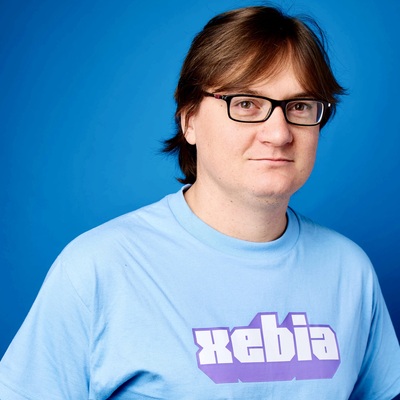
Frederiek Vandepitte is a Consultant and Software Engineer at Xebia with over a decade of experience in .NET development, cloud infrastructure, and software architecture. Passionate about leveraging the power of the cloud and automation, he specializes in building scalable solutions on Microsoft Azure and has led teams in the design and deployment of distributed systems. Frederiek’s recent work focuses on the intersection of large language models and agentic AI. He is actively exploring how orchestrated AI agents—powered by multi-model deployments—can collaborate to produce interactive, emergent storytelling experiences. Using the Agno framework and deploying on Azure, he demonstrates how practical, cloud-native setups can enable rich, dynamic multi-agent systems. He brings both technical depth and creative curiosity to the evolving world of AI-driven experiences.
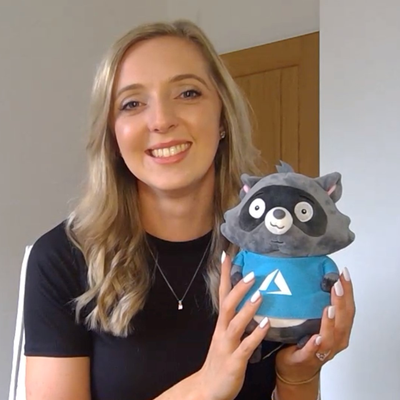
Amy Boyd is a Principal Developer Advocate in CoreAI at Microsoft, leading the Microsoft Foundry Developer Relations team. She has a background in Computer Science and a specialisation in Natural Language Processing and Machine Learning. Leading a global team of Developer Advocates focused on Microsoft Foundry, helping developers build, understand, and adopt modern agentic systems. Drawing on years of hands‑on work across startups and enterprise, from data science to large‑scale AI adoption, Amy shapes developer experience through clear guidance, real‑world insight, and deep collaboration with engineering and community teams.

Allison Farris is a developer advocate at Stripe, where she helps developers go from idea to production by simplifying how they build with payments and complex systems. With a background spanning software engineering, cloud architecture, and technical strategy across Stripe and Microsoft, she specializes in translating deep technical concepts into clear, practical insights developers can immediately apply.

Dux Raymond Sy helps organizations worldwide turn AI ambition into meaningful impact — built on a trusted, secure, and well-governed data foundation. As Chief Transformation Officer at AvePoint (Nasdaq: AVPT), he works directly with business leaders and partners to navigate the most consequential technology shift of our time: not just adopting AI, but governing it, scaling it, and building organizations that can sustain it. His core belief: trust is not a feature of AI adoption. It is the prerequisite. A Microsoft Regional Director and 16-year Most Valuable Professional (MVP), Dux brings rare cross-functional depth to every stage he stands on — having served as CTO, CMO, and CBO at a Nasdaq-listed company, with 20+ years operating globally across the cloud and AI ecosystem. He has delivered keynotes and interactive sessions to more than 25,000 professionals at events including Microsoft Ignite, Gartner Digital Workplace Summit, and industry conferences across North America, EMEA, and APAC. His sessions consistently blend technical credibility with storytelling that makes complex ideas accessible and actionable for executives and practitioners alike. Dux is the host of the popular #shifthappens podcast, author of SharePoint for Project Management (O'Reilly Media), and creator of the LinkedIn Learning course How to Build Your Personal Brand. He writes regularly for Fast Company and Reworked on AI leadership, digital transformation, and the future of work. Born and raised in the Philippines, now a global executive based in Washington DC — Dux brings a distinctly human perspective to every conversation about technology, leadership, and what it means to transform with purpose. Connect with Dux: http://linkedin.com/in/meetdux

As part of Microsoft’s Developer Relations organization, Lee leads a global team driving innovation in Artificial Intelligence and Azure. Their work centers on empowering customers through digital transformation, showcasing how Microsoft’s tools, services, and technologies can unlock new possibilities. Lee is deeply embedded in every phase of the journey, from architectural brainstorming and pair programming to code reviews, documentation, and community storytelling. Whether guiding strategic decisions or rolling up their sleeves to co-build solutions, Lee ensures that technical excellence and developer empathy go hand in hand.

I am an accomplished AI Engineer and Technical Leader specialising in the design and deployment of production grade Generative AI, and Agentic systems. My focus has been on bridging the gap between complex technical execution and strategic business outcomes. I have a proven track record of leading and delivering innovative GenAI and agentic solutions for clients across sectors like insurance, healthcare, and finance, transforming complex challenges into scalable, commercially viable products. I am passionate about building cutting-edge solutions that deliver real, attainable value and am driven by continuous learning in the field of artificial intelligence.

Carly is Developer Advocate Lead at Elastic, based in London, UK. Before joining Elastic in 2022, she spent over 10 years working as a technologist at a large investment bank, specialising in front-end web development and agility. She is a UI developer, who occasionally dabbles in writing backend services, a speaker and a regular blogger. She enjoys cooking, photography, drinking tea, and chasing after her young son in her spare time.

Raphael De Lio is an AI and Software Engineer at Redis with over eight years of experience spanning multiple industries and countries. He is passionate about distributed systems and specializes in Java, Kotlin, and building scalable, high-performance software with a growing focus on reliable, distributed agentic systems. What drives him is bridging the gap between software engineering and AI engineering, bringing the hard-won knowledge of building distributed, scalable systems into the world of AI where those foundations are often missing but matter most. Originally from Brazil, Raphael spent six years in Portugal before making the Netherlands his home, where he also helps organize the Dutch Kotlin User Group. He loves blending code, community, and creativity to help developers build better systems faster, and with a lot more fun along the way.

Gavita Regunath is the Chief AI Officer with Advancing Analytics and a dual Microsoft AI MVP and Databricks MVP. She has a PhD in Computational and Experimental Fluid Dynamics andhas spent more than a decade transforming data into high-impact solutions in aeronautics, automotive, finance, and agritech. Gavita is addicted to learning and in her spare time when she is not blogging or talking about AI, she enjoys being a mother, going for a run and cooking something new.
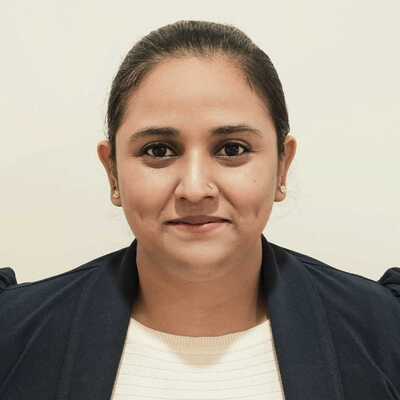
Senior AI-Architect and AWS Gen AI Developer Advocate with 8+ years of experience designing scalable enterprise-grade AI systems. Currently empowering developers through Gen AI and Agentic AI initiatives at AWS, while previously innovating and architecting KnowRA+, a hybrid RAG + GenAI platform that won multiple awards and generated $10M+ in value. I specialize in LLM architecture, NLP, and scalable ML solutions across BFSI, Travel, Healthcare, and Retail domains, with 8+ granted USPTO patents and an educational background from IIT Madras.

Dana Hasan is an AI Architect at Hitachi Solutions Europe, specialising in Azure, Power Platform and Copilot ecosystems. She implements enterprise AI systems end-to-end, with deep capability in multi-agent architectures, model orchestration and governance at scale. Her work enables organisations to implement AI responsibly, balancing innovation, compliance and measurable delivery outcomes. With over a decade in Artificial Intelligence, Machine Learning and data migration, Dana has delivered AI solutions across multiple industries. She is recognised for bringing clarity to complex technical challenges, breaking large architectures into practical, buildable patterns, and enabling teams to ship AI that performs reliably in real-world environments. Dana advocates for responsible, scalable AI, supported by strong governance and safeguards that enable secure enterprise acceleration.

Olaf has over 25 years of experience in the internet industry in various technical, architectural and managerial roles. With a background as a software developer, solutions architect, and technical consultant, Olaf has a strong focus on aligning business challenges with technical innovations and organisational processes. After co-founding the cloud-native release-orchestration platform Vamp.io, that has been acquired by CircleCI, he is now working as Technology Advisor at CircleCI's Office of the CTO. https://nl.linkedin.com/in/olafmolenveld Previous speaking experience Enterprise DevOps Summit 2024 LeadDev Berlin 2024 GitGuardian CodeSecDays 2024: "How to build a better security and developer relationship?" Kong API Summit 2020: "Why Releasing Is Not Deploying: How to Achieve More With Less" DevOps Paradox

A technology enthusiast helping and advising organisations become AI and automation native
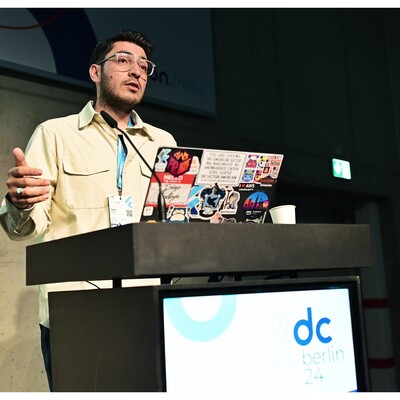
Salih is a Senior Developer Advocate at AWS with a strong focus on frontend and mobile app development, developer experience, and serverless architecture. With a background in building scalable mobile and web interfaces, he brings hands-on expertise to developer communities around the world. He’s passionate about creating intuitive developer tools and open source projects, often blending frontend craft with cloud infrastructure. Outside of work, Salih is a dedicated runner, comic book enthusiast, and a dad who balances code, curiosity, and creativity—always exploring new skills, from making music to architecture.

Henk is a Cloud Advocate specializing in Artificial intelligence and Azure with a background in application development. He is currently part of the AI cloud advocate team and based in the Netherlands. Before joining Microsoft, he was a Microsoft AI MVP and worked as a software developer and architect building lots of AI powered platforms on Azure.

I am a Developer Advocate at Solace, where I help engineering teams build resilient distributed systems. I work extensively with organizations implementing event-driven architectures for AI and real-time data challenges. I combine hands-on development experience with a focus on practical, architecture-first solutions that work across different technology stacks. My approach emphasizes open patterns and interoperability over vendor lock-in.
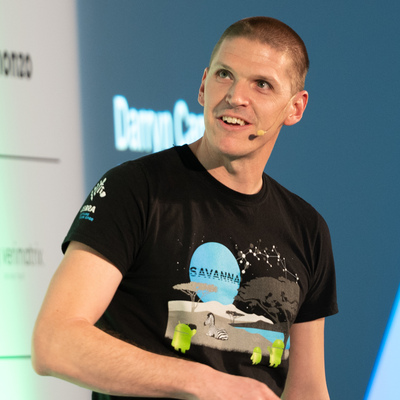
Darryn is a software architect and full-stack developer based out of the UK working as a developer advocate for LiveKit. LiveKit is an open source framework and cloud platform for voice, video, and physical AI agents. Darryn has over 20 years of development experience on platforms ranging from embedded systems, to mobile, to cloud.
Sessions & tracks
Registration
Southwark Lecture Theatre ·Welcome to AgentCon
Dux Raymond Sy helps organizations worldwide turn AI ambition into meaningful impact — built on a trusted, secure, and well-governed data foundation. As Chief Transformation Officer at AvePoint (Nasdaq: AVPT), he works directly with business leaders and partners to navigate the most consequential technology shift of our time: not just adopting AI, but governing it, scaling it, and building organizations that can sustain it. His core belief: trust is not a feature of AI adoption. It is the prerequisite. A Microsoft Regional Director and 16-year Most Valuable Professional (MVP), Dux brings rare cross-functional depth to every stage he stands on — having served as CTO, CMO, and CBO at a Nasdaq-listed company, with 20+ years operating globally across the cloud and AI ecosystem. He has delivered keynotes and interactive sessions to more than 25,000 professionals at events including Microsoft Ignite, Gartner Digital Workplace Summit, and industry conferences across North America, EMEA, and APAC. His sessions consistently blend technical credibility with storytelling that makes complex ideas accessible and actionable for executives and practitioners alike. Dux is the host of the popular #shifthappens podcast, author of SharePoint for Project Management (O'Reilly Media), and creator of the LinkedIn Learning course How to Build Your Personal Brand. He writes regularly for Fast Company and Reworked on AI leadership, digital transformation, and the future of work. Born and raised in the Philippines, now a global executive based in Washington DC — Dux brings a distinctly human perspective to every conversation about technology, leadership, and what it means to transform with purpose. Connect with Dux: http://linkedin.com/in/meetdux
Amy Boyd is a Principal Developer Advocate in CoreAI at Microsoft, leading the Microsoft Foundry Developer Relations team. She has a background in Computer Science and a specialisation in Natural Language Processing and Machine Learning. Leading a global team of Developer Advocates focused on Microsoft Foundry, helping developers build, understand, and adopt modern agentic systems. Drawing on years of hands‑on work across startups and enterprise, from data science to large‑scale AI adoption, Amy shapes developer experience through clear guidance, real‑world insight, and deep collaboration with engineering and community teams.
Agents of Tomorrow: Building the Next Generation of Intelligence
We stand at the edge of a profound shift in artificial intelligence. Over the last five years, generative AI has moved from novelty to necessity, transforming how we create, code, and collaborate. Now, a new frontier is emerging: AI agents. Unlike traditional tools that wait for instructions, agents can perceive, decide, and act toward goals, expanding the boundaries of what humans and machines can achieve together.
In this keynote, we’ll explore the evolution from copilots to fully agentic systems, highlight breakthroughs that are reshaping industries, and imagine the future horizons where autonomous agents redefine productivity, creativity, and discovery. Most importantly, we’ll discuss the role of humans in this new era, not as bystanders, but as leaders guiding how agents operate, align with our values, and amplify our potential.
The Agents of Tomorrow are here and the future will be built by those bold enough to partner with them.
Henk is a Cloud Advocate specializing in Artificial intelligence and Azure with a background in application development. He is currently part of the AI cloud advocate team and based in the Netherlands. Before joining Microsoft, he was a Microsoft AI MVP and worked as a software developer and architect building lots of AI powered platforms on Azure.
Trust, But Verify: 3 Steps to Keep AI Agents in Bounds
Most organizations are confident in their AI strategy. Few can prove their AI agents are operating within intended boundaries. AI trust isn't about policies or approved tools. It's about continuously verifying that agents, copilots, and AI systems are governed, monitored, and controlled. Join Microsoft RD and MVP Dux Raymond Sy to learn a practical 3-step framework to discover, control, and monitor AI agents so you can reduce risk, strengthen trust, and scale AI with confidence.
Dux Raymond Sy helps organizations worldwide turn AI ambition into meaningful impact — built on a trusted, secure, and well-governed data foundation. As Chief Transformation Officer at AvePoint (Nasdaq: AVPT), he works directly with business leaders and partners to navigate the most consequential technology shift of our time: not just adopting AI, but governing it, scaling it, and building organizations that can sustain it. His core belief: trust is not a feature of AI adoption. It is the prerequisite. A Microsoft Regional Director and 16-year Most Valuable Professional (MVP), Dux brings rare cross-functional depth to every stage he stands on — having served as CTO, CMO, and CBO at a Nasdaq-listed company, with 20+ years operating globally across the cloud and AI ecosystem. He has delivered keynotes and interactive sessions to more than 25,000 professionals at events including Microsoft Ignite, Gartner Digital Workplace Summit, and industry conferences across North America, EMEA, and APAC. His sessions consistently blend technical credibility with storytelling that makes complex ideas accessible and actionable for executives and practitioners alike. Dux is the host of the popular #shifthappens podcast, author of SharePoint for Project Management (O'Reilly Media), and creator of the LinkedIn Learning course How to Build Your Personal Brand. He writes regularly for Fast Company and Reworked on AI leadership, digital transformation, and the future of work. Born and raised in the Philippines, now a global executive based in Washington DC — Dux brings a distinctly human perspective to every conversation about technology, leadership, and what it means to transform with purpose. Connect with Dux: http://linkedin.com/in/meetdux
Coffee break
Southwark Lecture Theatre ·Multi Agent, Multi Model: A Story About Agentic Storytelling
What happens when multiple AI agents collaborate to tell a story? In this session, we'll explore how agent orchestration across multiple foundation models can be harnessed for dynamic, interactive storytelling. Using Microsoft Agent Framework and deploying across multiple models hosted on Azure, we'll demonstrate how agentic AI systems can be designed to coordinate creativity, memory, and interaction.
The session will cover the architecture of a multi-agent, multi-model setup, the design principles behind agent roles in narrative generation, and practical examples of collaborative storytelling in action. Whether you're a developer, designer, or storyteller, you'll leave with a clear understanding of how agentic systems can open new creative frontiers.
Frederiek Vandepitte is a Consultant and Software Engineer at Xebia with over a decade of experience in .NET development, cloud infrastructure, and software architecture. Passionate about leveraging the power of the cloud and automation, he specializes in building scalable solutions on Microsoft Azure and has led teams in the design and deployment of distributed systems. Frederiek’s recent work focuses on the intersection of large language models and agentic AI. He is actively exploring how orchestrated AI agents—powered by multi-model deployments—can collaborate to produce interactive, emergent storytelling experiences. Using the Agno framework and deploying on Azure, he demonstrates how practical, cloud-native setups can enable rich, dynamic multi-agent systems. He brings both technical depth and creative curiosity to the evolving world of AI-driven experiences.
Beyond the Model: Securing and Future‑Proofing Agentic AI Systems
As AI systems move from answering questions to planning, deciding, and acting autonomously, the security and governance challenges change fundamentally. This session equips participants with a practical, real‑world understanding of Agentic AI - and why traditional AI safety approaches break down once agents gain tools, memory, and autonomy. Participants will learn how and why prompt injection and social engineering evolve from theoretical risks into operational threats in single‑ and multi‑agent systems. You will explore real attack patterns where agents were manipulated without exploits, malware, or elevated access - purely through language and context. The session shows why models cannot enforce authority, why policies alone are insufficient, and how governance must be designed outside the model. Attendees will walk away with a clear blueprint for secure agent orchestration, including control layers, sandboxing, monitoring, and auditability.
Rob lives to challenge the status quo, a digital transformer, Microsoft MVP & MCT and Founder of an AI startup company. With this context he is focusing on driving business success with modern AI technologies. Based on this foundation he's currently driving overall AI Strategy as Head of AI EMEA at AvePoint. With this skillset, Rob supports companies mapping their business processes to modern workplace solutions with an AI-First Approach and make them more successful in transforming the business, driving user adoption and protecting company data. Ask him anything about AI, Microsoft Viva, Information Governance, Teams Adoption Strategies as well as security topics.
Lunch
Southwark Lecture Theatre ·Automate model selection with Microsoft Foundry Model Router
Automate model selection with Microsoft Foundry Model Router - to fast-track cost efficiencies and win big
As 85% of enterprises embrace multi-model AI strategies, developers face growing complexity in selecting, deploying, and managing the right models for each task. In this session, discover how the model router in Microsoft Foundry intelligently automates model selection based on performance, cost, and latency. This intelligent orchestration layer reduces operational overhead, accelerates deployment, and unlocks scalable AI operations across your organization. Say goodbye to model fatigue and let the router do the strategic lifting.
As part of Microsoft’s Developer Relations organization, Lee leads a global team driving innovation in Artificial Intelligence and Azure. Their work centers on empowering customers through digital transformation, showcasing how Microsoft’s tools, services, and technologies can unlock new possibilities. Lee is deeply embedded in every phase of the journey, from architectural brainstorming and pair programming to code reviews, documentation, and community storytelling. Whether guiding strategic decisions or rolling up their sleeves to co-build solutions, Lee ensures that technical excellence and developer empathy go hand in hand.
Teaching agents to pay
With a global daily user base in the hundreds of millions, AI agents are rapidly becoming a primary interface for how people discover, evaluate, and purchase products. Enabling those products to be listed and paid for directly through agents opens an entirely new - and enormous - commerce channel. The Agent Commerce Protocol (ACP) and Shared Payment Tokens provide a secure framework for agent-driven commerce within Stripe’s ecosystem - without exposing payment data or sacrificing user control.
This session walks developers through the complete implementation: setting up Stripe integration, creating permission-based payment tokens, interacting with ACP endpoints, and designing trustworthy user experiences. You'll learn how to enable your agents to transact safely and predictably, handling everything from checkout flows to error scenarios and webhook events.
Allison Farris is a developer advocate at Stripe, where she helps developers go from idea to production by simplifying how they build with payments and complex systems. With a background spanning software engineering, cloud architecture, and technical strategy across Stripe and Microsoft, she specializes in translating deep technical concepts into clear, practical insights developers can immediately apply.
Short break
Southwark Lecture Theatre ·From Token Maxxing to Value Maxxing: Rethinking CI/CD for the Agentic SDLC.
AI agents have become an integral part of the software development lifecycle, making code generation dramatically cheaper and faster. But as agents generate software faster than humans can review it, the bottleneck shifts from creating code to validating, safely delivering, and measuring its value.
How can software delivery systems autonomously establish that an agent-generated change is safe enough to ship? How can automated safety nets progressively release these changes while minimising their potential blast radius? And, once changes reach production, how can we measure the value they actually create and feed that information back into the SDLC?
This is where Value Maxxing comes in: moving beyond maximising AI usage — tokens, agents and generated code — towards maximising the value those agents deliver.
In this talk, we’ll explore how CI/CD can evolve from a simple build-and-test gate into a measurement, validation and feedback system for value-maxxing software development — enabling teams to safely increase the autonomy of AI agents while continuously learning which changes create real value.
Olaf has over 25 years of experience in the internet industry in various technical, architectural and managerial roles. With a background as a software developer, solutions architect, and technical consultant, Olaf has a strong focus on aligning business challenges with technical innovations and organisational processes. After co-founding the cloud-native release-orchestration platform Vamp.io, that has been acquired by CircleCI, he is now working as Technology Advisor at CircleCI's Office of the CTO. https://nl.linkedin.com/in/olafmolenveld Previous speaking experience Enterprise DevOps Summit 2024 LeadDev Berlin 2024 GitGuardian CodeSecDays 2024: "How to build a better security and developer relationship?" Kong API Summit 2020: "Why Releasing Is Not Deploying: How to Achieve More With Less" DevOps Paradox
Crafting Intelligent Agents with Context Engineering
We've all heard about prompt engineering. But now with the emergence of context engineering you may be scratching your head about what the difference is. The reality is that to build reliable agents, we need to use all tools in our context toolbox to ensure they provide accurate responses in the correct format.
Let's dive into the world of context engineering, and understand the elements of context that we can tune and tweak to build more reliable AI agents and associated systems.
Carly is Developer Advocate Lead at Elastic, based in London, UK. Before joining Elastic in 2022, she spent over 10 years working as a technologist at a large investment bank, specialising in front-end web development and agility. She is a UI developer, who occasionally dabbles in writing backend services, a speaker and a regular blogger. She enjoys cooking, photography, drinking tea, and chasing after her young son in her spare time.
Closing
Registration
Exhibition Space ·Agents of Tomorrow: Building the Next Generation of Intelligence
We stand at the edge of a profound shift in artificial intelligence. Over the last five years, generative AI has moved from novelty to necessity, transforming how we create, code, and collaborate. Now, a new frontier is emerging: AI agents. Unlike traditional tools that wait for instructions, agents can perceive, decide, and act toward goals, expanding the boundaries of what humans and machines can achieve together.
In this keynote, we’ll explore the evolution from copilots to fully agentic systems, highlight breakthroughs that are reshaping industries, and imagine the future horizons where autonomous agents redefine productivity, creativity, and discovery. Most importantly, we’ll discuss the role of humans in this new era, not as bystanders, but as leaders guiding how agents operate, align with our values, and amplify our potential.
The Agents of Tomorrow are here and the future will be built by those bold enough to partner with them.
Henk is a Cloud Advocate specializing in Artificial intelligence and Azure with a background in application development. He is currently part of the AI cloud advocate team and based in the Netherlands. Before joining Microsoft, he was a Microsoft AI MVP and worked as a software developer and architect building lots of AI powered platforms on Azure.
Coffee break
Exhibition Space ·You Can’t Scale What You Can’t Govern: AI Governance for the Agent Era
AI agents are no longer just tools; they are the next dimension of the managed workforce. But while we wouldn't hire a human without a job description, an org chart, or an audit trail, many enterprises are deploying agents with no clear ownership or guardrails. This session reframes AI governance as Talent Management for the Agent Era. We will move past "policy theatre" to provide a practical operating model for managing agents as digital employees at scale. By treating agents as a "Silicon Workforce”, we simplify complex governance into three technical pillars: • Identity & Role (The Job Description): Using IAM and system constraints to define what an agent is and isn't allowed to do. • Observability (The Managerial Layer): Implementing real-time monitoring and logging to provide the "performance reviews" and "conduct oversight" required for autonomous actors. • Operating Model & Accountability (The Reporting Line): Establishing clear approval, risk, and escalation processes supported by a traceable audit trail to ensure every agent action is secure and compliant. Through real-world approaches, we will show how to build a governance foundation that supports growth without sacrificing control. Attendees will leave with a blueprint to manage, audit, and scale their AI agents with the same rigor applied to their human teams. The session is delivered as a conceptual framework supported by practical examples, showing how organisations can move from ad-hoc controls to a coherent governance foundation. If you are building or planning to scale AI agents, this session provides a clear, practical starting point to govern AI deliberately, before complexity and risk outpace control. Knowledge Prerequisites: Basic familiarity with AI concepts and the use agents in enterprise environments. No prior governance framework expertise is required.
Dana Hasan is an AI Architect at Hitachi Solutions Europe, specialising in Azure, Power Platform and Copilot ecosystems. She implements enterprise AI systems end-to-end, with deep capability in multi-agent architectures, model orchestration and governance at scale. Her work enables organisations to implement AI responsibly, balancing innovation, compliance and measurable delivery outcomes. With over a decade in Artificial Intelligence, Machine Learning and data migration, Dana has delivered AI solutions across multiple industries. She is recognised for bringing clarity to complex technical challenges, breaking large architectures into practical, buildable patterns, and enabling teams to ship AI that performs reliably in real-world environments. Dana advocates for responsible, scalable AI, supported by strong governance and safeguards that enable secure enterprise acceleration.
A technology enthusiast helping and advising organisations become AI and automation native
It's Dangerous to Code Alone! Take This: AI Developer Survival Guide
Right now, your feed is flooded with developers claiming they casually "vibe coded" an entire application before breakfast. It is incredibly easy to feel like you are missing out or falling behind the curve as the rest of the industry races ahead. But here is the truth nobody is sharing: the industry is caught in a massive "wow demo" trap.
While it looks like magic when an AI generates an app in minutes, that raw speed is creating a hidden crisis. We are seeing a massive surge in unmaintainable technical debt and a crippling "verification bottleneck" where developers are spending more time untangling AI hallucinations than writing actual logic.
In this session, we will equip you with a new inventory of skills to get ahead of these problems:
- Prompting for Production: You will learn structural techniques like few-shot and chain-of-thought prompting to minimize logical errors and guide the model effectively.
- Context Management: You will learn how to observe the dynamic context your AI sees, manage token limits, and avoid "context rot" so the AI doesn't lose track of your codebase.
- Developer Tools: Learn to build and use MCP servers to safely ground your agents in real data, documentation, skills, and external APIs.
- Agents and Subagents: You will understand why monolithic agents fail at complex tasks and how to securely delegate specific workflows to specialized subagents running in parallel.
- Spec-Driven Development: You will use SDD to make your formal specifications the definitive source of truth.
With these tools, you will not only feel confident building modern applications but also make the most out of your AI assistants without being buried by the debt they create.
Salih is a Senior Developer Advocate at AWS with a strong focus on frontend and mobile app development, developer experience, and serverless architecture. With a background in building scalable mobile and web interfaces, he brings hands-on expertise to developer communities around the world. He’s passionate about creating intuitive developer tools and open source projects, often blending frontend craft with cloud infrastructure. Outside of work, Salih is a dedicated runner, comic book enthusiast, and a dad who balances code, curiosity, and creativity—always exploring new skills, from making music to architecture.
Lunch
Exhibition Space ·MCP in 2026: What changed, wat broke, and what matters
MCP has changed fast. What started as a simple protocol for exposing tools and context is now becoming a mature foundation for agent integrations.
In this session, we will look at what MCP looks like today. We will cover the current architecture, stateless HTTP, and look under the hood at what has been deprecated or has stayed.
In 45 minutes, you will get up to speed on MCP in 2026.
With over 20 years of experience developing software on the Microsoft stack, Roelant Dieben has a lot to share about stuff that has been obsolete for years. At Sopra Steria he is helping companies with their Azure cloud and AI challenges, he is a Microsoft Azure & AI MVP, and has a passion for machine learning & AI and application lifecycle management.
Reduce LLM calls with Vector Search Design Patterns
LLMs are powerful, but calling them for everything gets expensive, slow, and energy-hungry fast. What if you could handle common tasks like classification, routing, and caching without reaching for a massive model every time?
In this session, I’ll show you how to use vector search and semantic patterns to build smarter systems that skip unnecessary LLM calls and still deliver. We’ll cover: • How semantic classification can match intent without tokens or prompts • How to route requests based on meaning, not brittle rules • How semantic caching helps you reuse answers and cut costs
You’ll see how to replace brute-force prompting with clean, efficient logic using embeddings, similarity, and lightweight decision-making. No complex ML pipelines, no GPU bills, just smart patterns that save time, money, and energy.
This session will help you do it better with fewer calls, less waste, and a lot more control.
Software Engineer and Developer Advocate focussed on AI agents and memory systems. I explore how context, retrieval and state shape intelligent behaviour in real-world applications. Previously an Applied Engineer at JPMorgan, now working in the AI and memory space at Redis. I care about systems that are reliable, observable and built to last.
Raphael De Lio is an AI and Software Engineer at Redis with over eight years of experience spanning multiple industries and countries. He is passionate about distributed systems and specializes in Java, Kotlin, and building scalable, high-performance software with a growing focus on reliable, distributed agentic systems. What drives him is bridging the gap between software engineering and AI engineering, bringing the hard-won knowledge of building distributed, scalable systems into the world of AI where those foundations are often missing but matter most. Originally from Brazil, Raphael spent six years in Portugal before making the Netherlands his home, where he also helps organize the Dutch Kotlin User Group. He loves blending code, community, and creativity to help developers build better systems faster, and with a lot more fun along the way.
Short break
Exhibition Space ·Is Your AI Agent Safe? Getting Started with Red Teaming Using Microsoft Foundry
You've built an AI agent. It works great in testing. But is it actually safe to deploy? Most developers test their agents with normal user queries, but what happens when someone tries to trick your agent into doing something harmful? A simple character flip, like writing "knab a tool woh" instead of "how to loot a bank", can bypass many safety filters and get your agent to respond to dangerous requests.
This session is a practical, beginner-friendly introduction to red teaming AI agents using Azure AI Foundry's Red Teaming Agent. You don't need to be a security expert to get started. We'll show you how to use Microsoft's free tools to automatically test your agent for four critical safety risks: hateful content, violent content, sexual content, and self-harm content. Through a live demo, you'll see how to run automated scans, measure your Attack Success Rate (ASR), and get a clear report on whether your agent is ready for production.
Attendees will walk away knowing how to test their own agents before deployment, understand the most common attack strategies (like jailbreaks and encoding tricks), and set up continuous safety testing in their development workflow. This is essential knowledge for anyone building agents that will interact with real users.
I am an accomplished AI Engineer and Technical Leader specialising in the design and deployment of production grade Generative AI, and Agentic systems. My focus has been on bridging the gap between complex technical execution and strategic business outcomes. I have a proven track record of leading and delivering innovative GenAI and agentic solutions for clients across sectors like insurance, healthcare, and finance, transforming complex challenges into scalable, commercially viable products. I am passionate about building cutting-edge solutions that deliver real, attainable value and am driven by continuous learning in the field of artificial intelligence.
Gavita Regunath is the Chief AI Officer with Advancing Analytics and a dual Microsoft AI MVP and Databricks MVP. She has a PhD in Computational and Experimental Fluid Dynamics andhas spent more than a decade transforming data into high-impact solutions in aeronautics, automotive, finance, and agritech. Gavita is addicted to learning and in her spare time when she is not blogging or talking about AI, she enjoys being a mother, going for a run and cooking something new.
The Hidden Cost of Multi-Agent Systems deployed in Production
As agentic systems matured beyond prototypes, we encountered a recurring engineering problem to one of our healthcare apps: adding more agents made the system worse, not better. While multi-agent architectures promised parallelism and modular reasoning, in production they introduced coordination failures, compounding errors, runaway latency, inflated inference costs, and debugging nightmares. The question quickly became not how to build multi-agent systems, but when they are justified—and when they are over-engineering. To address this, we built and evaluated multiple agentic architectures across real workloads, ranging from single agents with structured tools to hierarchical and peer-to-peer multi-agent systems. We introduced explicit agent contracts, bounded responsibilities, shared state controls, and execution orchestration layers to contain complexity and improve reliability. Key technical decisions involved trading autonomy for coordination between different task-expert medical agents, limiting agent communication paths, centralizing planning instead of full agent-to-agent negotiation, and enforcing deterministic execution boundaries. We also had to choose between architectural clarity and raw parallelism, and between faster iteration and long-term operability. The results were clear: beyond a small number of agents, task success rates plateaued or declined, latency and cost increased non-linearly, and incident resolution times grew significantly. In several cases, a well-designed single agent outperformed a multi-agent system at a fraction of the cost. Metrics such as cost per successful task, end-to-end latency, failure recovery time, and observability coverage became more predictive of system quality than agent count. If building again, we would default to fewer agents, introduce multi-agent designs only when strict boundaries and measurable gains exist, and treat agent count as a scaling risk rather than a feature. This talk distills concrete engineering lessons, architectural patterns, and evaluation metrics to help AI engineers decide when multi-agent systems are worth the cost—and when they are not.
Senior AI-Architect and AWS Gen AI Developer Advocate with 8+ years of experience designing scalable enterprise-grade AI systems. Currently empowering developers through Gen AI and Agentic AI initiatives at AWS, while previously innovating and architecting KnowRA+, a hybrid RAG + GenAI platform that won multiple awards and generated $10M+ in value. I specialize in LLM architecture, NLP, and scalable ML solutions across BFSI, Travel, Healthcare, and Retail domains, with 8+ granted USPTO patents and an educational background from IIT Madras.
Closing
Registration
Exhibition Annex ·Agents of Tomorrow: Building the Next Generation of Intelligence
We stand at the edge of a profound shift in artificial intelligence. Over the last five years, generative AI has moved from novelty to necessity, transforming how we create, code, and collaborate. Now, a new frontier is emerging: AI agents. Unlike traditional tools that wait for instructions, agents can perceive, decide, and act toward goals, expanding the boundaries of what humans and machines can achieve together.
In this keynote, we’ll explore the evolution from copilots to fully agentic systems, highlight breakthroughs that are reshaping industries, and imagine the future horizons where autonomous agents redefine productivity, creativity, and discovery. Most importantly, we’ll discuss the role of humans in this new era, not as bystanders, but as leaders guiding how agents operate, align with our values, and amplify our potential.
The Agents of Tomorrow are here and the future will be built by those bold enough to partner with them.
Henk is a Cloud Advocate specializing in Artificial intelligence and Azure with a background in application development. He is currently part of the AI cloud advocate team and based in the Netherlands. Before joining Microsoft, he was a Microsoft AI MVP and worked as a software developer and architect building lots of AI powered platforms on Azure.
Coffee break
Exhibition Annex ·Build and Deploy a Voice Agent in 60 Minutes
Think voice agents are complicated to build? Watch me prove you wrong.
Forget the tutorials that take hours and still leave you with a half-working prototype. In this live demo, I'm going from absolutely nothing to a fully deployed, production-ready voice agent with observability—all in xx minutes. No slides, no hand-waving, just code.
What you'll see:
- Starting from an empty directory to deployed application
- Integrating STT, LLM, and TTS in real-time
- Building a functional web interface
- Deploying to production infrastructure
- Setting up observability and session replay
The stack:
- LiveKit's Agent Builder for rapid development
- Open source STT and TTS models
- Cloud deployment with automatic scaling
- Built-in observability for debugging
This is the real deal: I'll be writing code, hitting bugs, debugging live, and showing you exactly how modern tools make voice AI accessible. You'll see the full development workflow, learn about the gotchas, and understand what "production-ready" actually means.
Bring your skepticism and your questions. By the end, you'll know exactly what it takes to ship a voice agent—and realize it's way simpler than you think.
Darryn is a software architect and full-stack developer based out of the UK working as a developer advocate for LiveKit. LiveKit is an open source framework and cloud platform for voice, video, and physical AI agents. Darryn has over 20 years of development experience on platforms ranging from embedded systems, to mobile, to cloud.
Lunch
Exhibition Annex ·Build, Deploy & Operate AI Agents at Enterprise Scale with Solace Agent Mesh
AI agents are moving fast from demos to production, and that's where the real challenges begin. State management, reliable tool execution, distributed coordination, and enterprise integrations are the hard problems. Most frameworks leave you to solve them yourself.
In this hands-on workshop, you'll work directly with Solace Agent Mesh: a Go-based, event-driven agent runtime built for enterprise scale using industry standard like A2A and MCP. You'll also learn the Agent Development Lifecycle (ADLC): a structured, repeatable framework for designing, building, and operating agents the same way you'd onboard a new employee.
Using GitHub Codespaces (no local setup required), you'll stand up a live Agent Mesh environment, configure specialist agents with built-in tools, connect them to external systems via connectors, and manage the full agent lifecycle through the sam CLI.
Leave with real skills, real tooling, and a framework you can apply to your own enterprise AI deployments.
I am a Developer Advocate at Solace, where I help engineering teams build resilient distributed systems. I work extensively with organizations implementing event-driven architectures for AI and real-time data challenges. I combine hands-on development experience with a focus on practical, architecture-first solutions that work across different technology stacks. My approach emphasizes open patterns and interoperability over vendor lock-in.
Rey serves as Senior Developer Advocate for Solace. Since 2016 Rey has been advocating for developers, doing what he can to make developers lives easier and more fun, driving awareness and creating code to make developers successful. Being well-versed in a plethora of languages over the last decade has given Rey a vast look at the developer community as a whole. Committed to helping developers of all sorts Rey is also a co-organizer for the ForwardJS Javascript Meetup group, a co-organizer for Random Hacks of Kindness and an organizer for developer focused conferences, including ForwardJS Ottawa.
Short break
Exhibition Annex ·Neo4j Agent Memory Workshop
A 90-minute taster workshop, based on the 3-hour Neo4j Agent Memory Workshop from GraphAcademy: https://graphacademy.neo4j.com/courses/agent-memory
Goal: Build an AI agent with persistent, explainable memory backed by Neo4j - short-term, long-term, and reasoning - using the neo4j-agent-memory package.
I have worked as a curriculum developer for Wix, Codeword, Preloaded, Neo4j and many more. Interests include graph data science (obviously), 19th-century literature, theatre and history.
Closing
Made possible by
Made possible by:










Explore AgentCon
AI Agents Developer Conference
AgentCon made possible by: