/Events /Build //localhost:Zürich
Build //localhost:Zürich
This event is part of //localhost, organized by Global AI Zurich.
About
For the uninitiated — Build //localhost is a globally coordinated developer event series where builders, engineers, and AI enthusiasts gather locally to demo, discuss, and discover what's being built in their own backyard. Think: real talks, real demos, real conversations — no fluff.
𝗔𝘁 𝗕𝘂𝗶𝗹𝗱 //𝗹𝗼𝗰𝗮𝗹𝗵𝗼𝘀𝘁:Zurich, 𝗲𝘅𝗽𝗲𝗰𝘁: ⚙️ Live technical sessions & hands-on demos 🤖 AI-first conversations with practitioners 🔗 Meaningful networking with Zurich's builder community 💡 Spontaneous ideas, collaborations, and maybe a few "𝘄𝗵𝘆 𝗱𝗶𝗱𝗻'𝘁 𝗜 𝘁𝗵𝗶𝗻𝗸 𝗼𝗳 𝘁𝗵𝗮𝘁" moments
Share Your Microsoft Build //localhost Experience
If you share updates, photos, or learnings from your Microsoft Build //localhost event, feel free to use our official hashtags and tag the Global AI Community.
Official Hashtags
- #MSBuild
- #Buildlocalhost
- #GlobalAICommunity
Sessions & tracks
Latest and greatest about GitHub Copilot and AI Agents in the SDLC
A no fluff, no marketing presentation about all the latest and greatest features. Packed with demos and live coding.

Dominique is a Sr Software Solution Engineer at Microsoft, passionate about Software Craftmanship and its intersection with AI.
A Practical Adoption Strategy for Copilot Cowork
Copilot Cowork adoption succeeds when organizations treat it as a structured change program, not just a rollout. This talk presents a practical strategy for moving from first use to sustained business impact by focusing on readiness, security and data governance, seat targeting, champion networks, training, and measurement. Microsoft’s adoption guidance emphasizes an AI council, intentional early seat assignment, ongoing user communities, and dashboard-based impact tracking as core elements of a successful approach.
Attendees will learn how to build an adoption plan that connects governance, role-based use cases, and habit formation with measurable outcomes. The session will also show how to sequence the journey across plan, implement, adopt, manage, and improve phases so Copilot Cowork becomes part of everyday work instead of a short-lived pilot.

Microsoft Agent Framework at Build: From Chatbots to Agentic Workflows
Microsoft Build introduced several important updates to Microsoft Agent Framework, Microsoft’s SDK and runtime for building agents and multi-agent workflows in .NET and Python. In this session, we’ll unpack what these announcements mean for developers and how they change the way we design, test, and operate agents.
We’ll cover the key Build updates, including Agent Harness, Handoff orchestration, CodeAct with Hyperlight, GitHub Copilot SDK integration, and agent evaluations. Rather than going deep into one narrow feature, this session gives builders a practical map of the new capabilities, when to use them, and how they fit together.
Expect one or two short demos showing how these concepts can move an agent from a simple prompt-response loop toward a more structured workflow with tools, routing, traces, and checks.

José Luis Latorre is a Microsoft AI MVP, LinkedIn Learning Trainer, and Agentic & Software Architect at Swiss Life, where he leads the Developer Community, helps shape the AI strategy—while also building agentic applications that have to work on Mondays, not just in demos. Since 2023, he’s been contributing to Microsoft’s agentic AI frameworks (as in: building it, not just using it): Semantic Kernel, AutoGen, and now Microsoft Agent Framework (MAF)—where he’s Contributor #29. Nights and weekends, alongside the day job. Because apparently he enjoys pain… and shipping PRs. He has released 4 courses and is working on the next one (Agent Framework), teaching up to 60,000 learners. Frustrated by unreliable agents in the real world, he built AgentEval—the .NET evaluation toolkit that brings validation discipline to agents and agentic workflows (think: what RAGAS / DeepEval are for Python, AgentEval is for .NET). On stage, expect real engineering lessons, practical patterns, and live demos—helping teams build agents that are not just impressive, but measurably better. Tagline: “I don’t just build agents. I help build the frameworks… and then I measure whether they behave.”
Microsoft IQ and the New Enterprise Context Layer
Microsoft Build 2026 introduced Microsoft IQ as a unified intelligence layer for enterprise AI, designed to ground agents in the right context across the open web, workplace signals, business data, and organizational knowledge. The announcement brings together Web IQ for fresh web grounding, Work IQ for Microsoft 365 work patterns and content, Fabric IQ for semantic business data and real-time operational meaning, and Foundry IQ for centralized knowledge retrieval across enterprise sources. Together, these capabilities aim to help developers build agents that reason more accurately, act more securely, and deliver more useful outcomes across Microsoft’s AI ecosystem.

Alexander Wachtel has been recognized as a Microsoft AI MVP since 2020 for his community work in AI area. During his Ph.D. research at the Karlsruhe Institute of Technology (KIT), he has published several AI papers in the area of Human-Computer-Interaction, Natural Language Processing & Cognitive Services. Furthermore, he is still teaching agile software engineering at the KIT using Azure DevOps. Due to his teaching activities at the KIT, he was also awarded as a Microsoft Innovative Educator (MIE) expert from 2016 to 2019. Due to his many years of experience, he has been also honored as a Microsoft Certified Trainer (MCT) since 2013. He provides Microsoft consulting for the industry and public sector, and teaches classes for Microsoft Certified Azure Solutions Architect Expert and Microsoft 365 Certified Administrator Expert.
Agents at scale
As AI agents transition from simple chatbots to autonomous workplace assistants, organizations face a critical challenge: how to scale development without losing control. A fragmented toolset creates security gaps and operational chaos. This session explores the necessity of a unified agent ecosystem. Using the Microsoft Agent Platform as a blueprint, we will examine how to effectively build intelligent agents, centrally govern their orchestration, and secure them with enterprise-grade guardrails. Learn how to balance autonomous agent capabilities with strict compliance and security standards.

Bernhard Merkle works as a Software Specialist and Technology Scout for Gen AI, AI, ML, Cloud, XOps related technologies in the central Research & Development Department at SICK AG, one of the world’s leading producers of sensors and sensor solutions. He is a Microsoft MVP for AI, loves Python and serves as internal consultant for new Software Development Technologies. In his spare time he gives a lecture about development with Models and AI. He writes technical articles and also gives sessions at various conferences (e.g. ACCU, PyConUK, , QCon, OOPSLA, EclipseCon and OOP).
From Aspire to Azure Container Apps: Building Secure Containers with SBOM and CVE Checks
This talk explores how .NET Aspire streamlines the development and orchestration of secure, cloud native container applications. A key aspect is the integration of SBOM generation to provide transparency and traceability across all dependencies. Security is further strengthened through automated CVE checks in CI/CD pipelines, aligned with Cyber Resilience Act (CRA) expectations. The session provides practical guidance for building and operating secure, compliant containers across the full application lifecycle.
Damien is a web developer, architect and a Microsoft MVP for Visual Studio Development Technologies, Sonar Navigator who loves to learn. He contributes regularly to open-source projects on GitHub and Microsoft ASP.NET Core docs including creating a some of the Microsoft ASP.NET Core security documentation. He runs a very popular blog which focuses on ASP.NET Core, application security, Entra and Angular.
Bring Copilot to your app: real integrations with Copilot SDK
Most developers know GitHub Copilot as an assistant inside their editor. But with the GitHub Copilot SDK, you can integrate those capabilities directly into your own applications.
In this session, we build a real application that embeds Copilot as a functional component. We will see how to define tools, connect APIs, and let Copilot plan and execute tasks inside your software.

I'm a GitHub Technical Lead, and I'm passionate about front-end technologies and everything related to the cloud, especially Microsoft Azure. I live in Zurich and actively participate in local and international community activities and events. I share my love for technology through my blog https://www.emanuelebartolesi.com. I also became a Twitch Affiliate as a live coder, and you can follow me at https://twitch.tv/kasuken to write some code together. Microsoft MVP (12x) GitHub Star ⭐ (4x) GitHub Star of the Year 2023
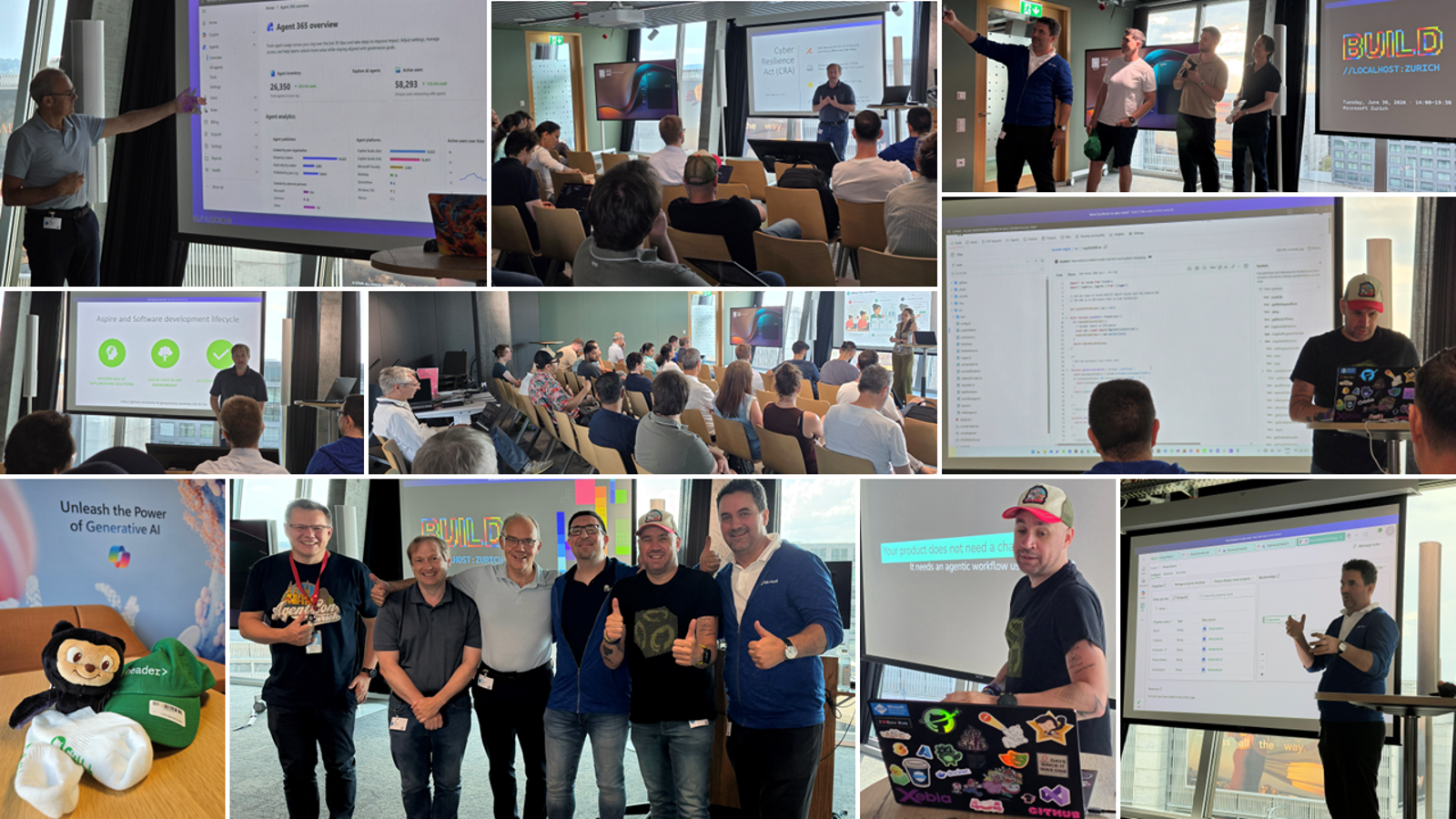
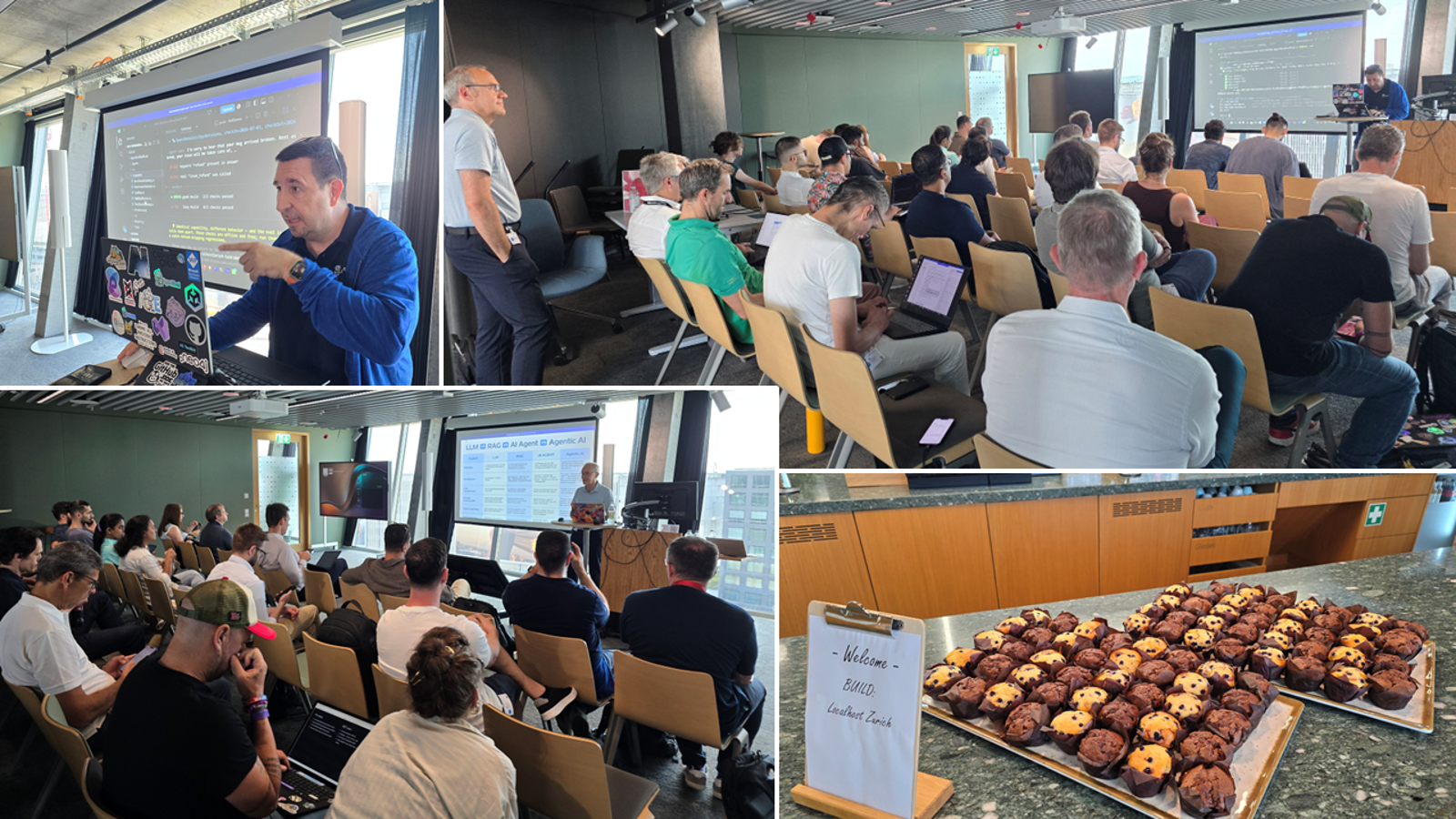
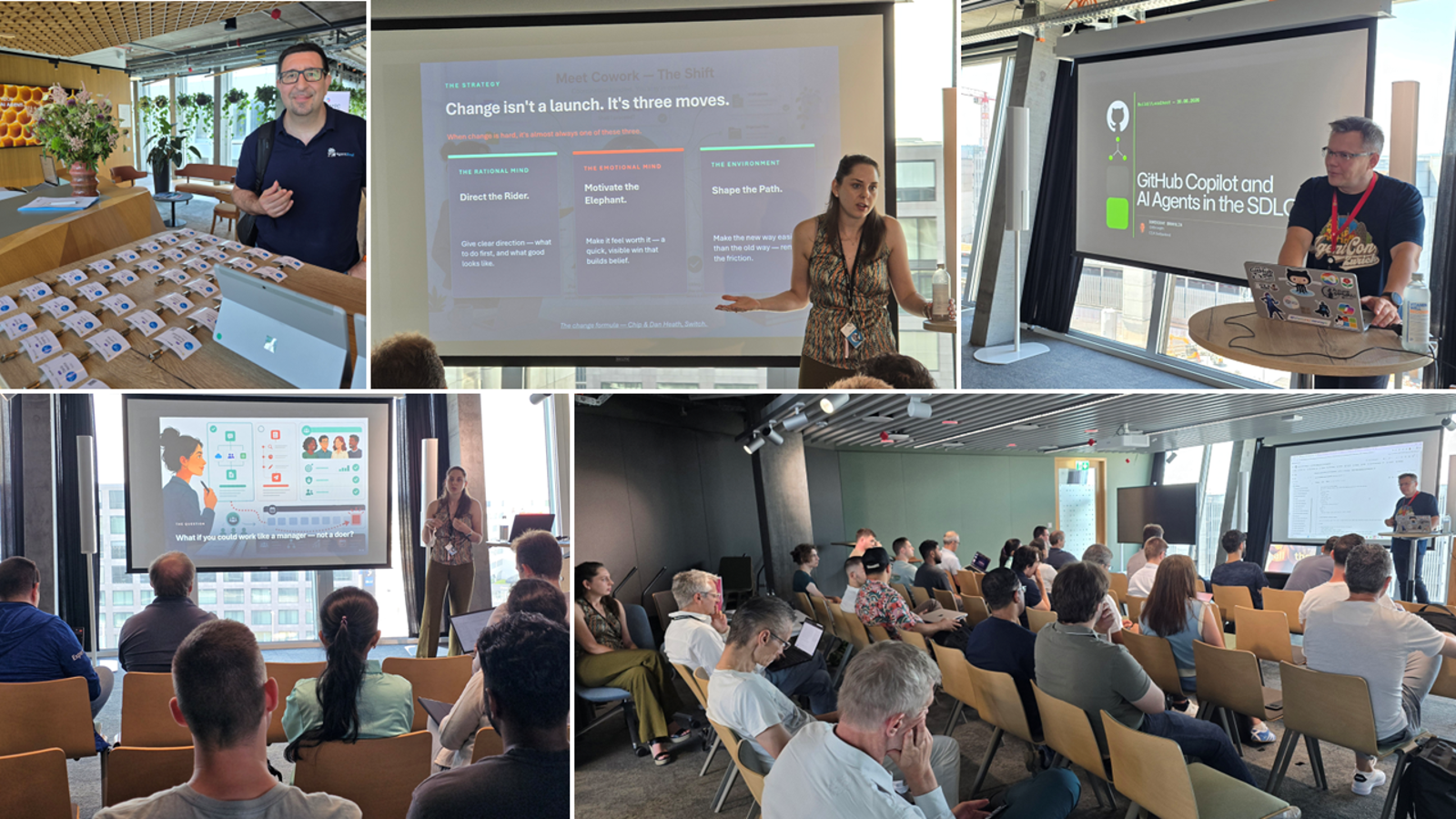
This is how it looked
Explore //localhost
Enjoy the best of Microsoft Build in your local community.